


Fasting offers numerous health benefits and has gained huge popularity for supporting weight loss, improved metabolism and overall well-being. However, fasting is not a one-size-fits-all process; knowing when to stop is as important as knowing when to begin. Experts say that one can gain many health benefits from fasting, but one should also be cautious about the right time to start and the right time to end it.
Want To Shed A Few Kilo? Choose From Our Wide-Range Of Weight Loss Supplements!
Take this two-minute read to know when to start fasting and an evidence-based way to continue.
What is Fasting?
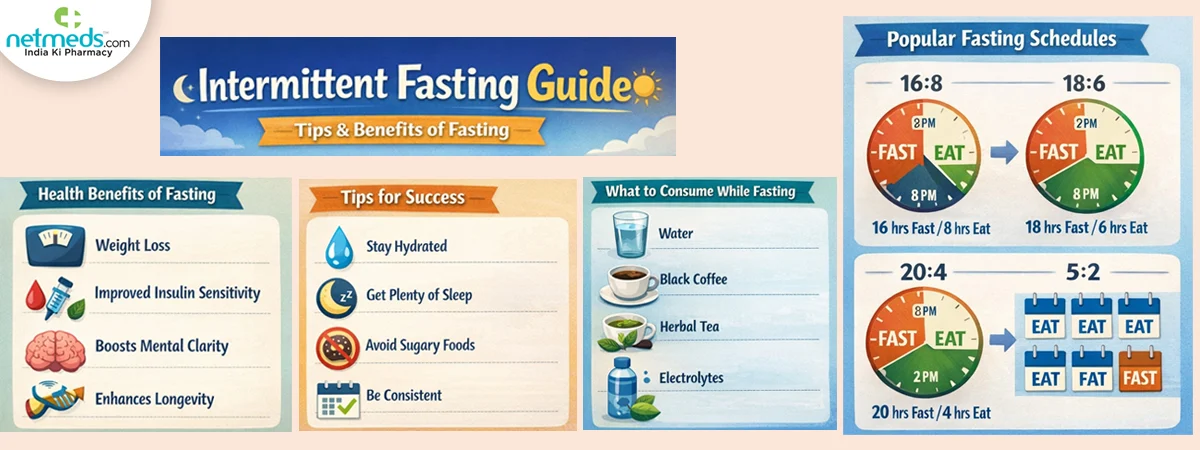
Fasting is the voluntary process of total abstinence from food and sometimes drinks for a specific period. Common types include:
Intermittent fasting, different window 16:8, 18:6
24-hour fasting
Alternate-day fasting
Extended fasting prolonging more than 48 hours.
Also Read: Intermittent Fasting: Method, Types, Health Benefits And FAQs
Signs You Should Stop Fasting Immediately
The body starts to send signals when it needs nourishment; thus, ignoring the cues can be harmful to the system. Stop fasting if you feel:
Fainting
Light-headedness occasionally is normal, but frequent episodes of fainting or dizziness indicate that your blood pressure or blood sugar values are dropping badly.
Extreme Weakness or Fatigue
Feeling weak or tired is quite common, but the inability to carry out your daily tasks or functions is a sign that your body cannot withstand a fasting state.
Intense Headaches
Headaches are commonly observed during the initial phase of fasting; however, pounding or severe headaches may indicate extreme dehydration or electrolyte imbalance.
Rapid Heartbeat
Irregular or fast heartbeat is a warning signal that the body is not maintaining electrolyte balance, which needs prompt medical attention to replenish fluids.
Brain Fog
Mental fog is rarely observed, but disorientation or confusion is a red flag that indicates your body needs fuel to function.
Nausea or Vomiting
Frequent nausea or vomiting suggests your body is not tolerating fasting.
Dark Urine
Not passing urine or very dark coloured urine indicates dehydration, and this suggests that the body needs fuel and fluids to function properly, of ignored can lead to serious complications.
Hunger
Increased hunger paired with anger and irritability may signal that your body is under immense stress and not able to continue in the fasting state.
How to Do Fasting In The Right Way?
Right Type of Fasting
Before starting a fast, we should choose the right type that suits our body conditions. For example, beginners should start with 12:12 fasting, which is 12 hours of fasting periods and 12 hours of eating. And then slowly progress to a 16:8 fasting.
How To Safely Fast?
Maintain Hydration
Good hydration is vital to replenishing water and electrolytes lost during the fasting process. Drink plenty of water and include salt lemonade to maintain electrolyte balance.
Wholesome Meal
It is important to nourish the body with nutritious foods like dal, eggs, and chicken, healthy sources of fat and fiber-loaded foods like fruits, veggies and whole grains during the eating window.
Avoid Junk Foods
Eating processed and junk foods can instantly spike sugar levels, which can lead to stronger hunger during the fasting period.
Break Fast Slowly
Break the fast with light hydration foods such as soups, fruits, smoothies or tender coconut water. Avoid eating heavy, oily and deep-fried foods immediately, as these may upset the stomach.
Also Read: Are You On Dry Fast? Understand The Types, Benefits And Side Effects
How Long Should You Fast?
For Beginners
12–14-hour fasting window is a safe starting point.
Intermittent Fasting (IF)
16–18 hours IF is the most popular and offers better results.
Advanced Type
24 hours of fasting once or twice a week; however, it is not recommended for all.
Extended Fasting
36–72 hours only under proper medical guidance. Not suitable for all.
General Rule:
Long-duration fasting offers better results; consistency matters more than duration of fasting.
Who Should Avoid Fasting?
Fasting is not safe for pregnant or breastfeeding mothers.
Diabetics should seek proper medical guidance.
Those with eating disorders.
Malnourished or underweight people.
People on medications who require food.
Measures To Follow for Safe Fasting
Never ignore any warning signals.
Start slow and follow it regularly.
Stay hydrated and avoid overexertion.
Consult a doctor if you are not sure if you have any medical conditions or any doubts about how fasting benefits your body.
Frequently Asked Questions
Is fasting safe every day?
Yes, intermittent fasting methods, such as 16:8, are safe for most healthy individuals.
Can I Drink Water During Fasting?
Yes, water is vital to prevent dehydration. You can also drink black coffee or tea without sugar.
How To Break a Fast?
Having a small portion of carbs, proteins, or fats that offer a steady supply of fuel is good to break a fast.
How Fast Can I lose weight?
Fasting may help you shed weight; however, results vary from person to person. The key is to maintain consistency, and you may observe changes in 2-4 weeks.
Conclusion
Fasting is a powerful way to lose weight and augment overall health when done appropriately. The key mantra is to maintain balance, knowing how long to fast and when to stop. Always listen to your body signals over strict fasting goals.
References:
https://pmc.ncbi.nlm.nih.gov/articles/PMC10439666/
Physiological and Psychological Effects of Medically Supervised Fasting in Young Female Adults: An Observational Study
Pradeep MK 1, Prakash B Kodali 2, Gulab R Tewani 3, Hemanshu Sharma 4, Aarti Nagarkar
https://pmc.ncbi.nlm.nih.gov/articles/PMC8754590/
The Effect of Fasting on Human Metabolism and Psychological Health
Yiren Wang 1, Ruilin Wu 1
 Previous