Modern work culture has made desk jobs very common, with most professionals spending 7-10 hours a day sitting at computers, with very little movement. Although this may seem harmless, prolonged sitting can significantly affect blood circulation in the legs and may increase the risk of varicose veins. Mobility in muscles is essential to enhance blood flow in the system and optimise overall health.
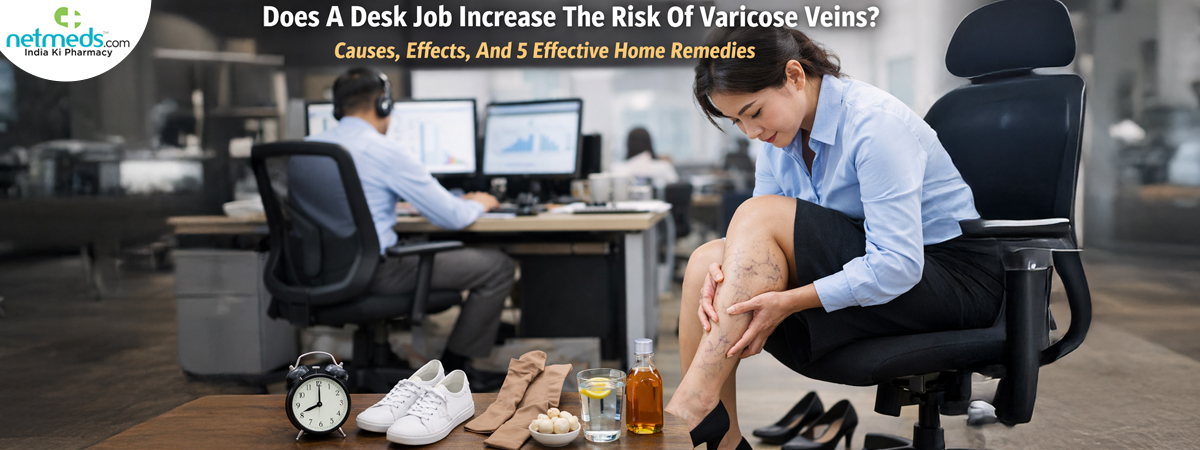
Varicose veins occur in people for several reasons; however sedentary lifestyle and long hours of sitting and standing can be a vital reason. Varicose veins are swollen, twisted veins that typically appear in the legs owing to improper blood flow and increased pressure in the veins. Dive into this article to explore how long hours sitting make you prone to varicose veins and ways to prevent them.
Also Read: Varicose Veins: Causes, Symptoms And Treatment
How Desk Jobs Can Increase the Risk of Varicose Veins?
Reduced Blood Circulation
When you sit for a long duration, the leg muscles remain in an inactive state. Generally, leg muscles help pump blood towards the heart. However, lack of movement may result in blood pooling in the lower extremities, increasing pressure in the veins.
Increased Pressure on Leg Veins
Sitting with knees bent for long hours can restrict blood flow in the legs. This increased pressure may weaken vein walls and valves over a period, making them more prone to becoming varicose.
Poor Posture/ Leg Position
Certain sitting posture such as crossing legs, slouching, or sitting in squeezed spaces, can further lessen the circulation of blood. These habits may aggravate venous pressure and contribute to vein damage.
Sedentary Lifestyle
Desk work accompanied by a lack of physical activity or a sedentary lifestyle is a key contributor to poor vascular health. Physical inactivity weakens circulation and increases the risk of vein disorders even in young adults.
How Varicose Veins Impact Your Health
Varicose veins are not only a cosmetic problem. In most cases, they cause severe pain and discomfort, such as:
• Leg pain or feeling of heaviness
• Swelling in lower extremities
• Burning or pounding sensation
• Muscle cramps, especially at night
• Skin discolouration around veins
• In severe cases, ulcers or blood clots
Symptoms usually start as tired legs after long work days, but if left untreated, they may aggravate over time.
5 Remedies to Prevent Varicose Veins
Take Regular Breaks
Ensure to stand up and walk every 30- 60 minutes in between office hours. Even a short walk around the office helps activate leg muscles and improve blood circulation. In addition, engaging in light activities like stretching, walking to refill a bottle, or using stairs can remarkably ease vein pressure.
Practice Leg Exercises at Your Desk
You can easily improve circulation with simple desk exercises like
Ankle rotations
Toe raises
Leg extensions
Foot flexing
These small movements keep blood flowing smoothly and prevent it from pooling in the legs.
Also Read: Standing Too Long? You Can Develop Varicose Veins
Elevate Your Legs After Work
After a long, tiring day at work, lie down and elevate your legs above heart level for 10–15 minutes. This helps blood return to the heart and reduces pressure in the veins.
Wear Compression Stockings
Compression stockings are helpful in gently squeezing the legs and support veins, which push blood upward more efficiently. They are especially helpful for people who sit or stand for long hours.
Lead An Active Lifestyle
Being active and engaging in regular workouts like walking, cycling, yoga, or swimming strengthens leg muscles and promotes circulation. Even 30 minutes of exercise daily can lower your risk of developing varicose veins.
Simple Tips for Desk Workers
Sitting with crossed legs for long periods should be avoided.
Maintain body weight within a healthy range.
Stay well-hydrated throughout the day.
Adjust your chair so your feet rest flat on the floor.
Stretch your legs during phone calls or meetings.
Conclusion
A desk job is known to increase your risk of varicose veins due to continued sitting and decreased blood circulation. Good blood flow to the lower extremities is important for long-term vein health. Following some of these lifestyle changes, like taking short movement leg-ups, wearing stockings, doing leg stretches at the desk, and exercising regularly, can lower your risk
References:
https://pmc.ncbi.nlm.nih.gov/articles/PMC7406736/
Distribution of working positions among workers with varicose veins based on the National Health Insurance and National Employment Insurance data
Saemi Jung 1, Youngki Kim 1,2,✉, Dongmug Kang
Work and the Veins. A Retrospective Analysis of Work Activities in Patients with Chronic Venous Disease, Davide Costa 1, Nicola Ielapi 1 2, Umberto Marcello Bracale 3, Antonio
https://www.sciencedirect.com/science/article/pii/S089050962400579X
 Previous