


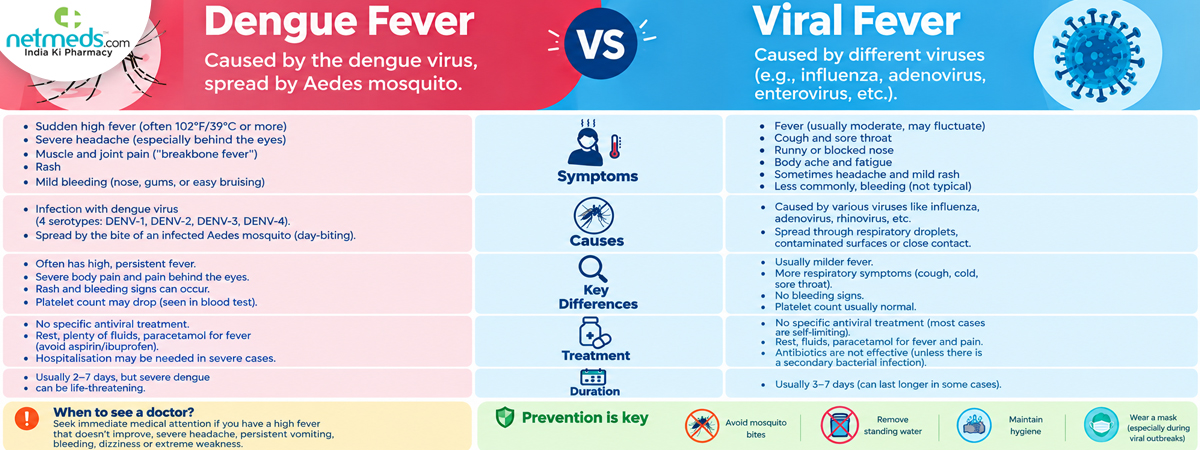
Dengue and viral fever are common illnesses that result in fever, body pains, headache and fatigue, and as their symptoms can overlap, it may be hard to distinguish based on symptoms alone. However, dengue fever is caused by the dengue virus and is spread via infected Aedes mosquitoes, while viral fever is caused by a viral infection and has several different causes.
(To Combat Viral Fever And Boost Immune System, Shop From Our Broad Range Of Health Supplements)
Understanding the differences between dengue and viral fever, their symptoms, causes, and treatment can help with timely medical care and prevent complications.
What Is Dengue Fever?
Dengue fever is caused by the dengue virus and is transmitted by the bite of an infected Aedes mosquito. Unlike viral fever, dengue tends to be more severe, which can result in bleeding, shock and organ complications. Prompt medical evaluation is essential, especially when warning signs develop.
Also Read: Dengue: All You Need To Know About The Fever
What Is Viral Fever?
Viral fever is a term used to imply fever caused by a viral infection. Several viruses can cause viral fever, including those responsible for respiratory, gastrointestinal and other infections.
Depending on the virus involved, symptoms may range from fever, chills, fatigue, headache, muscle aches, cough, sore throat, runny nose, vomiting or diarrhoea.
Dengue vs Viral Fever: Key Differences
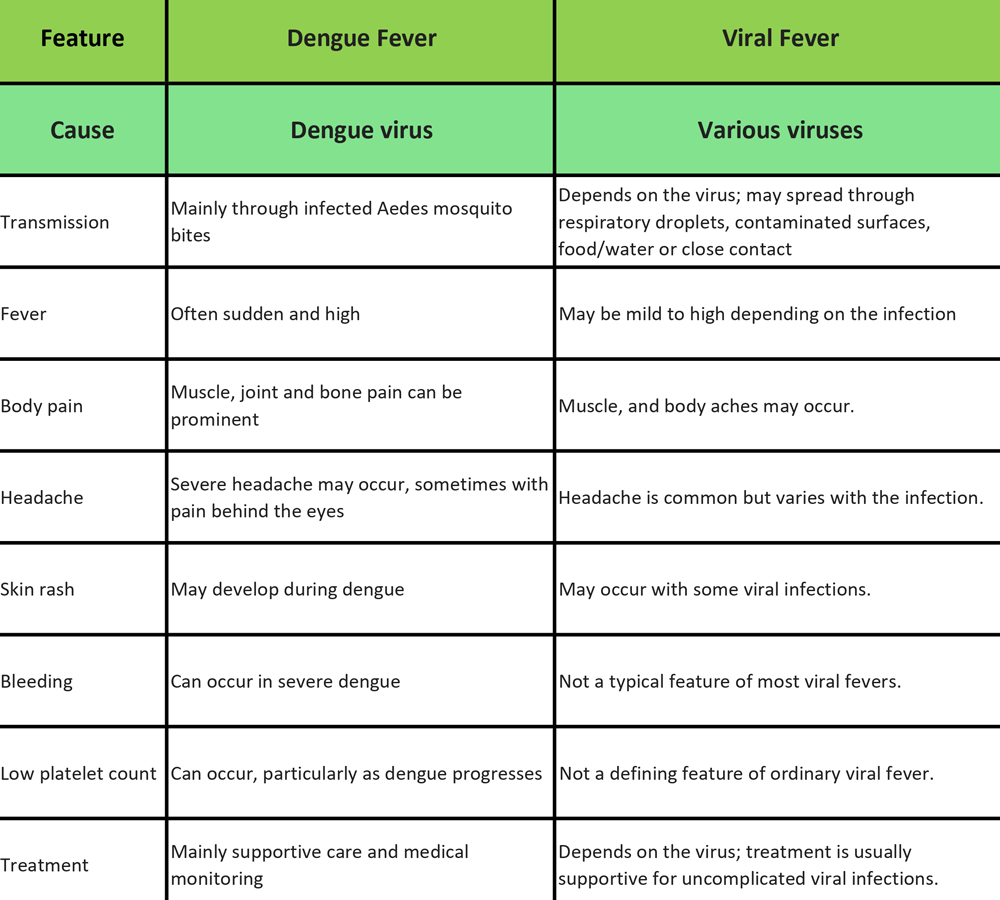
Dengue Fever Symptoms
Common symptoms of dengue include:
Sudden high fever, mostly above 103 F, which does not settle easily with regular medication.
Throbbing body ache and joint pain
Pain in the eye regions
Skin rashes, appearing 3 to 4 days after onset of fever
Nausea, vomiting
Loss of appetite
Extreme fatigue
In certain cases, mild bleeding from gums or nose or regular brushing
Dengue symptoms usually appear several days after an infected mosquito bite. Not everyone develops the same symptoms.
Dengue Warning Signs
Some people develop severe dengue, mostly around the time the fever starts to settle. Seek immediate medical attention if symptoms such as these occur:
Severe abdominal pain or tenderness
Persistent vomiting
Bleeding from the nose or gums
Vomiting blood or blood in stools
Rapid breathing
Extreme weakness, restlessness or unusual tiredness
Pale or cold skin
Reduce urine output
Severe dengue can become life-threatening and requires prompt medical treatment.
Also Read: Dengue Diet: Importance of Nutrition, Sample Meal Plan And FAQs Explained
Viral Fever Symptoms
Usually, the symptoms vary according to the virus causing the infection. Common symptoms include:
Fever
Headache
Fatigue
Muscle aches
Sore throat
Cough
Runny nose
Nausea or vomiting
Diarrhoea in certain viral infections
Unlike dengue, viral fever is not a single specific disease, so its symptoms can differ considerably from person to person.
What Causes Dengue and Viral Fever?
Causes of Dengue
Dengue is caused by dengue virus types and is primarily spread through bites from infected Aedes mosquitoes.
Causes of Viral Fever
Viral fever can be caused by several different types of viruses. Respiratory viruses may spread through droplets or close contact, while some viral infections can spread through contaminated food or water, bodily fluids or infected surfaces.
Therefore, identifying the specific cause may require a physician’s evaluation and, when appropriate, diagnostic testing.
How Is Dengue Diagnosed?
Doctors usually evaluate patients based on present symptoms, medical history, mosquito exposure, and physical examination.
Blood tests can help confirm dengue infection. And based on the stage of illness, your physician may recommend tests that identify dengue viral components or antibodies.
The complete blood profile test may also be evaluated to assess platelet counts, haematocrit and other blood parameters. Moreover, a low platelet count alone does not confirm dengue, as platelet levels can decrease for other reasons as well.
How Is Viral Fever Diagnosed?
Viral fever is diagnosed based on the symptoms and suspected infections. In most common viral infections, doctors may diagnose the illness based on clinical symptoms. If any other infection is suspected or symptoms are very severe, the physician may suggest blood tests, urine tests, swabs or other investigations.
Dengue Treatment
There is no specific antiviral medicine routinely used to cure dengue. Treatment generally focuses on supportive care and monitoring. It may include:
Replenish fluids lost to prevent dehydration
Good rest
Manage fever
Monitoring blood counts and other clinical parameters when required
Hospital care for severe dengue or warning signs
Do not self-medicate when dengue is suspected, as these medicines can elevate the risk of bleeding. Consult with your physician and take medication as advised.
Viral Fever Treatment
Treatment depends on the underlying viral infection. For uncomplicated viral illnesses, supportive measures may include:
Sufficient rest
Soft, easily digestible and nutritious foods
Manage fever
Treating specific symptoms
Antibiotics do not treat viral infections unless a healthcare provider identifies a bacterial infection requiring antibiotic treatment.
Dengue vs Viral Fever: Which One Is More Serious?
The severity of the fever depends on the underlying illness and the person affected. Most viral infections settle with supportive care, while dengue can at times progress to more severe dengue fever accompanied by complications. As dengue and viral fever can look similar in the starting stage, continuous high fever, extreme exhaustion, bleeding symptoms, abdominal pain, or any other warning sign should never be ignored.
How to Prevent Dengue
Since dengue is transmitted by mosquitoes, preventing mosquito bites and reducing mosquito breeding sites are essential parts of prevention.
Wear clothing that covers the arms and legs.
Use window and door screens with mosquito nets where possible.
Clear stagnant water from containers, pots, coolers and other areas around the home.
Keep water-storage containers covered.
When Should I See a doctor?
Consult your physician if fever is high, continuous, worsening, or associated with severe body ache, repeated vomiting, dehydration, rashes or unusual bleeding.
If dengue is suspected, prompt medical evaluation is especially important because symptoms can change as the illness progresses.
Conclusion
Fever during monsoon season is quite common; however, not every fever is similar and treating dengue fever like an ordinary fever can have serious complications. The best approach is to observe the fever pattern and never wait beyond 3 days if the fever persists.
References:
https://pmc.ncbi.nlm.nih.gov/articles/PMC2756447/
Clinical and laboratory features that distinguish dengue from other febrile illnesses in endemic populations
James A Potts 1, Alan L Rothman 1
https://www.sciencedirect.com/science/article/pii/S1876034125003314
Ageep AK, Malik AA, Elkarsani MS. Clinical presentations and laboratory findings in suspected cases of dengue virus. Saudi Med J. 2006;27:1711–1713.
Akram DS, Igarashi A, Takasu T. Dengue virus infection among children with undifferentiated fever in Karachi. Indian J Pediatr. 1998;65:735–740. doi: 10.1007/BF02731055.
Ali N, Nadeem A, Anwar M, Tariq WU, Chotani RA. Dengue fever in malaria endemic areas. J Coll Physicians Surg Pak. 2006;16:340–342.
Anuradha S, Singh NP, Rizvi SN, Agarwal SK, Gur R, Mathur MD. The 1996 outbreak of dengue hemorrhagic fever in Delhi, India. Southeast Asian J Trop Med Public Health. 1998;29:503–506.
Ashford DA, Savage HM, Hajjeh RA, et al. Outbreak of dengue fever in Palau, Western Pacific: risk factors for infection. Am J Trop Med Hyg. 2003;69:135–140.
Bandyopadhyay S, Lum LC, Kroeger A. Classifying dengue: a review of the difficulties in using the WHO case classification for dengue haemorrhagic fever. Tropical Medicine and International Health. 2006;11:1238–1255. doi: 10.1111/j.1365-3156.2006.01678.x.
Baruah HC, Mohapatra PK, Kire M, Pegu DK, Mahanta J. Haemorrhagic manifestations associated with dengue virus infection in Nagaland. Journal of Communicable Diseases. 1996;28:301–303.
Baruah J, Shiv A, Kumar GA. Indian Journal of Pathology & Microbiology. Vol. 49. Indian Association of Pathologists & Microbiologists; Chandigarh, India: 2006. Incidence of dengue in a tertiary care centre - Kasturba Hospital, Manipal; pp. 462–463.
Bruce MG, Sanders EJ, Leake JA, et al. Leptospirosis among patients presenting with dengue-like illness in Puerto Rico. Acta Trop. 2005;96:36–46. doi: 10.1016/j.actatropica.2005.07.001.
Buchy P, Vo VL, Bui KT, et al. Secondary dengue virus type 4 infections in Vietnam. Southeast Asian J Trop Med Public Health. 2005;36:178–185.
 Previous