


You are what you eat, but most people neglect the important role nutrition plays in helping the body adapt to changing seasons and environmental conditions. Though sunscreen remains the first line of defence against harmful UV radiation, do you know that your diet can also play a key role in safeguarding your skin from sun damage? Certain foods are heaped with antioxidants, vitamins, minerals and bioactive plant compounds that help strengthen the skin’s natural defence mechanism against UV rays and oxidative stress.
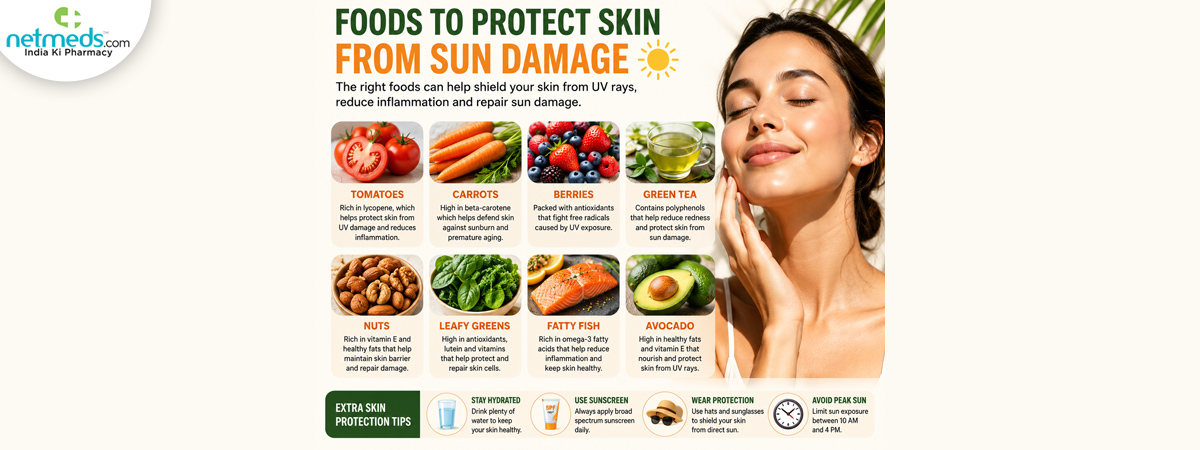
Constant sun exposure can lead to premature ageing, hyperpigmentation, sunburn, wrinkles and an increased risk of skin cancer. Adding a whole lot of skin-friendly foods to your regular meal plan may help mitigate inflammation, combat free radical damage and optimise overall skin health.
To Safeguard Your Skin From Sun Damage, Shop From Our Broad Range Of Skincare Products
Here, we have curated five scientifically backed foods that may help protect your skin from sun damage naturally.
5 Superfoods To Protect The Skin From Sun Damage
Tomatoes
Tomatoes are one of the richest sources of lycopene, a powerful antioxidant responsible for their vibrant red colour and potent health-benefiting traits. Lycopene helps neutralise free radicals generated by UV radiation and may reduce skin redness caused by sun exposure. Adding tomatoes to the diet regimen can benefit the skin by:
Offering protection against UV-induced skin damage.
Reducing oxidative stress and damage to healthy skin cells.
Promoting collagen production.
Supporting skin’s radiance and making the skin look youthful.
Ways To Add:
Enjoy wholesome tomato salad
Nourishing tomato soup
Homemade tomato salsa
Refreshing tomato juice
Watermelon
Watermelon contains high amounts of lycopene and vitamin C, making it an excellent summer fruit for skin protection and hydration. Its high-water content also helps lock moisture during extremely hot weather. Including watermelon as part of the meal plan may benefit the skin by:
Providing antioxidant protection.
Maintaining skin hydration.
Supporting collagen synthesis
Reducing signs of photo ageing.
Ways To Add:
Enjoy as a fresh fruit bowl.
Make wholesome smoothies.
Hydrating watermelon juice.
Nourishing salads.
Fatty Fish
Fatty fish such as salmon, sardines, and mackerel are an incredible source of omega-3 fatty acids that help reduce inflammation and strengthen the skin barrier. Trying to add these fish to the diet plan, which may help the skin by:
Also Read: Want Naturally Glowing Skin Discover The Power Of Skincare Supplement
Reducing UV-induced inflammation.
Improving skin elasticity and texture.
Preventing skin dryness.
Supporting skin repair and healing.
Ways To Add:
Grilled salmon
Fish curry
Baked sardines
Fish sandwiches
Green Tea
Green tea is a storehouse of catechins, particularly epigallocatechin gallate (EGCG), which possesses potent antioxidant and anti-inflammatory properties. Research suggests that regular consumption may help protect the skin from UV damage.
Fights free radical damage.
Reduces inflammation.
Supports skin repair.
May improve skin elasticity.
Ways To Add:
Warm green tea
Iced green tea
Green tea smoothies
Matcha beverages
Carrots
Carrots are heaped with beta-carotene, which the body converts into vitamin A. This vitamin plays a vital role in maintaining healthy skin and safeguards against UV-related skin damage. Regular intake of carrots can benefit the skin by:
Promoting skin cell regeneration.
Maintaining healthy skin texture and complexion.
Reducing oxidative damage.
Promoting a natural glow and radiance.
Ways To Add:
Enjoy fresh carrots as a standalone snack.
Carrot juice to boost nutrition.
Blended with salads.
Soups, curries and vegetables stir fries.
Also Read: Sun Damaged Skin Beyond Sunscreen How To Protect Your Body From Harmful UV Rays
Simple Tips To Prevent Sun Damage
Well, some of the foods can protect the skin from sun damage; however, they should not replace sunscreen or other protective measures. Following the skin-friendly routines below can offer complete protection against UV radiation.
Use a broad-spectrum sunscreen with SPF 30 or higher and apply it regularly before stepping out.
Ensure you wear protective clothing, hats, and sunglasses.
Stay hydrated throughout the day and maintain fluid balance.
Stay indoors during peak sun exposure between 10 a.m. and 4 p.m.
Reapply sunscreen every two hours when outdoors.
Frequently Asked Questions
Can Food Really Protect The Skin From Sun Damage?
Absolutely, some of the foods are heaped with powerful antioxidants and anti-inflammatory properties that may help reduce UV-induced oxidative stress, skin damage, and optimise skin health. However, they should complement the diet regimen but not replace sunscreen and other sun protection measures.
Which Vitamin Is Best For Protecting Skin From The Sun?
Is Watermelon Good For Sun Protection?
Yes. Watermelon is loaded with lycopene and vitamin C, which may help protect the skin from UV-related damage and lock in moisture.
Does Green Tea Help Prevent Sun Damage?
Green tea is a great source of catechins that exhibit potent antioxidant actions, which may help reduce inflammation and protect skin cells from UV-induced stress.
What Foods Should Be Avoided For Healthy Skin?
Processed and junk foods, sugary beverages, excessive alcohol intake, and trans-fat-rich foods may contribute to inflammation and negatively affect skin health.
Conclusion
Shielding your skin from sun damage requires a comprehensive approach that includes internal and external care. Together with sunscreen, protective clothing, and skin-friendly foods can help strengthen your skin's natural defence against harmful UV rays.
References:
Nutritional protection against skin damage from sunlight
Helmut Sies 1, Wilhelm Stahl
https://pubmed.ncbi.nlm.nih.gov/15189118/
https://www.sciencedirect.com/science/article/pii/S0002916523030265
 Previous