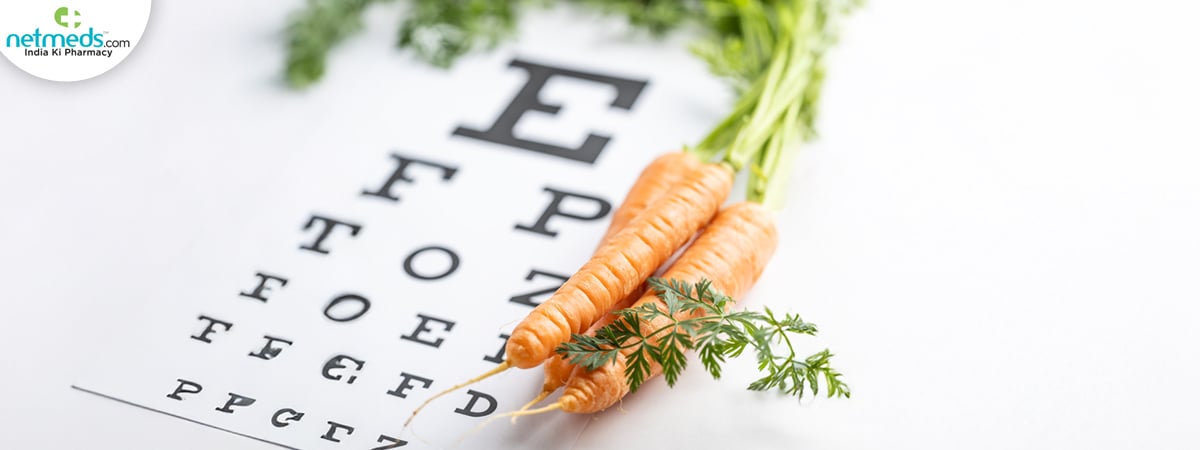
We must have all heard our mother saying that carrots are nature’s best gift for perfect eyesight. Yes, from childhood mealtime advice to folktales, this bright, orange-coloured root vegetable has earned immense attention for ‘sharpening’ vision.
For A Healthy Vision And Good Eyesight, Shop From Our Wide Range Of Vitamin A Supplements
Experts reveal that fact lies somewhere between nutrition and nuance. Carrots are rich in beta-carotene, which the body converts into vitamin A, an essential nutrient for augmenting healthy vision, especially in dim light. In addition, vitamin A deficiency may lead to night blindness and other severe eye problems; however, experts claim that eating carrots beyond your daily requirements would not further optimise eyesight. While carrots certainly deserve a place in a wholesome diet, let’s explore the science behind this.
The Origin of Carrot-Vision Belief
Well, carrots for good eyesight gained fame during World War II, when the British rulers promoted carrots as a reason behind improved night vision among Royal pilots. However, the fact is that radar technology played a major role, but this claim unintentionally rooted the carrot- eye power connection in public memory. Though slightly overrated, the claim cannot be totally ignored.
Also Read: Carrots Can Contribute To Health & Beauty
Why Are Carrots Linked to Eye Health?
Carrots are endowed with a wealth of beta-carotene, a carotenoid that the body converts into vitamin A (retinol). While vitamin A is vital for the formation of rhodopsin, a pigment in the retina that enables night vision, maintaining cornea health and proper functioning of retinal photoreceptors and the prevention of vitamin A deficiency-related eye disorders (xerophthalmia). Deficiency of vitamin A may result in night blindness.
Do Carrots Sharpen Vision?
Carrots may help you if you have a vitamin A deficiency. In a person with insufficient vitamin A intake, adding carrots to the diet regimen may help:
Restore normal vision
Improve night blindness
Prevent serious eye damage
Myth: If Your Vision Is Already Normal
If your intake of vitamin A is adequate, then eating more carrots will not necessarily make your vision much better. They will not help you correct refractive errors like myopia and hyperopia. They cannot treat astigmatism or reduce the need for glasses.
Good Eyesight and clarity depend primarily on:
Eye structure
Corneal curvature
The focusing ability of the lens
Genetic factors
Carrots do not modify these structural characteristics.
Benefits of Carrots for Eye Health
Vitamin A is a vital nutrient that plays a key role in enabling proper low-light vision and treating night blindness.
Reduces risk of corneal dryness, irritation and prevents dry eyes.
Carrots are a powerhouse of antioxidants that help protect retinal cells from oxidative damage and promote vision.
Carotenoids in carrots contribute to long-term retinal health and may lower the risk of age-related macular degeneration.
Nutrients in Carrots That Help the Eyes
Apart from beta-carotene, carrots pack a wealth of lutein, zeaxanthin, vitamin C and potassium.
Lutein and zeaxanthin, the key antioxidants, build up in the retina and may help prevent age-related macular degeneration.
Also Read: Vision Health: Protect Your Eyes With These 5 Natural Hacks- Infographic
How Many Carrots Should You Eat?
You can have about 1 medium-sized carrot daily. As vitamin A is a fat-soluble vitamin, combining it with a healthy source of fats like nuts or olive oil can help with better absorption.
Overconsumption may cause carotenemia, a harmless condition where the skin turns slightly yellow-orange.
Who Benefits Most from Eating Carrots?
People with a poor vitamin A diet.
Children in highly deficient-prone areas.
Individuals with night blindness
Myth or Fact?
Carrots help maintain healthy vision, but they do not enhance vision beyond normal physiological limits. So, carrots can help sharpen vision in people with vitamin A deficiency.
Conclusion
Carrots are valued as a key component of a wholesome diet and may support long-term eye health, but they are not a substitute for proper medical care or eliminate glasses or reverse age-related eye problems. They are valued as maintenance fuel and not a magical remedy. A balanced and varied diet, including smart eye care routines are always more beneficial than a single vegetable.
References:
Carrots, carotene and seeing in the dark
W Smith 1, P Mitchell, R Lazarus
https://pubmed.ncbi.nlm.nih.gov/10484191/
Nutritional, physical, and sensory evaluation of hydroponic carrots (Daucus carota L.) from different nutrient delivery systems
P N Gichuhi 1, D Mortley, E Bromfield, A C Bovell-Benjamin
https://pubmed.ncbi.nlm.nih.gov/20492130/
https://www.acs.org/pressroom/presspacs/2023/february/carrots-good-for-your-eyes-and-degradable-polymers.html
 Previous