


What if the secret to better health wasn’t hidden in expensive superfoods, but in tiny, easily available seeds sitting quietly in your kitchen? Insignificant they may look, do not underestimate the impressive dose of vitamins, minerals, healthy fats, and antioxidants that little seeds deliver in every bite. From improving digestion to boosting heart health, they are one of the simplest ways to upgrade your diet without making drastic changes. Unlike many health foods, seeds are affordable and accessible, and their neutral taste allows them to blend perfectly into both sweet and savoury dishes. Super convenient, they are an easy alternative for anyone to adopt a healthier diet without extra effort.
What Makes Seeds So Easy to Use?
One of the best things about seeds is how effortlessly they fit into everyday meals, along with a long shelf life. Besides that, you do not need complicated recipes or cooking skills to enjoy their benefits. Raw, soaked, roasted, or ground, depending on your preference, just make seeds an integral part of your meals. Rich in omega-3, fibre, and antioxidants, they improve digestion, relieve constipation, support heart health, and help manage weight effectively.
What else? Sprinkle them over salads, mix them into smoothies, add them to yogurt, or even include them in roti or baking recipes. Isn’t that amazing?
Also Read: Why Should You Start Your Day With A Protein-Rich Breakfast? Find Out Here
How Many Seeds Should You Eat?
While seeds are highly nutritious, moderation is key. A small quantity is enough to deliver their health benefits. Generally, one or two tablespoons of mixed seeds per day is considered ideal for most adults. Another good idea is to rotate different types of seeds to get a variety of nutrients. For example, you can have chia seeds in the morning, pumpkin seeds as a snack, and sesame seeds in meals. Some seeds, like chia and basil seeds, are best consumed after soaking to aid digestion.
Also Read: Lentils: Here’s Why You Should Soak This Protein-Rich Food Before Cooking
Precautions
Not many ill effects, just be a little careful when eating them. Overeating seeds may lead to digestive discomfort or excess calorie intake, so balance is important. When consumed in the right quantity, seeds can be a simple yet powerful addition to a healthy lifestyle
Also Read: Toor /Arhar Dal: 5 Nutritional Reasons Why You Should Eat This Protein-Rich Legume Daily
Want to stay full for longer and, of course, watch your weight, and not to miss antioxidant content? Include seeds in your daily routine. Not for the trend but indeed a smart, sustainable step toward better overall wellness.
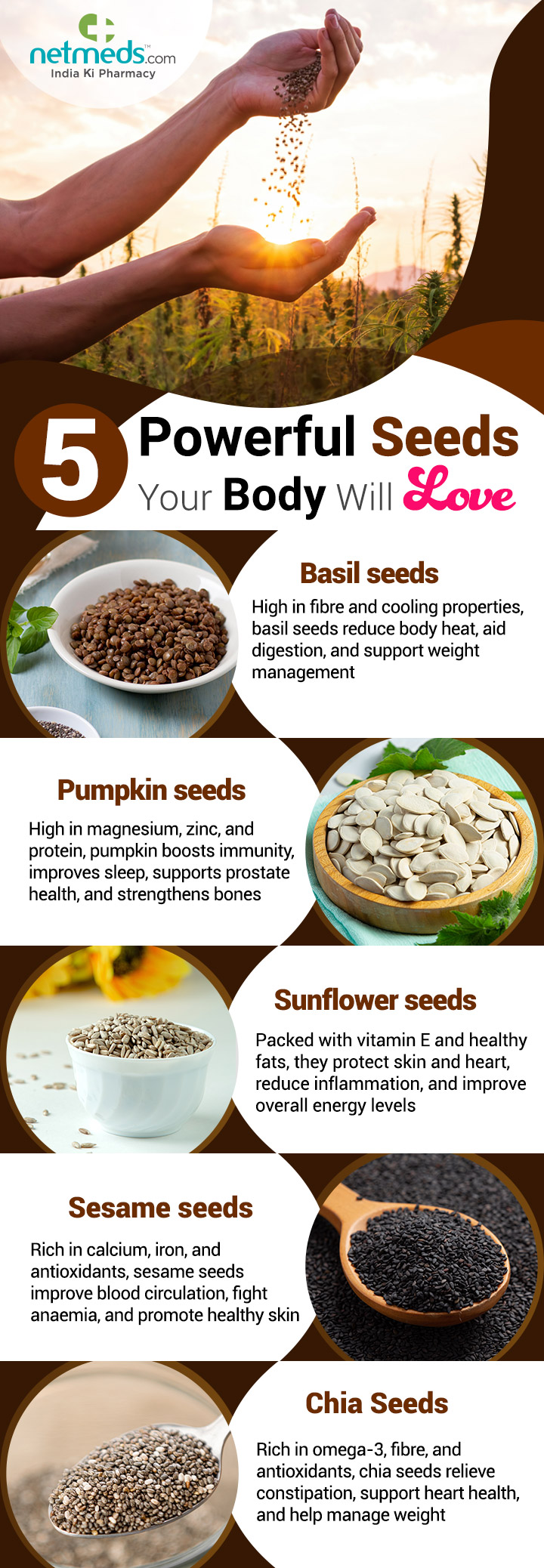
Check the infographic to know more about the top ones you must give a try:
References:
Nutritional and Health Potential of Edible Seeds: Micronutrient Bioavailability and Mechanistic Insights
Nighat Raza
https://pmc.ncbi.nlm.nih.gov/articles/PMC12852966/
https://www.phytojournal.com/archives/2025/vol14issue1/PartB/14-1-6-618.pdf
 Previous


