


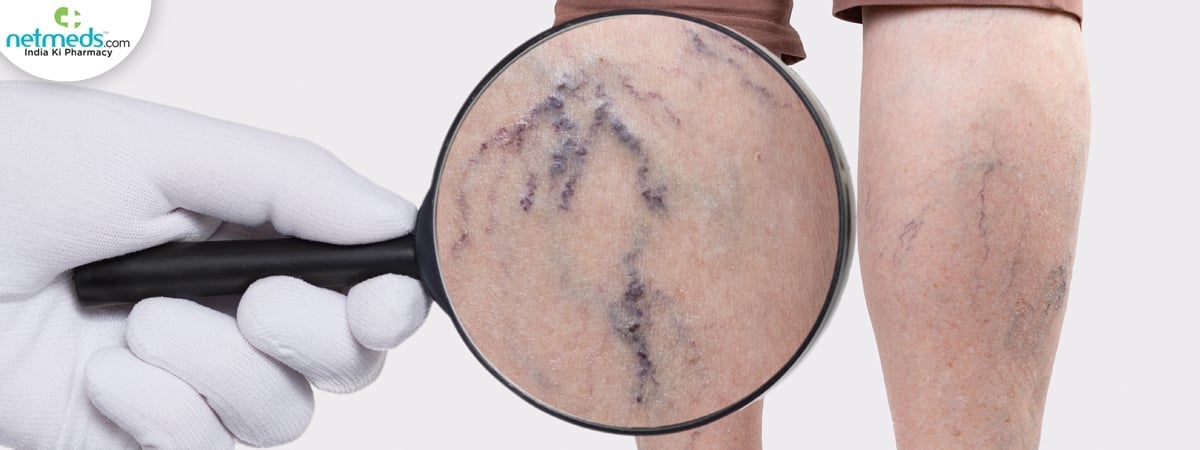
Do you complain of muscle pain often, particularly in the body extremities of the lower legs, and also notice a prominent dark blue or purple discolouration in those regions? Then you are indeed suffering from a very commonly occurring health anomaly medically termed varicose veins, characterized by distended, bloated veins, predominantly present in the legs and feet. This illness can occur due to myriad causes, including standing for prolonged periods, a sedentary lifestyle, obesity, pregnancy, or even gut disorders such as constipation, and bloating. While some cases of varicose veins are rather slight and do not warrant the need for advanced treatment, certain instances of engorged, damaged veins indicate underlying issues with blood circulation, and rampant clotting, and are chronic, causing persistent leg pain and discomfort. Moreover, the obvious unsightly dark lines on the skin in the lower legs are embarrassing as well and are considered a cosmetic concern.
Also Read: Varicose Veins: Causes, Symptoms And Treatment
Ayurveda describes the ailment of varicose veins as “Siraja Granthi”, wherein “Siraja” refers to the veins and tubular structures in blood flow and “Granthi” implies a cyst-like inflammation. It is considered to be induced by aggravated pitta dosha encompassing blood vessels, besides hampered kapha dosha and vata dosha at the site of bulging, leading to tridoshic imbalance and aberrant blood clots. Varicose veins are often accompanied by numerous painful indications of Sada (numbness), Ayasa (fatigue), Gratitha Sira (distended veins), Krishnarakta Sira (blue to purple discoloration in the veins and skin), and Toda (relentless aching in the lower legs). Nevertheless, fret not, for the ancient Ayurvedic manuscripts such as Charaka Samhita, Sushruta Samhita, list a plethora of powerful herbs with anti-inflammatory, pain-relieving, and pitta-balancing traits, that function as effective natural remedies in curing varicose veins. Read on, to discover some remarkable pitta-pacifying herbs to rectify circulation, fade darkened patches on the skin, mend injured blood vessels in varicose veins, and avert the recurrence of this painful condition.
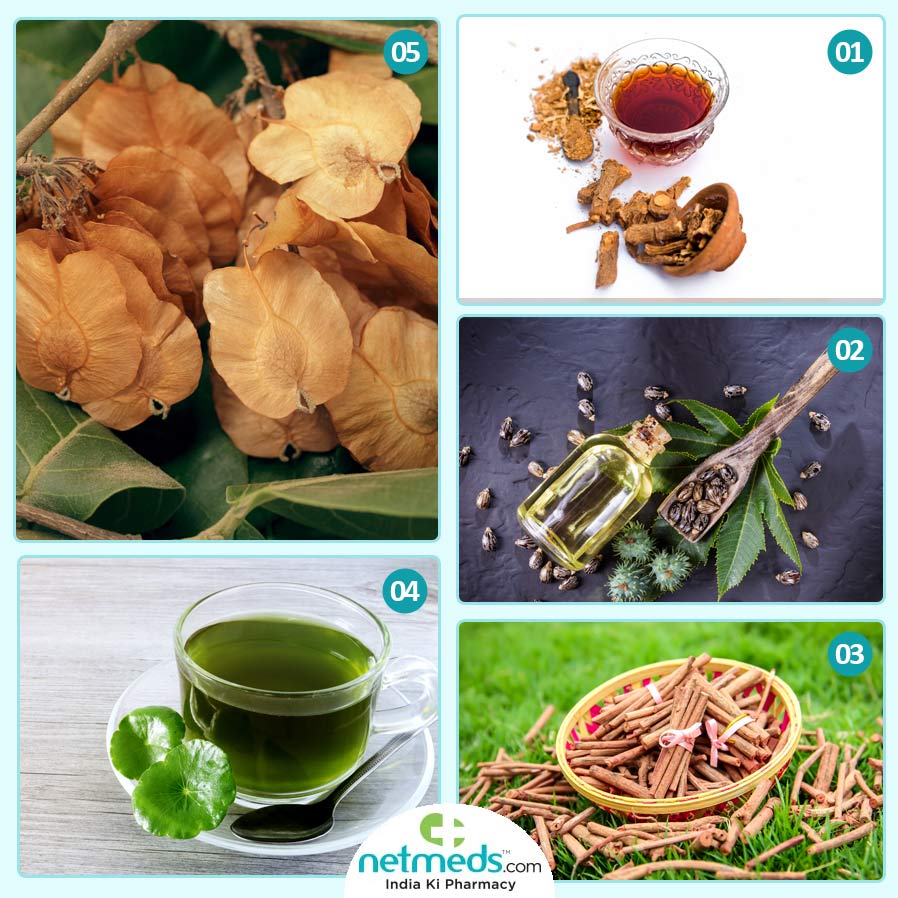
Astonishing Natural Remedies From Ayurveda For Varicose Veins:
1. Sariva (Indian Sarsaparilla)
Sariva roots are laden with plant compounds that hold Varnya or complexion boosting and Dahaprashamana i.e. burn relieving qualities. The root extracts are powdered and spread topically onto portions of skin afflicted by varicose veins with uneasy symptoms of itching, dryness, dark spots, to soothe irritation and even skin tone. A tonic made from ground roots of Sariva is also ingested, as it comprises excellent blood-purifying traits to flush out Ama toxins and regulate circulation.
2. Eranda (Castor Bean)
The wealth of bioactive ricin-based compounds in the tincture derived from the beans of Eranda – castor oil, are renowned for their tremendous potential to reduce inflammation and relax blood clots in the lower legs affected by varicose veins. Warming some castor oil and rubbing it in gently, in circular motions, onto the portions of skin with varicose veins, is a proven herbal solution to augment blood circulation in the system, as well as to banish dark spots.
3. Manjistha (Indian Madder)
Manjistha is blessed with anti-inflammatory properties that aid in lowering swelling and mitigating pain in the lower legs in varicose veins. This herb efficiently balances the vitiated pitta dosha, aside from cleansing the blood of impurities and improving circulation in injured veins and blood vessels. Dried powder preparation of stem, and root of manjistha is a time-tested antidote for chronic cases of varicose veins and the paste of manjistha powder mixed with aloe vera gel can be applied onto discoloured skin to remove spots and blemishes.
4. Gotu Kola (Asiatic Pennywort)
Bestowed with iron, a vital trace mineral for healthy red blood cell synthesis and transport in the system, gotu kola effectively eliminates plaques and thickening from blood vessels, to promote smooth circulation and preserve normal blood pressure. Drinking an herbal concoction of gotu kola leaf juice works wonders in boosting collagen, and elastic production, thanks to the profuse amounts of triterpenoid antioxidants, which help resolve blood vessel damage and fortify the internal structures of veins.
Also Read: Gotu Kola: 5 Fabulous Wellness Incentives Of This Wonder Herb
5. Chirabilva (Indian Elm Tree)
Chilrabilva is packed with strong Pitta Shamaka or pitta-balancing characteristics, besides kapha and vata modifying traits, to foster optimal equilibrium of the tridoshas in the system. This versatile herb, touted as a natural blood purifier, is consumed as bark decoction to undo blood clots in the lower legs. It is also applied topically as a paste made from bark extracts, onto regions of skin affected by varicose veins, to minimize discolouration.
Additional Herbs To Soothe Blood Clots
Triphala
A traditional Ayurvedic herbal formulation consisting of three fruits: amla (Indian gooseberry), haritaki (chebulic myrobalan), and bibhitaki (Bahera), it has potent antioxidants to help in improving blood circulation and reducing inflammation in varicose veins and reducing the risk of further vein damage. Consuming Triphala powder or tablets may also aid overall vascular health and alleviate symptoms associated with varicose veins.
Guggulu (Indian Bedellium)
Guggulu, also known as Indian Bedellium, has been used in Ayurvedic medicine for centuries due to its anti-inflammatory and anti-arthritic properties. It contains compounds that help improve blood circulation and reduce swelling and pain associated with varicose veins. Guggulu also aids in detoxifying the blood and promoting the healing of damaged blood vessels.
Brahmi (Bacopa monnieri)
Brahmi, an Indian herb, is well known for its cognitive-enhancing properties. It contains compounds that strengthen the veins and capillaries, improving their elasticity and reducing the risk of blood pooling and clot formation. Additionally, Brahmi has mild analgesic properties that can help alleviate discomfort associated with varicose veins. Consuming Brahmi as a supplement or applying Brahmi oil topically regularly can provide relief from varicose veins.
Frequently Asked Questions
How do you get rid of blood clots in varicose veins?
To cure varicose veins, treatment depends on the type of clot.
Superficial thrombophlebitis, where a clot in a varicose vein is seen near the skin.
This is more common and usually less dangerous than deep vein thrombosis (DVT). Management includes:
NSAIDs (e.g., ibuprofen) for pain and inflammation.
Wear compression stockings.
Leg elevation.
Walking helps to maintain venous flow.
If the clot is extensive or close to deep veins, doctors may prescribe short-term anticoagulants.
Deep Vein Thrombosis (DVT)
If the clot extends into deeper veins, this is serious and requires:
Prescription anticoagulants (e.g., heparin, apixaban, rivaroxaban).
Immediate medical supervision.
Never attempt home remedies for suspected DVT. Sudden leg swelling, warmth, and severe pain require urgent evaluation.
Which herb is best for varicose veins?
Several herbs improve venous tone and circulation. The most evidence-backed include:
Horse Chestnut (Aesculus hippocastanum), the active compound is Aescin.
Reduces leg swelling and venous leakage.
Improves vein tone.
Often used in standardised extracts.
Improves connective tissue strength in veins.
Enhances microcirculation.
Butcher’s Broom (Ruscus aculeatus)
Reduces inflammation and improves venous return.
Among these, Horse Chestnut extract has the strongest clinical support.
Avoid if pregnant, on blood thinners, or with liver disease without medical advice.
Which Ayurvedic oil is best for varicose veins?
In Ayurveda, varicose veins are often associated with Vata imbalance.
Commonly recommended oils:
Sahacharadi Thailam is traditionally used for nerve and vascular conditions.
Improves circulation and reduces stiffness.
Mahanarayana Thailam possess potent anti-inflammatory properties that improve local blood flow.
Dhanwantharam Thailam supports vascular and muscular health.
Application method:
Gentle upward massage (toward the heart)
Do not massage forcefully over a painful clot
Oils may relieve symptoms, but do not cure varicose veins.
References:
Varicose Veins
- Meghal R. Antani; Jeffery B. Dattilo.
https://www.ncbi.nlm.nih.gov/books/NBK470194/
- https://www.ncbi.nlm.nih.gov/pmc/articles/PMC8995160/
 Previous


