Pickled vegetables are a famous addition to meals, offering a tangy flavour, crunchy texture, and appetising taste to daily cuisines. The process of pickling is a method of food preservation that has existed since time immemorial. From traditional Indian pickles made from a rich array of vegetables like carrot, cabbage, green chilies, and lemons to cucumber pickles, kimchi and sauerkraut, these preserved foods are enjoyed across cultures.
Fermented pickle varieties offer more impressive health merits than other regular types of pickles. However, their health impact depends on how they are prepared, their salt and sugar content, and whether they are fermented.
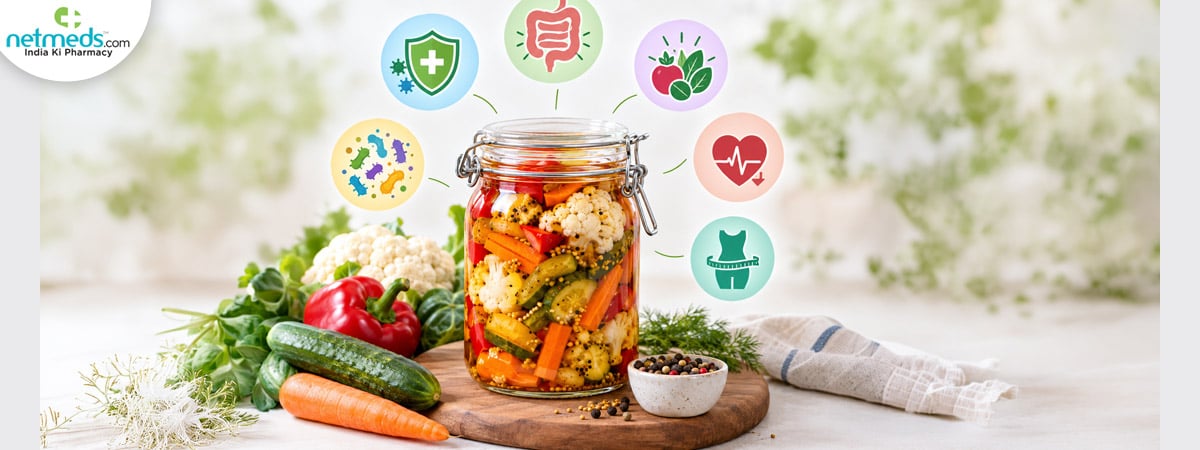
(For Optimal Gut Health and Digestive Functions, Shop From Our Broad Spectrum Of Probiotics)
Fermented vegetables may contribute to gut health by providing beneficial bacteria, while vinegar-pickled varieties can retain fewer nutrients and antioxidants. However, eating too much salt-rich or sugar-rich pickle may not be ideal or safe for everyone.
Explore this article to unravel the health benefits of pickled vegetables, their potential side effects and how to include them in a balanced diet.
What Are Pickled Vegetables?
Pickled vegetables are made by preserving the veggies in an acidic medium such as salt water, vinegar or rice vinegar, which are allowed to ferment for certain period. This method helps extend their shelf life, while at the same time modifying the flavour, texture and, in a few cases, nutritional content.
There are two main types of pickled vegetables:
Vinegar-pickled vegetables: This variety is made using vinegar, water, salt and at times sugar and other spices. However, they do not undergo a natural fermentation process and do not possess live beneficial bacteria.
Fermented vegetables: These varieties are prepared naturally using beneficial microorganisms that convert the sugar present into acids. For instance, traditionally fermented cucumber pickles, kimchi, and sauerkraut. Certain varieties contain live microorganisms that may benefit gut microbiota.
Hence, it is important to differentiate between these two types, as not all pickled vegetables contain nutrients and probiotics.
Are Pickled Vegetables Good for Health?
Absolutely, pickled vegetables can be added to part of a healthy meal plan when taken in moderate amounts. They may offer dietary fiber, antioxidants and vitamins, depending on the vegetable and processing method. In addition, the fermentation process also supports digestive health.
However, most commercially available pickles contain considerable amounts of sodium, while sweet varieties are loaded with sugar. Therefore, the nutritional value and health-benefiting properties of pickled vegetables mostly depend on the ingredients used and the amount consumed.
Health Benefits Of Pickled Vegetables
Promotes Gut Health
Fermented vegetables are endowed with beneficial microorganisms that support gut microbiome balance and digestive health. These microorganisms may help sustain a healthy balance of gut bacteria and improve normal digestive processes.
Traditionally fermented foods like cucumbers, kimchi and sauerkraut supply live cultures, depending on their method of processing and storage. However, vinegar-pickled vegetables do not provide probiotics, and the benefits of fermented foods can vary.
Also Read: Gherkin: Nutrition, Recipes And Culinary Uses Of This Tangy Vegetable- Recipe Inside!
Potent Antioxidants
Most vegetables are naturally packed with antioxidants that help safeguard cells from oxidative damage. Pickled vegetables also contain these antioxidant compounds; however, their levels can vary during processing and storage.
Carrots, cabbage, green chillies, cucumber, and other vegetables used to make fermented pickles contain different bioactive compounds which deliver numerous health-healing benefits. Including a broad spectrum of vegetables, both fresh, seasonally available, and pickled, can help add variety to your meal regimen.
Contribute to Fibre Intake
Vegetables are loaded with dietary fiber, which promotes bowel regularity and gut health. Pickling does not necessarily discard all the fiber present in the original vegetable. However, pickles are consumed only in small portions, and they should not complement or substitute fresh vegetable intake. Whole fruits, legumes, pulses and whole grains are other primary sources of dietary fibre.
Boost Flavour
Typically, vinegar-pickled vegetables are low in calories, making them a flavourful add-on to meals. Their tangy taste enhances salads, sandwiches, wraps and cereal bowls without needing calorie-dense sauces.
However, sweet ones and other pickle varieties made with excess oil or sugar are dense in calories and fats. Always be mindful of the ingredients used and portion size.
Increase Intake of Vegetable Variety
Pickled vegetables allow you to enjoy any variety of vegetables beyond their regular season. It offers rich flavours and different textures to your regular meals.
Also Read: Japanese Fruits: 5 Delicious Types, Health Benefits And Easy Pickling Recipe For All
Adding a small serving of pickled carrots, cucumber, cabbage or other pickled vegetables of your choice along with a wholesome and varied meal regimen can make consuming vegetables a more enjoyable experience.
Note: Fresh vegetables are still the basis of a healthy eating habit.
Provide Vitamins and Minerals
Pickled vegetables may retain fair amounts of some key nutrients from the original product. For example, cucumber pickles offer vitamin K and other nutrients, depending on the preparation method. But nutrient composition varies according to the vegetable, processing methods, and storage duration.
Side Effects
Salt is largely used in the process of pickling, and in some varieties, salt serves as the main preservative ingredient and contributes to high sodium content.
Those suffering from hypertension, cardiovascular disease or chronic kidney problems should restrict intake of pickled vegetables.
Sugar-loaded pickled vegetables contain an excess amount of sugar to balance the acidity. Consuming them regularly can lead to excess sugar intake, which is harmful for diabetic patients and those trying to cut down on sugar. Go for unsweetened varieties or read the nutrition label before buying.
Some people may experience bloating, gas or abdominal discomfort after taking fermented or highly acidic foods. However, individual tolerance differs; begin with a small portion if you are not adapted to these foods.
Healthy Ways To Eat Pickled Vegetables
Following these simple tips can help you enjoy them while limiting excess salt and sugar.
Start with a small serving as a side dish rather than eating large quantities at a time.
Read nutrition labels and select products with less added salt or sodium content.
Choose unsweetened varieties or check the ingredients list for added sugars.
If you are taking fermented vegetables for their probiotic benefits, check whether the product contains live and active cultures.
Always combine pickled vegetables with fresh vegetables, whole grains, pulses, eggs, fish or other protein-rich foods to make the meal wholesome.
Use standardised recipes and follow the recommended fermentation, refrigeration or canning instructions while preparing pickled vegetables to avert any risk of contamination.
Traditional Indian pickles can also be added in very small amounts. However, many varieties contain considerable salt and oil, so portion control is important.
Frequently Asked Questions
Are pickled vegetables good for gut health?
Fermented pickled vegetables containing live beneficial microorganisms may support gut health. Vinegar-pickled vegetables do not necessarily contain probiotics.
Can I eat pickled vegetables every day?
Small servings may fit into a balanced diet, but daily intake depends on the sodium and sugar content of the pickle and your overall diet. People who need to restrict sodium should seek personalised advice.
Are homemade pickled vegetables healthier than store-bought ones?
Homemade pickles allow you to control ingredients such as salt and sugar. However, they are not automatically healthier or safer; correct preparation and storage are essential.
Are pickled vegetables good for weight loss?
Low-calorie pickled vegetables may add flavour to meals without contributing many calories. However, they do not directly cause weight loss, and sweetened or oil-rich varieties may contain more calories.
Conclusion
Pickled vegetables can serve as a flavourful addition to a balanced meal regimen and may offer a fair amount of dietary fiber, antioxidants and probiotics.
However, those made with vinegar contain high sodium levels, added sugar and can reduce their nutrient profile.
The best option is to choose low-sodium varieties, limit added sugar, be mindful of portion size and continue enjoying a variety of fresh seasonal vegetables.
References:
https://pmc.ncbi.nlm.nih.gov/articles/PMC10173413/
Regular consumption of pickled vegetables and fermented bean curd reduces the risk of diabetes: a prospective cohort study
Yulan Cai 1,2,†, Xiaoxia Yang 3,†, Siju Chen 3,†, Kunming Tian 3,4, Suowen Xu 4, Renli Deng 5, Min Chen 6, Yan Yang 1,2,*, Tao Liu 6,*
Ali MK, Pearson-Stuttard J, Selvin E, Gregg EW. Interpreting global trends in type 2 diabetes complications and mortality. Diabetologia. (2022) 65:3–13.
International Diabetes Federation . Diabetes Atlas 10th Edition 2021. Brussels: International Diabetes Federation; (2021).
Xu Y, Wang L, He J, Bi Y, Li M, Wang T, et al. Prevalence and control of diabetes in Chinese adults. JAMA. (2013) 310:948–59.
Yoshino J, Mills KF, Yoon MJ, Imai S. Nicotinamide mononucleotide, a key NAD(+) intermediate, treats the pathophysiology of diet- and age-induced diabetes in mice. Cell Metab. (2011)
Ragul K, Kandasamy S, Devi PB, Shetty PH. Evaluation of functional properties of potential probiotic isolates from fermented brine pickle. Food Chem. (2020) 311:126057.
Chen X, Zhang Y, Chen Y, Wei Z. Research progress on the formation mechanism and analysis technics of flavor in fermented vegetables. J Chin Inst Food Sci Technol. (2014) 14:217–24.
Wan H, Liu T, Su C, Ji X, Wang L, Zhao Y, et al. Evaluation of bacterial and fungal communities during the fermentation of Baixi sufu, a traditional spicy fermented bean curd. J Sci Food Agric. (2020) 100:1448–57.
Gul K. Safety of meat and poultry. In:En V, Prakash O, Belloso L, Keener S, Astley S, Braun H, et al., editors. Regulating safety of traditional and ethnic foods. (2016) Amsterdam: Elsevier Inc, p. 63–77.
Barigela A, Bhukya B. Probiotic Pediococcus acidilactici strain from tomato pickle displays anti-cancer activity and alleviates gut inflammation in-vitro. 3 Biotech. (2021) 11:23.
Xiao Y, Zhang C, Zeng X, Yuan Z. Microecological treatment of hyperuricemia using Lactobacillus from pickles. BMC Microbiol. (2020) 20:195.
 Previous