


If you have ever checked the ingredient list on moisturisers, soothing creams, or healing ointments, you may have noticed allantoin appearing quite often. This gentle yet powerful skincare ingredient has been widely used for decades because of its ability to soothe irritation, promote skin healing, and improve overall skin texture.
Known for its skin-repairing and moisturising properties, allantoin is commonly found in products designed for sensitive, dry, or damaged skin. Whether you are dealing with redness, rough patches, minor skin irritation, or dull skin, allantoin can help calm and restore the skin’s natural balance.
Also Read: Hyaluronic Acid For Skin: Benefits, Uses And Side Effects For Hydrated Skin
In this blog, let us explore what allantoin is, how it works for the skin, its key benefits, common uses, and possible downsides, so you can understand why this ingredient has become a staple in modern skincare.
(Thinking of upgrading your skincare routine? Discover skin-loving ingredients that support healthy, glowing skin!)
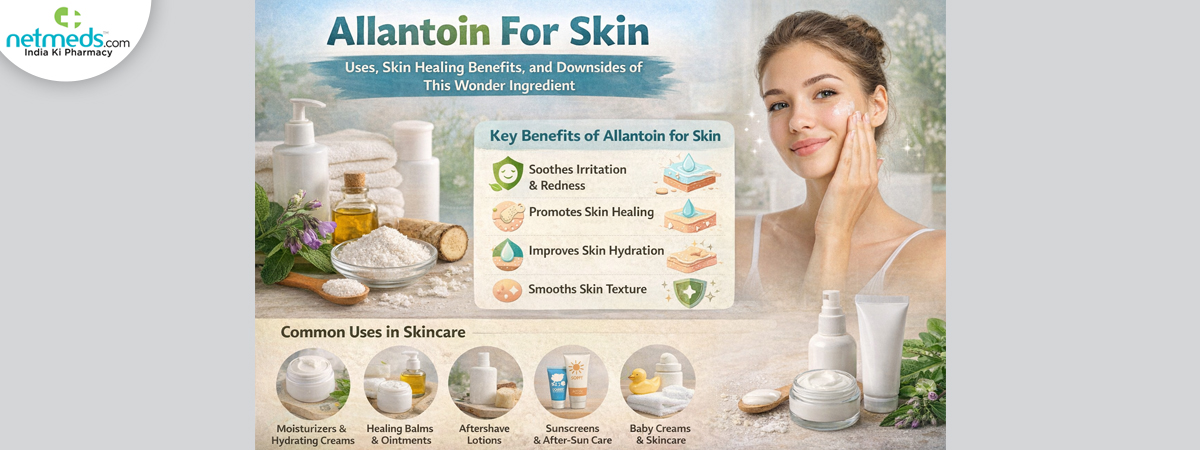
What Is Allantoin?
Allantoin is a skin-soothing compound naturally found in plants such as comfrey (Symphytum officinale) and also produced synthetically for cosmetic use. It has long been used in dermatology and skincare formulations because of its ability to promote skin repair, improve hydration, and reduce irritation.
Chemically, allantoin is classified as a keratolytic and skin-protectant ingredient, meaning it helps soften and shed dead skin cells while protecting and soothing the skin barrier.
Due to its gentle nature, allantoin is widely included in products such as moisturisers, serums, sunscreens, aftershaves, lip balms, baby skincare products, and healing creams.
Also Read: Glycolic Acid For Skin: Benefits, Uses And Side Effects
How Allantoin Works For The Skin
Allantoin works by supporting the skin’s natural repair process while improving moisture retention and skin texture. It gently softens the outer layer of the skin and encourages healthy cell regeneration.
Here is how allantoin benefits the skin:
Helps soften and smooth rough or dry skin
Supports the healing of minor skin irritation
Promotes cell regeneration and skin renewal
Protects the skin barrier from environmental stressors
Improves skin hydration and overall texture
These properties make allantoin particularly useful for sensitive, dry, and damaged skin types.
Why Dermatologists Recommend Allantoin?
Dermatologists often recommend allantoin because it is gentle, non-irritating, and suitable for almost all skin types. It helps calm inflammation, accelerate healing, and improve skin softness without causing harsh reactions.
Unlike some active ingredients that may irritate sensitive skin, allantoin works quietly in the background, repairing and strengthening the skin barrier over time.
Skin Healing Benefits Of Allantoin
Soothes Skin Irritation And Redness
One of allantoin’s most well-known benefits is its ability to calm irritated skin. It helps reduce redness, itching, and discomfort caused by environmental factors, dryness, or mild inflammation. This is why allantoin is frequently included in products designed for sensitive and reactive skin.
Promotes Skin Healing
Allantoin supports the skin’s natural healing process by stimulating healthy tissue growth. It is often used in formulations for minor cuts, burns, scrapes, and sunburn recovery. By encouraging cell regeneration, allantoin helps the skin repair itself more efficiently.
Improves Skin Hydration
Allantoin acts as a moisturising agent that helps the skin retain water. It prevents excessive dryness and keeps the skin soft, smooth, and comfortable. This makes it an excellent ingredient for dry skin types.
Smooths Rough And Uneven Skin
Allantoin has mild keratolytic properties, which means it helps remove dead skin cells from the surface. This gently exfoliating effect improves skin texture and smoothness without harsh irritation.
Supports Skin Barrier Protection
The skin barrier plays a crucial role in protecting the body from environmental stressors like pollution and bacteria. Allantoin helps strengthen and protect this barrier, improving the skin’s resilience.
Helps Calm Post-Procedure Skin
Allantoin is commonly used in post-treatment skincare after procedures such as chemical peels or laser treatments for its soothing and healing properties.
Common Uses Of Allantoin In Skincare
Allantoin is found in a wide range of skincare and cosmetic products, including:
Moisturisers and hydrating creams
Healing ointments and skin repair balms
Aftershave lotions and calming gels
Sunscreens and after-sun products
Lip balms and hand creams
Baby skincare products
Its multi-functional nature makes it a valuable ingredient in everyday skincare formulations.
Downsides And Possible Side Effects
Allantoin is generally considered very safe and well-tolerated, but in rare cases, some individuals may experience mild reactions.
Possible side effects include:
Mild skin irritation in extremely sensitive individuals
Temporary redness may occur if combined with strong active ingredients
Most people can use allantoin without any issues, especially when it is present in low concentrations commonly used in skincare products.
Precautions When Using Allantoin
Although allantoin is gentle, a few precautions can help ensure safe use:
Perform a patch test before using a new product
Avoid combining too many active ingredients at once
Follow product instructions carefully
Consult a dermatologist if you have severe skin conditions
These simple precautions can help maximise the benefits of allantoin while minimising potential irritation.
Conclusion
Allantoin is a powerful yet gentle skincare ingredient known for its soothing, moisturising, and skin-healing properties. From calming irritation and improving hydration to supporting skin repair and enhancing texture, allantoin offers a wide range of benefits for healthy skin.
Its ability to work well with other skincare ingredients while remaining safe for sensitive skin makes it a valuable addition to modern skincare formulations.
If you are looking for a skin-repairing ingredient that hydrates, protects, and restores your skin, allantoin may be a wonderful addition to your skincare routine.
 Previous