Achieving a healthy and glowing skin is a desire that transcends age and gender. While numerous skincare essentials promise amazing results, the basis of beautiful skin often lies in getting the right nutrition and targeted supplementation. Among a host of nutrients that offer skin health benefits, Vitamin B3 stands out as a surprising winner, conferring healing benefits for augmenting skin texture, elasticity, and overall radiance. In recent years, researchers have also focused on a connection between vitamin B3 and nicotinamide adenine dinucleotide, a compound associated with ageing, metabolism and longevity.
To Fadeaway Fine Lines And Look Youthful, Shop From Our Wide Range Of Skincare Products
So, is Vitamin B3 truly a new anti-ageing nutrient? While it is not “new” in the nutritional sense, emerging research suggests it may be increasingly important for supporting healthy ageing. Read more about this.
What Is Vitamin B3?
Vitamin B3 is a water-soluble vitamin that has gained immense attention in both the nutrition and skincare industries for its proven ability to nurture skin from inside out. Vitamin B3 not only promotes overall health but also addresses common skin concerns such as ageing, inflammation, and uneven texture.
Dive into this article to learn more about the benefits of vitamin B3 for unlocking your skin’s radiance and keeping its vitality and glow throughout the years.
Understanding Vitamin B3 And Skin Health
Vitamin B3 is available in several forms, with niacin (nicotinic acid) and niacinamide(nicotinamide) being the most important for beauty and skin health uses. This key nutrient holds a vital role in cellular energy production and DNA repair, making it key for sustaining healthy skin and functioning.
The role of vitamin B3 lies in its ability to restore cellular energy levels by restoring the NAD+ pool within skin cells. This, in turn, optimises mitochondrial function and skin regeneration processes.
What makes this nutrient more valuable for skin health is its uniqueness and gentleness. Unlike other skincare ingredients that may irritate, vitamin B3 is well-tolerated by most skin types and can be used consistently without significant adverse effects. Thereby making it a perfect choice for people seeking long-term skin health solutions through dietary intake and topical use.
Also Read: Retinol-Rich Anti-Ageing Foods: 5 Natural Ways to Achieve Youthful, Glowing Skin
Anti-Ageing Support
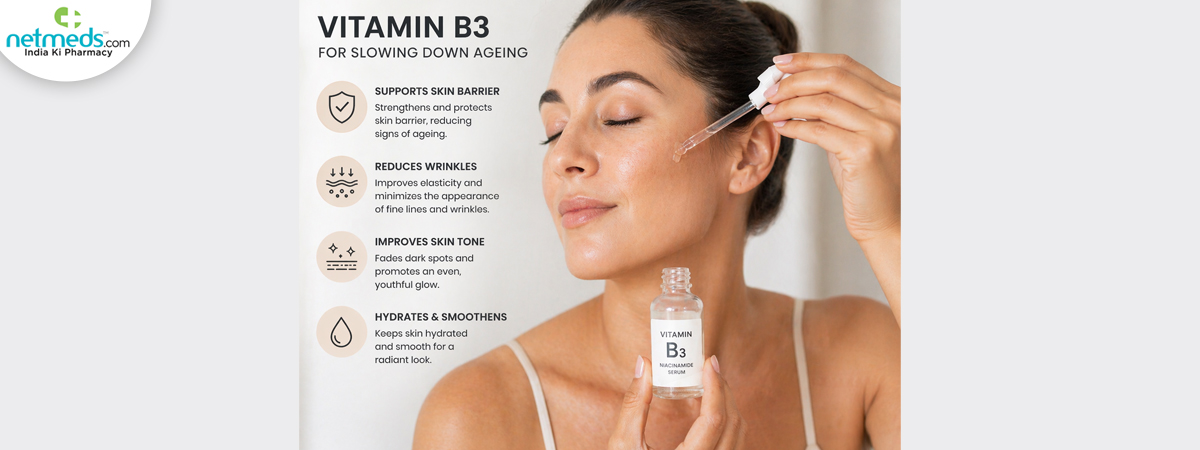
The primary benefit of vitamin B3 is its incredible ability to improve skin elasticity and slow down signs of ageing. It promotes collagen production, which keeps the skin firm and resilient. Adequate intake of vitamin B3 decreases the appearance of fine lines and wrinkles, while making your skin look youthful and radiant.
Eases Inflammation
Vitamin B3 is best known for its soothing anti-inflammatory properties, making it especially beneficial for irritated or sensitive skin. It can help calm redness associated with rosacea, acne, or environmental stressors, leading to a more balanced and even-toned appearance.
Minimised Pore Appearance
Pores become more visible with excess oil buildup. Vitamin B3 controls sebum production, which can lower pore congestion and make it less visible.
Acne Control
Thanks to its anti-inflammatory and oil-balancing effects, Vitamin B3 is highly effective in managing acne-prone skin. It may help reduce breakouts, calm active blemishes, and support faster healing of acne marks.
Skin Hydration
Vitamin B3 strengthens the skin’s moisture barrier, allowing it to lock moisture from deep within. This helps to keep skin soft, plump, and supple while reducing dryness and flaking.
Stronger Skin Barrier Protection
A healthy skin barrier is essential for resilient skin, and Vitamin B3 supports the production of ceramides and beneficial lipids. This helps protect the skin from pollutants, irritants, and moisture loss.
Sources of Vitamin B3
The safest and most natural way to get Vitamin B3 is through a wholesome diet.
Rich sources include:
Chicken
Turkey
Tuna
Salmon
Peanuts
Brown rice
Whole grains
Legumes
Seeds
Supplements
Some people use supplements such as niacin, niacinamide and nicotinamide riboside (NR). However, supplements should be taken under proper guidance, especially for deficiencies or specific health concerns.
Skincare Products
Topical niacinamide serums and creams are commonly used for anti-ageing and skin barrier support.
Also Read: Vitamin B3: Functions, Food Sources, Deficiencies and Toxicity
Is Vitamin B3 Better Than Other Anti-Ageing Nutrients?
Vitamin B3 is not a miracle nutrient and should not be viewed in isolation. Healthy ageing depends on:
Balanced diet
Sleep
Exercise
Stress control
Protein intake
Other nutrients such as Vitamin D, magnesium, omega-3s, zinc, and antioxidants. Vitamin B3 is best considered one important piece of a larger longevity strategy.
Side Effects of Vitamin B3
Vitamin B3 is generally safe at normal dietary levels, but excessive supplementation can cause side effects.
Niacin Side Effects
Skin flushing (warmth, redness, itching)
Headache
Dizziness
Stomach upset
High-Dose Risks
Liver stress
High blood sugar
Digestive irritation
Increased uric acid (may worsen gout)
Niacinamide Side Effects
Usually better tolerated than niacin, but high doses may still cause digestive discomfort or liver concerns.
Can Vitamin B3 Reverse Ageing?
No single nutrient can reverse signs of ageing; however, studies have shown that vitamin B3 controls biological processes associated with healthy ageing. It supports energy production, repair, and heals damaged skin. Always consider it as a complementary maintenance, but not a healing solution.
Conclusion
Vitamin B confers amazing health-benefiting qualities and improves skin health. However, its connection to NAD+ and cellular health has made vitamin B3 a powerful ingredient in slowing down ageing, improving cellular health, and repairing damaged skin cells.
References:
Niacinamide: A B vitamin that improves aging facial skin appearance
Donald L Bissett 1, John E Oblong, Cynthia A Berge
https://pubmed.ncbi.nlm.nih.gov/16029679/
ealthycell.com/blogs/articles/do-vitamin-b3-anti-aging-supplements-work?srsltid=AfmBOoqeTYt82j9eFkuXMtGcqmY6MkZNUmP1mnZ3izetHjFHcP7_lJF9
 Previous