Have you ever watched a yoga video, tried to copy the instructor and wondered, ‘Am I actually doing this pose correctly?’
You are not alone. Practising yoga at home is convenient, affordable and increasingly popular, but one major challenge remains: without a physical teacher present, it can be difficult to know whether your spine, knees, hips, shoulders or feet are properly aligned.
This is where Artificial Intelligence (AI) enters the yoga mat.
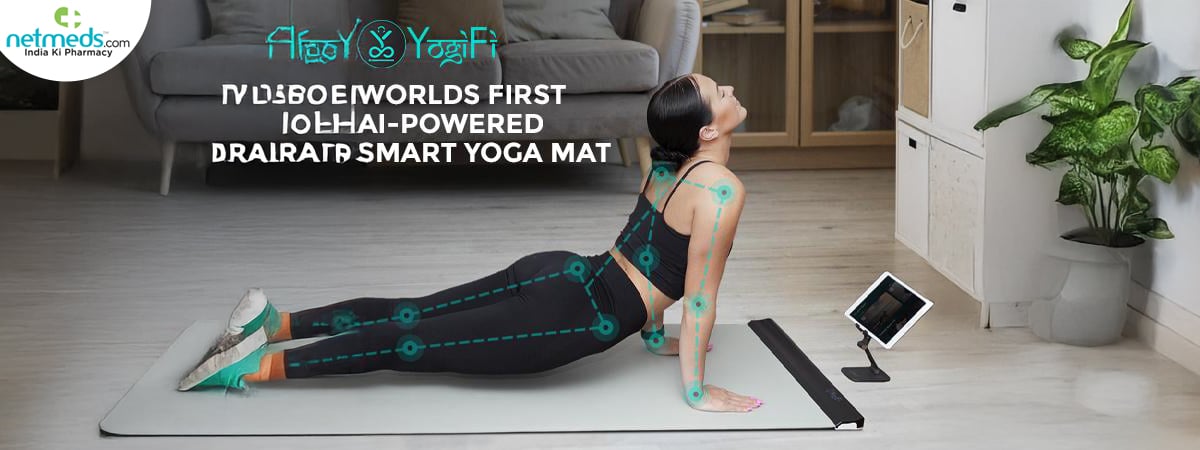
From smartphone cameras and computer-vision systems to smart yoga mats and personalised digital coaches, AI-powered yoga technology is becoming increasingly sophisticated. These systems can identify yoga poses, track body landmarks, analyse joint positions and, in some cases, provide real-time feedback when your alignment differs from a reference posture.
In 2026, researchers are going a step further. New studies are exploring AI systems that can recognise yoga poses and provide automated posture correction, including applications designed for people with physical disabilities.
But can AI really replace a yoga instructor?
Not quite.
AI can potentially become a useful supplementary tool for posture awareness and home practice, but it cannot fully replicate the judgement, experience and personalised safety assessment of a qualified yoga teacher or healthcare professional.
Also Read: Yoga For Beginners: 5 Easy Asanas To Initiate This Holistic Practice Right At Home
Let us understand how AI yoga works, what it can and cannot do, and whether this technology deserves a place in your 2026 wellness routine.
What Is AI Yoga?
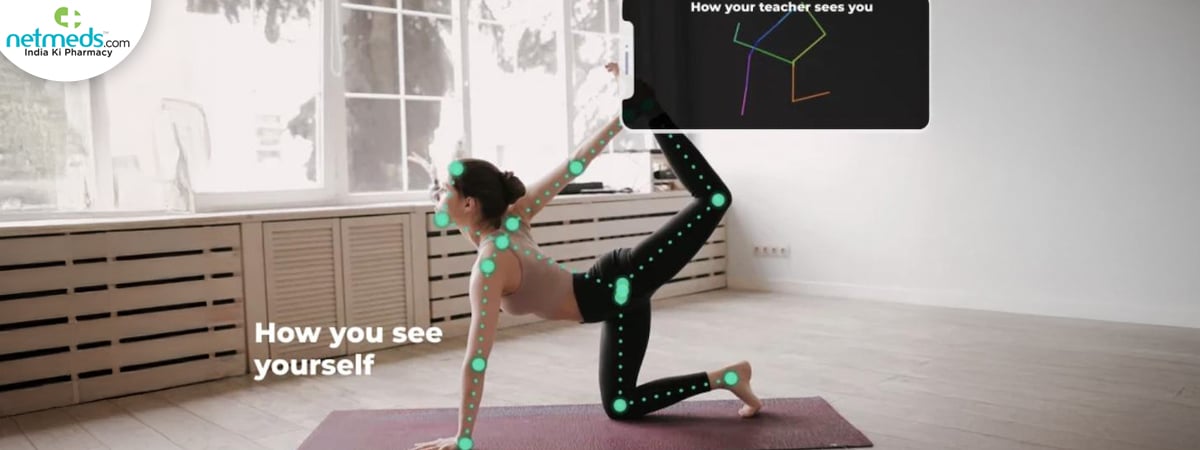
AI Yoga refers to yoga applications and systems that use artificial intelligence, computer vision, machine learning or motion-tracking technology to analyse a person's yoga practice.
Instead of simply showing you a video of an instructor performing an asana, an AI-powered system may use a camera to identify your body's key points, such as:
Head
Shoulders
Elbows
Wrists
Spine or torso
Hips
Knees
Ankles
The software then uses these body landmarks to estimate your posture and movement.
Some systems can compare your position with a reference pose and provide feedback such as:
“Lift your chest.”
“Bend your knee slightly.”
“Straighten your back.”
“Move your feet further apart.”
The sophistication varies considerably between platforms. Some systems simply identify which yoga pose you are attempting, while more advanced systems analyse alignment and movement over time.
How Does AI Correct Your Yoga Posture?
The technology behind AI yoga is largely based on computer vision and human pose estimation.
Here is a simplified version of how it works:
The Camera Captures Your Movement
A smartphone, tablet, laptop or other camera records your yoga practice. Depending on the system, the processing may happen on the device or through a connected service.
AI Detects Body Landmarks
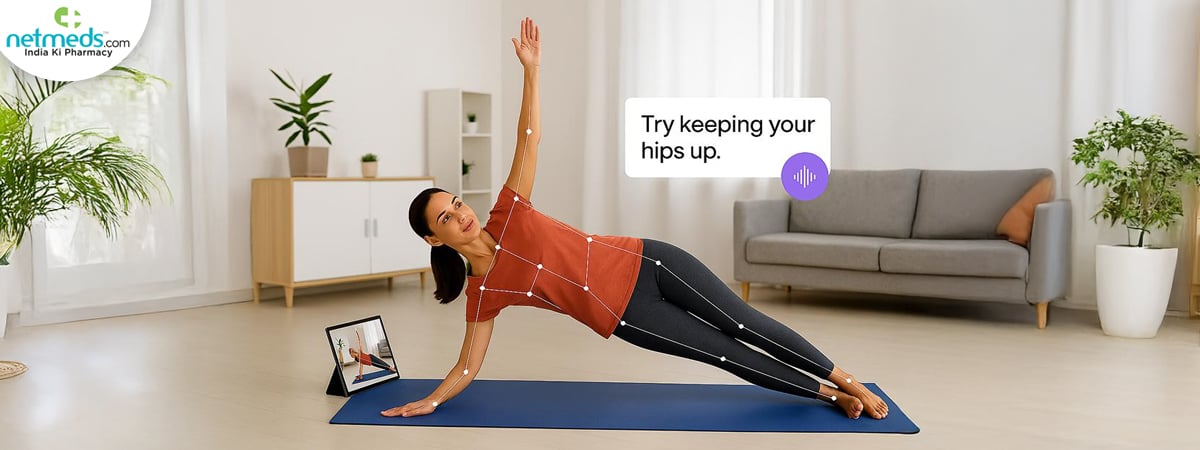
The software identifies key points on your body. Rather than understanding your body exactly like a human instructor does, the AI generally works with a digital representation or "skeleton" consisting of points and connections.
The System Analyses Joint Angles
The software can estimate relationships between different body landmarks.
For example, it may examine:
Knee angle
Elbow position
Hip alignment
Shoulder position
Relative position of limbs
Body orientation
Your Pose Is Compared With a Reference
The system can compare the detected posture with a predefined or learned representation of the yoga asana. If there is a significant deviation, the system may identify a potential alignment issue.
You Receive Feedback
Depending on the technology, feedback may appear as:
On-screen visual cues
Text instructions
Voice prompts
Alignment scores
Colour-coded body landmarks
Real-time corrections
A 2026 research framework described an AI system combining pose estimation, biomechanical features and temporal learning to detect yoga poses and generate visual, text-based and voice-based corrective feedback.
Also Read: Morning Yoga vs. Evening Yoga: Benefits, Comparison, and Best Time to Practice
Can AI Really Correct Yoga Posture?
Yes, but with important limitations.
Current AI systems can increasingly recognise yoga poses and identify certain measurable alignment deviations. A 2026 study in Scientific Reports investigated real-time yoga posture correction using deep learning and the MoveNet pose-estimation system, specifically exploring applications for people with physical disabilities and chair yoga.
Another 2026 paper in the International Journal of Yoga developed a multimodal approach to improve yoga pose recognition, highlighting the growing use of AI and computer vision for posture analysis.
This means AI-assisted posture correction is moving beyond a futuristic concept and into active research and development.
However, detecting a body position isn't the same as understanding the person performing it.
That distinction is extremely important.
7 Potential Benefits of AI-Powered Yoga
Provides Real-Time Feedback
One of the biggest advantages of AI yoga is immediate feedback. When practising alone, you may hold a pose incorrectly without realising it. An AI system can potentially alert you as you move away from a predefined alignment. This can make home practice more interactive than simply following a recorded video.
Makes Home Yoga More Interactive
Traditional online yoga classes generally require you to watch and imitate the instructor. AI can turn this into a two-way experience. Instead of simply watching the screen, you perform the pose while the technology analyses your movement and responds. This may make home workouts feel more personalised and engaging.
Helps Beginners Become More Body-Aware
Beginners often struggle to understand what instructions such as “square your hips” or “stack your shoulders over your wrists” actually mean. Visual AI feedback can potentially make these instructions easier to understand. It may show where your body is positioned and highlight differences from the intended posture.
Supports Consistent Practice
Having an interactive digital system available at home may make it easier for some people to maintain a regular routine. This can be especially useful for people who don't have access to a yoga studio or prefer exercising privately at home.
WHO notes that yoga can support balance, flexibility, strength, mobility and mental well-being, and its 2026 International Day of Yoga focus was “Yoga for Healthy Ageing.”
AI could potentially help make guided yoga more accessible to people practising at home.
Can Track Progress
Some digital yoga systems may allow users to monitor practice history and performance indicators.
Depending on the platform, this could include session duration, pose accuracy, repetition, hold time, mobility measurements, and practice frequency. Tracking can help users identify patterns and stay motivated.
However, a numerical "pose score" should not automatically be interpreted as a medical or clinical assessment.
May Improve Accessibility
One particularly interesting development is the use of AI yoga systems for people with physical disabilities.
A 2026 Scientific Reports study specifically explored real-time posture correction for people with physical disabilities and chair-yoga applications. This suggests that AI could eventually help adapt yoga instruction for people who may not be able to follow conventional standing-pose demonstrations.
Personalisation Could Become More Sophisticated
The next generation of AI yoga may move beyond simple pose recognition.
Future systems could potentially consider age, mobility, experience level, previous practice patterns, range of motion, preferred practice style, and individual goals. The result could be a more personalised digital yoga experience.
AI Yoga vs Traditional Yoga Instructor
So, should AI replace your yoga teacher?
No, it should not replace a yoga instructor.
AI and human instruction have different strengths.
AI Yoga Technology
Human Yoga Instructor
Provides automated feedback
Provides personalised observation
Can monitor measurable body landmarks
Can understand individual context
Available at home
Can physically demonstrate modifications
Can track practice data
Can respond to discomfort and concerns
Consistent digital feedback
Human judgement and experience
Convenient and scalable
Personal interaction and encouragement
An experienced instructor can observe more than joint angles.
They can notice whether you are:
Holding your breath
Experiencing discomfort
Compensating because of limited mobility
Fatiguing during the pose
Moving too aggressively
Struggling with balance
Performing an exercise unsuitable for your current condition
AI may not reliably recognise all these factors.
What Are the Limitations of AI Yoga?
Despite impressive advances, AI yoga is still developing.
Camera Angle Matters
Computer-vision systems may perform differently depending on camera position.
A pose that looks correct from the front may reveal a completely different alignment issue from the side.
Lighting Can Affect Detection
Poor lighting, shadows or low image quality can make it harder for software to identify body landmarks accurately.
Clothing and Occlusion Can Create Problems
Loose clothing, blankets, furniture or overlapping limbs can interfere with pose estimation.
Different Bodies Move Differently
There is no single "perfect" body shape or range of motion.
Age, anatomy, flexibility, previous injuries and mobility limitations can all affect how a person safely performs a yoga pose. An AI system trained around a reference posture may incorrectly label a healthy variation as an error.
AI Does Not Diagnose Injuries
An AI yoga app may identify that your knee angle differs from its reference position.
It cannot necessarily determine why. Pain, injury, joint instability, muscle weakness or another underlying issue may require professional assessment.
Pose Accuracy Does Not Equal Safety
A person can technically match the visual shape of an asana and still perform it unsafely. This is why AI feedback should be considered guidance, not a diagnosis or guarantee of injury prevention.
Can AI Yoga Prevent Injuries?
This is one of the biggest questions surrounding the technology.
In theory, identifying alignment deviations could help users become more aware of potentially problematic movements.
However, there is not yet enough evidence to claim that consumer AI yoga systems reliably prevent injuries.
Research is increasingly investigating automated posture correction, but many current studies focus on technical performance, such as pose recognition accuracy, rather than long-term clinical outcomes.
For example, recent research has demonstrated high accuracy in recognising yoga poses using advanced computer-vision models, but recognition accuracy does not automatically establish that the technology improves health outcomes.
More research is needed to determine whether AI-guided corrections actually improve technique, reduce injury rates or produce better long-term outcomes.
Is AI Yoga Safe for Beginners?
It can be useful for beginners when used appropriately.
If you are new to yoga:
Start with beginner-friendly poses.
Use a stable, well-lit environment.
Position the camera so your entire body is visible.
Avoid attempting advanced poses simply because the app recommends them.
Stop if you experience pain, dizziness or unusual discomfort.
Don't ignore instructions from your healthcare professional.
Consider learning foundational techniques from a qualified instructor.
Most importantly, don't allow an AI score to override what your body is telling you.
What Does the Future of AI Yoga Look Like?
The future could be much more sophisticated than simply receiving a message saying, “Straighten your knee.”
AI yoga may eventually combine:
Computer vision + wearables + personalised training + voice coaching + progress tracking
A smart system could potentially analyse your movement throughout an entire session, identify recurring patterns and adapt future sessions according to your mobility and experience.
Research is already exploring advanced architectures, including transformer-based models for yoga pose identification. One 2026 study reported strong recognition performance using a Vision Transformer approach across public yoga datasets.
At the same time, accessibility is becoming an important research direction. AI-powered systems designed around chair yoga and physical disabilities suggest that technology could eventually make personalised yoga guidance available to a wider range of users.
5 Tips for Using AI Yoga Effectively
Use AI as an Assistant
Think of AI as a digital helper rather than your personal yoga therapist.
Learn the Basics First
Understand basic alignment and breathing before relying heavily on automated corrections.
Don't Chase a Perfect Score
A higher AI score doesn't necessarily mean a healthier body or better yoga practice.
Listen to Your Body
Pain, dizziness or significant discomfort should never be ignored simply because an app says your pose is correct.
Seek Human Guidance When Needed
If you have an injury, chronic pain, significant mobility limitations or a medical condition, seek appropriate professional advice before beginning or modifying your practice.
Is AI Yoga Worth Trying in 2026?
Yes, potentially, especially for home practitioners who want interactive feedback.
AI yoga can make digital practice more engaging, provide real-time visual guidance and help users become more aware of measurable aspects of their posture.
But the technology is still evolving.
The most sensible approach is to combine AI convenience with human expertise. Use technology to supplement your yoga practice rather than treating it as an infallible instructor.
And remember: yoga isn't simply about making your body look like a reference image. It also involves breathing, awareness, balance, mindfulness and moving within an appropriate range for your individual body.
Conclusion
AI Yoga in 2026 represents an exciting intersection of ancient practice and modern technology.
Computer vision and machine learning are becoming increasingly capable of recognising yoga poses, analysing body landmarks and generating real-time posture feedback. Current research, including 2026 studies on real-time correction and accessible chair-yoga systems shows that this field is moving rapidly.
However, AI still has limitations. It may struggle with camera angles, unusual body positions, occlusion and individual anatomical differences. More importantly, identifying a posture is not the same as understanding a person's physical condition.
So, can technology correct your yoga posture?
It can help you recognise and adjust certain alignment issues but it should not replace a qualified yoga instructor or medical professional.
The future of yoga may not be AI versus humans. It could be AI and human expertise, combining technology's ability to monitor movement with the judgement, empathy and personalised guidance of an experienced instructor.
In other words, your smartest yoga practice in 2026 may be the one that uses technology without forgetting to listen to your own body.
References:
1. World Health Organization – Yoga for Healthy Ageing: Global Practice and Clinical Evidence
Read the WHO evidence overview
2. Scientific Reports – Real-Time Yoga Posture Correction Using Deep Learning
A 2026 study exploring real-time yoga posture correction, including applications for people with physical disabilities and chair yoga.
Read the Scientific Reports study
3. International Journal of Yoga – Multimodal AI for Yoga Pose Recognition
A 2026 study examining AI-based yoga pose recognition using a hybrid computer-vision approach.
Read the International Journal of Yoga research
4. YogiFormer – Vision Transformer for Yoga Pose Identification
2026 research exploring Vision Transformer technology for recognising yoga poses from skeletal keypoints.
5. AI Yoga – Human Pose Estimation for Real-Time Asana Correction
A 2026 research project exploring computer vision and human pose estimation for automated yoga posture feedback.
 Previous