Ugadi and Gudi Padwa mark the beginning of the new year according to the Hindu lunar calendar. On this day, Ugadi pachadi is served in the households of Andhra, Karnataka, Maharashtra, and other northern parts of the country. This mixture made with neem flowers, tangy raw mango, jaggery, salt, chilli powder, and tamarind signifies the importance of all tastes in life. Ugadi is celebrated with great fervour and involves making rich culinary delicacies comprising different tastes, sweet, salt, sour, bitter, and spicy. Right from sweet and tangy mango pachadi, crispy pornam poli, and spicy kodhimbir vada to sesame ladoos; the range is many, but it’s the Ugadi Pachadi- a refreshing and energising summer drink, that tops them all.
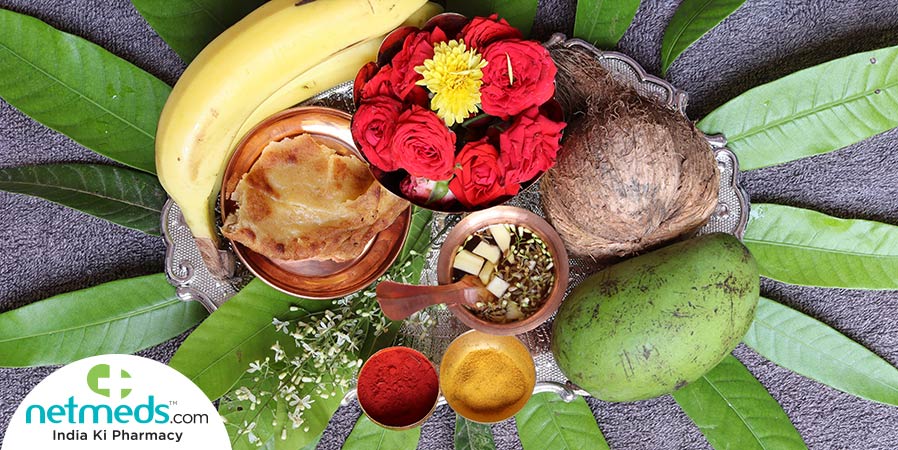
People begin the celebration with the pachadi, a festive drink that blends six essences and flavours. It is a translucent drink made of raw mango, tamarind, neem flowers, jaggery, salt, green chillies, and water. The proportions of ingredients in the drink signify the six emotions and tastes of life- jaggery for happiness, neem flower for sadness, while tamarind denotes unpleasantness, mango for surprise, green chillies for anger, and salt stands for fear.
Also Read: Kashaya Rasa In Ayurveda: 7 Powerful Benefits, Best Foods, and Precautions for Optimal Health
The Symbolism Behind Ugadi Pachadi
Ugadi Pachadi is not just a festive preparation but a thoughtful reminder of life’s emotional spectrum. Each ingredient represents a unique feeling that one is likely to experience in the coming year, encouraging acceptance and balance. By consuming this dish at the start of the new year, people symbolically prepare themselves to embrace joy, sorrow, anger, fear, surprise, and discomfort with equal grace. This age-old tradition reflects a deep philosophical understanding that life is a blend of contrasting experiences, and true well-being lies in acknowledging and harmonising them rather than resisting any single emotion.
Also Read: Rasa In Ayurveda: 6 Tastes And Their Incredible Health Benefits For Mind-Body Balance
The Six Tastes Of Life
According to Ayurveda, all six tastes are necessary for total well-being. Here is how each taste contributes to our overall health.
Sweet
All of us like eating sweet treats. Our body needs sugary stuff to keep our energy levels going, regulate hormonal functions, balance fluids, repair tissues, and soothe nerves. However, it is important to eat sugar in the right amounts from the right sources.
Sources:
Eat fruits, whole grains, milk, palm sugar, and jaggery to treat your sweet cravings.
Salt
Salt is a must-have ingredient in all our dishes. Salt or sodium plays an imperative role in balancing electrolytes in our bodies. Salt is crucial for hydration, to manage blood pressure, heart health, and elimination of waste, skin health,h and promotes overall well-being.
Sources:
Fruits, vegetables, and dairy products are natural sources of salt. However, remember to limit added salt.
Sour
Sour is hot, intense, sharp,se and tickles our taste buds. Sour foods aid in promoting digestion and absorption, help with circulation and elimination, boost energy, strengthen the heart, sharpen the senses, and also help in absorbing vital minerals like iron from the food.
Sources:
All citrus fruits, curd, sour cream, and cheese are good sources.
Bitter
The bitter taste is often less relished by most of us, but it promotes the appetite and brings out the flavour of other tastes in the food. Indeed, bitter-tasting foods are a powerful detoxifier and possess strong antiseptic, antiviral,l and antibiotic properties. In addition, it is also helpful in reducing weight, fluid retention, treating skin disease, acidity, and nausea.
Sources:
Dark green vegetable, bitter gourd, black coffee, and dark chocolate.
Pungent
Pungent is the hottest of all the 6 tastes, and it is very intense. Pungent taste helps in promoting digestion, detoxification, clearing the sinuses, aids in circulation, boosts metabolism,m and eases muscle pain.
Sources:
Chilli pepper, garlic, onion, black pepper, er and cayenne.
Astringent
Astringent gives a puckering sensation in the mouth, and it is one of the least enjoyed tastes. It gives a dry feeling on the tongue, due to the shrinking of pores, and this effect is called astringent. Astringent taste helps in absorbing water, tightening tissue, and burning fat.
Sources:
Lentils, dried beans, pomegranate, and tea.
Recipe
Ugadi Pachadi
There are no right proportions for making this recipe; you can add these 6 ingredients less or more as per your choice and taste.
Ingredients
1 tsp tamarind
¼ cup water for soaking tamarind
⅓ cup of water to be added later
¼ cup jaggery
⅓ cup finely chopped raw mangoes
2 tbsp neem flowers
¼ tsp chopped green chillies
¼ teaspoon salt or add as required
Method
Soak 1 tablespoon tamarind in ¼ cup water for about 30 minutes. Then extract the tamarind pulp and keep it aside.
In a bowl, add 1 cup of water, jaggery powder, and mix well so that the jaggery dissolves.
Now add finely chopped raw mangoes, neem flowers, green chillies,s and salt as required.
Add the tamarind pulp to this mixture and blend well.
Offer the Ugadi pachadi as naivedyam to deities and then serve it to your family.
Nutritional Facts
This pachadi is not only a festive drink, but it is valued as a great health supplement and summer elixir. The antifungal properties of neem flower work as a detoxifier and combat harmful pathogens. While raw mangoes are loaded with vitamin C, magnesium, and calcium, they boost cardiac health and regulate blood pressure and diabetes. The richness of polyphenols in tamarind helps shed excess kilos, and jaggery pumps iron stores and serves as an instant source of energy.
References:
https://www.thehindu.com/life-and-style/celebrating-ugadi-in-all-its-wholeness/article69377594.ece
https://www.naditarangini.com/gudi-padwa-through-an-eye-of-ayurved/
 Previous