




Netmeds First Membership
Introduction About VERTIN 16MG TABLET
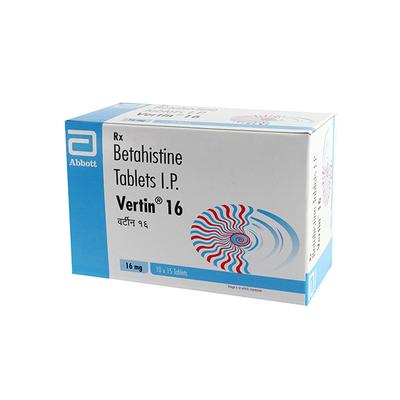
Vertin 16mg Tablet is a medicine that contains Betahistine and belongs to the group of vestibular function modulators. It is primarily recommended for individuals experiencing occasional sensations of dizziness, spinning, or imbalance, helping support inner ear circulation, balance awareness, and spatial orientation. In patients with recurring balance concerns, it may assist in maintaining stability during daily activities and improve comfort while moving, as part of a medically supervised care plan.
Vertin tablet, works by supporting inner ear blood flow, pressure balance, and interaction with histamine pathways related to balance signals. This helps the body maintain better awareness of movement and orientation, potentially reducing episodes of lightheadedness or mild spinning sensations. By aiding inner ear function, Vertin may support stability in daily routines and contribute to overall comfort during physical activity.
Vertin 16mg Tablet should be used with care in children, elderly, or individuals with chronic health conditions, with dosage adjustments guided by a healthcare professional. The tablet is usually taken orally with water, at the same time each day, with or without food depending on comfort. Maintaining a consistent daily routine supports steady balance awareness. If a dose is missed, it should be taken as soon as remembered unless the next scheduled dose is near.
This medicine should be used with caution in individuals with heart disease, kidney issues, or other chronic conditions. Inform your doctor of any existing medications or health concerns before starting. Use during pregnancy or breastfeeding should only occur under medical supervision to ensure safety for both mother and child.
The most common body responses may include mild sensations of fullness, digestive changes, or temporary lightheadedness as the body adjusts. Seek immediate medical attention for severe reactions such as sudden balance loss, severe dizziness, or allergic reactions like swelling of the face, lips, or difficulty breathing.
Uses Of VERTIN 16MG TABLET
It is used to manage:
- Dizziness (vertigo)
- Ringing in the ears (tinnitus)
- Hearing instability or mild hearing loss
Benefits of VERTIN 16MG TABLET
Supports Relief from Vertigo-Related Sensations
Provides informational guidance for individuals experiencing spinning or imbalance sensations.
Helps Manage Episodes of Dizziness
Offers context for those noticing intermittent lightheadedness or off-balance feelings.
Usage in Inner Ear Balance Disturbances
Addresses conditions linked with the inner ear that may influence stability and spatial awareness.
May Assist with Ringing or Buzzing Sensations in the Ears
Shares knowledge about managing ear-related sensations that can accompany balance issues.
Supports Better Balance in Daily Activities
Helps individuals understand how balance awareness can be maintained in routine movements.
Helps Improve Comfort During Movement
Provides educational context on supporting smoother transitions while standing, walking, or turning.
Enhances Stability in Individuals with Balance Concerns
Offers insight into daily lifestyle and activity alignment for those experiencing occasional imbalance.
May Reduce Discomfort Linked to Spinning Sensations
Guides users in recognizing potential patterns and considerations when navigating everyday tasks.
How VERTIN 16MG TABLET Works
Acts as a Histamine Analogue in the Inner Ear
Vertin 16 mg Tablet contains Betahistine, which functions similarly to histamine. It primarily acts on histamine receptors (H1 and H3) in the inner ear, helping regulate balance and vestibular function.
Improves Blood Flow in the Inner Ear (Cochlea)
The medication promotes dilation of blood vessels in the inner ear, enhancing microcirculation within the cochlea. This improved blood flow helps reduce pressure and fluid imbalance associated with vertigo.
Reduces Endolymphatic Pressure
By improving inner ear circulation, Betahistine helps lower excess endolymphatic fluid pressure. This is particularly beneficial in conditions like Ménière’s disease, where fluid buildup contributes to symptoms.
Modulates Histamine Receptors (H1 Agonist & H3 Antagonist Action)
Betahistine stimulates H1 receptors (vasodilation effect) and blocks H3 receptors (increasing histamine release). This dual action enhances vestibular compensation and improves balance control.
Enhances Vestibular Compensation Mechanism
The medicine supports the brain’s ability to adapt to changes in balance signals from the inner ear, helping reduce dizziness and vertigo episodes over time.
Helps Reduce Frequency and Severity of Vertigo Attacks
By improving inner ear function and circulation, Vertin 16 mg helps decrease the intensity and recurrence of vertigo symptoms, supporting better daily functioning.
How to use VERTIN 16MG TABLET
Recommended Dosage Guidelines
- Provides clear guidance on typical intake routines as advised by healthcare professionals.
- Helps users understand daily use under medical supervision.
How to Take Vertin 16mg Tablet
- Explains the method of intake in a simple, easy-to-follow format.
- Swallow with a full glass of water for comfortable intake.
When and How Often to Take the Tablet
- Offers guidance on timing and frequency for consistent daily use.
- Take at the same time each day to support balance awareness.
Taking Vertin Tablet with Meals
- Shares suggestions for intake alongside meals if recommended.
- Supports comfort and reduces potential digestive discomfort.
Tips for Following a Consistent Dosage Routine
- Highlights practical ways to maintain adherence, such as linking intake to daily habits.
- Supports stable balance perception throughout daily activities.
Side Effects Of VERTIN 16MG TABLET
Common Side Effects:
- Headache
- Nausea
- indigestion(dyspepsia)
When to Consult Your Doctor About Vertin 16mg Tablet:
- Allergic reactions such as,Red or lumpy skin rash,Inflamed or itchy skin, Swelling of face, lips, tongue, or neck,
- Difficulty breathing,
- Drop in blood pressure
How To Manage Side Effects
Headache
- Stay Hydrated: Drink plenty of water throughout the day to help ease headache symptoms.
- Rest in a Quiet Environment: Minimize noise and bright lights by resting in a calm, dark room.
- Use Over-the-Counter Pain Relief: Consult your doctor about using mild pain relievers like acetaminophen to alleviate headaches.
- Avoid Stressful Activities: Limit activities that increase stress or physical exertion when experiencing headaches.
- Seek Medical Advice: Contact your healthcare provider if headaches become severe, persistent, or are accompanied by other symptoms.

Nausea And Vomiting
- Keep Yourself Hydrated: Take small, frequent sips of water, ginger tea, or clear soups to control dehydration.
- Eat Light Foods: Choose simple, bland foods like toast, crackers, or plain rice that are easy on the stomach.
- Avoid Strong Smells and Spicy Foods: These may trigger or worsen nausea.
- Take Adequate Rest: Sit or lie down in a comfortable position and avoid sudden movements.
- Consult a doctor if Needed: Seek medical advice if nausea is severe, does not improve, or is accompanied by repeated vomiting, fever, blood, or dehydration.
Warning & Precautions

Pregnancy
ContraindicatedVertin 16 mg Tablet is not recommended during pregnancy unless clearly advised by the doctor. There is limited safety data available, and the potential risk to the baby is unknown. Your doctor will decide only if the benefits outweigh the risks. Hence, consult your doctor before taking it.

Breastfeeding
Use with CautionVertin 16 mg Tablet should be used with caution during breastfeeding and only if advised by the doctor. It is not known whether the medicine passes into breast milk. Your doctor will assess the benefits and potential risks before recommending its use. Hence, consult your doctor before taking it.

Driving and Using Machines
Use with CautionVertin 16 mg Tablet may cause drowsiness or dizziness. It can affect your alertness and reaction time. Do not drive or use machines until you know how this medicine affects you.consult your doctor before taking it.

Kidney
Use with CautionVertin 16 mg Tablet should be used with caution in patients with kidney impairment. No dose adjustment is generally required based on available data. However, consult your doctor before taking this medicine.

Liver
Use with CautionVertin 16 mg Tablet should be used with caution in patients with liver impairment. No specific dose adjustment is required based on available data. However, consult your doctor before taking this medicine.

Allergy
ContraindicatedDo not take Vertin 16 mg Tablet if you are allergic to betahistine or any of the other ingredients in the formulation.

Lungs
Use with CautionVertin 16 mg Tablet should be used with caution in patients with asthma, as it may worsen the condition. Your doctor may monitor your condition during management. However, consult your doctor before taking this medicine.

Use In Pediatrics
ContraindicatedVertin 16 mg Tablet is not recommended for use in children and adolescents below 18 years of age due to insufficient data on safety and efficacy. Consult your doctor before taking this medicine.

Use In Geriatrics
Use with CautionVertin 16 mg Tablet should be used with caution in elderly patients. No dose adjustment is generally required; however, medical supervision is recommended. Consult your doctor before taking this medicine.
Other Warnings for VERTIN 16MG TABLET
Before taking Vertin 16 mg Tablet, inform your doctor if you have:
- History of stomach ulcer or digestive problems
- Low blood pressure
Who should not take VERTIN 16MG TABLET
It is not recommended for patients with a history of:
- adrenal gland tumour (phaeochromocytoma)
Drug - Drug interaction
Antihistamines (e.g., Cetirizine, Loratadine)
- Interaction: Vertin 16 mg Tablet may theoretically influence the effects of antihistamines, and vice versa.
- Effects: Possible alteration in symptom response due to overlapping histamine pathways.
- Management: Inform your healthcare provider if you are using antihistamines alongside Vertin 16 mg Tablet.
Monoamine Oxidase Inhibitors (MAOIs, e.g., Selegiline, Phenelzine)
- Interaction: MAOIs may increase the exposure of Vertin 16 mg Tablet in the body.
- Effects: Potential changes in how the body processes Vertin 16 mg Tablet.
- Management: Discuss current or recent MAOI use with your healthcare provider.
Other Medicines
- Interaction: No clinically significant interactions with other commonly used medicines have been reported in vivo.
- Effects: Standard drug metabolism is generally unaffected, but theoretical interactions may exist.
- Management: Always inform your healthcare provider about all prescription, over-the-counter, or herbal products you are taking.
Cytochrome P450 Enzyme Interactions
- Interaction: In vitro studies indicate that Vertin 16 mg Tablet is not expected to inhibit cytochrome P450 enzymes in vivo.
- Effects: Minimal likelihood of affecting the metabolism of other medicines through this pathway.
- Management: No dose adjustments are generally required based on CYP450 interactions.
Synopsis
| Drug | : | Betahistine |
| Pharmacological Category | : | Histamine analogue |
| Therapeutic Indication | : |
Dizziness (vertigo), Ringing in the ears (tinnitus), Hearing instability or mild hearing loss |
| Dosage Forms | : | Tablet, Oral disintegrating tablet, Oral disintegrating Strip |
More Information
1)Why Is Vertin 16 mg Tablet Recommended for Balance Problems in Remote Workers?
Real-Time Symptom Tracking
Vertin 16 mg Tablet is used to address symptoms such as dizziness, vertigo, and imbalance. Tracking when these symptoms occur—especially during long hours of screen use—helps healthcare providers understand patterns and symptom triggers.
Remote Consultations and Telemedicine
Healthcare providers can monitor patients experiencing balance issues through remote consultations. Vertin 16 mg Tablet usage can be assessed alongside symptom tracking to understand its effects.
Personalized Health Monitoring
Monitoring daily activity, sleep, and symptom severity while on Vertin 16 mg Tablet allows healthcare providers to gain insights into the impact of lifestyle and screen time on balance.
Early Detection of Changes
Symptom tracking with Vertin 16 mg Tablet helps identify changes in balance early, allowing healthcare providers to understand progression and patterns of dizziness or vertigo.
Improved Symptom Management
Tracking and logging responses to Vertin 16 mg Tablet helps maintain consistent records of symptom intensity and duration, providing a clear view of patient experiences.
Enhanced Patient Engagement
Patients using Vertin 16 mg Tablet with monitoring may feel more aware of symptom patterns, supporting better awareness of posture, breaks from screen time, and daily activity levels.
Data-Driven Insights for Providers
Analyzing symptom patterns, screen-time triggers, and responses to Vertin 16 mg Tablet provides healthcare teams with data to better understand balance challenges in remote workers.
Convenience and Accessibility
Remote monitoring makes it easier for patients to maintain oversight of balance issues while using Vertin 16 mg Tablet, even when working from home or in remote locations.
2)Does Vertin 16 mg Tablet Help with Dizziness Caused by Long Screen Hours?
Symptom Relief Monitoring
Vertin 16 mg Tablet addresses dizziness, vertigo, and imbalance commonly experienced by people with extended screen exposure. Recording symptoms helps track intensity and frequency.
Real-Time Symptom Tracking
Documenting dizziness episodes while using Vertin 16 mg Tablet allows healthcare providers to analyze patterns linked to prolonged screen use.
Remote Consultations and Telemedicine
Healthcare providers can review symptom logs and Vertin 16 mg Tablet usage remotely to understand the patient’s experience with screen-related dizziness.
Personalized Health Monitoring
Monitoring sleep patterns, screen time, posture, and daily activity while using Vertin 16 mg Tablet provides insights into how lifestyle factors interact with dizziness.
Early Detection of Changes
Tracking symptoms with Vertin 16 mg Tablet helps detect any changes or worsening of dizziness early, giving providers a clearer picture of symptom trends.
Consistent Symptom Logging
Maintaining records while on Vertin 16 mg Tablet ensures healthcare teams have a complete view of episodes, intensity, and potential triggers.
Enhanced Patient Engagement
Patients monitoring their symptoms alongside Vertin 16 mg Tablet usage gain awareness of patterns related to screen time and balance, encouraging better attention to daily habits.
Data-Driven Insights for Providers
Healthcare teams can use the logged data on screen time, symptom severity, and response to Vertin 16 mg Tablet to identify trends and provide better insights into dizziness management.
Convenience and Accessibility
Remote monitoring allows continuous oversight of balance-related symptoms in patients using Vertin 16 mg Tablet, even during long hours of work-from-home routines.
FAQs About VERTIN 16MG TABLET
Q: What is Vertin 16 mg Tablet ?
A: Vertin 16 mg Tablet is a medication used for symptoms such as dizziness, vertigo, and balance discomfort, commonly associated with inner ear conditions like Ménière’s syndrome.
Q: How does Vertin 16 mg Tablet work?
A: Vertin 16 mg Tablet works by improving microcirculation in the inner ear, which helps regulate pressure and may influence the perception of balance and spatial orientation.
Q: Who should consult a doctor before using Vertin 16 mg Tablet?
A: Patients with allergies to betahistine, stomach ulcers, asthma, low blood pressure, or high blood pressure caused by adrenal gland tumors should consult their doctor before using Vertin 16 mg Tablet.
Q: Is Vertin 16 mg Tablet suitable for children and adolescents?
A: Vertin 16 mg Tablet is not recommended for use in children and adolescents below 18 years of age due to limited safety and efficacy data.
Q: Can elderly patients use Vertin 16 mg Tablet?
A: Elderly patients can use Vertin 16 mg Tablet without a standard dose adjustment, but caution and supervision are generally advised.
Q: Is Vertin 16 mg Tablet safe during pregnancy?
A: Vertin 16 mg Tablet is not recommended during pregnancy unless specifically advised by a healthcare provider, as limited data is available on safety.
Q: Can Vertin 16 mg Tablet be used during breastfeeding?
A: Vertin 16 mg Tablet should be used with caution during breastfeeding, and only under the guidance of a healthcare professional, as it is not known if the drug passes into breast milk.
Q: Does Vertin 16 mg Tablet affect kidney or liver function?
A: Available data suggest that Vertin 16 mg Tablet generally does not require dose adjustments in patients with kidney or liver impairment. Caution is advised, and professional guidance is recommended.
Q: Can Vertin 16 mg Tablet cause dizziness or drowsiness?
A: Vertin 16 mg Tablet is not typically associated with drowsiness, but some patients may experience mild dizziness due to individual response.
Q: Does Vertin 16 mg Tablet affect the ability to drive or use machinery?
A: Vertin 16 mg Tablet itself is not known to impair driving or machine operation. However, dizziness or vertigo related to underlying conditions may affect alertness.
Q: What are the common side effects of Vertin 16 mg Tablet?
A: Commonly reported side effects include mild nausea, headache, or indigestion. Serious allergic reactions are rare and require immediate medical evaluation.
Q: How can symptoms be monitored while taking Vertin 16 mg Tablet?
A: Tracking episodes of dizziness, vertigo, and balance fluctuations, along with lifestyle factors such as screen time and daily activity, can provide useful insights for healthcare providers.
Q: Can I drink alcohol while taking Vertin 16 mg Tablet?
A: Consumption of alcohol while using Vertin 16 mg Tablet may influence alertness or dizziness. It is advisable to discuss alcohol intake with your healthcare provider while using this medicine.
References
1) KD Tripathi. Histamine and Antihistaminics. Drugs Essentials of medical pharmacology. 8th edition. 2013. Page –178
2) C Della Pepa 1, G Guidetti 1, M Eandi 1. Betahistine in the treatment of vertiginous syndromes: a meta-analysis. National Library of Medicine, National Center for Biotechnology Information. PubMed central 2006 Aug. [Accessed date 27/03/2026] 
3) Adrian James, Martin J Burton. Betahistine for Ménière's disease or syndrome. National Library of Medicine, National Center for Biotechnology Information. PubMed central 2001 Jan 22. [Accessed date 27/03/2026] 
4) Accord Healthcare. Betahistine dihydrochloride 16 mg tablets. [ revised in June 2025] [Accessed date 27/03/2026]
5) Sandoz B.V. Betahistine Sandoz 16 mg, tabletten.[Revised date Oct 2021] [Accessed date 27/03/2026]
6) Meiji Pharma Spain. Betahistine dihydrochloride 16 mg Tablets. Revised date Feb 2024] [Accessed date 27/03/2026]
Author Details