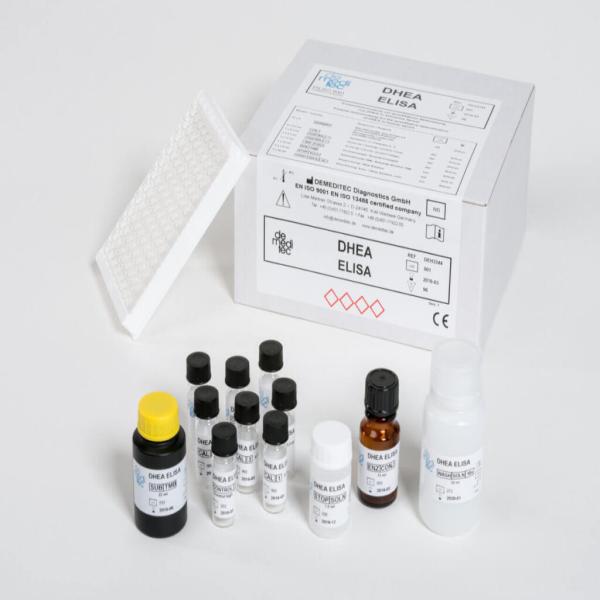
Toxoplasma IgG vet ELISA 1's

MRP ₹61,140.00 (Inclusive of all taxes)
Deliver to

Netmeds First Membership

Starting at just ₹[] for 3 months.
View Plans

Description

The Toxoplasma IgG vet ELISA is a veterinary diagnostic tool used for the qualitative detection of IgG antibodies to Toxoplasma gondii in animal specimens like serum or plasma. This enzyme-linked immunosorbent assay helps veterinarians determine if an animal has been exposed to the Toxoplasma parasite, which is the causative agent of toxoplasmosis. The presence of IgG antibodies typically indicates a past or chronic infection. This test is intended for professional veterinary use to aid in the diagnosis and management of toxoplasmosis in various animal species, including canines and felines.


For professional veterinary use: This is a diagnostic instrument intended for use by qualified veterinarians and laboratory technicians for animal health screening.
Detects IgG Antibodies: The test specifically identifies the presence of Immunoglobulin G (IgG) antibodies, which helps in determining a past or ongoing immune response to Toxoplasma gondii.
ELISA-Based Method: Utilises the enzyme-linked immunosorbent assay (ELISA) principle, a widely used and established laboratory technique for detecting antibodies.
Wide Species Applicability: This test can be used to detect antibodies in a variety of mammalian species, such as canines, felines, bovine, and ovine.
Sample Versatility: The assay can be performed using either serum or plasma samples collected from the animal.


Q: What is the Toxoplasma IgG vet ELISA kit used for?

A: This kit is an enzyme-linked immunosorbent assay designed for the qualitative detection of IgG antibodies to Toxoplasma gondii in the serum or plasma of various animals, including canines and felines. It is used as an aid in the diagnosis of toxoplasmosis.


Q: What kind of sample is required for this test?

A: The test requires a serum or plasma sample from the animal. For instance, 1 mL of serum collected from clotted blood in a tube without anticoagulants is a common requirement.


Q: Which animal species can be tested with this kit?

A: This ELISA kit can be used to test a wide range of mammalian species, including canines, felines, bovine, ovine, caprine, and porcine.


Q: How should the samples be handled and stored?

A: Samples should be clearly labeled. It is often recommended to ship them overnight with cold packs. Serum can typically be shipped refrigerated or frozen. The kit itself should be stored at temperatures between 2-8°C.


Q: What does a positive result indicate?

A: A positive result indicates the presence of IgG antibodies against Toxoplasma gondii, which suggests a past or chronic infection. It is important to interpret the results in conjunction with clinical signs and other diagnostic tests, and consultation with a veterinarian is advised for a definitive diagnosis.

The Toxoplasma IgG vet ELISA is a veterinary diagnostic tool used for the qualitative detection of IgG antibodies to Toxoplasma gondii in animal specimens like serum or plasma. This enzyme-linked i...Read More

Key Benefits

Aids in the diagnosis of toxoplasmosis in animals by detecting IgG antibodies against Toxoplasma gondii.
Allows for the screening of various animal species, including cats and dogs, for exposure to the parasite.
Provides veterinarians with information to help manage and advise on toxoplasmosis, a zoonotic disease that can pose health risks to humans.
Helps differentiate between past/chronic infections (IgG) and potentially more recent infections when used in conjunction with IgM antibody tests.
Supports population health surveillance and individual animal health examinations in a clinical setting.

Aids in the diagnosis of toxoplasmosis in animals by detecting IgG antibodies against Toxoplasma gondii.
Allows for the screening of various animal species, including cats and dogs, for exposur... Read More

Direction for Use/Dosage

This test is for in-vitro diagnostic use and should be administered by a veterinary professional.
The general procedure involves:
1. Collecting a whole blood sample from the animal and preparing a serum or plasma specimen.
2. Adding the prepared sample (serum or plasma) and reagents to the microwell plate provided in the kit.
3. Incubating the plate to allow for antibody-antigen binding.
4. Washing the plate to remove unbound materials.
5. Adding the enzyme conjugate and substrate, which will produce a color change if antibodies are present.
6. Reading and interpreting the results according to the kit's specific instructions.
Always refer to the detailed instructions included with the test kit for precise protocols, incubation times, and result interpretation.

This test is for in-vitro diagnostic use and should be administered by a veterinary professional.
The general procedure involves:
1. Collecting a whole blood sample from the animal and prep... Read More

Safety Information/Precaution

For veterinary in-vitro diagnostic use only. Not for human use.
All patient samples should be handled as potentially infectious materials. Wear protective gloves and eyewear during the assay procedure.
Avoid contact between reagents and the skin or mucous membranes.
Do not use the kit beyond its expiration date.
Dispose of all used materials, including samples and test components, as biohazardous waste according to local regulations.
Consult a healthcare professional or veterinarian for the interpretation of results.

For veterinary in-vitro diagnostic use only. Not for human use.
All patient samples should be handled as potentially infectious materials. Wear protective gloves and eyewear during the assay pr... Read More

Other Information

Store the test kit at the recommended temperature, typically between 2-8°C. Do not freeze.
Ensure all reagents are at room temperature before starting the test procedure.
Do not mix components from different kit lots.
Excessively hemolyzed or lipemic samples may not be suitable for this test and could affect the results.
The final diagnosis should not be based on the result of this test alone but should be made by a veterinarian in conjunction with other clinical findings.

Store the test kit at the recommended temperature, typically between 2-8°C. Do not freeze.
Ensure all reagents are at room temperature before starting the test procedure.
Do not mix compone... Read More

Lab updated