



Netmeds First Membership
Quick Links
Introduction About TAZLOC H 40MG TABLET
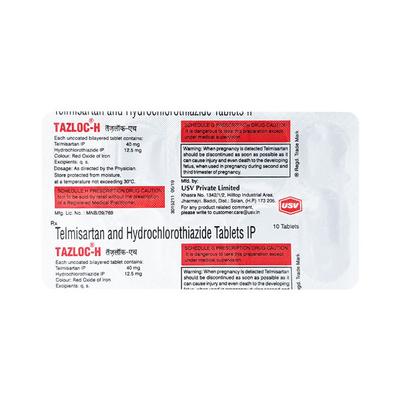
Tazloc H 40mg Tablet is a telmisartan–hydrochlorothiazide combination used under medical supervision to support blood pressure control and fluid balance (hypertension). This tablet is usually recommended for adults who require a single daily tablet to maintain blood pressure levels and cardiovascular protection as part of a long-term heart health plan.
Take this medicine as advised by your physician. It can be taken with or without food. During management with TAZLOC H 40MG TABLET your doctor will constantly monitor your kidney functions, blood pressure, electrolyte levels and blood sugar levels to avoid the risk of unwanted side effects.
Inform your doctor if you have any heart, liver, or kidney problems, diabetes, low blood pressure or are severely dehydrated due to excessive vomiting or diarrhea. TAZLOC H 40MG TABLET is also not suitable for use in pregnant or breastfeeding women as it may cause serious harm to the growing baby.
Common side effects of taking TAZLOC H 40MG TABLET are low blood pressure, dizziness, low or high blood potassium levels, pins and needles, muscle pain, diarrhoea, dry mouth, erectile dysfunction and increased blood uric acid levels. Contact your doctor if any of these side effect worsens.
Key Composition
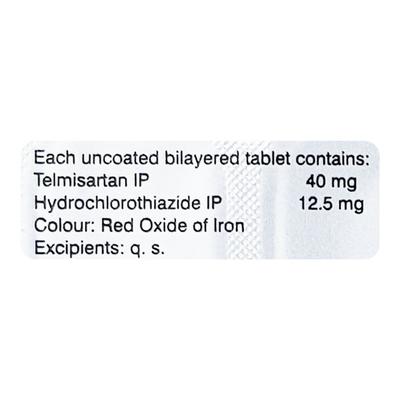
- Telmisartan 40 mg: Helps relax and widen blood vessels, supporting smoother blood flow and blood pressure control.
- Hydrochlorothiazide: A thiazide diuretic that increases urine output and supports fluid and salt balance
Uses Of TAZLOC H 40MG TABLET
- Management of Hypertension (high blood pressure)
Benefits of TAZLOC H 40MG TABLET
- Supports maintenance of healthy blood pressure levels when used regularly as advised
- Combines vessel relaxation and gentle fluid removal in a single once-daily tablet
- Helps reduce strain on the heart and blood vessels as part of a long-term cardiovascular care plan
- Convenient fixed-dose combination, which may improve daily routine adherence
How TAZLOC H 40MG TABLET Works
Telmisartan: Vessel Relaxation Mechanism
Telmisartan is an angiotensin II type-1 (AT1) receptor blocker. It attaches to AT1 receptors on vascular smooth muscle and blocks angiotensin II from binding, which reduces vasoconstriction and aldosterone-mediated sodium retention. This leads to relaxation and widening of blood vessels, lowering vascular resistance and supporting smoother blood flow.
Hydrochlorothiazide: Diuretic and Volume Mechanism
Hydrochlorothiazide is a thiazide diuretic that acts on the distal convoluted tubule in the kidney to inhibit sodium–chloride reabsorption. More sodium and water are excreted in urine, which reduces circulating blood volume and contributes to lower arterial pressure. It can also affect electrolytes (especially potassium and sodium), which is why monitoring is important.
Combined Mechanism in Tazloc H 40 mg
Together, telmisartan’s vessel relaxation and hydrochlorothiazide’s fluid reduction provide additive blood pressure–lowering support: one reduces vascular resistance while the other decreases volume load. This dual mechanism often achieves stronger and more sustained blood pressure maintenance than either component alone in suitable patients.
How to use TAZLOC H 40MG TABLET
Morning Dosage with Meals
Tazloc H 40mg Tablet is typically taken once daily in the morning to align the diuretic effect with daytime activities, reducing nighttime urination. Take with or without food, but breakfast timing helps maintain consistent absorption and stomach tolerance.
Swallow Whole Instructions
Swallow the tablet whole with a full glass of water without crushing, chewing, or breaking to ensure proper release of telmisartan and hydrochlorothiazide. This method supports steady blood pressure maintenance throughout the day.
Fixed Daily Timing Schedule
Maintain the same time each day (preferably 8-9 AM) for stable blood levels and optimal cardiovascular support; use pill organizers or phone alarms for adherence. Consistent timing enhances effectiveness of the dual mechanism action.
Hydration During Diuretic Use
Drink 2-3 liters water daily (8-12 glasses) to counter hydrochlorothiazide's fluid removal while preventing dehydration, especially in hot weather. Monitor urine color (pale yellow target) and avoid excessive caffeine/alcohol.
What if I forgot to take TAZLOC H 40MG TABLET
Take missed dose as soon as remembered on the same day; skip if near next dose time—never double up to avoid low blood pressure risk. Resume regular schedule immediately after.
Overdose
If you or anyone else accidentally take too much of TAZLOC H 40MG TABLET, consult your doctor immediately or visit the nearby hospital. Symptoms include low blood pressure, rapid heartbeat, vomiting, slow heartbeat, dizziness, low blood levels of potassium (resulting in nausea, sleepiness and muscle cramps or irregular heartbeat), reduced kidney function including kidney failure.
Side Effects Of TAZLOC H 40MG TABLET
Common Side Effects of TAZLOC H 40MG TABLET:
- Dizziness
- Low or high blood potassium levels
- Pins and needles (paraesthesia)
- Vertigo (spinning sensation)
- Fast or irregular heartbeat
- Low blood pressure causing dizziness while standing up
- Diarrhoea, dry mouth, flatulence
- Back pain, muscle spasm or pain
- Erectile dysfunction (inability to get or keep an erection)
- Increased blood uric acid levels
- Sore throat, sinus inflammation, common cold, cough
- Urinary tract infections
- Anaemia
- Kidney problems
When to consult a doctor?
- Eye pain, swelling, decrease in vision (signs of fluid accumulation in the eye)
- Skin reactions or unexpected skin lesions
- Increased skin sensitivity towards sunlight, sunburn, redness, itching, swelling and blistering of skin
- Signs of severe dehydration (such as dry mouth, feeling weak or tired, drowsiness, restlessness, muscle weakness, nausea, vomiting and fast heart rate)
Warning & Precautions

Pregnancy
ContraindicatedTAZLOC H 40MG TABLET is not recommended for use in pregnant women as it may cause serious harm to the growing fetus. Therefore, inform your doctor before taking TAZLOC H 40MG TABLET if you are pregnant, think you may be pregnant or planning to have a baby. If you become pregnant while undergoing therapy with TAZLOC H 40MG TABLET, stop taking it and consult your doctor immediately.

Breastfeeding
ContraindicatedTAZLOC H 40MG TABLET is not recommended for use in breastfeeding women. Therefore, consult your doctor before taking it.

Driving and Using Machines
Use with CautionDo not drive or handle any heavy tools or machines if you experience dizziness or drowsiness after taking TAZLOC H 40MG TABLET.

Alcohol
Consult your doctorAvoid consumption of alcohol while taking TAZLOC H 40MG TABLET as it might make you feel dizzier and drowsier.

Kidney
Consult your doctorTAZLOC H 40MG TABLET is not recommended for use in patients with severe kidney problems. It should be used with caution in patients with other kidney problems (such as kidney transplant, narrowing of renal arteries).

Liver
Consult your doctorTAZLOC H 40MG TABLET is not recommended for use in patients with severe liver impairment (such as cholestasis, jaundice, biliary obstruction). It should be used with caution in patients with mild to moderate liver problems.

Allergy
ContraindicatedDo not take TAZLOC H 40MG TABLET if you are allergic to Telmisartan or Hydrochlorothiazide or any other ingredients of this medicine.

Heart Disease
Use with CautionTAZLOC H 40MG TABLET should be used with caution in patients with heart problems (such as irregular heart rhythm, problems with heart muscle or valves).

Use In Pediatrics
ContraindicatedTAZLOC H 40MG TABLET is not recommended for use in children and adolescents (aged below 18 years).

Use In Geriatrics
Use with CautionTAZLOC H 40MG TABLET should be used with caution in the elderly patients.
Other Warnings for TAZLOC H 40MG TABLET
Before taking TAZLOC H 40MG TABLET, inform your doctor if you:
- Have primary hyperaldosteronism (problems in adrenal gland)
- Have low blood pressure
- Are severely dehydrated (due to diarrhea, vomiting or excess sweating)
- Are on a low-salt diet
- Have diabetes
- Have gout (painful joints)
- Have had skin cancer
- Have an auto-immune disease condition affecting the skin (such as SLS)
- Are scheduled for any upcoming surgery
Who should not take TAZLOC H 40MG TABLET
TAZLOC H 40MG TABLET is not recommended for use if you:
- Have diabetes related kidney problems
- Have low potassium levels in blood
- Have high calcium levels in blood
Diet and Lifestyle Advice
Diet Tips for Tazloc H 40mg Users
- Low-Sodium Foods: Limit salt to <2g/day (avoid pickles, papads, processed snacks, restaurant food); use herbs/spices for flavoring.
- Potassium Balance: Include bananas, spinach, oranges, coconut water moderately; avoid excess if blood tests show high potassium.
- Heart-Friendly Choices: Whole grains (oats, brown rice), leafy greens, fruits (apples, berries), lean proteins (fish, chicken, lentils), low-fat dairy.
- Hydration Target: 2-3 liters water daily (8-12 glasses) to counter diuretic effect; lemon water adds natural citrate.
- Avoid: Fried foods, sugary drinks, red meat excess, packaged juices.
Lifestyle Recommendations
- Exercise: 30-45 minutes brisk walking/aerobics daily improves circulation and supports blood pressure maintenance.
- Weight Management: Target BMI 19.5-24.9 through portion control and activity.
- Stress Reduction: Yoga, meditation, deep breathing 10-15 minutes daily.
- Alcohol: Complete avoidance; worsens dizziness and dehydration.
- Smoking: Quit completely for vascular health support.
- Sleep: 7-8 hours quality sleep nightly.
Daily Meal Plan Example
|
Time |
Food Choices |
|
Breakfast (with dose) |
Oats + banana + low-fat milk |
|
Lunch |
Brown rice + dal + spinach + curd |
|
Snack |
Apple + handful almonds |
|
Dinner |
Grilled fish + salad + roti |
Drug - Drug interaction
- Potassium-Related: Potassium supplements, salt substitutes, ACE inhibitors (enalapril, lisinopril), spironolactone increase hyperkalemia risk; monitor levels regularly.
- NSAIDs/Painkillers: Ibuprofen, diclofenac, aspirin may reduce effectiveness and impair kidney function.
- Lithium: Telmisartan increases lithium toxicity risk; requires close monitoring.
- Digoxin/Heart Drugs: May increase digoxin levels; watch for irregular heartbeat.
- Alcohol: Enhances dizziness, low blood pressure; complete avoidance recommended.
- Diuretics/Other BP Meds: Furosemide, amlodipine may cause excessive blood pressure drop.
- Diabetes Meds: Aliskiren contraindicated in diabetics; metformin may need adjustment.
Drug - Food interaction
- Food in general: Tazloc H 40mg can be taken with or without food; a consistent timing (often with breakfast) is preferred for routine and tolerance.
- Alcohol: Alcohol can further lower blood pressure, increasing the chance of dizziness, light-headedness, fainting, or irregular heart rate; it is generally advised to avoid alcohol with this medicine.
- High-sodium foods: Excess salt (pickles, papads, packaged snacks, processed foods) can blunt the blood-pressure–lowering effect, so patients are usually advised to limit sodium intake.
- High-potassium foods and supplements: Because telmisartan can raise potassium while hydrochlorothiazide can lower it, large amounts of potassium-rich foods (bananas, coconut water, oranges) or salt substitutes containing potassium should only be used as per medical advice after checking blood levels.
- Caffeine and strong stimulants: Coffee/energy drinks do not have a direct contraindication but can transiently influence blood pressure and may worsen dehydration if taken in excess, so moderation plus adequate water intake is recommended.
Synopsis
| Drug | : | Hydrochlorothiazide, Telmisartan |
| Pharmacological Category | : | Thiazide diuretics, Angiotensin-II Receptor blockers |
| Therapeutic Indication | : | High blood pressure |
| Dosage Forms | : | Tablet |
More Information
Tazloc H 40mg Patient Monitoring Checklist
|
Monitoring Item |
Frequency |
What to Check |
Action if Abnormal |
|
Kidney Function |
Baseline, 1-2 weeks, then 3-6 months |
Creatinine, eGFR, BUN |
Contact doctor immediately |
|
Electrolytes |
Baseline, 1-2 weeks, then 6-12 months |
Potassium, sodium levels |
Adjust diet/meds, retest |
|
Blood Pressure |
Daily (home) + doctor visits |
Target <140/90 mmHg |
Dose review needed |
|
Blood Sugar (diabetics) |
Baseline + every 3 months |
HbA1c, fasting glucose |
Diabetes med adjustment |
|
Urine Output |
Daily observation |
Normal volume/color |
Report dark/foamy urine |
Telmisartan Single Agent vs Tazloc H 40mg (Combination) Benefits
|
Aspect |
Telmisartan Alone |
Tazloc H 40mg (Telmisartan + HCTZ) |
|
BP Reduction |
Effective vascular relaxation (↓10-15 mmHg SBP) |
Greater reductions (↓21.5/13.3 mmHg SBP/DBP vs monotherapy) |
|
Mechanism |
AT1 blockade only (vessel dilation) |
Dual action: Vessel relaxation + fluid reduction |
|
24-Hour Control |
Good trough coverage |
Superior (13.7/8.7 mmHg additional benefit) |
|
Potassium Effect |
Tends to raise (hyperkalemia risk) |
Balances HCTZ potassium loss |
|
Dose Convenience |
Single agent daily |
One tablet combines both mechanisms |
|
Goal Achievement |
~40-50% BP goal attainment |
Higher rates (more patients <140/90 mmHg) |
Key Advantages of Combination
- Additive Efficacy: Studies show 13-21 mmHg greater SBP reduction vs telmisartan monotherapy
- Potassium Protection: HCTZ counters telmisartan's hyperkalemia risk
- Better Compliance: Single pill vs two separate medications
- 24-Hour Superiority: Telmisartan/HCTZ > other ARB/HCTZ combinations
When Doctors Consider Combination
|
Patient Scenario |
Single Agent May Suffice |
Combination Often Preferred |
|
Mild BP elevation |
Telmisartan 40mg |
If insufficient response |
|
BP >160/100 mmHg |
May need higher dose |
Initial combination |
|
Fluid retention |
Not optimal |
HCTZ component helps |
|
Potassium concerns |
Risk of elevation |
Balanced by diuretic |
Telmisartan HCTZ kidney monitoring schedule
Telmisartan + HCTZ (as in Tazloc H 40 mg) generally needs a structured kidney-monitoring plan focusing on creatinine/eGFR and electrolytes, especially potassium.
What to monitor
- Serum creatinine & eGFR: To detect any decline in kidney function early.
- Serum electrolytes: Potassium, sodium, sometimes magnesium, because ARBs can raise potassium while thiazides can lower it; net effect is patient-specific.
- Urea / BUN: As part of a standard kidney function panel.
- Urinalysis / protein (in CKD or diabetes): Optional but useful where baseline kidney disease is present.
Practical monitoring schedule (for patient education copy)
You cannot fix an exact schedule for all users in product content, but you can describe typical patterns like:
- Before starting:
- Baseline kidney function tests (creatinine, eGFR, urea/BUN) and electrolytes including potassium and sodium.
- Early follow-up (after starting or dose change):
- Recheck kidney function and electrolytes at about 1–2 weeks, especially in patients with diabetes, elderly, or any prior kidney issue.
- Short- to mid-term:
- Repeat tests at 4–6 weeks to ensure stability once the maintenance dose is established.
- Long-term maintenance:
- For stable patients without CKD: at least every 6–12 months during routine hypertension follow-up.
- For CKD, diabetes, elderly, or those on NSAIDs/other nephrotoxic drugs: every 3–6 months, or as per specialist advice.
Red-flag triggers for extra tests
Encourage users to contact their doctor and get labs sooner if they notice:
- Sudden drop in urine output, dark or foamy urine.
- Persistent vomiting/diarrhea, high fever, or anything causing dehydration.
- New severe muscle cramps, extreme weakness, irregular heartbeat (possible potassium imbalance).
- Unusual swelling of feet/face or fast weight gain (possible fluid retention).
FAQs About TAZLOC H 40MG TABLET
Q: What is TAZLOC H 40MG TABLET used for?
A: TAZLOC H 40MG TABLET is used to manage hypertension and its associated cardiovascular problems.
Q: What type of a medicine is TAZLOC H 40MG TABLET?
A: TAZLOC H 40MG TABLET is an antihypertensive medicine. It relaxes your blood vessels and improves blood flow across them. It also reduces thickness of the blood by removing excess fluids from the body in the form of urine. Collectively, it reduces the strain on the heart and helps the heart to pump blood more smoothly with less pressure.
Q: What happens when I stop taking TAZLOC H 40MG TABLET?
A: Do not stop taking TAZLOC H 40MG TABLET without consulting your doctor as your blood pressure may raise once again. Make sure to take it for the stipulated duration recommended by your doctor to achieve maximum results.
Q: What is the best time to take TAZLOC H 40MG TABLET?
A: TAZLOC H 40MG TABLET can be taken with or without meals. Your doctor will decide the best time for you to take it based on your age, body weight and disease condition.
Q: What to do if I forgot to take a dose of TAZLOC H 40MG TABLET?
A: If you forgot to take a dose of TAZLOC H 40MG TABLET, take it as soon as you remember. However, if it is time for the next dose, skip the missed dose and take the next one regularly. Do not take a double dose to compensate the missed ones.
Q: What precautions should be followed while taking TAZLOC H 40MG TABLET?
A: Before taking TAZLOC H 40MG TABLET, inform your doctor if you have any heart, liver or kidney problems. You must also inform your doctor if you have diabetes, low blood pressure volume or are severely dehydrated. Stop taking TAZLOC H 40MG TABLET and consult your doctor immediately if you become pregnant. Regularly visit your doctor and take all the necessary blood test recommended by your doctor without fail.
Q: Can I consume alcohol while taking TAZLOC H 40MG TABLET?
A: Avoid consumption of alcohol while taking TAZLOC H 40MG TABLET as it might make you feel dizzier and drowsier.
Q: What happens if I accidentally take more TAZLOC H 40MG TABLET?
A: If you or anyone else accidentally took more TAZLOC H 40MG TABLET, consult your doctor immediately. Overdosage may cause low blood pressure, abnormal heartbeat, dizziness, vomiting, decreased kidney functions, nausea, sleepiness and muscle cramps.
Q: Can I take TAZLOC H 40MG TABLET daily?
A: Take TAZLOC H 40MG TABLET as advised by your physician. Your doctor will evaluate your health condition and suggests whether can you take TAZLOC H 40MG TABLET every day or not.
Q: Is TAZLOC H 40MG TABLET safe to use in diabetic patients?
A: TAZLOC H 40MG TABLET may alter the blood sugar levels in your body. Therefore, it is necessary to inform your doctor if you have diabetes before taking TAZLOC H 40MG TABLET as a precaution. Your doctor will closely monitor you blood sugar levels to avoid the risk of side effects.
Q: What are the side effects of TAZLOC H 40MG TABLET?
A: The most common side effects of taking TAZLOC H 40MG TABLET are low blood pressure, dizziness, low or high blood potassium levels, pins and needles, muscle pain, diarrhoea, dry mouth, erectile dysfunction and increased blood uric acid levels. Contact your doctor if any of these side effect worsens.
Q: Can I stop taking TAZLOC H 40MG TABLET once my symptoms subside?
A: No. Do not stop taking TAZLOC H 40MG TABLET without consulting your doctor. As hypertension is a chronic condition, long term management may be necessary to control its symptoms. Therefore, take TAZLOC H 40MG TABLET as advised by your doctor for the stipulated duration. Premature discontinuation of therapy may increase your blood pressure once again.
Q: Can TAZLOC H 40MG TABLET be taken during pregnancy?
A: TAZLOC H 40MG TABLET is not recommended for use in pregnant women as it may cause serious harm to the growing fetus. Therefore, inform your doctor before taking TAZLOC H 40MG TABLET if you are pregnant, think you may be pregnant or planning to have a baby. If you become pregnant while undergoing therapy, stop taking it and consult your doctor immediately.
Q: Is TAZLOC H 40MG TABLET safe to use in kidney disease?
A: TAZLOC H 40MG TABLET is not recommended for use in patients with severe kidney problems. It should be used with caution in patients with other kidney problems (such as kidney transplant, narrowing of renal arteries). Your doctor will access your health condition and suggest a suitable dose for you. Therefore, it is important to inform your doctor if you have any kidney problems before taking TAZLOC H 40MG TABLET as a precaution.
Q: Can the use of TAZLOC H 40MG TABLET affect the liver?
A: Yes. TAZLOC H 40MG TABLET may affect the way your liver work. It can elevate the levels of certain liver enzymes in your body. Therefore, it is strictly not recommended for use in patients with severe liver diseases. It should be used with caution in patients with other minor liver problems. Consult your doctor before taking it.
References
1. KD. Tripathi. Antihypertensive Drugs. Drugs Affecting Renin-Angiotensin System and Plasma Kinins. Essentials of medical pharmacology. Seventh edition. 2013. Page – 559, 561 & 562.
2. Roberto Fogari, MD, Annalisa Zopppi, MD, Amedeo Mugellini, MD, Paolo Preti, MD, Maurizio Destro, MD, Andrea Rinaldi MD, and Giuseppe Derosa, MD. Effectiveness of hydrochlorothiazide in combination with telmisartan and olmesartan in adults with moderate hypertension not controlled with monotherapy: a prospective, randomized, open-label, blinded end point (PROBE), parallel-arm study. NIH. National Library of Medicine. National Center for Biotechnology Information. PMC. PubMed Central. February 2008. [Accessed on 10th December 2025] 
3. Kazuo Eguchi, Satoshi Hoshide, Tomoyuki Kabutoya, Kazuyuki Shimada, Kazuomi Kario. Is very low dose hydrochlorothiazide combined with candesartan effective in uncontrolled hypertensive patients NIH. National Library of Medicine. National Center for Biotechnology Information. Pubmed.gov. December 2010. [Accessed on 10th December 2025] 
4. Accord Healthcare Limited. Electronic Medicines Compendium (EMC). [Revised in December 2021] [Accessed on 10th December 2025]
5. Hikma Pharmaceuticals USA Inc. Telmisartan and Hydrochlorothiazide Tablet. Dailymed.com. [Revised in July 2021]. [Accessed on 10th December 2025]
6. Glenmark Arzneimittel GmbH. Electronic Medicines Compendium (EMC). [Revised in November 2019] [Accessed on 10th December 2025]
7. Central Drugs Standard Control Organization. Telmisartan 40mg/80mg+ Hydrochlorthiazide 12.5mg/12.5mg tablet. August 2003. [Accessed on 10th December 2025]
Useful Diagnostic Tests
Author Details