

Netmeds First Membership
Quick Links
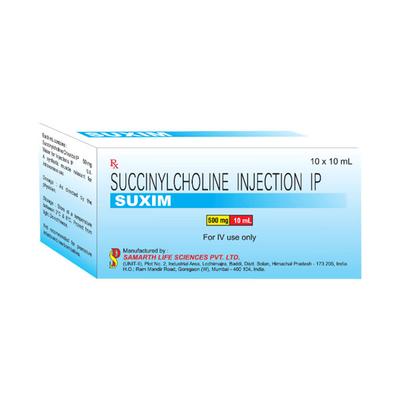
Introduction About SUXIM 500MG INJECTION
SUXIM 500MG INJECTION is used for temporary muscle relaxation prior to surgical and diagnostic procedures. It provides rapid and short-term relaxation of airway muscles in patients who needs a ventilator to control breathing and reduce the intensity of muscle contractions associated with drug-induced convulsions or with electroconvulsive therapy (ECT).
It contains Succinyl choline (also known as Suxamethonium) which is a muscle relaxant which works by blocking the connection between nerves and muscles and keeps them relaxed.
SUXIM 500MG INJECTION will be administered by an anaesthesiologist under careful medical supervision. Before receiving SUXIM 500MG INJECTION inform your doctor if you are pregnant or breastfeeding or have any liver, kidney or heart problems.
You must also inform your doctor if you have allergies to anaesthesia, had recent surgery, trauma or accident, have chronic illness or bed-ridden, glaucoma, eye injury, muscle weakness, tenderness and pain, paralysis, cancer, tuberculosis, tetanus, thyroid problems or bone fractures and taking medications for the same as a precaution.
The most common side effects of receiving SUXIM 500MG INJECTION are abdominal cramps or pain along with nausea or a feeling of “fullness”, visible twitching of muscle beneath the skin, muscle damage, foamy urine, red or discoloured urine, increased saliva production, muscle pain after the operation, abnormal heart rate and skin flushing. Consult your doctor if any of these side effects trouble you.
Uses Of SUXIM 500MG INJECTION
- Temporary muscle relaxation prior to surgical and diagnostic procedures
- Rapid and short-term relaxation of airway muscles in patients who needs a ventilator to control breathing
- Reduces the intensity of muscle contractions associated with drug-induced convulsions or with electroconvulsive therapy
How SUXIM 500MG INJECTION Works
SUXIM 500MG INJECTION contains Succinyl Choline which works by mimicking the neurotransmitter acetylcholine, which normally triggers muscle contraction. When succinylcholine binds to acetylcholine receptors at the neuromuscular junction, it causes an initial muscle contraction followed by paralysis because it remains bound, preventing further signals from reaching the muscle. This leads to a temporary and controlled relaxation, which is useful during surgeries or procedures that require muscle relaxation.
How to use SUXIM 500MG INJECTION
SUXIM 500MG INJECTION will be given to you only by a doctor or a nurse into the veins as an intravenous injection or infusion. Your doctor will decide the correct dose and duration of therapy for you based on your age, body weight, health condition, type of surgery, and amount off muscle relaxation that is required.
Side Effects Of SUXIM 500MG INJECTION
Common
- Abdominal cramps or pain along with nausea or a feeling of “fullness”
- Visible twitching of muscle beneath the skin
- Excessive production of saliva
- Muscle pain after the operation
- Raised pressure of fluid in the eye which may cause headache or blurred vision
- Speeding up or slowing down your heart rate
- Skin flushing
- Skin rash
- High blood potassium levels
- High or low blood pressure
- Muscle damage and protein in the blood or urine due to muscle damage
- Red or cola coloured urine
Rare
- Difficulty in opening your mouth
Contact your doctor immediately if you experience any of the following side effects after receiving SUXIM 500MG INJECTION:
- Severe allergic reactions (such as sudden wheeziness, difficulty in breathing, swelling of the eyelids, face or lips, rash or itching of face or whole body)
- Abnormal heartbeat, difficulty in breathing
Warning & Precautions

Pregnancy
Monitoring requiredYour doctor will access the risks and benefits of the medicine and administer SUXIM 500MG INJECTION only when it is considered necessary. Therefore, before receiving SUXIM 500MG INJECTION if you are pregnant or think you may be pregnant as a precaution

Breastfeeding
ContraindicatedThere is insufficient information regarding the safety of suxamethonium in breastfeeding women. Therefore, it is recommended not to breastfeed for at least 24 hours after administration of Suxamethonium. Consult your doctor for advice.

Driving and Using Machines
ContraindicatedDo not drive or handle any heavy machines until you recover from the surgery completely.

Kidney
Consult your doctorSUXIM 500MG INJECTION is not recommended for use in patients with severe kidney problems. It should be used with caution in patients with other kidney problems. Therefore, consult your doctor for advice.

Liver
Consult your doctorSUXIM 500MG INJECTION is not recommended for use in patients with severe kidney problems. It should be used with caution in patients with other kidney problems. Therefore, consult your doctor for advice.

Allergy
ContraindicatedBefore receiving SUXIM 500MG INJECTION inform your doctor if you are allergic to Succinyl choline.

Heart Disease
Use with CautionSUXIM 500MG INJECTION should be used with caution in patients with heart problems. Therefore, consult your doctor for advice.

Use In Pediatrics
Use with CautionSUXIM 500MG INJECTION should be used with caution in children and adolescents (aged 18 years or below). Therefore, consult your doctor for advice.

Use In Geriatrics
Use with CautionSUXIM 500MG INJECTION should be used with extreme caution in elderly patients (aged 75 years or older), especially who have chronic illnesses. Therefore, consult your doctor for advice.
Others
SUXIM 500MG INJECTION is not recommended for use if you:
- Or your family have developed allergic reactions or experienced high fever towards anaesthetic medications
- have a deficiency of pseudocholinesterase, an enzyme which breaks down suxamethonium in the body
- have recently met with a major accident, surgery or severe burns in the last 3 months
- are bed-ridden or having fractured bone
- have high blood potassium levels in the blood
- have recently had an eye injury
- have glaucoma
- or your family have a disease condition associated with muscles or nerves
- have muscle weakness or dystrophy
- have paralysis or cerebral palsy
Before receiving SUXIM 500MG INJECTION, inform your doctor if you:
- Have tetanus, an infection which is caused by contamination of the wounds
- Have tuberculosis or any other severe long-standing infection
- Have cancer
- Have low RBC and Hemoglobin levels and anaemia
- Are undernourished
- Have any auto-immune disease such as multiple sclerosis
- Have an underactive thyroid gland
- Have myasthenia gravis (muscle weakness)
- Recently had a heart-lung bypass surgery or blood transfusion
- Have been in contact with insecticides
- Have an allergic reaction to any muscle relaxant
- Have an imbalance in blood chemistry
- Have a bone injury or muscle tightness in the area of the injury
- recently received radiation therapy
- suffer from severe burns
Interactions
- Drug-Drug interactions
- Anaesthetics (Ex. propofol, ketamine, propanidid, lignocaine and procaine)
- Pain killers used before surgery (such as morphine, pethidine and pancuronium)
- Medicines used for Alzheimer's disease (such as donepezil, galantamine and tetrahydroaminoacridine (Tacrine hydrochloride))
- Anti-glaucoma agents (such as ecothiophate eye drops)
- medicines for coughs, cold, sleeping or tablets for allergies
- Anti-malarial agents (such as chloroquine or quinine)
- Oral contraceptives
- Anti-asthma and COPD agents (such as terbutaline, Bambuterol)
- metoclopramide (anti-emetic agent)
- Anticancer agents (such as cyclophosphamide, triethylene-melanine, chlorethamine, tretamine and thiotepa)
- Antidepressants and Antipsychotics agents (such as phenelzine, lithium, chlorpromazine, promazine, fluoxetine, paroxetine, sertraline, fluvoxamine, citalopram, escitalopram)
- Magnesium supplements, laxatives or other medicines containing magnesium
- Oestrogens
- Immunosuppressants (used to manage auto-immune conditions and prevents graft rejection)
- Oxytocin (to contract the womb)
- Antibiotics (such as clindamycin, polymyxins, and aminoglycosides, vancomycin, piperacillin)
- Cardiac agents (such as verapamil, digoxin, procainamide or quinidine)
- aprotinin (to reduce bleeding)
- medicines used for myasthenia gravis (such as neostigmine, pyridostigmine, physostigmine and edrophonium)
- medicines used to control your blood pressure during surgery such as trimetaphan
Overdosage:
SUXIM 500MG INJECTION will be given to you only in a hospital. Therefore, it is unlikely to receive an overdose. However, consult your doctor if you experience any unpleasant reactions after receiving SUXIM 500MG INJECTION.
Synopsis
| Drug | : | Succinyl Choline (or Suxamethonium) |
| Pharmacological Category | : | Short-acting depolarizing neuromuscular blockade |
| Therapeutic Indication | : | Muscle Relaxant |
| Dosage Forms | : | Injection |
More Information
Storage
- Keep SUXIM 500MG INJECTION out of reach of children
- Store SUXIM 500MG INJECTION in a refrigerator between 2 and 8°C. Do not freeze
FAQs About SUXIM 500MG INJECTION
Q: What is SUXIM 500MG INJECTION used for?
A: SUXIM 500MG INJECTION is used for temporary muscle relaxation prior to surgical and diagnostic procedures. It provides rapid and short-term relaxation of airway muscles in patients who needs a ventilator to control breathing and reduce the intensity of muscle contractions associated with drug-induced convulsions or with electroconvulsive therapy (ECT).
Q: How SUXIM 500MG INJECTION is administered?
A: SUXIM 500MG INJECTION will be given to you only by a doctor or a nurse into the veins as an intravenous injection or infusion.
Q: Can SUXIM 500MG INJECTION be used for delivering the baby?
A: Your doctor will access the risks and benefits of the medicine and administer SUXIM 500MG INJECTION only when it is considered necessary. It is often used as a muscle relaxant to facilitate intubation and ensure the mother remains still during the procedure. However, its use is carefully monitored due to its short duration of action and potential side effects. The decision to use suxamethonium is made by the anesthesiologist based on the specific circumstances of the delivery and the mother's health condition.
Q: Why SUXIM 500MG INJECTION causes abnormal heart rate?
A: Suxamethonium can cause an abnormal heart rate because it affects the heart's electrical system. It stimulates certain receptors in the body, which can lead to either a slow heart rate (bradycardia) or a fast heart rate (tachycardia). It can also cause a rise in potassium levels in the blood, which might lead to serious heart rhythm problems. These changes happen because of how suxamethonium works on the muscles and nerves, so doctors closely monitor heart rate when using this drug.
Q: Why SUXIM 500MG INJECTION causes muscle twitching?
A: Suxamethonium causes muscle twitching because it initially stimulates the muscles before it relaxes them. When the drug is injected, it binds to receptors at the neuromuscular junction, causing the muscles to contract briefly, leading to visible twitching or fasciculations. After this initial contraction, the muscles become relaxed, which is the intended effect for procedures like surgery. The twitching is a normal response to how suxamethonium works in the body and usually stops after a few seconds.
Q: Is SUXIM 500MG INJECTION safe?
A: SUXIM 500MG INJECTION is generally considered safe when used under the supervision of an experienced anesthesiologist, but like all medications, it carries some risks. It is a fast-acting muscle relaxant commonly used during surgeries to facilitate intubation or provide muscle relaxation. However, it can cause side effects such as muscle pain, hyperkalemia (high potassium levels), and in rare cases, malignant hyperthermia, a severe reaction to certain anesthesia drugs. It's also contraindicated in individuals with conditions like neuromuscular diseases or a history of malignant hyperthermia. The safety of suxamethonium depends on careful patient selection, proper dosing, and close monitoring during its use.
Q: Can SUXIM 500MG INJECTION be used in children?
A: SUXIM 500MG INJECTION should be used with caution in children and adolescents (aged 18 years or below). Therefore, consult your doctor for advice.
Q: What precautions must be taken before receiving SUXIM 500MG INJECTION?
A: SUXIM 500MG INJECTION will be administered by an anaesthesiologist under careful medical supervision. Before receiving SUXIM 500MG INJECTION inform your doctor if you are pregnant or breastfeeding or have any liver, kidney or heart problems.
You must also inform your doctor if you have allergies to anaesthesia, had recent surgery, trauma or accident, have chronic illness or bed-ridden, glaucoma, eye injury, muscle weakness, tenderness and pain, paralysis, cancer, tuberculosis, tetanus, thyroid problems or bone fractures and taking medications for the same as a precaution. Consult your doctor if you experience severe muscle pain, stomach pain, muscle twitching, abnormal heart rate after receiving SUXIM 500MG INJECTION.
Q: Which medicines must be avoided before SUXIM 500MG INJECTION is administered?
A: Before administering SUXIM 500MG INJECTION, certain medications should be avoided due to potential interactions that can cause complications. It is because, the suxamethonium present in the medicine can interact with anticholinesterases like neostigmine, which can prolong muscle paralysis; aminoglycoside antibiotics like gentamicin, which may enhance neuromuscular blockade; and lithium, which can extend the drug's effects. Magnesium sulfate, by increasing the risk of prolonged muscle paralysis, and diuretics like furosemide, which may cause electrolyte imbalances, should also be avoided. Additionally, digitalis drugs like digoxin can lead to dangerous cardiac arrhythmias when combined with suxamethonium. It's crucial to inform your healthcare provider about all medications you are taking to prevent these interactions.
References
- KD. Tripathi. Essentials of Medical Pharmacology. 8th Edition. Skeletal Muscle Relaxants. Succinyl Choline. Page – 379.
- Succinyl Choline Chloride. StatPearls. National Library of Medicine. National Center for Biotechnology Information. PMC. PubMed Central. February 2023. [Accessed on 28th August 2024]. https://www.ncbi.nlm.nih.gov/books/NBK499984/
- Suxamethonium Chloride 50mg/ml Solution for Injection. Mercury Pharmaceuticals Limited. EMC. UK. [Revised in August 2023]. [Accessed on 28th August 2024]. https://www.medicines.org.uk/emc/files/pil.5189.pdf
Author Details