




Netmeds First Membership
Description
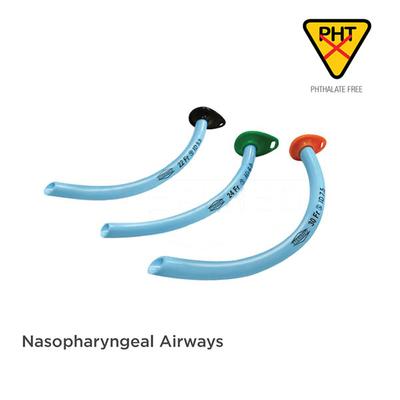
The Sterimed Nasopharyngeal Airway is a medical device designed to be inserted into the nasal passageway to maintain an open airway, particularly when a person is unconscious or semi-conscious. Made from a soft, medical-grade PVC, it is designed to bypass obstructions at the level of the nose, nasopharynx, or the base of the tongue. Its purpose is to prevent the tongue from falling back and obstructing the airway. This device is intended for single-patient use and is E.T.O. sterile and pyrogen-free.
Anatomical Design: Crafted from soft, non-irritant medical-grade PVC, the airway is designed to conform to the natural contours of the nasal passage for patient comfort. Atraumatic Tip: Features a soft, rounded, and beveled tip to allow for gentle insertion and minimize trauma. Kink-Resistant Tube: The tube is designed to resist kinking, which helps in maintaining a clear and uninterrupted pathway for oxygenation. Flared End: The proximal end is flared to prevent the device from getting lost inside the patient's nose. Sterile and Single-Use: Each airway is sterilized with ethylene oxide gas and individually packed in a peelable pouch to ensure hygiene and prevent cross-contamination.
Q: What is a nasopharyngeal airway used for?
A: A nasopharyngeal airway (NPA) is a tube inserted into the nasal passageway to secure an open airway, particularly when a person is unconscious or semi-conscious. It helps prevent the tongue from obstructing the airway.
Q: Who should insert this device?
A: The use of this product is restricted to qualified doctors or healthcare professionals only. It requires proper training to ensure correct placement and to avoid complications.
Q: What material is the Sterimed NPA made from?
A: The Sterimed nasopharyngeal airway is crafted from a soft, non-irritant, medical-grade PVC (Polyvinyl Chloride).
Q: Can this device be reused?
A: No, this is a single-use-only product. It is supplied sterile and should not be re-sterilized or reused after it has been opened or used.
Q: In what situations should this airway not be used?
A: This device should not be used if the patient has a blocked nose, nasal polyps, a history of frequent nosebleeds (epistaxis), or a fractured nasal bone. It is also contraindicated in cases of known or suspected base of skull fractures.
The Sterimed Nasopharyngeal Airway is a medical device designed to be inserted into the nasal passageway to maintain an open airway, particularly when a person is unconscious or semi-conscious. Mad...
Key Benefits
Maintains Airway Patency: It effectively keeps the airway open by preventing the tongue from obstructing the passage, which is particularly useful in unconscious or semi-conscious patients. Suitable for Patients with Gag Reflex: Unlike oropharyngeal airways, this device can be tolerated by patients who have an intact gag reflex. Facilitates Ventilation: It provides a clear channel for improved oxygenation and ventilation, especially when bag-valve-mask ventilation is challenging. Reduces Insertion Trauma: The soft material and smooth-edged design help to minimize discomfort and trauma during insertion and removal. Versatile Use: It is a valuable tool in various settings, including emergencies, trauma care, and for patients with conditions that make mouth access difficult.
Maintains Airway Patency: It effectively keeps the airway open by preventing the tongue from obstructing the passage, which is particularly useful in unconscious or semi-conscious patients. Suitabl...
Direction for Use/Dosage
1. Select the appropriate size by measuring from the side of the nostril to the earlobe on the same side. 2. Lubricate the tip of the airway with a water-soluble lubricant to ease insertion. 3. With the bevel of the tip facing the nasal septum, gently insert the tube into a nostril. 4. Advance the airway following the natural curve of the nasal floor until the flange rests against the nostril. Do not force the tube; if resistance is met, try the other nostril. 5. Check for correct placement to ensure it is not too long (which can cause gagging) or too short.
1. Select the appropriate size by measuring from the side of the nostril to the earlobe on the same side. 2. Lubricate the tip of the airway with a water-soluble lubricant to ease insertion. 3. Wit...
Safety Information/Precaution
For single use only. Do not re-sterilize or reuse. The use of this product is restricted to qualified healthcare professionals. Consult a healthcare professional before use, especially for patients with existing medical conditions. Do not use in patients with facial trauma, basilar skull fractures, nasal polyps, or a history of nosebleeds. Use with caution in patients with coagulation disorders or those on anticoagulant therapy, as there is an increased risk of bleeding. If the airway is too long, it may cause gagging or other complications; ensure correct sizing before insertion. Any blocked or occluded device should be removed immediately.
For single use only. Do not re-sterilize or reuse. The use of this product is restricted to qualified healthcare professionals. Consult a healthcare professional before use, especially for patients...
Other Information
Store in a cool, dry place, away from direct heat and sunlight. The product is sterile if the package is unopened and undamaged. Discard any opened and unused devices.