



Netmeds First Membership
Introduction About SOLITEN ORAL SOLUTION
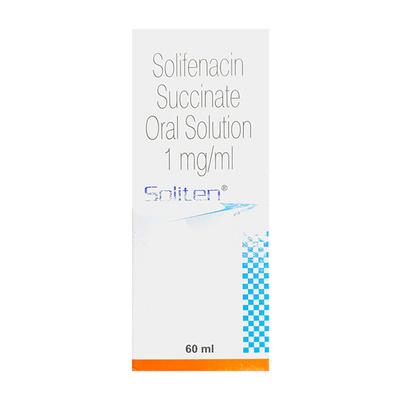
SOLITEN Oral Solution is a carefully formulated oral solution designed to support individuals experiencing symptoms related to an overactive bladder. Containing the active ingredient solifenacin, it works by relaxing specific muscles in the bladder to help reduce frequent or urgent urges to urinate.
Suitable for use under medical supervision, this solution offers a convenient liquid form that can be precisely dosed, making it appropriate for various patient groups including those who may have difficulty swallowing tablets.
Developed with patient comfort and daily life management in mind, this product is supported by clinical research and healthcare professional guidance to provide a scientifically grounded option for bladder support.
Uses Of SOLITEN ORAL SOLUTION
- Overactive bladder
Benefits of SOLITEN ORAL SOLUTION
- Helps manage symptoms associated with an overactive bladder, such as frequent or sudden urges to urinate
- Supports comfort in daily activity by reducing the number of bathroom visits
- May be suitable for specific patients with neurogenic detrusor overactivity, as advised by a doctor
How SOLITEN ORAL SOLUTION Works
SOLITEN Oral Solution relaxes the muscles in the bladder by blocking specific receptors called muscarinic M3 receptors. This helps the bladder hold more urine and reduces the need to urinate frequently or urgently, improving bladder control and comfort in daily life.
How to use SOLITEN ORAL SOLUTION
How to Take SOLITEN Oral Solution
Take SOLITEN Oral Solution exactly as prescribed by your doctor. You can take it with or without food. Use the measuring cup, spoon, or oral syringe provided to ensure the correct dose—avoid using household teaspoons. Swallow the measured liquid dose directly without mixing it with other liquids.
Recommended Dosage Instructions for SOLITEN
The typical starting dose for adults is 5 mg (5 ml) once daily. Based on symptom response and tolerance, your doctor may increase the dose to 10 mg (10 ml) once daily. Dosage for children or special populations should be determined by a healthcare professional.
Measuring and Administering Your SOLITEN Dose
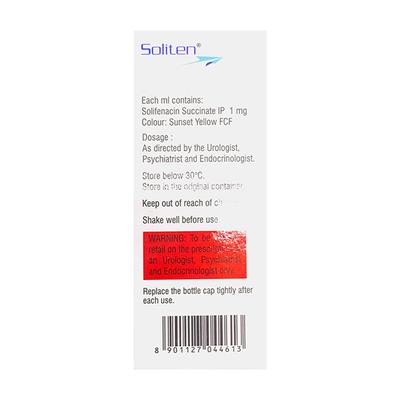
Always use the accurate measuring device provided with the medication to measure your dose. Shake the bottle well before use. Administer the dose orally at about the same time every day for consistency.
Timing and Frequency of SOLITEN Oral Solution
SOLITEN is usually taken once daily, preferably at the same time each day. This helps maintain consistent levels of the medicine in your body and supports symptom control.
Dosage Adjustments for Special Populations
- Elderly patients: No initial dose adjustment is usually needed, but monitoring for side effects is important.
- Kidney or liver impairment: Dose adjustments may be necessary; consult your doctor to determine the safest dose.
- Children: Use and dose must be determined by the doctor, as safety and efficacy are not well established.
Administration Tips for Best Results
- Take your dose consistently at the same time every day.
- Maintain hydration to help manage some side effects like dry mouth or constipation.
- Avoid grapefruit or grapefruit juice, as it may interact with the medicine.
What if I forgot to take SOLITEN ORAL SOLUTION
If you miss a dose, take it as soon as you remember unless it is nearly time for your next dose. Do not double up doses to make up for a missed one. Resume your regular dosing schedule and consult your healthcare provider if unsure.
Side Effects Of SOLITEN ORAL SOLUTION
Common side effects of SOLITEN Oral Solution may include:
- Dry mouth
- Constipation
- Blurred vision
- Nausea and upset stomach
- Urinary tract infection
- Dizziness or tiredness
- Indigestion, abdominal pain, or heartburn
Warning & Precautions

Pregnancy
Consult your doctor- SOLITEN Oral Solution is classified as a category C drug for pregnancy, meaning risk to the fetus cannot be ruled out due to lack of controlled human studies. Animal studies have shown some adverse fetal effects at high doses. Use during pregnancy is advised only if the potential benefits outweigh potential risks.
- Consult a doctor before use if pregnant or planning pregnancy.

Breastfeeding
Consult your doctor- It is unknown whether solifenacin passes into human breast milk. Given its long half-life and potential side effects, discontinuing breastfeeding or switching medication may be considered based on clinical need and doctor’s advice.
- Monitor infants for possible anticholinergic symptoms such as constipation or urinary issues if the drug is used during breastfeeding.

Driving and Using Machines
Use with CautionThis medicine may cause dizziness or blurred vision; patients are advised to avoid driving or operating machinery if affected.

Kidney
Consult your doctorPatients with kidney impairment should use SOLITEN cautiously, and dosing adjustments are advised based on severity. Those on dialysis or with severe kidney disease may not be suitable candidates for this medication.

Liver
Use with CautionUse with caution in patients with liver impairment. Dose adjustments or close medical monitoring may be necessary due to altered drug metabolism.

Allergy
ContraindicatedDo not use SOLITEN if allergic to any of the ingredients of this medicine.

Heart Disease
Use with CautionCaution is recommended in patients with a history of heart rhythm problems, including QT prolongation. Inform the doctor of any heart conditions before starting treatment.

Use In Pediatrics
Consult your doctorSafety and effectiveness in children under 12 years are not well established. Use in children should only be under direct medical supervision, particularly for neurogenic detrusor overactivity in patients 2 years and older.

Use In Geriatrics
Consult your doctorNo specific dose adjustment is generally required for elderly patients, but increased sensitivity and monitoring for side effects such as dizziness or blurred vision is important.
Drug - Drug interaction
- SOLITEN interacts with medicines that affect liver enzymes, especially CYP3A4 inhibitors such as ketoconazole, itraconazole, fluconazole, and ritonavir. These may increase solifenacin blood levels, raising side effect risks. Dose adjustments are advised in such cases.
- Combining SOLITEN with other anticholinergic drugs or those with antimuscarinic effects (e.g., benztropine, oxybutynin, some antidepressants and antipsychotics) can increase anticholinergic side effects such as dry mouth, constipation, and urinary retention.
- Drugs that prolong the QT interval (e.g., dronedarone, dofetilide, pimozide) may have additive effects with solifenacin, increasing risk for abnormal heart rhythms; caution or avoidance is recommended.
- SOLITEN may reduce absorption or effects of certain drugs like olanzapine or droperidol; monitoring is advised.
Drug - Food interaction
- Grapefruit and grapefruit juice should be avoided during treatment as they can increase solifenacin blood concentration, intensifying side effects
More Information
Did you know:
- Solifenacin, the active ingredient in SOLITEN Oral Solution, is a selective muscarinic receptor antagonist that primarily targets M3 receptors in the bladder to reduce symptoms of overactive bladder such as urgency, frequency, and urge urinary incontinence.
- Clinical studies have shown that patients usually start with a 5 mg dose once daily and about 50% of patients opt for an increased dose of 10 mg after 4–6 weeks, which improves symptom control without significantly increasing side effects.
- Solifenacin has a long half-life (about 45–68 hours), allowing for once-daily dosing and steady symptom management throughout the day.
- In clinical trials, solifenacin demonstrated better improvement in urinary urgency and incontinence compared to older medications like tolterodine, with patients reporting enhanced quality of life.
- Common side effects such as dry mouth and constipation are dose-dependent but generally mild to moderate, and treatment discontinuation rates due to side effects are similar to placebo.
- Solifenacin is designed to relax bladder muscles and increase bladder capacity, helping patients manage overactive bladder symptoms more comfortably.
- Unlike older treatments, solifenacin’s selectivity for specific muscarinic receptors reduces unwanted effects on other organs, contributing to better tolerability.
Comparison with similar medicine
|
Feature/Aspect |
SOLITEN (Solifenacin) |
Tolterodine |
Oxybutynin |
Darifenacin |
|
Efficacy |
Highly effective; often ranked top 3 for symptom relief |
Effective; somewhat less potent than solifenacin |
Effective; older drug, effectiveness comparable to solifenacin 10mg |
Effective; well tolerated; effective for urge incontinence |
|
Dosing |
Once daily (5–10 mg) |
Once or twice daily (2–4 mg) |
Typically multiple times daily (5–15 mg) |
Once daily (7.5 mg) |
|
Side Effect Profile |
Dry mouth (14–30%), constipation (6–8%), blurred vision low; moderate overall side effects |
Dry mouth lower than solifenacin, constipation less frequent; lowest side effects overall |
Higher dry mouth incidence (up to 50%), more side effects due to non-selectivity |
Lowest discontinuation rate; comparable safety to solifenacin |
|
Cognitive Impact |
Lower risk of cognitive effects compared to oxybutynin |
Moderate risk |
Higher risk, especially in elderly |
Low to moderate risk |
|
Cost |
Mid-range pricing |
Mid to high |
Lower cost option |
Higher cost generally |
|
Patient Preference |
Better tolerated than oxybutynin; good efficacy/tolerability balance |
Preferred for fewer side effects |
Effective but with more side effects |
Tolerated well; lower discontinuation rates |
|
Unique Features |
Long half-life supports once-daily dosing; bladder-selective M3 receptor antagonist |
Good safety profile for elderly; good for long-term use |
Non-selective muscarinic antagonist; immediate release form limits use |
Also selective for M3 receptors; longer dosing interval |
FAQs About SOLITEN ORAL SOLUTION
Q: What is SOLITEN Oral Solution used for?
A: SOLITEN is used to manage symptoms of overactive bladder, helping reduce urgent, frequent, and uncontrolled urination.
Q: How does SOLITEN Oral Solution work?
A: It relaxes the bladder muscles by blocking certain receptors, increasing the bladder’s capacity to hold urine and reducing urgency.
Q: How should I take SOLITEN Oral Solution?
A: Take the prescribed dose once daily, with or without food, using the measuring device provided. Avoid missing doses or stopping without a doctor’s advice.
Q: What is the typical dosage for adults?
A: Usually, the starting dose is 5 mg once daily, which may be increased to 10 mg based on response and tolerance.
Q: Can children use SOLITEN Oral Solution?
A: Its use in children under 12 years is not well established and should only be under medical supervision.
Q: What are common side effects?
A: Dry mouth, constipation, blurred vision, nausea, and dizziness are common. These are usually mild and manageable.
Q: Are there any precautions I should know about?
A: Inform your doctor about pregnancy, breastfeeding, liver, kidney, or heart conditions before starting. Avoid grapefruit and be cautious when driving.
Q: Can I take SOLITEN with other medications?
A: Some medicines may interact with SOLITEN. Always inform your doctor about all medications, including over-the-counter and supplements.
Q: What should I do if I miss a dose?
A: Take it as soon as you remember. If it’s close to the next dose, skip the missed one. Do not double the dose.
Q: How long does it take to see results?
A: Some symptom improvement may occur within a week, but optimal effects often take 4 to 6 weeks.
References
- KD. Tripathi. Anticholinergic Drugs and Drugs Acting on Autonomic Ganglia. Essentials of medical pharmacology. Eighth edition. 2019. Page – 129.
- Sun pharma. Soliten oral solution. [Accessed on 25th September 2025]

- Solifenacin. NHS. [Accessed on 25th September 2025]

Author Details