



Netmeds First Membership
Quick Links
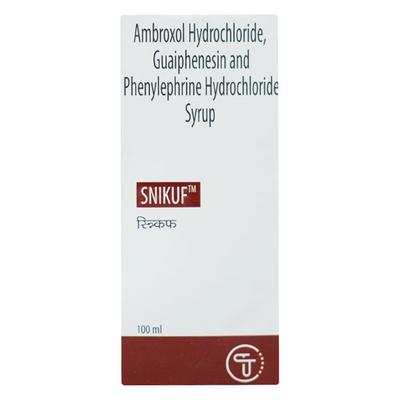
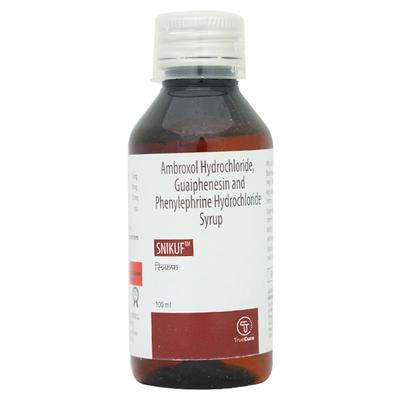
Introduction About SNIKUF SYRUP
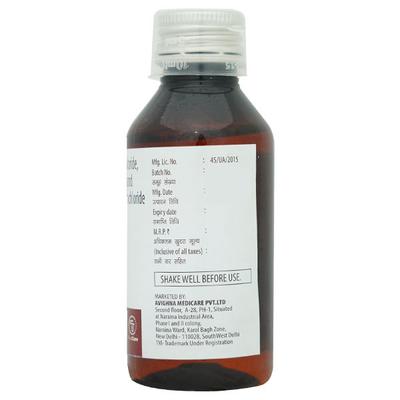
SNIKUF SYRUP contains Ambroxol, Guaiphenesin, and Phenylephrine which belong to the group of medicines called mucolytics, expectorants and Nasal decongestants. It is used for the management of cough and cold. SNIKUF SYRUP is also used for relieving nasal block due to hay fever (seasonal allergy) and sinus congestion. Symptoms of cold and hay fever include redness, itchy, watery eyes, sneezing, itchy nose, or throat, running nose or blocked nose, throat pain, dry cough etc.
Before taking SNIKUF SYRUP, inform your doctor if you are suffering from any sugar intolerance, kidney diseases, liver diseases, peptic ulcer, etc. SNIKUF SYRUP is not recommended for use in patients who are pregnant, breastfeeding, or in children less than 12 years of age.
The most common side effects of taking SNIKUF SYRUP include nausea, numbness in the throat and mouth, altered taste, stomach discomfort, allergic reactions, etc. Consult your doctor if any of the symptoms are worsening.
Uses Of SNIKUF SYRUP
It is used for relieving symptoms of:
- cough and cold (running nose, blocked nose, dry cough, sneezing etc.)
- nasal block associated with hay fever
- sinus congestion
How SNIKUF SYRUP Works
SNIKUF SYRUP contains ambroxol, guaifenesin, and phenylephrine. Ambroxol is a mucolytic agent that manages the excess secretion of mucus; thus, it lowers the phlegm viscosity and makes it easier to cough out.
Guaiphenesin promotes mucus clearance and facilitates coughing up and spitting out the sputum. Phenylephrine is a nasal decongestant that helps to increase sinus cavity drainage and relieve nasal congestion. Thus, [GBBKEYWORD] helps to relieve cough and cold.
How to use SNIKUF SYRUP
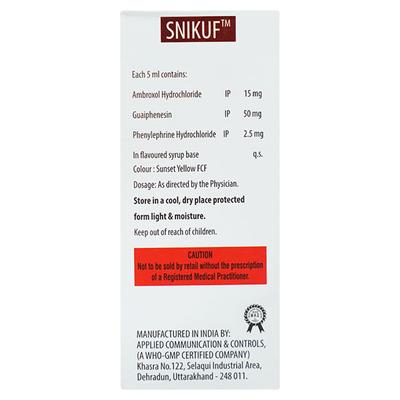
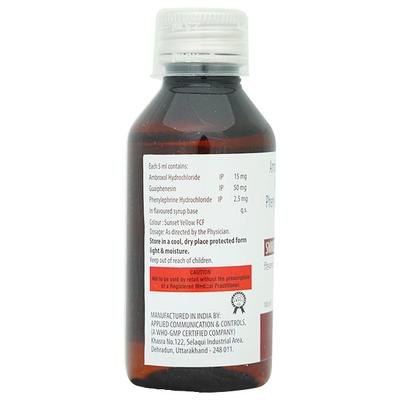
Take SNIKUF SYRUP as advised by your physician. Shake well before use. Your doctor will decide the correct dose and duration for you depending upon your age, body weight and disease condition.
Side Effects Of SNIKUF SYRUP
Common
- nausea
- altered taste and numbness in the mouth
- numbness in the throat
Uncommon
- vomiting
- diarrhoea
- digestive problems
- dry mouth
- stomach pain
Rare
- rashes
- hives
- hypersensitivity reactions
Stop taking SNIKUF SYRUP and contact your doctor immediately if you notice any of the following symptoms:
- swelling in lips, mouth, face, and throat with difficulty in breathing, swallowing and talking (symptoms of angioedema)
- increased heart rate, sweating, fall in blood pressure, difficulty standing up, loss of consciousness (symptoms of anaphylactic shock)
- dryness in the throat
- skin with rashes, blisters, pain along with fever (Steven – Johnson syndrome)
- occurrence of areas with redness and swelling on the body along with fever (skin condition called acute generalized exanthematous pustulosis)
- skin reaction with sores in mouth, throat, genitals, fever, headache etc (symptoms of erythema multiforme
- painful red area that spreads quickly, skin peels without blisters, fever, headache etc (symptoms of toxic epidermal necrolysis)
- nervousness, dizziness, or sleeplessness
- symptoms are not recovering after 7 days
How To Manage Side Effects
Diarrhea
Keep yourself hydrated by drinking plenty of fluids and electrolytes such as ORS. Consult a doctor before taking any medication.

Dry Mouth
Drink plenty of water to make your mouth moist every time. Chew sugar-free gums. Avoid alcohol consumption and cigarette smoking. Consult your doctor if it is worsening.

Nausea And Vomiting
Avoid eating fried and greasy food. Take simple, light, small meals at frequent intervals. Keep yourself hydrated by drinking lots of fluids.
Warning & Precautions

Pregnancy
ContraindicatedSNIKUF SYRUP is not recommended if you are pregnant (especially in the first trimester) Consult your doctor before taking it.

Breastfeeding
ContraindicatedSNIKUF SYRUP is not recommended for breastfeeding mothers. Consult your doctor before taking it.

Kidney
Use with CautionSNIKUF SYRUP should be used with caution in patients suffering from kidney failure (impaired renal function). Consult a doctor before taking SNIKUF SYRUP.

Liver
Use with Caution[GBBKEYWORD] should be used with caution in patients diagnosed with severe liver diseases. Consult your doctor before taking SNIKUF SYRUP.

Allergy
ContraindicatedDo not take SNIKUF SYRUP if you are allergic to ambroxol, guaiphenesin, or phenylephrine. Consult your doctor before taking SNIKUF SYRUP.

Lungs
Use with CautionSNIKUF SYRUP should be used with caution in patients suffering from respiratory diseases that result in a risk of mucus plug formation (bronchial motor diseases) like asthma, bronchiectasis, cystic fibrosis etc. Consult your doctor before taking it.

Heart Disease
Use with CautionSNIKUF SYRUP should be used with caution in patients suffering from heart disease and high blood pressure. Consult your doctor before taking SNIKUF SYRUP.

Use In Pediatrics
ContraindicatedSNIKUF SYRUP is not recommended to use in children below 12 years of age. Consult your doctor before taking it.
Others
Before taking SNIKUF SYRUP inform your doctor if you are:
- having sensitivity to any food or medicine
- having diabetes
- following a sodium-restricted diet
- thyroid diseases
- having sugar intolerance
Interactions
A. Drug-Drug interactions:
Before using SNIKUF SYRUP inform your doctor if you are taking the following medicines:
- medicines used to manage psychiatric problems (ex. monoamine oxidase inhibitors such as tranylcypromine, isocarboxazid etc)
- medicine used to manage fever, and pain (ex. paracetamol)
- medicines used to manage Parkinson’s disease (ex. selegiline, rasagiline)
Overdosage:
If you or anyone else accidentally took too more of this medicine, consult your doctor immediately. Symptoms include nausea and vomiting.
Synopsis
| Drug | : | Ambroxol, Guaiphenesin, Phenylephrine |
| Pharmacological Category | : | Mucolytics, Expectorants, Nasal decongestant |
| Therapeutic Indication | : | Used to relieve symptoms of cough, cold, sinus compression |
| Dosage Forms | : | Syrup |
More Information
- Keep SNIKUF SYRUP out of reach of children
- Store SNIKUF SYRUP at room temperature
FAQs About SNIKUF SYRUP
Q: What is SNIKUF SYRUP used for?
A: SNIKUF SYRUP is used for the management of coughs and colds. SNIKUF SYRUP is also used for relieving nasal block due to hay fever (a seasonal allergy) and sinus congestion. Symptoms of a cold or hay fever include red, itchy, watery eyes; sneezing; an itchy nose or throat; a running or blocked nose; throat pain; a dry cough; etc.
Q: How does SNIKUF SYRUP work?
A: SNIKUF SYRUP contains ambroxol, guaifenesin, and phenylephrine. Ambroxol is a mucolytic agent that manages the excess secretion of mucus; thus, it lowers the phlegm viscosity and makes it easier to cough out.
Guaiphenesin promotes mucus clearance and facilitates coughing up and spitting out the sputum. Phenylephrine is a nasal decongestant that helps to increase sinus cavity drainage and relieve nasal congestion. Thus, [GBBKEYWORD] helps to relieve cough and cold.
Q: What are the most common side effects of taking SNIKUF SYRUP?
A: The most common side effects of taking SNIKUF SYRUP include nausea, numbness in the throat and mouth, altered taste, stomach discomfort, allergic reactions, etc. Consult your doctor if any of the symptoms are worsening.
Q: Can I use SNIKUF SYRUP for managing cough in a 5-year-old child?
A: SNIKUF SYRUP is not recommended for use in children below 12 years of age. Consult your doctor before taking SNIKUF SYRUP to avoid unwanted side effects.
Q: How to use and store SNIKUF SYRUP
A: Take SNIKUF SYRUP as advised by your physician. Shake well before use. Your doctor will determine the correct dose and duration for you depending upon your age, body weight, and disease condition. Store SNIKUF SYRUP at room temperature and keep it out of reach of children.
References
1. KD Tripathi. Autocoids and related drugs. Essentials of Medical Pharmacology.8th edition. 2019. Page – 238, 240, 242.
2. Evan Richards. Michael j. Lopez. Christopher V Maani. Phenylephrine. Richards, Evan, Michael J. Lopez, and Christopher V. Maani. Phenylephrine. In Stat Pearls [Internet]. StatPearls Publishing, 2021. [Revised on 11th July 2022] [Accessed on 16th August 2022] https://www.ncbi.nlm.nih.gov/books/NBK534801/
3. Reckitt Benckiser Health Care. Electronic Medicines Compendium (EMC). [Revised in March 2012] [Accessed on 16th August 2022] https://www.medicines.org.uk/emc/files/pil.616.pdf
4. Sandoz d.d. Estonian branch. Ambroxol. [Revised in June 2016] [Accessed on 16th August 2022] https://www.ravimiregister.ee/Data/PIL_ENG/PIL_10403_ENG.pdf
5. LABORATORIOS CINFA, S.A. Ambroxol. [Revised in May 2016] [Accessed on 16th August 2022] https://www.cinfainternational.com/wp-content/uploads/PIL_ambroxol_HK.pdf
6. OTC monograph final Dailymed. Phenylephrine [Revised in March 2021] [Accessed on 16th August 2022] https://dailymed.nlm.nih.gov/dailymed/drugInfo.cfm?setid=4dfd46e4-b9f9-464d-aa47-e8fa9e526a5d
7. Dailymed. Phenylephrine. [Revised in March 2022] [Accessed on 16th August 2022] https://dailymed.nlm.nih.gov/dailymed/fda/fdaDrugXsl.cfm?setid=d7d62ac1-1333-4366-884b-26537766ce38&type=display
Author Details