



Netmeds First Membership
Quick Links
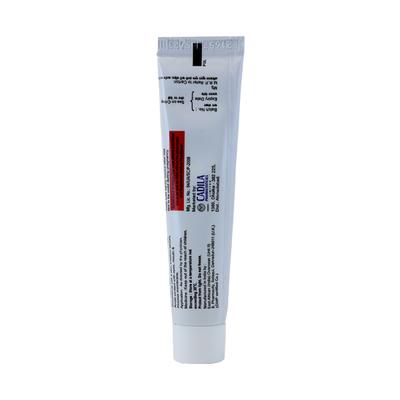
Introduction About SKINSHINE CREAM
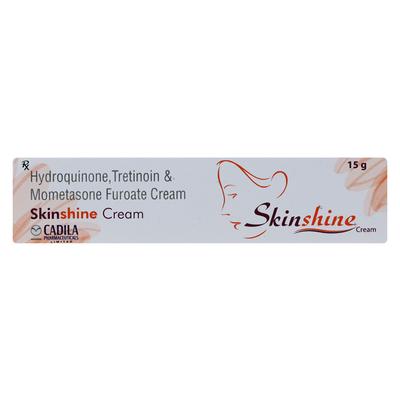
Skinshine Cream is a dermatological medicine recommended for facial hyperpigmentation, including melasma, post-inflammatory dark spots, sun-induced pigmentation, age-related skin darkening, and uneven skin tone, used under medical supervision, that works by reducing excess melanin formation and improving skin turnover, helping lighten dark facial patches.
Skinshine Cream is for external use only and should be used exactly as prescribed by your doctor, following the recommended dose and duration. Wash your hands before and after applying the cream and always check the product label for instructions before use. Do not exceed the recommended dose to ensure safe and effective use.
Most common side effects of this medicine include mild redness, dryness, stinging, or burning sensations at the application site. Other effects can include peeling, flaking, or itching. These reactions are usually temporary, but if they persist or worsen, consult your doctor promptly.
Skinshine Cream should be used only under medical supervision and for short-term, intermittent use. It is intended for external application on the face and should not come into contact with the eyes, mouth, or mucous membranes. During use, avoid sun exposure and UV light, as this may affect the managed areas. It is recommended to apply sunscreen regularly to protect the skin.
The safety of Skinshine Cream has not been established during pregnancy or in children under 12 years. Caution is advised for breastfeeding women. Use should be discontinued immediately if severe irritation, allergic reactions, or worsening skin symptoms occur, and a doctor should be consulted.
Uses Of SKINSHINE CREAM
Used to manage the following conditions under medical supervision:
- Facial hyperpigmentation
- Melasma (gray-brown patches on the face)
- Post-inflammatory dark spots following acne or skin injuries
- Sun-induced pigmentation
- Age-related skin darkening
- Uneven skin tone
Benefits of SKINSHINE CREAM
01) Skinshine Cream for Melasma (Facial Pigmentation)
Skinshine Cream is recommended for managing melasma, a common form of facial pigmentation that appears as gray-brown patches on the cheeks, forehead, or upper lip. It is used under medical supervision as part of a structured skincare plan.
02) Helps Reduce Appearance of Dark Spots
This cream may help reduce the appearance of dark spots associated with excess melanin deposition. Regular use as advised by a doctor supports visible improvement over time.
03) Supports Improvement in Uneven Skin Tone
Skinshine Cream is often advised for individuals experiencing uneven skin tone due to localized pigmentation. It works gradually to promote a more balanced-looking complexion.
04) Commonly Recommended for Hyperpigmentation
Dermatologists may recommend Skinshine Cream for various forms of hyperpigmentation, including patchy or localized skin darkening on the face.
05) May Help with Post-Acne Dark Marks
Skinshine Cream is suitable for post-inflammatory dark marks that may remain after acne subsides. It is typically used as part of a dermatologist-guided skincare routine.
06) Used for Sun-Induced Skin Discoloration
Excessive sun exposure can contribute to skin discoloration and dark patches. Skinshine Cream may be advised alongside sun-protective measures to manage such pigmentation concerns.
07) Suitable for Patchy Facial Pigmentation
For individuals experiencing patchy facial pigmentation, this formulation is prescribed under medical supervision to help improve overall skin clarity.
08) Often Advised for Hormonal Pigmentation Concerns
Hormonal changes may lead to visible pigmentation changes on the face. Skinshine Cream is sometimes recommended for such concerns, based on clinical evaluation.
09) Supports Gradual Brightening of Affected Areas
With consistent and supervised use, Skinshine Cream may support gradual brightening of pigmented areas, contributing to a more even skin appearance.
10) Used in Dermatology Practice for Complex Pigmentation Cases
In dermatology practice, Skinshine Cream may be prescribed for complex or persistent pigmentation concerns, following proper assessment and guidance.
How SKINSHINE CREAM Works
01) How the Triple Combination Formula Works Together
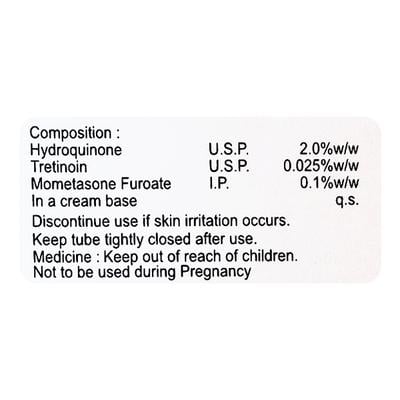
Skinshine Cream contains a triple combination formula of Hydroquinone, Tretinoin, and Mometasone that works in a coordinated manner to address facial hyperpigmentation. Each ingredient performs a specific role, and together they support improved pigment regulation and skin clarity under medical supervision.
02) Synergistic Action of Hydroquinone, Tretinoin, and Mometasone
The three active ingredients function through a synergistic approach. Hydroquinone helps regulate melanin production, Tretinoin promotes skin cell turnover, and Mometasone helps reduce inflammation that may contribute to pigmentation changes. This combined action enhances overall effectiveness compared to single-ingredient formulations.
03) How Skinshine Cream Targets Pigment Formation at Multiple Levels
Skinshine Cream works at different stages of pigment formation. It supports the regulation of excess melanin synthesis, assists in removing pigmented surface cells through controlled exfoliation, and helps calm inflammatory responses that may trigger uneven pigmentation.
04) Cellular-Level Action of Skinshine Cream
At the cellular level, the formulation influences melanin-producing cells (melanocytes) and supports structured skin renewal. By promoting controlled cell turnover and pigment dispersion, it contributes to gradual improvement in the appearance of darkened areas.
05) How Active Ingredients Enhance Skin Renewal and Pigment Balance
Tretinoin encourages renewal of the outer skin layer, Hydroquinone supports pigment balance, and Mometasone helps maintain skin comfort during use. This combined mechanism promotes a more even-looking complexion when used as directed by a healthcare professional.
How to use SKINSHINE CREAM
01) How to Apply Skinshine Cream Correctly
- Skinshine Cream should be applied exactly as prescribed by your doctor.
- Cleanse and dry the affected area before application.
- Take a small amount and apply it gently to the targeted area, avoiding contact with the eyes, mouth, and mucous membranes.
- Wash your hands after use.
02) Step-by-Step Guide for Night-Time Application
- Skinshine Cream is generally advised for night-time use.
- Wash your face with a mild cleanser and pat dry.
- Wait for the skin to dry completely before applying a thin layer to the affected area.
- Leave it on overnight unless otherwise directed by your doctor. Follow sun-protective measures during the day.
03) How Much Skinshine Cream Should Be Applied
- Use only a small, pea-sized amount unless otherwise directed by your healthcare professional.
- Applying more than the prescribed quantity does not enhance results and may increase the risk of irritation.
04) Applying a Thin Layer: Why Quantity Matters
- A thin layer is sufficient to cover the affected area.
- Using the correct quantity helps ensure even application and supports safe use.
- Avoid over-application or frequent re-application unless advised by your doctor.
05) Spot Application vs Full-Face Application
- Skinshine Cream is typically applied only to the affected areas of pigmentation, unless your doctor recommends otherwise.
- Spot application helps target specific dark patches, while full-face application should only be done if specifically instructed by a healthcare professional.
Side Effects Of SKINSHINE CREAM
Common:
- Application site reactions such as redness, dryness, stinging or burning sensations, peeling, flaking, or itching.
How To Manage Side Effects

Application Site Reactions
• Apply a Moisturizer if Advised: Using a gentle, non-comedogenic moisturizer may help reduce dryness and flaking. Consult your doctor before adding any skincare product.
• Avoid Harsh Skincare Products: Limit the use of scrubs, exfoliants, alcohol-based products, or strong cleansers that may worsen irritation.
• Protect Skin from Sun Exposure: Use sunscreen and avoid excessive sun exposure, as irritated skin may become more sensitive.
• Do Not Over-Apply the Cream: Use only the prescribed amount to reduce the likelihood of increased irritation.
• Seek Medical Advice: Contact your healthcare provider if irritation becomes severe, persistent, or uncomfortable.
Warning & Precautions

Pregnancy
Consult your doctorThe safety of Skinshine Cream during pregnancy has not been established. If you are pregnant or planning to become pregnant, consult your doctor before use.

Breastfeeding
Use with CautionSkinshine Cream should be used with caution in breastfeeding women. Seek medical advice before applying this medicine while nursing.

Allergy
ContraindicatedDo not use Skinshine Cream if you are allergic to Hydroquinone or Tretinoin, Mometasone, or any other ingredients in the formulation. Inform your doctor about any history of drug allergies before use.

Use In Pediatrics
Consult your doctorThe safety and effectiveness of Skinshine Cream in children below 12 years of age have not been established. Consult a pediatrician before giving it.

Use In Geriatrics
Consult your doctorThere is limited information available regarding the use of Skinshine Cream in elderly patients. Medical advice is recommended before use. Consult your doctor before taking it.
Drug - Drug interaction
1. Other Topical Retinoids (e.g., Adapalene, Tazarotene)
- Interaction: Using Skinshine Cream along with other retinoid-containing products may increase skin sensitivity and irritation.
- Effects: May lead to excessive redness, peeling, dryness, or discomfort at the application site.
- Management: Avoid combining topical retinoids unless specifically advised by your doctor. Inform your healthcare provider about all skincare products you are using.
2. Other Skin-Lightening Agents (e.g., Hydroquinone-containing products)
- Interaction: Concurrent use with additional hydroquinone products may increase the risk of skin irritation.
- Effects: May cause increased redness, dryness, or uneven skin response.
- Management: Use only one depigmenting formulation at a time unless directed by a healthcare professional.
3. Topical Corticosteroids (e.g., Betamethasone, Clobetasol)
- Interaction: Combining Skinshine Cream with other corticosteroid products may enhance steroid-related skin effects.
- Effects: May increase the risk of skin thinning or sensitivity with prolonged use.
- Management: Use strictly as prescribed and avoid additional steroid creams unless recommended by your doctor.
4. Irritating Skincare Products (e.g., Alcohol-based toners, Chemical Exfoliants)
- Interaction: Using harsh cosmetic or exfoliating products alongside Skinshine Cream may increase skin irritation.
- Effects: May result in excessive dryness, burning sensation, or peeling.
- Management: Choose mild cleansers and avoid abrasive skincare products during use.
5. Photosensitizing Medicines (e.g., Certain Antibiotics or Acne Medications)
- Interaction: Some medicines may increase skin sensitivity to sunlight when used with Skinshine Cream.
- Effects: May raise the likelihood of sun-related skin reactions.
- Management: Inform your doctor about all medicines you are taking and follow recommended sun-protection measures.
Synopsis
|
Drug |
: |
Hydroquinone, Tretinoin, Mometasone |
|
Pharmacological Category |
: |
Hypopigmenting agents, Retinoids, Corticosteroids |
|
Therapeutic Indication |
: |
Melasma, post-inflammatory dark spots, Sun-induced pigmentation, Age-related skin darkening, Uneven skin tone |
|
Dosage Forms |
: |
Cream |
More Information
01)Why are triple-combination creams like Skinshine Cream prescribed only for specific pigmentation patterns?
Triple-combination creams (Hydroquinone + Tretinoin + Mometasone) are prescription medicines used mainly for melasma and certain types of hyperpigmentation. They are not regular cosmetic creams and are recommended only for specific pigmentation patterns due to their potency and safety profile.
They are designed specifically for melasma
These creams work best for:
- Symmetrical brown patches on cheeks, forehead, or upper lip
- Hormone-related pigmentation (melasma)
- Sun-aggravated facial pigmentation
They are not suitable for:
- Freckles
- Birthmarks
- Natural skin tone enhancement
- General “fairness” use
Using them for the wrong condition may not improve pigmentation and can worsen it.
They contain a topical steroid
Mometasone (a corticosteroid) reduces inflammation but can cause side effects if misused, such as:
- Skin thinning
- Acne and rosacea-like eruptions
- Increased facial hair
- Steroid dependence
- Rebound pigmentation after stopping
Because of this, doctors prescribe them only for specific patterns and short durations.
Not all pigmentation is the same
Different dark spots have different causes. Managements depends on:
- Depth of pigmentation (epidermal vs dermal)
- Hormonal factors
- Sun exposure
- Inflammation
Triple creams are effective only when the pigmentation type matches the mechanism of action.
Risk of long-term complications
Prolonged or unsupervised use may lead to:
- Post-inflammatory hyperpigmentation
- Persistent redness
- Rare ochronosis (bluish-black discoloration)
That’s why dermatological supervision is essential.
Requires strict sun protection
These creams increase skin sensitivity. Without daily sunscreen:
- Results reverse quickly
- Pigmentation may worsen
Proper guidance ensures safe and effective outcomes.
Conclusion
Triple-combination creams like Skinshine Cream are prescribed only for specific pigmentation patterns such as melasma because they contain a potent steroid along with skin-lightening and exfoliating agents. Incorrect or prolonged use can damage the skin and worsen pigmentation. Always use under medical supervision for a limited period with strict sun protection.
02) Why is duration monitoring important while using Skinshine Cream?
Skinshine Cream is a triple-combination prescription medicine containing hydroquinone (depigmenting agent), tretinoin (retinoid), and mometasone (topical corticosteroid). Because it includes a steroid and strong active ingredient, monitoring the duration of use is essential for safety and effectiveness.
Contains a Potent Steroid (Mometasone)
Prolonged steroid use on the face can cause:
- Skin thinning (atrophy)
- Acne and rosacea-like eruptions
- Visible blood vessels
- Increased facial hair
- Steroid dependence
Monitoring duration (usually short-term, 4–8 weeks) helps to control these complications.
Control Rebound Pigmentation
Using the cream for too long or stopping abruptly may lead to:
- Return of melasma
- Darker rebound pigmentation
- Increased skin sensitivity
Controlled duration ensures gradual improvement without worsening the condition.
Reduces Risk of Hydroquinone-Related Complications
Long-term or unsupervised hydroquinone use may rarely cause:
- Exogenous ochronosis (bluish-black pigmentation)
- Uneven skin lightening
Time-bound therapy lowers these risks.
Avoids Skin Barrier Damage from Tretinoin
Tretinoin increases skin turnover. Overuse can lead to:
- Redness
- Peeling
- Burning sensation
- Irritation
Duration monitoring helps maintain skin barrier health.
Ensures Safe and Effective Results
Dermatologists:
- Prescribe for limited duration
- Assess improvement regularly
- Gradually taper if needed
- Recommend strict sunscreen use
This approach maximizes benefits while minimizing harm.
Conclusion:
Duration monitoring is important while using Skinshine Cream because it contains a topical steroid and potent depigmenting agents. Prolonged or unsupervised use can cause skin thinning, rebound pigmentation, irritation, and long-term complications. Therefore, it should be used only for a limited period under medical supervision with proper sun protection.
03) Why does dermatologist evaluation matter in facial hyperpigmentation?
Facial hyperpigmentation is not just a cosmetic concern, it can have different causes, depths, and triggers. A dermatologist’s evaluation ensures accurate diagnosis, safe management, and long-term skin health.
Accurate Diagnosis of the Pigmentation Type
Not all dark spots are the same. Common causes include:
- Melasma
- Post-inflammatory hyperpigmentation (after acne)
- Sun-induced pigmentation
- Hormonal pigmentation
- Drug-induced pigmentation
Each condition requires a different management approach. Self-management without proper diagnosis may worsen pigmentation.
Assessment of Pigmentation Depth
Dermatologists determine whether pigmentation is:
- Epidermal (superficial) – responds well to creams
- Dermal (deeper) – may need procedures or combination therapy
Incorrect management selection can delay improvement and cause irritation.
Controlling of Steroid Misuse
Many over the counter or improperly used creams contain topical steroids. Unsupervised use may lead to:
- Skin thinning
- Acne and rosacea
- Steroid dependence
- Rebound hyperpigmentation
A dermatologist prescribes safe alternatives and limits duration appropriately.
Identification of Underlying Triggers
Hyperpigmentation may be linked to:
- Hormonal imbalance
- Pregnancy
- Sun exposure
- Certain medications
- Thyroid disorders
Managing only the surface pigmentation without addressing triggers leads to recurrence.
Personalized management Plan
A dermatologist may recommend:
- Prescription depigmenting agents
- Chemical peels
- Laser therapy
- Strict photoprotection
- Maintenance therapy
This tailored approach ensures safe, gradual, and sustainable results.
Conclusion:
Dermatologist evaluation in facial hyperpigmentation is important because different pigmentation types require different managements. Proper assessment reduce steroid misuse, reduces complications, identifies underlying causes, and ensures safe and effective management. Self-medication may worsen the condition and delay recovery.
04) When do dermatologists consider combination formulas for skin pigmentation?
Dermatologists consider combination formulas (such as depigmenting agent + retinoid + mild corticosteroid) when single managements are not sufficient or when pigmentation has multiple contributing factors. These prescription combinations are commonly used in conditions like melasma and resistant hyperpigmentation.
When Pigmentation Has Multiple Causes
Some facial pigmentation results from:
- Increased melanin production
- Inflammation
- Sun exposure
- Hormonal triggers
Combination formulas target different pathways simultaneously, improving management effectiveness.
When Monotherapy Fails
If a single agent (e.g., hydroquinone alone) does not provide adequate improvement, dermatologists may add:
- A retinoid to enhance skin turnover
- A mild corticosteroid to reduce irritation and inflammation
This improves penetration and overall results.
In Moderate to Severe Melasma
Combination therapy is often preferred in:
- Persistent melasma
- Symmetrical facial patches
- Sun-aggravated pigmentation
It provides faster and more noticeable improvement compared to single agents.
To Reduce Irritation
Retinoids and depigmenting agents may cause redness and peeling. A short-term mild corticosteroid in the combination:
- Controls inflammation
- Improves patient tolerance
- Enhances compliance
However, duration is strictly monitored to avoid steroid-related side effects.
For Short-Term Intensive Therapy
Combination formulas are typically prescribed:
- For limited periods (often 4–8 weeks)
- Under medical supervision
- Along with strict sunscreen use
Long-term maintenance is usually shifted to non-steroidal options.
Conclusion:
Dermatologists consider combination formulas in facial hyperpigmentation when the condition is moderate to severe, resistant to single therapy, or involves multiple mechanisms such as increased melanin production and inflammation. These combinations improve effectiveness but require short-term, supervised use to reduce side effects.
05) What are the differences between triple-combination creams and single-ingredient creams for pigmentation?
When managing facial hyperpigmentation, dermatologists may prescribe either triple-combination creams (e.g., hydroquinone + tretinoin + mild corticosteroid) or single-ingredient creams. The choice depends on severity, cause, and patient skin type.
Composition
Triple-Combination Creams
- Contain three active ingredients:
- Depigmenting agent (e.g., hydroquinone)
- Retinoid (e.g., tretinoin)
- Mild corticosteroid
- Target multiple mechanisms of pigmentation
Single-Ingredient Creams
- Contain only one active ingredient
- Target a single pathway of pigmentation
Speed of Results
Triple Combination
- Faster improvement
- Often used in moderate to severe melasma
Single Ingredient
- Slower but gradual results
- Suitable for mild pigmentation
Safety Profile
Triple Combination
- Higher risk of side effects due to steroid content
- Requires short-term use and medical supervision
Single Ingredient
- Lower risk profile
- Safer for long-term maintenance therapy
Indications
Triple Combination
- Moderate to severe melasma
- Resistant pigmentation
- Short-term intensive management
Single Ingredient
- Mild hyperpigmentation
- Maintenance after initial improvement
- Sensitive skin types
Duration of Use
Triple Combination
- Typically prescribed for 4–8 weeks
- Not recommended for prolonged use
Single Ingredient
- Can be used longer under supervision
Conclusion:
Triple-combination creams act on multiple mechanisms and provide faster results in moderate to severe pigmentation but carry a higher risk of side effects and require short-term supervised use. Single-ingredient creams are safer, suitable for mild pigmentation, and preferred for long-term maintenance therapy.
FAQs About SKINSHINE CREAM
Q: What is Skinshine Cream used for?
A: Skinshine Cream is a prescription triple-combination cream with Hydroquinone, Tretinoin, and Mometasone, used to manage melasma and specific facial hyperpigmentation.
Q: How does Skinshine Cream work?
A: It reduces melanin production, speeds up skin cell turnover, and controls inflammation, targeting pigmentation from multiple causes.
Q: Can Skinshine Cream be used daily?
A: Yes, usually once daily in the evening, but frequency should follow your dermatologist’s advice to avoid side effects.
Q: How long does it take to see results?
A: Visible improvement is typically seen in 4–8 weeks, depending on pigmentation type, severity, and sun protection adherence.
Q: Is sunscreen necessary while using Skinshine Cream?
A: Yes. Sunscreen and sun protection are essential as the cream increases skin sensitivity to sunlight and reduce the worsening of pigmentation.
Q: Who should use Skinshine Cream?
A: Adults with symmetrical facial pigmentation patterns, mainly melasma, should use it only under dermatologist supervision.
Q: How should Skinshine Cream be applied?
A: Apply a thin layer on affected areas in the evening, avoiding unaffected skin or general skin lightening.
Q: Can Skinshine Cream be used for general skin lightening?
A: No. It is not a cosmetic fairness cream and improper use can damage the skin or worsen pigmentation.
Q: Are there any side effects?
A: Possible effects include redness, peeling, acne, or skin thinning; most are minimized with proper duration and supervision.
Q: Why is dermatologist supervision necessary?
A: Dermatologist guidance ensures accurate diagnosis, safe use, monitoring for side effects, and control the rebound pigmentation.
Q: How can I buy Skinshine Cream on Netmeds?
A: Upload a valid doctor’s prescription, add the cream to your cart, and complete checkout for home delivery from Netmeds.
Q: Can it be used with other creams or cosmetics?
A: Avoid combining with other steroid creams or harsh cosmetics; consult your dermatologist before adding any products.
References
1)KD Tripathi. Drugs Acting on Skin and Mucous Membranes. Essentials of Medical Pharmacology. Eighth Edition, 2019. Page – 952, 953, 955.
2)Kiran V Godse 1. TRIPLE COMBINATION OF HYDROQUINONE, TRETINOIN AND MOMETASONE FUROATE WITH GLYCOLIC ACID PEELS IN MELASMA. NIH National Library of Medicine, National Centre for Biotechnology. Pubmed Central. 2009 Jan-Mar. [Accessed on 19th Feb 2026] 
3)Swalin Parija. Amaresh Chandra Sahoo. Sundeep Kumar H K. Bishwanath Mishra. FORMULATION DEVELOPMENT AND EVALUATION OF TRIPLE COMBINATION CREAM OF HYDROQUINONE, TRETINOIN AND MOMETASONE FUROATE FOR THE TREATMENT OF SKIN DISORDERS. IJPIR Journal Journal. [Accessed on 19th Feb 2026] 
4)Imran Majid 1,. MOMETASONE-BASED TRIPLE COMBINATION THERAPY IN MELASMA: IS IT REALLY SAFE?. NIH National Library of Medicine, National Centre for Biotechnology. PMC, Pubmed Central. 2010 Oct-Dec. [Accessed on 19th Feb 2026]
5)Torque pharma. No Scars cream. [Accessed on 19th Feb 2026]
6)Leeford Healthcare. Ultrabrite Cream. [Accessed on 19th Feb 2026]
7)Conical Pharmaceuticals Pvt. Ltd. Deroton Cream. [Accessed on 19th Feb 2026]
8)YAXON BIOCARE PVT. LTD. Shine-On Cream. [Accessed on 19th Feb 2026]
9)TORRENT PHARMACEUTICALS LTD. LOOKBRITE Cream. [Accessed on 19th Feb 2026]
10)Glasier Wellness Inc. Hydrip®- MT Cream. [Accessed on 19th Feb 2026]
Useful Diagnostic Tests
Author Details