

Netmeds First Membership
Quick Links
Introduction About REOCAL INJECTION
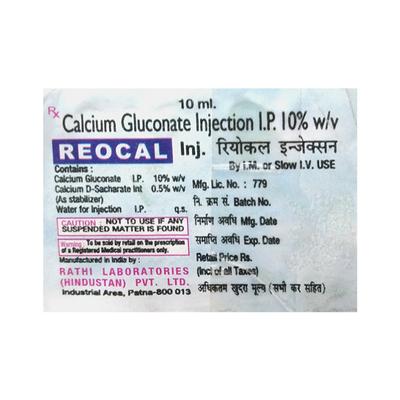
REOCAL INJECTION is used to replace low levels of calcium in the body (acute symptomatic hypocalcaemia), to manage an abnormal heartbeat (arrhythmia), and to help restore normal heart function in an emergency (cardiac arrest) due to high potassium levels in the blood (severe hyperkalaemia).
It is also used to manage lead and fluoride poisoning. It contains Calcium gluconate, which belongs to the group of medicines called calcium salts, which work by increasing calcium levels in the blood. During management, your blood and urine calcium levels will be monitored closely.
REOCAL INJECTION is not recommended for use if you have high levels of calcium in the urine or blood, excessive levels of vitamin D, a tumour, impaired kidney function, osteoporosis, sarcoidosis, or the so-called milk-alkali syndrome. It is also not recommended if you are a child less than 18 years of age and require repeated or prolonged management due to the risk of exposure to aluminium and in Total Parenteral Nutrition (TPN) (feeding by passing stomach via administration into a vein).
Before receiving REOCAL INJECTION, inform your doctor if you suffer from chronic kidney disease, are at risk of stone formation in your urinary tract, suffer from deposition of calcium in the kidneys, have sarcoidosis (swollen or inflamed patches of tissue), or have heart disease.
REOCAL INJECTION is generally not recommended for use in pregnant and breastfeeding women unless clearly advised by the doctor. REOCAL INJECTION should not be used for repeated or prolonged management in children (less than 18 years of age) or those with impaired kidney function due to the risk of exposure to aluminium. It should be used with caution with elderly patients.
The most common side effects of receiving REOCAL INJECTION are local tissue irritation, reddening of the skin, a burning sensation, and pain during the injection or infusion. Consult your doctor if any of the side effects worsen.
Uses Of REOCAL INJECTION
- It is used to replace low levels of calcium in the body
- To manage an abnormal heartbeat and heart function (cardiac arrest) due to high potassium levels in the blood.
- To manage lead and fluoride poisoning
How REOCAL INJECTION Works
REOCAL INJECTION works by increasing the levels of calcium in the blood or by binding to excess potassium or magnesium in the blood. Calcium is necessary for the normal function of nerves and muscles, muscle contraction, cardiac function, and blood coagulation.
How to use REOCAL INJECTION
REOCAL INJECTION will be given to you only by a doctor or a nurse into a vein as an intravenous injection or infusion. Your doctor will decide the correct dose and duration of management depending on your age, body weight, and disease condition.
Side Effects Of REOCAL INJECTION
Common
- local tissue irritation, reddening of the skin, burning sensation, and pain during injection or infusion
Rare
- Severe, and in some cases fatal, adverse reactions following intravenous administration of ceftriaxone and calcium salt in preterm and full-term newborns (less than 28 days old)
Warning & Precautions

Pregnancy
Monitoring requiredREOCAL INJECTION is generally not recommended for use in pregnant women unless clearly necessary. Consult your doctor before receiving REOCAL INJECTION.

Breastfeeding
Use with CautionREOCAL INJECTION should be used with caution in breastfeeding women as it passes through the breastmilk. Consult your doctor if breastfeeding should be discontinued.

Driving and Using Machines
Use with CautionDo not drive or operate any machines if you feel any unusual effects after receiving REOCAL INJECTION.

Kidney
Consult your doctorREOCAL INJECTION is not recommended for use if you have kidney disease and require repeated or prolonged management due to the risk of exposure to aluminium. It should be used with caution in patients with chronic kidney disease, who are at risk of stone formation in their urinary tract, or who suffer from the deposition of calcium in their kidneys (nephrocalcinosis). Consult your doctor before using it.

Allergy
ContraindicatedDo not receive REOCAL INJECTION if you are allergic to calcium gluconate or any other ingredients in this medicine.

Heart Disease
Use with CautionREOCAL INJECTION should be used with caution in patients with heart disease. Consult your doctor before receiving REOCAL INJECTION.

Use In Pediatrics
ContraindicatedREOCAL INJECTION should not be used for repeated or prolonged management in children (less than 18 years of age) or those with impaired kidney function due to the risk of exposure to aluminium. Consult your doctor before using it.

Use In Geriatrics
Use with CautionREOCAL INJECTION 10 ml should be used with caution in elderly patients. Consult your doctor before receiving REOCAL INJECTION.
Others
REOCAL INJECTION is not recommended for use if you:
- Have high levels of calcium in your urine (hypercalciuria)
- Have high levels of calcium in your blood (Ex. hyperparathyroidism)
- Have excessive levels of vitamin D
- Have a tumour
- Have osteoporosis due to a lack of mobility,
- Have sarcoidosis, or so-called milk-alkali syndrome
- for Total Parenteral Nutrition (TPN) (feeding by passing the stomach via administration into a vein) due to the risk of exposure to aluminium
Before receiving REOCAL INJECTION, inform your doctor if you:
- Have sarcoidosis (swollen or inflamed patches of tissue, usually affecting the lungs and skin)
Interactions
A. Drug-Drug interactions:
- cardiac glycosides like digoxin
- thiazide diuretics (Ex. chlorthalidone)
- antibiotics like ceftriaxone
- sympathomimetic agents like adrenaline (epinephrine)
- magnesium and calcium
- calcium channel blockers (Ex. amlodipine)
- vitamin D
Overdosage:
Since REOCAL INJECTION 10 ml will be given to you by a doctor or nurse, it is unlikely that you will be given too much. If you think you have been given too much, you feel sick, are constipated, have stomach pain, suffer muscle weakness, feel thirsty, are passing a lot of urine, feel confused, or have bone pain. Tell your doctor immediately.
Synopsis
| Drug | : | Calcium Gluconate |
| Pharmacological Category | : | Calcium salts |
| Therapeutic Indication | : |
Low calcium levels, abnormal heartbeat, cardiac arrest, lead and fluoride poisoning |
| Dosage Forms | : | Injection |
More Information
Storage
- Keep REOCAL INJECTION out of the reach of children.
- Store at room temperature
FAQs About REOCAL INJECTION
Q: What is REOCAL Injection 10 ml used for?
A: REOCAL Injection 10 ml is used to replace low levels of calcium in the body and manage abnormal heartbeat and heart function (cardiac arrest) due to high potassium levels in the blood. It is also used to manage lead and fluoride poisoning.
Q: What if I accidentally receive more of REOCAL Injection 10 ml?
A: Since the injection will be given to you by a doctor or nurse, it is unlikely that you will be given too much. If you think you have been given too much, feel sick, are constipated, have stomach pain, suffer muscle weakness, feel thirsty, are passing a lot of urine, feel confused, or have bone pain, you must tell the person giving you the injection immediately.
Q: What are the possible drug interactions with REOCAL Injection 10 ml?
A: REOCAL Injection 10 ml can interact with certain medications, including digoxin, tetracycline antibiotics, and calcium-channel blockers. It's essential to inform your healthcare provider about all medications, supplements, and herbal products you are taking to avoid potential interactions and ensure safe use of calcium gluconate injections.
Q: What does REOCAL Injection 10 ml contain?
A: REOCAL Injection 10 ml contains Calcium gluconate, which belongs to the group of medicines called calcium salts, which work by increasing calcium levels in the blood.
Q: What are the side effects of REOCAL Injection 10 ml?
A: The most common side effects of receiving REOCAL INJECTION are local tissue irritation, reddening of the skin, a burning sensation, and pain during the injection or infusion. Consult your doctor if any of the side effects worsen.
Q: How quickly does REOCAL Injection 10 ml work?
A: The onset of action of REOCAL Injection 10 ml can vary depending on the individual's condition and the severity of calcium deficiency. In some cases, patients may experience a noticeable improvement in symptoms relatively quickly after receiving the injection, while in others, it may take more time for the effects to become apparent.
Q: Can REOCAL Injection 10 ml be given at home?
A: In most cases, REOCAL Injection 10 ml are administered in a clinical setting by trained healthcare professionals due to the need for proper monitoring and expertise in handling IV medications. However, some patients may receive instructions for at-home administration under specific circumstances.
Q: What should I do if I miss a dose of REOCAL Injection 10 ml?
A: If you miss a dose of REOCAL Injection 10 ml, contact your healthcare provider for instructions. It's essential to follow their guidance to ensure proper management of your condition.
Q: Can I buy REOCAL Injection 10 ml online?
A: If you wish to buy REOCAL Injection 10 ml in Netmeds, you need a prescription from a registered medical practitioner. Netmeds has made buying online medicines more easy for consumers and is one of India's leading online pharmacies.
Q: How does REOCAL INJECTION work?
A: REOCAL INJECTION works by increasing the levels of calcium in the blood or by binding to excess potassium or magnesium in the blood. Calcium is necessary for the normal function of nerves and muscles, muscle contraction, cardiac function, and blood coagulation.
References
1. KD. Tripathi. Drugs affecting calcium balance. Seventh edition. 2013. Chapter 24. Page – 335.
2. Anumita Chakraborty, Ahmet S. Calcium gluconate. NIH, National Library of Medicine. National Center for Biotechnology Information. PubMed. January 2024 [Accessed on 17th April 2024] https://pubmed.ncbi.nlm.nih.gov/32491395/
3. Nalan Gokce Celebi Yamanoglu and Adnan Yamanoglu. The effect of calcium gluconate in the treatment of hyperkalemia. NIH, National Library of Medicine. National Center for Biotechnology Information. PubMed Central. April 2022. [Accessed on 17th April 2024] https://www.ncbi.nlm.nih.gov/pmc/articles/PMC9069919/
4. Siegfried Hameln GmbH. Electronic Medicines Compendium (EMC). [Revised in May 2023] [Accessed on 17th April 2024] https://www.medicines.org.uk/emc/files/pil.6264.pdf
5. Fresenius kabi. U.S. Food & Drug Administration. [Revised in June 2017] [Accessed on 17th April 2024] https://www.accessdata.fda.gov/drugsatfda_docs/label/2017/208418s000lbl.pdf
Useful Diagnostic Tests
- Complete Blood Count (CBC)/ Hemogram
- Kidney Profile (Kft) With Electrolytes
- Pth-Intact Molecule Parathyroid Hormone
- Calcium
Author Details