



Netmeds First Membership
Quick Links
Introduction About REDAPT CT TABLET
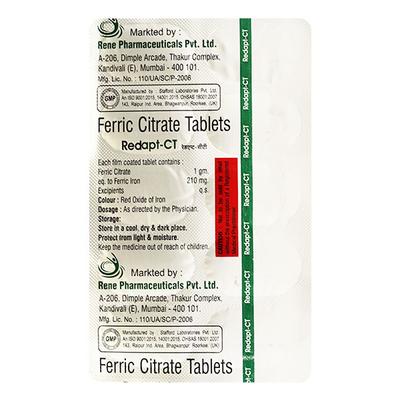
REDAPT CT TABLET contains Ferric citrate which belongs to the group of medicines called Phosphate binder and Iron replacement agents. It is indicated for the control of serum phosphorus levels in adult patients with chronic kidney disease on dialysis and for the management of iron deficiency anaemia in adults with chronic kidney disease not on dialysis.
REDAPT CT TABLET is not recommended for use in patients with iron overload syndromes (hemochromatosis). Contact your doctor before taking. REDAPT CT TABLET should be used with caution in patients with kidney disease.
REDAPT CT TABLET should be used with caution in pregnant and breast-feeding women. Contact your doctor before taking. Safety data of REDAPT CT TABLET in children and adolescents has not been established yet. It should be used with caution in elderly patients aged 65 years or above.
The most common side effects of taking REDAPT CT TABLET are nausea, vomiting, diarrhoea, constipation, or abdominal pain. Contact your physician if any of the symptoms worsen.
Uses Of REDAPT CT TABLET
It is used in adults to manage:
- hyperphosphatemia (high phosphorus levels) in chronic kidney disease on dialysis
- iron deficiency anaemia in chronic kidney disease not on dialysis
How REDAPT CT TABLET Works
Hyperphosphatemia in chronic kidney disease on dialysis:
REDAPT CT TABLET binds to dietary phosphate in the gastrointestinal tract, precipitates as ferric phosphate and is excreted in stools as it is insoluble. Thus, lowers the serum phosphate concentration.
Iron deficiency anaemia in chronic kidney disease not on dialysis:
REDAPT CT TABLET enters the blood, binds to the transferrin protein and is incorporated into haemoglobin. Thus, increases haemoglobin levels and iron levels in the body.
How to use REDAPT CT TABLET
Take REDAPT CT TABLET as advised by your physician. Swallow the medicines with a glass of water. Do not crush or chew the medicine. Your physician will decide the correct dose and duration for you depending upon your age, body weight and disease condition.
Side Effects Of REDAPT CT TABLET
Common
- nausea, vomiting
- diarrhoea, constipation
- abdominal pain
- high potassium levels in blood
- dark stool colour
How To Manage Side Effects
Nausea, vomiting:
Stick to simple meals. Avoid eating oily or spicy foods. Contact your doctor if nausea and vomiting did not improve.
Diarrhoea:
Drink lots of fluids, such as water or fruit juices to keep you hydrated. Do not take any medicine on your own for managing diarrhoea. Contact your doctor if diarrhoea did not improve.
Constipation:
Eat fibre rich foods such as fresh fruits, vegetables, and cereals. Drink more water and exercise regularly. Contact your doctor if constipation did not improve.
Stomach pain:
Try to rest and relax. Eat small meals but take frequently. Keep a heat pad on your stomach. Contact your doctor if stomach pain worsens.
Warning & Precautions

Pregnancy
Safety and effectiveness of REDAPT CT TABLET in pregnant women or women planning to have a baby has not been established yet. Contact your doctor before taking.

Breastfeeding
Safety and effectiveness of REDAPT CT TABLET in breastfeeding women has not been established yet. Contact your doctor before taking.

Allergy
Do not take REDAPT CT TABLET if you are allergic to Ferric Citrate or any other ingredients of this medicine.
Others
REDAPT CT TABLET is not recommended for use if you have:
- iron overload syndromes (hemochromatosis)
Use in paediatrics:
Safety and effectiveness of REDAPT CT TABLET in children and adolescents has not been established yet. Contact your doctor before taking.
Use in geriatrics:
REDAPT CT TABLET should be used with caution in elderly patients aged 65 years or above. Contact your doctor before taking.
Interactions
A. Drug-Drug interactions:
Before taking REDAPT CT TABLET, inform your doctor if you are taking any of the following medicine:
- ciprofloxacin, doxycycline (medicines used for bacterial infections)
Overdosage:
If you or anyone else accidentally take too much of REDAPT CT TABLET, consult your doctor immediately or visit the nearby hospital. Symptoms of overdosage are excessive elevations in iron stores in the body.
Synopsis
| Drug | : | Ferric citrate |
| Pharmacological Category | : | Phosphate binder and Iron replacement medicines, Hyperphosphatemia in Chronic Kidney Disease on Dialysis, Iron Deficiency Anaemia in Chronic Kidney Disease Not on Dialysis |
| Therapeutic Indication | : | Pain relief |
| Dosage Forms | : | Tablet, Capsule |
More Information
- Keep REDAPT CT TABLET out of the sight and reach of children
- Store REDAPT CT TABLET below 30°C
FAQs About REDAPT CT TABLET
How REDAPT CT TABLET works?
Hyperphosphatemia in Chronic Kidney Disease on Dialysis:
REDAPT CT TABLET binds to dietary phosphate in the gastrointestinal tract and precipitates as ferric phosphate and is excreted in stools. Thus, lowers the serum phosphate concentration.
Iron Deficiency Anaemia in Chronic Kidney Disease Not on Dialysis:
REDAPT CT TABLET enters the blood and binds to the transferrin protein and can be incorporated into haemoglobin. Thus, increases haemoglobin levels and iron levels in the body.
What are the side effects of taking REDAPT CT TABLET?
The most common side effects of taking REDAPT CT TABLET are nausea, vomiting, diarrhoea, constipation, abdominal pain, high potassium levels in blood and change in stool colour. Contact your physician if any of the symptoms worsen.
Who should not take REDAPT CT TABLET?
REDAPT CT TABLET is not recommended for use in patients with iron overload syndromes (hemochromatosis). Contact your doctor for more information before taking this medicine.
What REDAPT CT TABLET and what it is used for?
REDAPT CT TABLET contains Ferric citrate which belongs to the group of medicines called Phosphate binder and Iron replacement medicines. It is indicated for the control of serum phosphorus levels in adult patients with chronic kidney disease on dialysis and for the management of iron deficiency anaemia in adults with chronic kidney disease not on dialysis.
Can REDAPT CT TABLET be used in pregnancy?
Safety and effectiveness of REDAPT CT TABLET in pregnant women or women planning to have a baby has not been established yet. Contact your doctor before taking.
References
1. KD Tripathi. Haematinics and Erythropoietin. Essentials of medical pharmacology. Eighth edition. 2019. Page- 645.
2. Volker H Haase. The ins and outs of ferric citrate. NIH. National library of medicine, National centre for biotechnology information. Pubmed.gov. April 2022. [Accessed on 6th July 2022] https://pubmed.ncbi.nlm.nih.gov/35314048/
3. Ajay Gupta. Ferric Citrate Hydrate as a Phosphate Binder and Risk of Aluminum Toxicity. NIH. National library of medicine, National centre for biotechnology information. PubMed Central. October 2014. [Accessed on 6th July 2022] https://www.ncbi.nlm.nih.gov/pmc/articles/PMC4210856/
4. Keryx Biopharmaceuticals, Inc. U.S. Food & Drug Administration (FDA). [Revised in November 2017] [Accessed on 6th July 2022] https://www.accessdata.fda.gov/drugsatfda_docs/label/2017/205874s013lbl.pdf
5. Keryx Biopharmaceuticals inc. Ferric Citrate. [Revised in March 2021] [Accessed on 6th July 2022] https://dailymed.nlm.nih.gov/dailymed/drugInfo.cfm?setid=aadd18e0-3752-11e4-8510-0800200c9a66
6. Akebia Therapeutics. Ferric Citrate. [Revised in July 2021] [Accessed on 6th July 2022] https://www.auryxiahcp.com/static/Digital_IDA_Branded_Tearsheet_Final%20Upload-292146239d3b38755f7dec7fd4fa59be.pdf
7. Keryx Biopharmaceuticals, Inc. Ferric Citrate. [Revised in March 2021] [Accessed on 6th July 2022] https://www.auryxia.com/wp-content/uploads/Auryxia_PI.pdf
Useful Diagnostic Tests
- Serum phosphorus
- Serum ferritin
- Transferrin saturation (TSAT)
Author Details