





Netmeds First Membership
Quick Links
Introduction About PYRICOL EYE DROPS
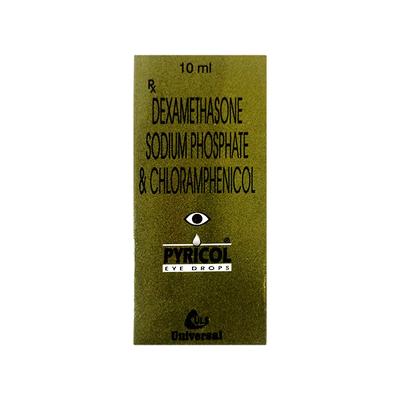
PYRICOL EYE DROPS is a combination of Chloramphenicol and Dexamethasone which belongs to the group of medicines called Antibiotics and Corticosteroids respectively. It is used to manage bacterial eye or ear infections. It is used to manage eye infections such as conjunctivitis (inflammation of the conjunctiva) and ear infections such as otitis media (middle ear infections) in children with ear tubes and otitis externa (outer ear infections) in adults and children.
During course of the management your doctor might regularly examine your eye and ear to avoid any untoward side effects. PYRICOL EYE DROPS should be used with caution in infants and children (2 years or younger). It is not recommended for use in new-borns. Before using PYRICOL EYE DROPS, inform your doctor if you have an injury or ulcer of the cornea, viral or fungal eye infections, severe blood disorders, liver problems, or family history of impaired bone marrow function.
PYRICOL EYE DROPS is not recommended for use in pregnant and breastfeeding women. The most common side effects of using PYRICOL EYE DROPS are itching, red or swollen eyelid, foreign body sensation or appearance of other signs of irritation. Contact your doctor if any of the side effects worsen or persists for a longer duration.
Uses Of PYRICOL EYE DROPS
It is used to manage:
- bacterial eye and ear infections (conjunctivitis, otitis media, otitis externa)
- bacterial eye infections (inflammations of the eye)
How PYRICOL EYE DROPS Works
PYRICOL EYE DROPS manages infection and inflammation where Chloramphenicol belongs to antibiotic which stops bacterial growth in the eye/ear by managing the synthesis of essential proteins required by the bacteria to carry out vital functions. Dexamethasone with anti-inflammatory properties which acts by inhibiting the chemicals such as prostaglandins that cause inflammation. It also reduces symptoms associated with infection such as redness and irritation of the eye/ear.
How to use PYRICOL EYE DROPS
Use PYRICOL EYE DROPS as advised by your physician. It is for external use only. Your doctor will decide the correct dose and duration for you depending upon your age, body weight and severity of the infection.
Side Effects Of PYRICOL EYE DROPS
Common
- itching
- red or swollen eyelid
- foreign body sensation or appearance of other signs of irritation
Rare
- abnormalities in blood formation like reduction in red blood cells, white blood cells, and platelets
Stop using PYRICOL EYE DROPS and consult your doctor immediately if you experience any of the following side effects:
- increased pressure in eye
- formation or worsening of cataract
- disturbance of corneal integrity
Warning & Precautions

Pregnancy
ContraindicatedPYRICOL EYE DROPS is not recommended for use in pregnant women. Consult your doctor before using it.

Breastfeeding
ContraindicatedPYRICOL EYE DROPS is not recommended for use in breastfeeding women. Consult your doctor before using it.

Driving and Using Machines
Use with CautionDo not drive or operate machinery if you experience blurred vision or other disturbances after using PYRICOL EYE DROPS.

Liver
ContraindicatedPYRICOL EYE DROPS is not recommended for use in patients with known impaired liver function. Consult your doctor before using it.

Allergy
ContraindicatedDo not use PYRICOL EYE DROPS if you are allergic to Chloramphenicol, Dexamethasone, or any of the other ingredients of this medicine.

Use In Pediatrics
ContraindicatedPYRICOL EYE DROPS is not recommended for use in newborns aged up to 28 days. Your doctor will prescribe the right dose depends on your child’s age, body weight and disease condition.

Use In Geriatrics
Consult your doctorYour doctor will prescribe the right dose depending on your age, body weight and health condition. Consult your doctor before using PYRICOL EYE DROPS.
Others
PYRICOL EYE DROPS is not recommended for use if you:
- have viral or fungal eye infection
- have an injury or ulcer of the cornea
- have severe blood disorders
- have a family history of impaired bone marrow function
- you wear contact lenses
Before using PYRICOL EYE DROPS inform your doctor if you:
- have diseases that cause corneal thinning
- recently had a cataract surgery
- have diabetes (high blood sugar)
Interactions
A. Drug-Drug interactions:
Before using PYRICOL EYE DROPS inform your doctor if you are using any of the following medicines:
- medicines used to manage bacterial infections (Ex. penicillin, cephalosporin, gentamicin, tetracycline, vancomycin)
- medicines used to manage diabetes (Ex. glimepiride, glyburide)
- medicines used to reduce blood clots (Ex. warfarin, hydroxycoumarin)
- medicines used to manage fits (Ex. phenytoin, ethotoin)
- methotrexate (used to manage certain types of cancer)
- medicines used to relieve pain and inflammation (Ex. diclofenac, indomethacin)
Overdosage:
If you or anyone else accidentally uses too much of PYRICOL EYE DROPS, contact your doctor immediately or visit the nearby hospital.
Synopsis
| Drug | : | Chloramphenicol, Dexamethasone |
| Pharmacological Category | : | Antibiotics, Corticosteroids |
| Therapeutic Indication | : | Bacterial eye, ear infections |
| Dosage Forms | : | Eye/Ear drops, Eye drops |
More Information
- Keep PYRICOL EYE DROPS out of reach of children
- Store below 25°C
FAQs About PYRICOL EYE DROPS
Q: Can I use PYRICOL EYE DROPS after having cataract surgery?
A: In case you have recently had cataract surgery, using PYRICOL EYE DROPS may delay healing and increase the risk of blister formation in the eye. Consult your doctor before using it.
Q: Can I use PYRICOL EYE DROPS if I have diabetes?
A: Before using PYRICOL EYE DROPS, inform your doctor if you have diabetes. You may have a risk of increased eye pressure or the formation of cataracts. In this case, your doctor will evaluate the benefits and risks for you of this management.
Q: How long can I use PYRICOL EYE DROPS for?
A: Your doctor will decide the correct dose and duration for you depending upon your age, body weight, and disease condition. It should not be used for longer than 10 days. You must talk to your doctor if you do not feel better after 3 days from the start of management.
Q: What if I use more than the required amount of PYRICOL EYE DROPS or accidentally swallow it?
A: If you use more than the required amount of PYRICOL EYE DROPS, wash your eye or ear thoroughly with lukewarm water. In case you have accidentally swallowed it, consult your doctor immediately.
Q: How does PYRICOL EYE DROPS work?
A: PYRICOL EYE DROPS is used to manage infection and inflammation. Chloramphenicol belongs to the antibiotic class, which stops bacterial growth in the eye or ear by managing the synthesis of essential proteins required by the bacteria to carry out vital functions. Dexamethasone has anti-inflammatory properties and acts by inhibiting the chemicals, such as prostaglandins, that cause inflammation. It also reduces symptoms associated with infection, such as redness and irritation of the eye or ear.
Q: What if I forget to use a dose of PYRICOL EYE DROPS?
A: If you forget to use a dose of PYRICOL EYE DROPS, use it as soon as you remember. However, omit the missed dose if it is almost time for the next dose. Do not use the medicine twice to make up for a forgotten dose.
Q: Can I stop using PYRICOL EYE DROPS?
A: Do not stop using PYRICOL EYE DROPS without consulting your doctor, as it may make your symptoms reappear or make the bacteria resistant to the management. If you have any more doubts regarding the use of this medicine, consult your doctor.
Q: What is PYRICOL EYE DROPS used for?
A: PYRICOL EYE DROPS is used to manage bacterial eye or ear infections. It is used to manage eye infections such as conjunctivitis (inflammation of the conjunctiva) and ear infections such as otitis media (middle ear infections) in children with ear tubes and otitis externa (outer ear infections) in adults and children.
Q: What are the side effects of using PYRICOL EYE DROPS?
A: The most common side effects of using PYRICOL EYE DROPS are itching, a red or swollen eyelid, and a foreign body sensation or appearance of other signs of irritation.
Q: Is PYRICOL EYE DROPS safe during pregnancy and breastfeeding?
A: PYRICOL EYE DROPS is not recommended for use during pregnancy or breastfeeding. Consult your doctor before using it.
Q: What should I tell my doctor before using PYRICOL EYE DROPS?
A: Before using PYRICOL EYE DROPS, inform your doctor if you have diseases that cause corneal thinning, recently had cataract surgery, or have diabetes (high blood sugar).
Q: Who should not use PYRICOL EYE DROPS?
A: Do not use PYRICOL EYE DROPS if you are allergic to chloramphenicol, dexamethasone, or have impaired liver function; in newborns aged up to 28 days; have a viral or fungal eye infection; have an injury or ulcer of the cornea; have severe blood disorders; have a family history of impaired bone marrow function; or if you wear contact lenses. Consult your doctor before using it.
Q: Can I drive while taking PYRICOL EYE DROPS?
A: Yes, do not drive or operate machinery if you experience blurred vision or other disturbances after using PYRICOL EYE DROPS.
References
1. KD. Tripathi. Corticosteroids. Tetracyclines and Chloramphenicol. Essentials of Medical Pharmacology. Seventh edition. 2013. Page – 289, 739.
2. Ginny C. Oong; Prasanna Tadi. Chloramphenicol. StatPearls. StatPearls Publishing. November 2021. [Accessed on 10th June 2022] https://www.ncbi.nlm.nih.gov/books/NBK555966/#article-19435.s3
3. Donavon B. Johnson; Michael J. Lopez; Brendan Kelley. Dexamethasone. StatPearls [Internet]. StatPearls Publishing. May 2022. [Accessed on 10th June 2022] https://www.ncbi.nlm.nih.gov/books/NBK482130/#:~:text=Dexamethasone%20is%20a%20potent%20glucocorticoid,becomes%20less%20permeable%2C%20as%20well.
4. Balkanpharma-Razgrad AD. Chloramphenicol+Dexamethasone. [Revised in October 2013] [Accessed on 10th June 2022] http://www.antibiotic.bg/uploads//e72c26cf4a763e0af4764503fa9c8e8d5b3c2bd9.pdf
5. American Academy of Opthalmology. Inflammation. [Accessed on 10th June 2022] https://www.aao.org/eye-health/symptoms/inflammation
6. Integrate Laboratories. Chloramphenicol Dexamethasone (Retchlor-D). [Accessed on 10th June 2022] https://integratedlaboratories.in/chloramphenicol-dexamethasone-retchlor-d/
Author Details