




Netmeds First Membership
INTRODUCTION ABOUT PRIORIX MONODOSE VACCINE
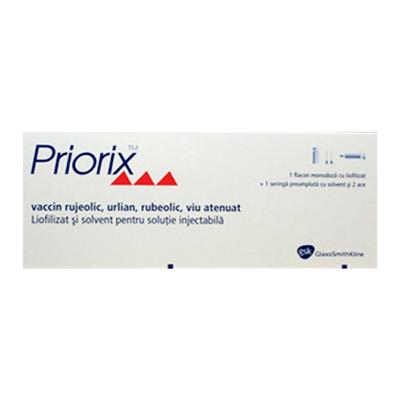
PRIORIX MONODOSE VACCINE is a combination of Measles, Mumps and Rubella Live Attenuated Viruses which belongs to the group of medicines called Vaccines. It is used in children (above 9 months), adolescents, and adults to provide them the protection against the diseases caused by measles, mumps, and rubella viruses.
Measles is a highly contagious, acute viral infection affecting the respiratory system. It is characterised by symptoms such as fever (as high as 105°F), feeling unwell, cough, inflammation of the inner lining of the nose, inflammation of the eyes, Koplik spots (peculiar red spots), followed by a maculopapular rash (rashes with raised and flat areas).
Mumps is a viral infection causing inflammation of the salivary glands located near the ears, accompanied by pain while chewing or swallowing, a fever, headache, muscle aches, weakness, and a loss of appetite. Rubella is a contagious viral infection that causes a low-grade fever, sore throat, and a rash that starts on the face and spreads to the whole body.
PRIORIX MONODOSE VACCINE is not recommended for use if you are allergic to measles, mumps, and rubella, live attenuated viruses, or neomycin. It is also not recommended for use if you have a severe infection with a high temperature or acquired immunodeficiency syndrome (AIDS).
PRIORIX MONODOSE VACCINE should be used with caution in patients with chronic liver diseases and in patients planned for kidney transplant. PRIORIX MONODOSE VACCINE is not recommended for use in pregnancy. It should be used cautiously in breastfeeding mothers. PRIORIX MONODOSE VACCINE is also not recommended for use in children (below 9 months). Consult your doctor before receiving it.
The common side effects associated with the use of PRIORIX MONODOSE VACCINE are reactions at the injection site (redness, pain, and swelling), a fever of 38°C or higher, a rash (spots), and an upper respiratory tract infection such as a common cold or sore throat. Contact your doctor or a nearby hospital if any of the conditions worsen.
USES OF PRIORIX MONODOSE VACCINE
- It is used in children (above 9 months), adolescents, and adults to provide them the protection against the diseases caused by measles, mumps, and rubella viruses
HOW PRIORIX MONODOSE VACCINE WORKS
PRIORIX MONODOSE VACCINE contains live viruses which are too weak to cause measles, mumps, or rubella in healthy individuals but stimulate the production of antibodies that manage these viruses from causing the infection in the future.
DIRECTIONS FOR USE
PRIORIX MONODOSE VACCINE will be given to you only by a doctor or a nurse subcutaneously under the skin or intramuscularly into the muscle (upper arm or outer thigh muscle). Your doctor will decide the correct dose and duration for you depending upon your age, body weight and disease condition.
SIDE EFFECTS OF PRIORIX MONODOSE VACCINE
COMMON
- injection site reactions such as swelling, pain, or/and redness
- fever of 38°C or higher
- rash (spots)
- upper respiratory tract infection such as common cold or sore throat
UNCOMMON
- infection of the middle ear
- swollen nodes (groin, armpit, or neck)
- loss of appetite
- nervousness
- abnormal crying
- sleeplessness
- signs of conjunctivitis such as redness, irritation, and watering of the eyes
- signs of bronchitis such as wet cough
- cough
- swollen glands in the cheeks
- diarrhoea
- vomiting
- ear infection
RARE
- convulsions accompanying high fever
- signs allergic reactions such as swelling, shortness of breath, cough, and rashes
Stop receiving PRIORIX MONODOSE VACCINE and contact your doctor if you experience any of the following side effects:
- high fever
HOW TO MANAGE SIDE EFFECTS
Cough And Cold
Take plenty of rest and sleep. Increase water or fluid intake to avoid dehydration. Gargle with salt water to soothe a sore throat. Consult your doctor if the symptom gets worse.

Diarrhea
Drink lots of fluids, such as water, to keep yourself hydrated. Try to avoid receiving any medicine on your own to manage diarrhoea, and consult your doctor if the symptom gets worse.

Nausea And Vomiting
Stick to simple meals. Avoid eating rich or spicy food. Eat slowly. Prefer to eat small and frequent meals. Avoid mixing hot and cold foods. Consult your doctor if the symptom gets worse.
WARNING & PRECAUTIONS

PREGNANCY
ContraindicatedPRIORIX MONODOSE VACCINE is not recommended for use if you are pregnant, think you are pregnant, or are planning to have a baby. Avoid getting pregnant for 1 month following vaccination; use an effective method of birth control. Consult your doctor before receiving the medicine.

BREASTFEEDING
Use with CautionPRIORIX MONODOSE VACCINE should be used with caution in breastfeeding mothers. Consult your doctor before receiving it.

DRIVING AND USING MACHINES
SafePRIORIX MONODOSE VACCINE has no or negligible effect on the ability to drive and use machines. Consult your doctor before receiving the medicine.

KIDNEY
Use with CautionPRIORIX MONODOSE VACCINE is used with caution in patients planned for kidney transplant. Consult your doctor before receiving it.

LIVER
Use with CautionPRIORIX MONODOSE VACCINE should be used with caution in patients with chronic liver diseases. Consult your doctor before receiving it.

ALLERGY
ContraindicatedPRIORIX MONODOSE VACCINE is not recommended for use if you are allergic to measles, mumps, and rubella live attenuated viruses, any other ingredients of this medicine, or neomycin. Consult your doctor before receiving it.

USE IN PEDIATRICS
ContraindicatedPRIORIX MONODOSE VACCINE is not recommended for use in children (below 9 months). Consult your doctor before receiving it.

USE IN GERIATRICS
ContraindicatedPRIORIX MONODOSE VACCINE is not recommended for use in elderly patients (aged 65 or above) as they do not need this vaccine. Consult your doctor before receiving it.
OTHERS
PRIORIX MONODOSE VACCINE is not recommended for use if you:
- have a severe infection with a high-grade fever
- have Acquired Immunodeficiency Syndrome (AIDS)
Before receiving PRIORIX MONODOSE VACCINE, inform your doctor if you:
- have disorders associated with central nervous system
- have history of convulsion accompanying high fever
- have family history of convulsions
- have or had severe allergy with egg protein
- history of side effect after vaccination against measles, mumps, or rubella such as easy bruising or bleeding for longer than usual
- have weak immunity
- history of fainting with previous injections
- have undergone blood transfusion or antibodies
- are scheduled for tuberculin test (test to detect tuberculosis)
INTERACTIONS
A. Drug-Drug Interactions:
Before receiving PRIORIX MONODOSE VACCINE, inform your doctor, if you are receiving any of the following medicine:
- diphtheria, tetanus, pertussis (acellular) vaccine (vaccine to manage diphtheria, tetanus, and pertussis)
- haemophilus influenzae type B vaccine (vaccine to manage influenzas)
- oral or inactivated polio vaccine (vaccine to manage polio)
- hepatitis A or hepatitis B vaccine (vaccine to manage hepatitis A or B infection)
- varicella vaccine (vaccine to manage chickenpox)
- meningococcal serogroup B, meningococcal serogroups C, or meningococcal serogroups A, B, C, W-135 and Y (vaccines to manage the meningococcal infection in the membranes covering the brain)
- pneumococcal conjugate vaccines (vaccine to manage pneumococcal infection)
Overdosage:
PRIORIX MONODOSE VACCINE will be given to you only by a doctor or nurse in a hospital, and so it is unlikely to receive an overdose. Moreover, no adverse reaction has been reported. However, if you experience any unusual symptoms, consult your doctor immediately or visit the nearby hospital.
SYNOPSIS
| Drug | : | Measles, Mumps and Rubella Live Attenuated Viruses |
| Pharmacological Category | : | Vaccine |
| Therapeutic Indication | : | Prevent measles, mumps, and rubella |
| Dosage Forms | : | Injection |
MORE INFORMATION
- Keep the medicine out of reach of children
- Store PRIORIX MONODOSE VACCINE at room temperature
FAQs ABOUT PRIORIX MONODOSE VACCINE
Q: What is PRIORIX MONODOSE VACCINE used for?
A: PRIORIX MONODOSE VACCINE is used in children (above 9 months), adolescents, and adults to provide them with protection against the diseases caused by the measles, mumps, and rubella viruses. Consult your doctor before receiving it.
Q: What side effects are seen with PRIORIX MONODOSE VACCINE?
A: The common side effects associated with the use of PRIORIX MONODOSE VACCINE are reactions at the injection site (redness, pain, and swelling), a fever of 38°C or higher, a rash (spots), and an upper respiratory tract infection such as a common cold or sore throat. Contact your doctor or a nearby hospital if any of the conditions worsen.
Q: Who should avoid receiving PRIORIX MONODOSE VACCINE?
A: PRIORIX MONODOSE VACCINE is not recommended for use if you are allergic to measles, mumps, and rubella, live attenuated viruses, or neomycin. It is also not recommended for use if you have a severe infection with a high temperature or acquired immunodeficiency syndrome (AIDS). This medicine is not recommended for use in pregnant women or children (below 9 months). Consult your doctor before receiving it.
Q: Is PRIORIX MONODOSE VACCINE safe to use during pregnancy?
A: PRIORIX MONODOSE VACCINE is not recommended for use if you are pregnant, think you are pregnant, or are planning to have a baby. Avoid getting pregnant for 1 month following vaccination; use an effective method of birth control. Consult your doctor before receiving the medicine.
Q: How does PRIORIX MONODOSE VACCINE work?
A: PRIORIX MONODOSE VACCINE contains live viruses that are too weak to cause measles, mumps, or rubella in healthy individuals but stimulate the production of antibodies that manage these viruses from causing the infection in the future.
Q: What is the method of receiving PRIORIX MONODOSE VACCINE?
A: PRIORIX MONODOSE VACCINE will be given to you only by a doctor or a nurse, subcutaneously under the skin or intramuscularly into the muscle (upper arm or outer thigh muscle). Your doctor will determine the correct dose and duration for you depending upon your age, body weight, and disease condition.
Q: Can PRIORIX MONODOSE VACCINE be given to elderly patients?
A: PRIORIX MONODOSE VACCINE is not recommended for use in elderly patients (aged 65 or above). This is because those who were born before 1957 do not need this vaccine. Consult your doctor before receiving it.
Q: What happens if you take more PRIORIX MONODOSE VACCINE than your required dose?
A: PRIORIX MONODOSE VACCINE will be given to you only by a doctor or nurse in a hospital, and so it is unlikely that you will receive an overdose. Moreover, no adverse reaction has been reported. However, if you experience any unusual symptoms, consult your doctor immediately or visit the nearby hospital.
Q: How often should PRIORIX MONODOSE VACCINE be received?
A: As per CDC (Centre for Disease Control and Prevention) recommendations, all children must get two doses of the MMR (measles, mumps, and rubella) vaccine, starting with the first dose at 12–15 months of age and the second dose at 4-6 years of age.
REFERENCES
1. KD Tripathi. Vaccines And Sera. Essentials of Medical Pharmacology. Seventh edition. 2013. Page – 924.
2. Intissar Haddiya. Current Knowledge of Vaccinations in Chronic Kidney Disease Patients. National Library of Medicine. National Centre for Biotechnology Information. PMC PubMed Central. July 2020. [Assessed 21st July 2022] https://www.ncbi.nlm.nih.gov/pmc/articles/PMC7394503/
3. GlaxoSmithKline Biologicals s.a., Rixensart, Belgium. Electronic Medicines Compendium (EMC). [Revised in February 2022] [Assessed 21st July 2022] https://www.medicines.org.uk/emc/files/pil.1159.pdf
4. GlaxoSmithKline UK. PRIORIX. [Revised in January 2019] [Assessed 21st July 2022] https://gskpro.com/content/dam/global/hcpportal/en_MT/PDF/Homepage/Products/productlisting/priorix/PRIORIX-SPC-PL-PIL-JUN15.pdf
USEFUL DIAGNOSTIC TESTS
- Real-Time Polymerase Chain Reaction (RT-PCR)
AUTHOR DETAILS
