






Netmeds First Membership
Quick Links
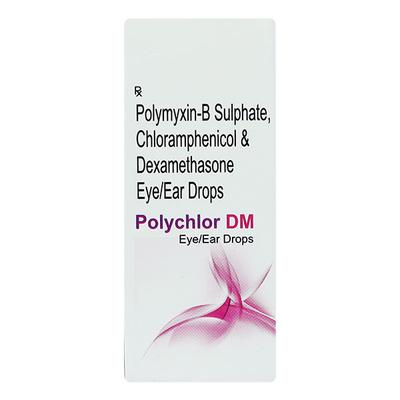
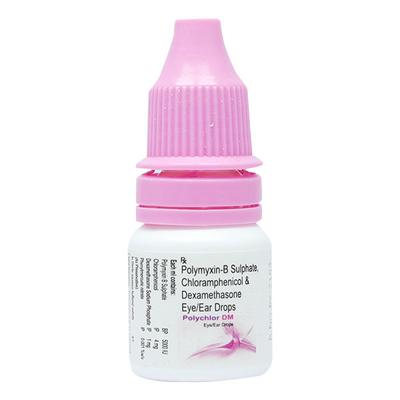
Introduction About POLYCHLOR DM EYE DROPS
POLYCHLOR DM EYE DROPS is a combination of Chloramphenicol and Polymyxin B which belongs to the group of medicines called Antibiotics and Corticosteroids respectively. It is used in adults to manage bacterial infections of the eyes and ear canal. Eye infection is characterized by warmth, redness, swelling and pain. Ear infection can show symptoms like ear pain, fever, irritability, rubbing or tugging ear or difficulty sleeping.
During course of the management your doctor might regularly examine your eye and ear to avoid any untoward side effects. The safety and effectiveness of POLYCHLOR DM EYE DROPS have not been established in children.
Before using POLYCHLOR DM EYE DROPS, inform your doctor if you have an injury or ulcer of the cornea, fungal or viral (herpes simplex) eye infections, severe blood disorders, liver problems or family history of impaired bone marrow function. POLYCHLOR DM EYE DROPS is not recommended in pregnant or breastfeeding women.
The most common side effects of using POLYCHLOR DM EYE DROPS are temporary burning, stinging, irritation, itching and redness. Consult your doctor if any of the side effects worsen.
Uses Of POLYCHLOR DM EYE DROPS
- Manage bacterial infections of the eyes and ear canal
How POLYCHLOR DM EYE DROPS Works
POLYCHLOR DM EYE DROPS manages infection, where chloramphenicol inhibits bacterial protein synthesis by binding to the 50S ribosomal subunit and directly managing the formation of bacterial protein, dexamethasone suppresses the migration and decreases the multiplication of certain cells that are responsible for inflammation, along with making the membrane less permeable and polymyxin B interacts with certain molecules of the outer membrane of infecting bacteria, changing membrane permeability and killing the cell.
How to use POLYCHLOR DM EYE DROPS
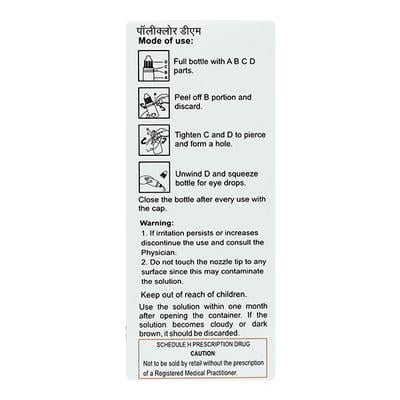
Use POLYCHLOR DM EYE DROPS as advised by your doctor. It is for external use only. Do not touch the tip of the dropper on any surface. Squeeze the dropper gently, then dispense the medication inside the lower eyelid or ear. Your doctor will decide the correct dose and duration for you depending upon your age, disease condition and body weight.
Side Effects Of POLYCHLOR DM EYE DROPS
Common
- temporary burning, stinging, irritation, itching, redness
Rare
Stop using POLYCHLOR DM EYE DROPS and consult your doctor immediately if you experience any of the following side effects:
- blurry eyesight or other visual disturbances
- cushing's syndrome or adrenal suppression
How To Manage Side Effects

Eye irritation Or Itching
Wash your eyes with plain cold water. Place an ice pack on your eye to soothe the irritation. Avoid straining your eyes by keeping away from mobile phones, laptops or television. Wear protective sunglasses while going outdoors. Consult your doctor if the symptom does not improve.
Warning & Precautions

Pregnancy
ContraindicatedPOLYCHLOR DM EYE DROPS is not recommended for use in pregnant women. Consult your doctor before using it.

Breastfeeding
ContraindicatedPOLYCHLOR DM EYE DROPS is not recommended for use in breastfeeding women. Consult your doctor before using it.

Driving and Using Machines
Use with CautionDo not drive or operate machinery if you are not sure if you have complete mental and physical alertness after using POLYCHLOR DM EYE DROPS.

Kidney
Use with CautionPOLYCHLOR DM EYE DROPS should be used with caution in patients with kidney failure. Consult your doctor before using it.

Liver
Use with CautionPOLYCHLOR DM EYE DROPS should be used with caution in patients with liver impairment. Consult your doctor before using it.

Allergy
ContraindicatedDo not use POLYCHLOR DM EYE DROPS if you are allergic to Chloramphenicol, Dexamethasone, Polymyxin B or any other ingredients of this medicine.

Use In Pediatrics
Consult your doctorThe safety and effectiveness of POLYCHLOR DM EYE DROPS have not been established in children. Consult your doctor before using it.

Use In Geriatrics
Consult your doctorThe safety and effectiveness of POLYCHLOR DM EYE DROPS have not been established in elderly patients. Consult your doctor before using it.
Others
POLYCHLOR DM EYE DROPS is not recommended for use if you:
- had experienced bone marrow suppression during previous exposure to chloramphenicol
- have known personal or family history of blood dyscrasias including aplastic anaemia
- have fungal eye infection
- inflammation of front layer of due to herpes simplex virus
- infection of parts of eye like vaccinia, varicella and other viral infection
Before using POLYCHLOR DM EYE DROPS, inform your doctor if you:
- have diseases that cause corneal thinning
- have severe bacterial conjunctivitis or an infection which is not confined to the conjunctivae
- wear contact lenses
- have diabetes (high blood sugar)
- you have any fungal infection
Interactions
A. Drug - Drug interactions:
Before using POLYCHLOR DM EYE DROPS, inform your doctor if you are using any of the following medicines:
- atropine and related compounds (used to manage slow heartbeat)
- medicines used to manage fits (Ex. phenytoin, phenobarbitone)
- ephedrine (used to manage breathing problems)
- rifampicin (used to manage bacterial infections)
- neomycin (used to manage eye infections)
- medicines used to manage HIV infection (Ex. ritonavir, cobicistat)
- medicines used on skin to reduce pain (Ex. diclofenac, ibuprofen)
- medicines used on skin to reduce inflammation (Ex. hydrocortisone, mometasone)
Overdosage:
If you or anyone else accidentally used too much of POLYCHLOR DM EYE DROPS, consult your doctor immediately or visit the nearby hospital.
Synopsis
| Drug | : | Chloramphenicol, Polymyxin B, Dexamethasone |
| Pharmacological Category | : | Antibiotics, Corticosteroid |
| Therapeutic Indication | : | Bacterial infection of eye or ear canal |
| Dosage Forms | : | Eye/Ear drops, Eye/Ear ointment |
More Information
- Keep POLYCHLOR DM EYE DROPS out of reach of children
- Store in a cool place
FAQs About POLYCHLOR DM EYE DROPS
Q: Can POLYCHLOR DM EYE DROPS be used for fungal infections?
A: No, POLYCHLOR DM EYE DROPS is used in patients with bacterial infections. Do not use this medicine for any other indication than prescribed for. Consult your doctor before using it for other purposes.
Q: Can I wear contact lenses while using POLYCHLOR DM EYE DROPS?
A: No, all types of contact lenses should be avoided when you are being managed for eye infections. Call you doctor for further queries regarding POLYCHLOR DM EYE DROPS use.
Q: Can I stop using POLYCHLOR DM EYE DROPS on my own?
A: Do not stop using POLYCHLOR DM EYE DROPS unless your doctor advises you to do so. You might need to discontinue using it in case any new infections or serious side effects occur. Call you doctor for further queries regarding POLYCHLOR DM EYE DROPS use.
Q: Can POLYCHLOR DM EYE DROPS be used in children?
A: The safety and effectiveness of POLYCHLOR DM EYE DROPS is not established in children. Your child’s doctor will select a suitable alternative management for your child to manage the infection.
Q: What if I forget to use a dose of POLYCHLOR DM EYE DROPS?
A: If you forget to use a dose of POLYCHLOR DM EYE DROPS, use it as soon as you remember. However, omit the missed dose if it is almost time for the next one. Do not use the medicine two times to make up for a forgotten dose.
Q: What precautions do I need to follow while taking POLYCHLOR DM EYE DROPS?
A: Patients using POLYCHLOR DM EYE DROPS must inform their doctor about their pre-existing disease conditions like injury or ulcer of the cornea, fungal or viral (herpes simplex) eye infections, severe blood disorders, liver problems or family history of impaired bone marrow function. Patients should also inform if they are pregnant, breast-feeding or having any allergies. Contact your doctor immediately if you have any unusual symptoms.
Q: Can POLYCHLOR DM EYE DROPS be used during pregnancy?
A: POLYCHLOR DM EYE DROPS is not recommended for use during pregnancy as the safety of one of its ingredients in pregnancy has not been established and it may be absorbed in blood and cross the placenta. If you are pregnant, think you may be pregnant or planning to get pregnant, consult your doctor before using this medicine. Inform your doctor immediately if you become pregnant during management with POLYCHLOR DM EYE DROPS.
References
1. KD. Tripathi. Corticosteroids. Tetracyclines and Chloramphenicol. Essentials of Medical Pharmacology. Seventh edition. 2013. Page – 289, 739
2. Ginny C. Oong; Prasanna Tadi. Chloramphenicol. NIH National Library of Medicine, National center for biotechnology information. July 2022. [Accessed on 10th June 2022] https://www.ncbi.nlm.nih.gov/books/NBK555966/#article-19435.s3
3. Donavon B. Johnson; Michael J. Lopez; Brendan Kelley. Dexamethasone. NIH National Library of Medicine, National center for biotechnology information. May 2022. [Accessed on 10th June 2022] https://www.ncbi.nlm.nih.gov/books/NBK482130/#:~:text=Dexamethasone%20is%20a%20potent%20glucocorticoid,becomes%20less%20permeable%2C%20as%20well
4. Centaur Pharmaceuticals Pvt. Ltd. and DCI Pharmaceuticals. Ocupol Dx (Chloramphenicol + Dexamethasone + Polymyxin B). [Revised in January 2022] [Accessed on 23rd June 2022] https://www.centaurpharma.com/downloads/2022/ophthalmology/anti-infectives/Ocupol%20DX%20Eye%20Drops%20Ointment.pdf
5. Pharmtak Ophthalmics (I) Pvt. Ltd. Takchlor-DX (Eye/Ear Drops) (Chloramphenicol + Dexamethasone + Polymyxin B) [Accessed on 23rd June 2022] https://www.pharmtakindia.com/product/takchlor-dx-eye-ear-drops/
Useful Diagnostic Tests
- Tympanometry
Author Details