







Netmeds First Membership
INTRODUCTION ABOUT PNEUMOSIL VACCINE
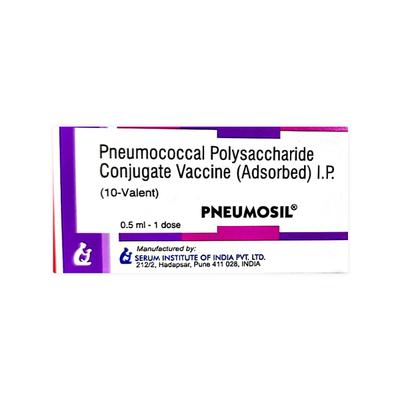
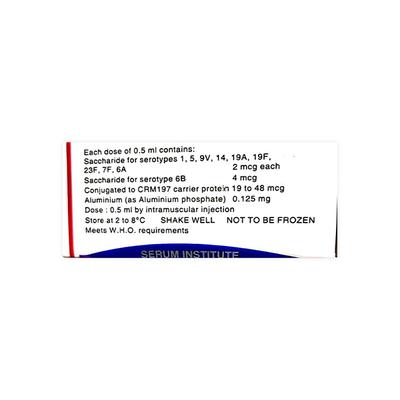
PNEUMOSIL VACCINE contains Pneumococcal Polysaccharide Serotypes (1, 5, 6 B, 6A 7F, 9V, 14, 19F, 19A, and 23F) conjugated with non-toxic diphtheria CRM197 protein. It is used in infants and toddlers (from 6 weeks to 15 months) for management against invasive disease, pneumonia and acute otitis media caused by streptococcus pneumoniae serotypes 1, 5, 6B, 6A, 7F, 9V, 14, 19F, 19A, and 23F.
PNEUMOSIL VACCINE can also be used in previously unvaccinated older infants and children (above 7 months & below 2 years), who are beyond the age of the routine infant schedule.
Streptococcus pneumoniae, or pneumococcus, is a bacteria that may cause certain invasive diseases such as sepsis, meningitis, bacteremia, pneumonia, pleural empyema, and bacteraemia.
Sepsis is a life-threatening condition developed due to the extreme response of the body to the infection, which is characterised by symptoms such as confusion, dizziness, and diarrhoea. Meningitis is an infection of the membranes covering the brain that is characterised by symptoms such as fever, headache, and stiff neck.
Pneumonia is an infection occurring in the air sacs of one or both lungs and is characterised by symptoms such as fever, chills, and shortness of breath. Pleural empyema is a lung infection that causes pus formation in the membrane covering the lungs and is characterised by symptoms such as chest pain, dry cough, and fever.
Bacteraemia is an infection of the blood that is characterised by symptoms such as fever, chills, and low blood pressure. Otitis media is an infection occurring in the middle that is characterised by symptoms such as pain in the ears, headache, and fever.
PNEUMOSIL VACCINE is not recommended for use if you are allergic to pneumococcal polysaccharide serotypes or diphtheria toxoids. PNEUMOSIL VACCINE should be used with caution in patients with chronic liver disease, chronic kidney disease, or nephrotic syndrome (a disorder causing excessive protein loss in the urine).
PNEUMOSIL VACCINE is not recommended for use by pregnant or breastfeeding women. PNEUMOSIL VACCINE is recommended for use only in infants and toddlers (from 6 weeks to 15 months). PNEUMOSIL VACCINE should be used with caution in previously unvaccinated older infants and children (above 7 months and below 2 years) who are beyond the age of the routine infant schedule. PNEUMOSIL VACCINE should be used with caution in elderly patients (aged 65 years or above).
The common side effects associated with the use of PNEUMOSIL VACCINE are reactions at the site of injection (such as redness, swelling, and tenderness), fever (37.5 oC or above), irritability, decreased appetite, drowsiness, or rash. Contact your doctor or a nearby hospital if any of the conditions worsens or persists.
USES OF PNEUMOSIL VACCINE
- Prevent the invasive diseases caused by specific streptococcus pneumoniae serotypes in infants and toddlers
- Prevent otitis media and pneumonia caused by S. pneumoniae
HOW PNEUMOSIL VACCINE WORKS
PNEUMOSIL VACCINE helps to manage diseases caused by specific streptococcus pneumoniae serotypes, where the pneumococcal polysaccharide vaccine stimulates the production of certain neutralising antibodies that bind to the virus and manage it from infecting cells, thus providing protection from the infection to be caused by specific streptococcus pneumoniae serotypes in the future.
DIRECTIONS FOR USE
PNEUMOSIL VACCINE will be given to you only by a doctor or a nurse and will be injected into a muscle as an intramuscular injection in the anterolateral aspect of the thigh in infants or the deltoid muscle of the upper arm in children. Your doctor will determine the correct dose and duration for you depending upon your age, body weight, and disease condition.
SIDE EFFECTS OF PNEUMOSIL VACCINE
COMMON
- reactions at the site of injection such as redness, swelling, and tenderness
- fever (37.5ºC or above)
- irritability
- decreased appetite
- drowsiness
- rash
UNCOMMON
- diarrhoea
- fever (above 39ºC)
RARE
- signs of anaphylactic reactions such as severe rashes, shortness of breath, and noisy breathing
Stop receiving PNEUMOSIL VACCINE and contact your doctor if you experience any of the following side effects:
- signs of anaphylactic reactions such as severe rashes, shortness of breath, and noisy breathing
HOW TO MANAGE SIDE EFFECTS

Dizziness Or Drowsiness
Lie down until the drowsiness passes and get up slowly. Get a lot of rest. Walk slowly and carefully. Take plenty of fluids. Avoid drinking coffee, alcohol, or smoking. Consult your doctor if the condition gets worsened.
WARNING & PRECAUTIONS

PREGNANCY
ContraindicatedPNEUMOSIL VACCINE is not recommended to be used in pregnant women. Consult your doctor before receiving the medicine.

BREASTFEEDING
ContraindicatedPNEUMOSIL VACCINE is not recommended to be used in breastfeeding women. Consult your doctor before receiving the medicine.

KIDNEY
Use with CautionPNEUMOSIL VACCINE should be used with caution in patients with chronic kidney disease or nephrotic syndrome (a disorder causing excessive protein loss in the urine). Consult your doctor before receiving it.

LIVER
Use with CautionPNEUMOSIL VACCINE should be used with caution in patients with chronic liver disease. Consult your doctor before receiving it.

ALLERGY
ContraindicatedPNEUMOSIL VACCINE is not recommended for use if you are allergic to pneumococcal polysaccharide serotypes, diphtheria toxoids, or any other ingredients of this medicine. Consult your doctor before receiving it.

USE IN PEDIATRICS
Consult your doctorPNEUMOSIL VACCINE is recommended for use only in infants and toddlers (from 6 weeks to 15 months). It is not recommended for use in infants (below 6 weeks). It should be used with caution in previously unvaccinated older infants and children (above 7 months & below 2 years), who are beyond the age of the routine infant schedule. Consult your doctor before receiving it.

USE IN GERIATRICS
Use with CautionPNEUMOSIL VACCINE should be used with caution in elderly patients (aged 65 years or above). Consult your doctor before receiving it.
OTHERS
Before receiving PNEUMOSIL VACCINE, inform your doctor if you:
- have thrombocytopenia (reduced blood platelet count)
- have any coagulation disorder (disorder causing delayed clotting)
- have a severe illness with high fever
- have active disease
- have congenital or acquired splenic dysfunction
- have HIV infection
- have any malignancy (cancer)
- have sickle cell disease (a disease that affects the shape of red blood cells and impairs their function)
- were born prematurely with a safety profile similar to that observed in non-high-risk groups
- were a very premature infants (born ≤ 28 weeks of gestation), particularly the with a history of respiratory immaturity
INTERACTIONS
A. Drug-Drug Interactions:
Before receiving PNEUMOSIL VACCINE, inform your doctor, if you are taking/ receiving any of the following medicines or vaccines (monovalent or combination vaccines):
- diphtheria vaccine (vaccine used to manage diphtheria)
- tetanus vaccine (vaccine used to manage tetanus)
- whole-cell pertussis vaccine (vaccine used to manage tetanus)
- haemophilus influenza type B vaccine (vaccine used to manage infection caused by the haemophilus influenza type B bacteria)
- inactivated or oral poliomyelitis
- rotavirus vaccine (vaccine used to manage infections caused by rotavirus)
- yellow fever virus vaccine (vaccine used to manage yellow fever)
- hepatitis B vaccine (vaccine used to manage hepatitis)
- measles vaccine (vaccine used to manage measles and rubella)
- rubella vaccine (vaccine used to manage a viral infection called rubella)
- mumps vaccine (vaccine used to manage mumps)
- varicella vaccine (vaccine used to manage chicken pox)
- meningococcal ACWY vaccine (vaccine used to manage meningococcal infections)
Overdosage:
PNEUMOSIL VACCINE will be given to you only by a doctor or nurse in a hospital, so it is unlikely to receive an overdose. However, if you experience any unusual symptoms, consult your doctor immediately or visit the nearby hospital.
SYNOPSIS
| Drug | : | Pneumococcal Polysaccharide Vaccine (PPV): 10 Valet |
| Pharmacological Category | : | Vaccine |
| Therapeutic Indication | : | Prevent the invasive diseases and otitis media caused by specific Streptococcus Pneumoniae Serotypes |
| Dosage Forms | : | Injection |
MORE INFORMATION
- Keep the medicine out of reach of children
- Do not freeze PNEUMOSIL VACCINE
- Store PNEUMOSIL VACCINE at 2°C to 8°C (36°F TO 46°F) away from freezer compartment
FAQs ABOUT PNEUMOSIL VACCINE
Q: What is PNEUMOSIL VACCINE used for?
A: PNEUMOSIL VACCINE is used in infants and toddlers (from 6 weeks to 15 months) for management against invasive disease, pneumonia, and acute otitis media caused by Streptococcus pneumoniae serotypes 1, 5, 6B, 6A, 7F, 9V, 14, 19F, 19A, and 23F. It can also be used in previously unvaccinated older infants and children (above 7 months and below 2 years), who are beyond the age of the routine infant schedule. Consult your doctor before receiving PNEUMOSIL VACCINE.
Q: What side effects are seen with PNEUMOSIL VACCINE?
A: The common side effects associated with the use of PNEUMOSIL VACCINE are reactions at the site of injection (such as redness, swelling, and tenderness), fever (37.5 oC or above), irritability, decreased appetite, drowsiness, or rash. Contact your doctor or a nearby hospital if any of the conditions worsen or persist.
Q: Who should avoid receiving PNEUMOSIL VACCINE?
A: PNEUMOSIL VACCINE is not recommended for use if you are allergic to pneumococcal polysaccharide serotypes or diphtheria toxoids. It is not recommended for use in pregnant or breastfeeding women. It is not recommended for use in infants (below 6 weeks). Consult your doctor before receiving PNEUMOSIL VACCINE.
Q: What is the method of receiving PNEUMOSIL VACCINE?
A: PNEUMOSIL VACCINE will be given to you only by a doctor or a nurse and will be injected into a muscle as an intramuscular injection in the anterolateral aspect of the thigh in infants or the deltoid muscle of the upper arm in children. Your doctor will determine the correct dose and duration for you depending upon your age, body weight, and disease condition.
Q: Is PNEUMOSIL VACCINE safe to use in liver patients?
A: PNEUMOSIL VACCINE should be used with caution in patients with chronic liver disease (liver diseases that have been prevailing in the body for a long time and are worsening with time). Consult your doctor before receiving PNEUMOSIL VACCINE.
Q: Is PNEUMOSIL VACCINE safe to use in kidney patients?
A: PNEUMOSIL VACCINE should be used with caution in patients with chronic kidney disease or nephrotic syndrome (a disorder causing excessive protein loss in the urine). Consult your doctor before receiving PNEUMOSIL VACCINE.
Q: How to store PNEUMOSIL VACCINE?
A: Keep PNEUMOSIL VACCINE out of reach of children. Do not freeze this product. Store it at 2°C to 8°C (36°F to 46°F). Use only refrigerated products and keep them away from freezer compartments.
Q: Who should be vaccinated with PNEUMOSIL VACCINE?
A: According to the normal routine infant schedule, PNEUMOSIL VACCINE should not be given to children above 15 months of age. It can be given to children (up to 2 years of age) only if they have not been previously vaccinated. It is not recommended to be used in children above 2 years of age.
REFERENCES
1. J. Larry Jameson, A. S. Fauci, D. L. Kasper, S. L. Hauser, D. L. Longo, J. Loscalzo. Immunization Principles and Vaccine Use. Harrison’s Principles of Internal Medicine. Twentieth Edition. 2018. Page – 889.
2. Stefaan J. Vandecasteele, Sara Ombelet, Sophie Blumental, Willy E. Peetermans. The ABC of pneumococcal infections and vaccination in patients with chronic kidney disease. NIH National Library of Medicine. National Centre for Biotechnology Information. PMC PubMed Central. May 2015. [Assessed 20th August 2022] https://www.ncbi.nlm.nih.gov/pmc/articles/PMC4440476/
3. Suvi Harmala, Constantinos Parisinos, Laura Shallcross, Alastair O’Brien, Andrew Hayward. Effectiveness of pneumococcal and influenza vaccines to prevent serious health complications in adults with chronic liver disease: a protocol for a systematic review. NIH National Library of Medicine. National Centre for Biotechnology Information. PMC PubMed Central. March 2018. [Assessed 20th August 2022] https://www.ncbi.nlm.nih.gov/pmc/articles/PMC5857657/
4. David S Fedson. Pneumococcal conjugate vaccination for older adults. NIH National Library of Medicine. National Centre for Biotechnology Information. PMC PubMed Central. September 2013. [Assessed 20th August 2022] https://www.ncbi.nlm.nih.gov/pmc/articles/PMC4181016/
5. Serum Institute of India Pvt. Ltd. Pneumococcal Polysaccharide Conjugate Vaccine (Adsorbed) (10-Valent). [Revised in January 2021] [Assessed 20th August 2022] https://www.fda.gov/media/76076/download
USEFUL DIAGNOSTIC TESTS
- Blood Test
- Urine Test
AUTHOR DETAILS
