







Netmeds First Membership
Quick Links
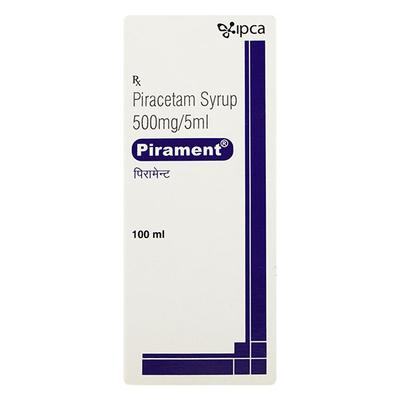
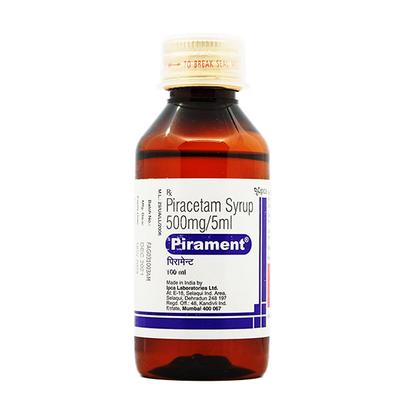
Introduction About PIRAMENT SYRUP
PIRAMENT SYRUP contains Piracetam, which belongs to the group of medicines known as Nootropics. It is used in the management of myoclonus of cortical origin in combination with other anti-myoclonic therapies. Myoclonus is a sudden, involuntary muscle jerk, shake, or spasm that may be caused by a disturbance in the brain and nervous system.
Before taking PIRAMENT SYRUP, inform your doctor if you have severe kidney disease and liver problems. Avoid consumption of alcohol during management with this medicine.
PIRAMENT SYRUP is not recommended for use in pregnant women unless advised by the doctor, and it is not recommended for use in breastfeeding women.
PIRAMENT SYRUP is not recommended for use in children (below 16 years of age). It should be taken with caution in elderly patients, especially in patients with impaired renal function.
The common side effects of taking PIRAMENT SYRUP are restlessness, nervousness, and weight gain. Consult your doctor if any of the side effects worsen.
Uses Of PIRAMENT SYRUP
- Manage myoclonus (sudden, involuntary muscle jerk, shake, or spasm)
How PIRAMENT SYRUP Works
PIRAMENT SYRUP is a derivative of the neurotransmitter γ-aminobutyric acid (GABA), which improves membrane stability and fluidity in the brain, thereby restoring the neurotransmission via glutamatergic and cholinergic (ACh) receptors, resulting in controlled movements.
How to use PIRAMENT SYRUP
Take PIRAMENT SYRUP as advised by your physician. Shake the bottle well before each use. Measure the dose with the enclosed dosing cup. Your doctor will decide the correct dose and duration of PIRAMENT SYRUP for you depending on your age, body weight, and disease condition.
Side Effects Of PIRAMENT SYRUP
Common
- nervousness
- abnormal movements (hyperkinesia)
- weight gain
Uncommon
- depression
- somnolence (excessive sleepiness)
- weakness (asthenia)
How To Manage Side Effects

Weakness
Drink plenty of fluids and eat a balanced diet and frequent meals. Do regular minimal exercise and follow a regular sleep schedule. Consult your doctor if the symptoms do not improve.
Warning & Precautions

Pregnancy
Monitoring requiredPIRAMENT SYRUP is not recommended for use in pregnant women unless considered clearly necessary. Consult your doctor before taking this medicine.

Breastfeeding
Monitoring requiredPIRAMENT SYRUP is not recommended for use in pregnant women unless considered clearly necessary. Consult your doctor before taking this medicine.

Alcohol
Consult your doctorAvoid consumption of alcohol while taking PIRAMENT SYRUP.

Kidney
Consult your doctorPIRAMENT SYRUP is not recommended for use in patients with severe kidney impairment. It should be used with caution in patients with renal insufficiency. Consult your doctor before taking this medicine.

Liver
ContraindicatedPIRAMENT SYRUP is not recommended for use in patients having liver impairment. Consult your doctor before taking this medicine.

Allergy
ContraindicatedDo not take PIRAMENT SYRUP if you are allergic to Piracetam, other pyrrolidone derivatives (such as levetiracetam), or any other ingredients of this medicine.

Use In Pediatrics
ContraindicatedPIRAMENT SYRUP is not recommended for use in children under 16 years of age. Consult your child’s doctor for advice.

Use In Geriatrics
Monitoring requiredPIRAMENT SYRUP should be taken with caution in elderly patients, especially in patients with impaired renal function. Your doctor may adjust the dose based on the evaluation of the functioning of the kidney. Consult your doctor before taking this medicine.
Others
PIRAMENT SYRUP is not recommended for use if you:
- have Huntington's disease (also known as Huntington's chorea)
- have ever experienced a brain haemorrhage
Before taking PIRAMENT SYRUP, inform your doctor if you:
- have severe haemorrhage
- gastrointestinal ulcer (due to risk of bleeding)
- underlying disorders of haemostasis (process to manage and stop bleeding)
- history of cerebral haemorrhage
- are undergoing major surgery, including dental surgery
Interactions
A. Drug-Drug interactions:
Before taking PIRAMENT SYRUP, inform your doctor if you are taking any of the following medicines:
- thyroid hormones (medicine used to manage hypothyroidism)
- anticoagulants such as acenocoumarol (medicine used to manage clotting of blood)
- carbamazepine, phenytoin, phenobarbitone, and valproate (medicine used to control fits or seizures)
Overdosage:
If you or anyone else accidentally takes too much of PIRAMENT SYRUP, consult your doctor immediately or visit the nearby hospital. Overdose may result in bloody diarrhea with abdominal pain.
Synopsis
| Drug | : | Piracetam |
| Pharmacological Category | : | GABA Analogues |
| Therapeutic Indication | : | Myoclonus |
| Dosage Forms | : | Tablet, Capsule, Infusion, Injection, Syrup |
More Information
Storage
- Keep this medicine out of reach of children
- Store below 25°C
FAQs About PIRAMENT SYRUP
Q: What is PIRAMENT SYRUP used for?
A: This medicine is used in the management of myoclonus, which is a sudden, involuntary muscle jerk, shake, or spasm that may be caused by a disturbance in the brain and nervous system.
Q: Can PIRAMENT SYRUP be used in patients with kidney problems?
A: PIRAMENT SYRUP is not recommended for use in patients with severe kidney impairment. It should be used with caution in patients with renal insufficiency. Your doctor may adjust the dose based on the functioning of the kidney. Consult your doctor before taking this medicine.
Q: How does PIRAMENT SYRUP work?
A: PIRAMENT SYRUP is a derivative of the neurotransmitter γ-aminobutyric acid (GABA), which improves membrane stability and fluidity in the brain, thereby restoring the neurotransmission via glutamatergic and cholinergic (ACh) receptors, resulting in controlled movements.
Q: Can PIRAMENT SYRUP be used in pregnant women?
A: PIRAMENT SYRUP is not recommended for use in pregnant women unless advised by the doctor. Consult your doctor before taking this medicine if you are pregnant or planning to get pregnant.
Q: Can PIRAMENT SYRUP be given to children?
A: This medicine is not recommended for use in children under 16 years of age. Your child’s doctor may prescribe a suitable medicine for your child. Consult your child’s doctor for advice.
Q: What are the side effects of PIRAMENT SYRUP?
A: The common side effects of taking PIRAMENT SYRUP are restlessness, nervousness, and weight gain. Consult your doctor if any of the side effects worsen.
Q: Who should not take PIRAMENT SYRUP?
A: PIRAMENT SYRUP is not recommended for use if you have Huntington's disease (also known as Huntington's chorea), have ever experienced a brain haemorrhage, severe kidney impairment, liver impairment, are allergic to piracetam, or other pyrrolidone derivatives (such as levetiracetam). Consult your doctor before taking it.
Q: What precautions must be taken while using PIRAMENT SYRUP?
A: PIRAMENT SYRUP should be used with caution in patients with renal insufficiency, severe haemorrhage, gastrointestinal ulcer (due to risk of bleeding), underlying disorders of haemostasis (process to manage and stop bleeding), history of cerebral haemorrhage, or are undergoing major surgery, including dental surgery. Consult your doctor before taking this medicine.
Q: Is PIRAMENT SYRUP safe for patients with liver disease?
A: PIRAMENT SYRUP is not recommended for use in patients having liver impairment. Consult your doctor before taking this medicine.
Q: What happens if I take too much PIRAMENT SYRUP?
A: If you or anyone else accidentally takes too much of PIRAMENT SYRUP, consult your doctor immediately or visit the nearby hospital. Overdose may result in bloody diarrhea with abdominal pain.
References
1. KD. Tripathi. Drugs Acting on Central Nervous System. Essentials of Medical Pharmacology. Eighth Edition. 2013. Page – 519.
2. Bengt Winblad. Piracetam: A Review of Pharmacological Properties and Clinical Uses. NIH National Library of Medicine, National Center for Biotechnology Information. PubMed Central. March 2005. [Accessed on 24th August 2024] https://www.ncbi.nlm.nih.gov/pmc/articles/PMC6741724/
3. Pieter A. Cohen, Igor Zakharevich, BA, and Roy Gerona, Presence of Piracetam in Cognitive Enhancement Dietary Supplements. NIH National Library of Medicine, National Center for Biotechnology Information. PubMed Central. March 2020. [Accessed on 24th August 2024] https://www.ncbi.nlm.nih.gov/pmc/articles/PMC6902196/
4. Torrent Pharmaceuticals Ltd. Normabrain Syrup (Piracetam). [Revised in May 2013]. [Accessed on 24th August 2024] https://www.torrentian.com/pisheet/Upload/PI_Sheet/525.pdf
Useful Diagnostic Tests
- Complete Blood Count (CBC)/ Hemogram
- Kidney Function Test (KFT)
- Healthy Midlife Checkup
- Men Health Checkup - Advanced
- Complete Women Checkup
- Full Body Checkup - Gold
- Elderly Checkup - Female
- Elderly Checkup - Male
- Full Body Checkup – Silver
Author Details