



Netmeds First Membership
Quick Links
Introduction About PEPCHEK CAPSULE
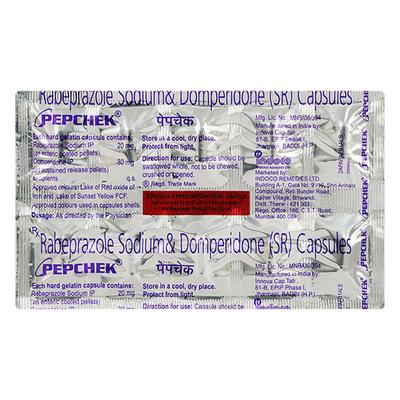
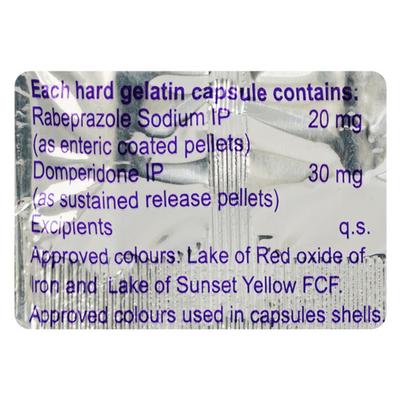
PEPCHEK CAPSULE is a combination of Rabeprazole sodium and Mosapride citrate sr which belongs to the group of medicines called Proton Pump inhibitors and Gastroprokinetic agents respectively. It is used to manage GERD in patients not responding to Rabeprazole alone.
Gastroesophageal reflux disease (GERD) occurs when stomach contents flow backwards and cause troublesome symptoms or complications like heartburn, excessive salivation, burping, and regurgitation. Though it is primarily a motility problem, the acidity of gastric contents is the most important aggressive factor in causing symptoms and lesions in food-pipe.
Before taking PEPCHEK CAPSULE, inform your doctor if you have any liver problems, stomach tumour, or vitamin b12 deficiency if you are taking a medicine for HIV (atazanavir), or if you are about to have a blood test (chromogranin A). PEPCHEK CAPSULE is not recommended for use in pregnant and breastfeeding women, so consult your doctor before taking it. PEPCHEK CAPSULE is not recommended for use in children.
The most common side effects of taking PEPCHEK CAPSULE are infections, trouble sleeping, headache, dizziness, cough, runny nose, sore throat, stomach pain, diarrhoea, gas, nausea, vomiting, constipation, back pain, weakness, etc. Contact your doctor if any of the above side effects worsen.
Uses Of PEPCHEK CAPSULE
- Manage GERD in patients not responding to Rabeprazole
How PEPCHEK CAPSULE Works
PEPCHEK CAPSULE provides relief from the symptoms of GERD where rabeprazole suppresses stomach acid secretion by specific blockade of the acid pump in the stomach, and mosapride increases the motility of your food pipe, accelerates stomach emptying, and enhances acid blocking effect of PPIs.
How to use PEPCHEK CAPSULE
Take PEPCHEK CAPSULE as advised by your physician. Swallow the medicine with a glass of water. Do not crush or chew the medicine. Your doctor will decide the correct dose and duration of PEPCHEK CAPSULE for you depending on your age, body weight and disease condition. Do not stop taking PEPCHEK CAPSULE unless your doctor advises you to stop.
Side Effects Of PEPCHEK CAPSULE
Common
- infections
- trouble sleeping
- headache, dizziness
- cough, runny nose, sore throat
- stomach pain, diarrhoea, gas, nausea, vomiting, constipation
- back pain
- weakness, flu-like symptoms
- noncancerous tumours in the stomach
- changes in blood cell count like high or low white blood cells, increased platelets
Uncommon
- nervousness or drowsiness
- bronchitis (chest infection)
- sinusitis (painful and blocked sinuses)
- dry mouth
- indigestion, burping
- skin redness
- pain in muscle, leg or joint
- hip, wrist and spine fractures
- urinary tract infection
- chest pain
- chills or fever
- changes in liver function
Rare
- loss of appetite
- depression
- hypersensitivity including allergic reactions
- disturbance in vision
- sore mouth or altered taste
- upset stomach
- liver problems including yellow skin and whites of your eyes and raised liver function tests
- itchy rash or blisters
- sweating
- kidney problems
- weight gain
- low blood platelet count (bleeding or easy bruising)
- fast, strong, or irregular heartbeat
- increase in certain types of fat
Stop taking PEPCHEK CAPSULE and consult your doctor immediately if you experience any of the following side effects:
- low magnesium levels (extreme tiredness, involuntary muscle contractions, disorientation, fits, dizziness, or increased heart rate)
- skin rash, especially when exposed to the sun
- joint pain
- diarrhoea with fever, abdominal pain or tenderness in the elderly
How To Manage Side Effects
Bloating
Eat smaller and more frequent meals. Eat and drink slowly, and exercise regularly. If flatulence does not improve, contact your doctor.
Constipation
Eat plenty of fiber-rich foods such as fresh fruits, vegetables, and cereals and drink plenty of water. Exercise more regularly. If constipation does not improve, contact your doctor.

Diarrhea
Drink lots of fluids, such as water or fruit juice to keep yourself hydrated. Do not consume any medicine on your own without consulting your doctor. If diarrhoea does not improve, contact your doctor.

Dizziness Or Drowsiness
Lie down until the dizziness is gone, then get up slowly. Move slowly and carefully, do not hurry. Get adequate rest. Drink plenty of water and other fluids. Avoid coffee, cigarettes, alcohol, and drugs. If dizziness does not improve, consult your doctor.

Headache
Drink an ample amount of water. Get adequate rest. Try to be relaxed and stress-free. Ask your doctor before taking any medicine for a headache. If the headache does not improve, contact your doctor.

Nausea And Vomiting
In case of nausea, take PEPCHEK CAPSULE with, or just after meals. Stick to simple meals. Avoid eating oily or spicy foods. If nausea does not improve, contact your doctor.
In case of vomiting, get adequate rest. Drink lots of fluids, especially water. Have small sips if you feel sick. Eat when you feel like it. Do not take any medicine for vomiting without asking your doctor. If vomiting does not improve, contact your doctor.

Stomach Pain
Try to rest and relax. Eat and drink slowly or try to have smaller meals more frequently. Keep a heating pad on your stomach. If the stomach pain does not improve, contact your doctor.
Warning & Precautions

Pregnancy
ContraindicatedPEPCHEK CAPSULE is not recommended for use in women who are pregnant or think they are pregnant. Consult your doctor before taking it.

Breastfeeding
ContraindicatedPEPCHEK CAPSULE is not recommended for use in women who are breastfeeding or planning to breastfeed. Consult your doctor before taking it.

Driving and Using Machines
Use with CautionDo not drive or use any machines if you feel sleepy after taking PEPCHEK CAPSULE.

Liver
Use with CautionPEPCHEK CAPSULE should be used with caution in patients who have or had any liver problems. Consult your doctor before taking it.

Allergy
ContraindicatedDo not take PEPCHEK CAPSULE if you are allergic to Rabeprazole, Mosapride, or any of the other ingredients of this medicine.

Use In Pediatrics
ContraindicatedPEPCHEK CAPSULE is not recommended for use in children. Consult your doctor before taking it.

Use In Geriatrics
Use with CautionPEPCHEK CAPSULE should be used with caution in elderly patients, especially those having osteoporosis. Consult your doctor before taking it.
Others
Before taking PEPCHEK CAPSULE, inform your doctor if you:
- have a stomach tumor
- have a deficiency or risk factors for reduced vitamin B12
- had a skin reaction after management with a similar medicine that reduces stomach acid
- are going to have a Chromogranin A blood test
Interactions
A. Drug-Drug interactions:
Before taking PEPCHEK CAPSULE, inform your doctor if you are taking any of the following medicine:
- medicines used to manage fungal infections (Ex. ketoconazole, itraconazole)
- atazanavir (used to manage HIV infection)
- methotrexate (used in cancer management)
- medicines used to relax muscles (Ex. atropine, scopolamine)
- erythromycin (used to manage bacterial infections)
- medicines used to manage inflammation or immune reactions, especially in the elderly (Ex. prednisolone, hydrocortisone)
Overdosage:
Contact your doctor immediately if you or anyone else accidentally took too much of PEPCHEK CAPSULE.
Synopsis
| Drug | : | Rabeprazole, Mosapride |
| Pharmacological Category | : | Proton pump inhibitor, Gastroprokinetic agent |
| Therapeutic Indication | : | Gastroesophageal reflux disease (GERD) |
| Dosage Forms | : | Tablet, Capsule |
More Information
- Keep PEPCHEK CAPSULE out of reach from children
- Store below 25°C
FAQs About PEPCHEK CAPSULE
Q: Does PEPCHEK CAPSULE cause blood problems?
A: PEPCHEK CAPSULE might cause blood problems in some patients but it often gets better when the management is stopped. Consult your doctor if you have any more doubts regarding PEPCHEK CAPSULE use.
Q: Can PEPCHEK CAPSULE make my skin sun-sensitive?
A: PEPCHEK CAPSULE might give you skin rash, especially when exposed to the sun. Inform your doctor immediately if you see any rash, as you might need to stop this management.
Q: Can I stop taking PEPCHEK CAPSULE on my own?
A: Do not stop taking PEPCHEK CAPSULE until your doctor tells you to stop, unless you experience any unwanted effects, worsening of your condition or any new symptoms. In such a case, contact your doctor right away. Continue taking it even if you feel better, as symptoms will probably start resolving before the ulcer is healed.
Q: Can PEPCHEK CAPSULE be used in children?
A: No. PEPCHEK CAPSULE is used for adults and is not recommended for children. Your doctor will decide on the correct dose or select a suitable alternative therapy for your child.
Q: Can PEPCHEK CAPSULE be crushed?
A: No. Do not break, crush or chew PEPCHEK CAPSULE. Simply swallow it wholly, with a glass of water.
Q: Can PEPCHEK CAPSULE be used in elderly patients?
A: PEPCHEK CAPSULE should be used with caution in elderly patients and if any adverse reactions are found then appropriate dose adjustments are made. Taking PEPCHEK CAPSULE for a period of more than one year may slightly increase the risk of hip, wrist, or spine fracture in the elderly. Consult your doctor before taking it.
Q: What if I forget to take a dose of PEPCHEK CAPSULE?
A: If you forget to take a dose of PEPCHEK CAPSULE, take it as soon as you remember. However, omit the missed dose if it is almost time for the next dose. Do not take the medicine twice to make up for a forgotten dose. If you forget to take your medicine for more than 5 days, ask your doctor before taking any more of it.
Q: Can PEPCHEK CAPSULE be taken during pregnancy?
A: PEPCHEK CAPSULE is not recommended for use in pregnancy. If you are pregnant, think you may be pregnant or are planning to get pregnant, consult your doctor before taking this medicine. Inform your doctor immediately if you become pregnant during management with PEPCHEK CAPSULE.
Q: Can I take other medicines with PEPCHEK CAPSULE?
A: Before taking PEPCHEK CAPSULE, inform your doctor if you are taking, have taken, or might take any other medicine, including prescription, non-prescription or any herbal medicine, as these might interact with each other and cause serious side effects.
References
1. Barbara G. Wells, Joseph T. DiPiro, Terry L. Shwinghammer, Cecily V. DiPiro. Gastroesophageal Reflux Disease. Pharmacotherapy Handbook. Ninth edition. Page- 206.
2. Lida H, Kaai M, Inoh Y, Kanoshima K, Ohkuma K, Nonaka T, Fujita K, Ida T, Kusakabe A, Maeda S, Nakajima A, Inamori M. Early effect on intragastric pH of oral administration of rabeprazole with mosapride compared with rabeprazole alone. NIH National Library of Medicine, National center for biotechnology information. Pubmed central. May 2017. [Accessed on 5th July 2022] https://www.ncbi.nlm.nih.gov/pmc/articles/PMC5479994/
3. Lim HC, Kim JH, Youn YH, Lee EH, Lee BK, Park H. Effects of the Addition of Mosapride to Gastroesophageal Reflux Disease Patients on Proton Pump Inhibitor: A Prospective Randomized, Double-blind Study. NIH National Library of Medicine, National center for biotechnology information. Pubmed central. October 2013. [Accessed on 5th July 2022] https://www.ncbi.nlm.nih.gov/pmc/articles/PMC3816184/#:~:text=The%20action%20mechanism%20of%20mosapride,effect%20of%20PPIs%20in%20humans.
4. Torrent Pharmaceuticals Ltd. Rabeprazole sodium + Mosapride citrate Sr. [Revised in March 2020] [Accessed on 5th July 2022] https://www.torrentian.com/pisheet/Upload/PI_Sheet/131.pdf
Useful Diagnostic Tests
- Esophageal pH monitoring
- Endoscopy
- Manometry
Author Details