






Netmeds First Membership
Introduction About ONCET 3D TABLET
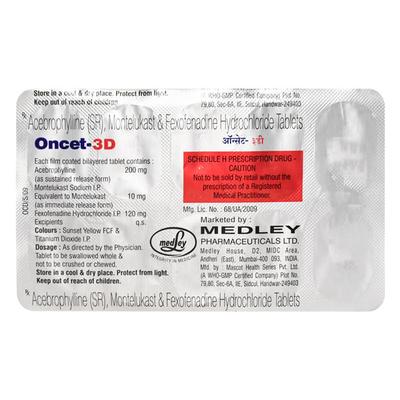
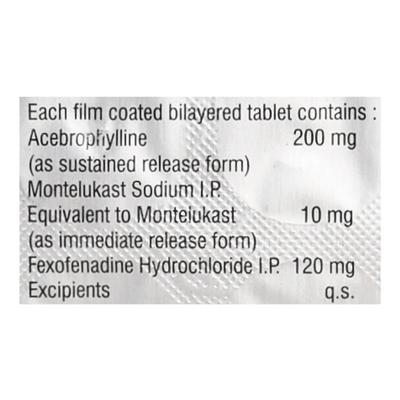
ONCET 3D TABLET is a combination of Acebrophylline, Fexofenadine and Montelukast which belongs to the group of medicines called Bronchodilators, Antihistamines and Leukotriene Receptor Blockers respectively. It is used in the management of asthma and chronic obstructive pulmonary disease (COPD). It also manages bronchitis and seasonal allergic rhinitis among asthmatic patients.
Take ONCET 3D TABLET as advised by your physician. Swallow the medicine with a glass of water. Do not crush or chew the medicine.
Before taking ONCET 3D TABLET inform your doctor if you have any liver, kidney or heart problems, if have fits, stomach ulcers, viral infections, hypertension or hyperthyroidism as a precaution.
ONCET 3D TABLET is not recommended for use in pregnant or breastfeeding women. Common side effects of taking ONCET 3D TABLET are epigastric pain, stomach discomfort, nausea, vomiting, dizziness, headache and respiratory tract infections. Consult your doctor if any of these side effects trouble you.
Uses Of ONCET 3D TABLET
It manages:
- Asthma & COPD
- Bronchitis (inflammation of the airways)
- Seasonal allergic rhinitis (nasal congestion, repeated sneezing, nasal itching or a red, watery, and itchy eyes)
Benefits of ONCET 3D TABLET
1. Triple-Combination Convenience
ONCET 3D TABLET contains three active components in a single dose, reducing the need to take multiple separate medicines and helping maintain a simple, streamlined routine.
2. Supports Better Dosage Consistency
With all components provided in a fixed amount, the tablet helps users follow a consistent daily schedule without managing different strengths or timings for separate medicines.
3. Designed for Symptom-Focused Support
Each ingredient belongs to a different therapeutic category (e.g., antihistamine, decongestant, analgesic/antipyretic), making the combination commonly used in situations where multiple symptoms are present at the same time.
4. Useful in Everyday Health Kits
Due to its combination format, ONCET 3D TABLET is often included in routine home and travel medical kits for convenience and readiness.
5. Reduces Pill Burden
Instead of taking separate tablets for different symptoms, this combination helps minimize the number of tablets taken in a day, improving user convenience.
6. Easy-to-Swallow Tablet Form
Its standard-size tablet design is easy to swallow, making it suitable for users who prefer tablet-based formulations over syrups or capsules.
7. Time-Saving and Practical
The all-in-one format may help users avoid confusion and save time, especially when managing busy schedules.
8. Supports Doctor-Guided Combination Use
ONCET 3D provides a ready-made combination that aligns with what healthcare professionals may recommend when multiple ingredients are needed together.
How ONCET 3D TABLET Works
1. Antihistamine Component (Cetirizine or Levocetirizine Type)
This ingredient works by selectively blocking H1 receptors, which are the sites where histamine typically binds.
- Histamine is released by the body during allergic responses.
- By reducing histamine’s activity at the receptor level, the antihistamine helps limit the chain reactions triggered by histamine release, such as increased vascular permeability and sensory nerve stimulation.
- It also stabilizes the allergic response by reducing histamine-driven signals in the airway and skin tissues.
2. Decongestant Component (e.g., Phenylephrine Type)
This ingredient acts as a selective alpha-1 adrenergic receptor agonist.
- It causes vasoconstriction (narrowing of blood vessels) in the nasal mucosa.
- Vasoconstriction reduces the amount of fluid and blood flow entering the nasal tissues.
- This process helps reduce swelling inside nasal passages.
3. Analgesic–Antipyretic Component (e.g., Paracetamol Type)
This component exhibits a central inhibitory action on the enzyme cyclooxygenase (COX), primarily COX-3 in the central nervous system.
- It reduces the synthesis of prostaglandins within the brain and spinal cord.
- Prostaglandins influence temperature regulation and pain signaling.
- By lowering prostaglandin formation centrally, the ingredient helps modulate temperature perception and discomfort signals.
How These Mechanisms Complement Each Other
Even though each component works through a different pathway, the combination is structured to:
- act at multiple physiological levels—histamine pathways, adrenergic receptors, and CNS prostaglandin modulation
- address histamine-driven responses, vascular congestion, and CNS discomfort pathways in a coordinated manner
- provide a multi-pathway approach for scenarios where different symptoms appear together
This complementary multi-mechanistic design is the primary reason ONCET 3D is categorized as a triple-action formulation.
How to use ONCET 3D TABLET
- Swallow the tablet whole with a full glass of water.
- Do not crush, chew, or break the tablet, as doing so may affect how the ingredients are released.
- Take it at the same time each day if advised for multiple days.
- Avoid taking more than the prescribed number of tablets in one day.
Step-by-Step Directions for Using ONCET 3D
- Read the instructions provided on the product label.
- Confirm the dosage recommended by your doctor.
- Drink a glass of water before swallowing the tablet, if needed.
- Place the tablet on your tongue and swallow whole with water.
- Continue the same routine daily if your doctor advises multiple-day use.
- Keep track of your intake schedule using a reminder or note.
Best Time to Take the Dose
- ONCET 3D is commonly taken after meals, unless your doctor advises otherwise.
- Taking it after food may help some users avoid stomach discomfort.
- Choose a consistent time (morning/evening) to avoid missing doses.
ONCET 3D Administration Instructions for Adults
- Adults should follow the exact dose recommended by their doctor.
- Not recommended for children unless specifically advised by a pediatric specialist.
- Older adults or individuals with medical conditions may receive modified dosing as per medical assessment.
ONCET 3D Tablet Intake: With or Without Food?
- ONCET 3D can typically be taken with or without food, but taking it after meals is often preferred for comfort.
- Avoid taking the tablet on an empty stomach if you experience sensitivity to oral medications.
What if I forgot to take ONCET 3D TABLET
- If you miss a dose, take it as soon as you remember.
- If it is almost time for your next scheduled dose, skip the missed one and continue with your regular routine.
- Do not double the dose to make up for the missed tablet.
- Maintain a reminder system to avoid repeated missed doses.
Overdose
If you or anyone else accidentally took more ONCET 3D TABLET, consult your doctor immediately or visit the nearby hospital. Symptoms include nausea, vomiting, upper stomach pain, restlessness, dizziness, tiredness, dry mouth, fits, fast heart rate, fast heart rate, sleepiness, thirst, headache and hyperactivity.
Side Effects Of ONCET 3D TABLET
Common
- stomach pain or discomfort, heartburn, loss of appetite
- headache
- transient nausea, dizziness
- vomiting, diarrhoea, constipation
- drowsiness
- upper respiratory tract infection
- skin rash or itching
- fever
- breathing difficulties
- nasal inflammation
- increased liver enzymes
When to consult a doctor:
- allergic reactions (swelling of the face, lips, tongue and/or throat which may cause difficulty in breathing or swallowing)
- behaviour and mood related changes (anxiety, aggressive behaviour or hostility, depression, suicidal thoughts, hallucinations)
- fits
- increased bleeding tendency
- feeling shaky (tremor)
- strong, fast or irregular heartbeats
- flu-like symptoms accompanied with pins and needles, numbness of arms or legs, worsening of pulmonary symptoms, and/or rash
Warning & Precautions

Pregnancy
ContraindicatedONCET 3D TABLET is not recommended for use in pregnancy. Therefore, consult your doctor before taking it.

Breastfeeding
ContraindicatedONCET 3D TABLET is not recommended for use in breastfeeding women. Therefore, consult your doctor before taking it.

Driving and Using Machines
Use with CautionONCET 3D TABLET usually does not affect your ability to drive or operate any machinery. However, do not drive or handle any heavy tools or machines if you feel dizzy or drowsy after taking ONCET 3D TABLET

Kidney
Use with CautionONCET 3D TABLET should be used with caution in patients with kidney problems. Therefore, consult your doctor before taking it.

Liver
Use with CautionONCET 3D TABLET should be used with caution in patients with liver problems. Therefore, consult your doctor before taking it.

Allergy
ContraindicatedDo not take ONCET 3D TABLET if you are allergic to Montelukast, Fexofenadine, Acebrophylline or to any other methylxanthines (such as theophylline, doxophylline).

Heart Disease
Consult your doctorONCET 3D TABLET is not recommended for use in patients suffering from myocardial infarction or arrythmias. It should be used with caution in patients with heart failure or any other heart problems. Therefore, consult your doctor before taking it.

Use In Pediatrics
ContraindicatedONCET 3D TABLET is not recommended for use in children and adolescents (aged below 18 years). Therefore, consult your doctor before taking it.

Use In Geriatrics
Use with CautionONCET 3D TABLET should be used with caution in the elderly patients. Therefore, consult your doctor before taking it.
Other Warnings for ONCET 3D TABLET
Before taking [ONCET 3D TABLET, inform your doctor if you:
- have chronic alcoholism (addiction to alcohol)
- have any viral infections
- have an over-active thyroid gland
- have hypertension (high blood pressure)
- have ulcers in the stomach and/or intestines
- have fits (seizures)
Who should not take ONCET 3D TABLET
ONCET 3D TABLET is not recommended for use if you:
- have an asthma attack
- have hypotension (low blood pressure)
- have fluid and electrolyte imbalance
Drug - Drug interaction
1. Interactions Related to the Antihistamine Component
Antihistamines may interact with:
Sedatives and CNS Depressants
- Sleeping pills
- Anxiety medicines
- Certain antipsychotics
These may increase drowsiness or slow reaction time.
2. Interactions Related to the Decongestant Component (Phenylephrine-type)
This component may interact with medications that affect blood pressure or heart rhythm.
Blood Pressure Medicines
- Beta-blockers
- Alpha-blockers
- Certain antihypertensive drugs
The decongestant may reduce their effectiveness or alter blood pressure response.
Monoamine Oxidase Inhibitors (MAOIs)
- Used for certain psychiatric conditions
These may cause excessive rise in blood pressure when combined with decongestants.
Antidepressants
- Some tricyclic antidepressants
- SNRIs
These may enhance the decongestant effect on blood vessels.
Thyroid medications
May increase sensitivity to the effects of decongestants.
3. Interactions Related to the Analgesic–Antipyretic Component (Paracetamol-type)
This component interacts with medicines affecting the liver or those metabolized similarly.
Liver-Affecting Medicines
- Certain anti-tuberculosis medicines (e.g., isoniazid)
- Anticonvulsants (e.g., carbamazepine, phenytoin)
These may increase strain on liver metabolism.
Blood Thinners (e.g., warfarin)
Long-term or high-dose intake may affect blood clotting stability.
Other Paracetamol-containing Products
Risk of accidental excess intake increases if combined with cold/flu syrups or pain medicines containing paracetamol.
4. Combined Interaction Risks
Due to its three components, ONCET 3D TABLET should be used cautiously with:
- Multiple cold/flu combination products
- Medicines causing drowsiness
- Medicines that elevate heart rate or blood pressure
- Medicines metabolized through liver pathways
- Weight-loss medicines with stimulant-like ingredients
- Nasal sprays containing decongestants
5. Medicines That Should Be Disclosed Before Taking ONCET 3D
Inform your doctor if you are taking:
- Blood pressure medicines
- Thyroid medications
- Antidepressants (MAOIs, TCAs, SNRIs)
- Anticonvulsants
- Anti-tuberculosis medicines
- Anxiety or sleep medicines
- Blood thinners
- Any medicine containing paracetamol
- Other antihistamines or decongestants
Synopsis
| Drug | : | Acebrophylline, Fexofenadine, Montelukast |
| Pharmacological Category | : | Methylxanthines, Second Generation Antihistamines, Leukotriene receptor antagonists |
| Therapeutic Indication | : | Asthma, COPD, Bronchitis, Allergic rhinitis |
| Dosage Forms | : | Tablet |
More Information
Why Combination Therapy Is Sometimes Preferred
Combination formulations like ONCET 3D TABLET may be recommended by healthcare professionals when multiple symptoms are present at the same time. A combination tablet:
- Brings together different categories of ingredients that act on separate physiological pathways.
- Helps simplify the medication routine by reducing the number of separate tablets a person needs to manage.
- Supports better adherence by offering all necessary components in one structured dose.
- Minimizes confusion that may arise when juggling multiple medications with different timings.
- Ensures that each component is present in a standard, balanced ratio, as designed in fixed-dose combinations.
This approach is primarily chosen for practicality, convenience, and structured dosing, especially when multi-symptom relief is discussed during medical consultations.
How to Distinguish Quality in Similar Combination Tablets
When selecting a combination tablet, users often consider several quality-related factors:
Ingredient Transparency
Check that the label clearly lists each active component with accurate strength information.
Balanced Formulation
Quality formulations maintain appropriate proportions of every ingredient so that they complement each other.
Manufacturing Standards
Look for products from pharmaceutical companies that follow recognized quality certifications and regulatory standards.
Tablet Design
Good quality tablets often feature:
- uniform shape
- consistent color
- proper coating for easy swallowing
- minimal crumbling during handling
Packaging Integrity
Well-sealed strips or blister packs reduces moisture exposure and help maintain stability.
Expiry and Batch Information
Clear batch tracing and manufacturing/expiry details reflect good compliance practices.
These markers help users differentiate well-formulated products from lower-quality alternatives.
Why Dosage Consistency Matters
Consistent dosing is important in combination tablets because:
- Each tablet contains a fixed ratio of multiple components, designed to work together in a coordinated manner.
- Skipping or doubling doses disrupts the intended balance of the ingredients.
- Regular intake helps maintain a steady level of each component in the body.
- Inconsistent use may lead to unpredictable effects or reduced symptom management efficiency.
- Following the recommended timing allows each component to work as designed in the formulation.
Maintaining dosage consistency ensures that the combination remains aligned with the structured schedule recommended by healthcare professionals.
“Before You Buy” Checklist for ONCET 3D TABLET
A patient-friendly, practical, and fully compliant pre-purchase guide:
1. Check the Active Ingredients
Ensure the tablet contains the specific combination (antihistamine + decongestant + analgesic/antipyretic) recommended by your doctor.
2. Confirm Suitability Based on Health Conditions
Discuss with your doctor if you have:
- blood pressure concerns
- thyroid issues
- liver or kidney problems
- breathing-related conditions
- chronic medical conditions
3. Review Current Medications
Make sure your doctor is aware if you take:
- antidepressants
- sedatives
- blood pressure medicines
- blood thinners
- other cold/flu products
- medications containing paracetamol
- herbal or OTC supplements
4. Check for Ingredient Sensitivities
Verify that you are not sensitive or allergic to:
- antihistamines
- decongestants
- paracetamol
or any excipients listed on the packaging.
5. Verify the Recommended Duration
Confirm how long your doctor intends you to use ONCET 3D TABLET and whether it is meant for short-term or structured intake.
6. Ensure Age Appropriateness
ONCET 3D is typically recommended for adults unless a healthcare provider advises otherwise.
7. Clarify Food and Timing Instructions
Check whether your doctor advised you to take it with or without food and note your best preferred time for consistent intake.
FAQs About ONCET 3D TABLET
Q: Can ONCET 3D TABLET be used in children?
A: ONCET 3D TABLET is generally not recommended for use in children and adolescents (aged below 18 years). Therefore, consult your doctor before taking it.
Q: Can ONCET 3D TABLET make you sleepy?
A: Yes. This medicine may make you feel sleepy or drowsy. Try to rest and relax. Get enough sleep. Avoid driving or operating any tools or machines while you are feeling dizzy. Do not consume too much of alcohol, as it can aggravate your dizziness. Consult your doctor if the symptom did not improve.
Q: Can ONCET 3D TABLET be used on an asthma attack?
A: No. ONCET 3D TABLET is only used to manage or manage the symptoms of asthma. If your asthma or breathing gets worse suddenly, contact your doctor immediately or go to the hospital straight away to avoid further exacerbation of the attack. Meanwhile use a fast-acting rescue inhaler along with ONCET 3D TABLET.
Q: Can I stop using ONCET 3D TABLET once my symptoms subside?
A: No. Continue to use ONCET 3D TABLET as long as your doctor prescribes it to you. Do not stop using this medicine or reduce the dose suddenly without consulting your doctor as it may make it less effective.
Q: What is the use of ONCET 3D TABLET?
A: ONCET 3D TABLET is used to manage asthma, COPD, inflammation of the airways (such as bronchitis) and seasonal allergic rhinitis.
Q: Can I take ONCET 3D TABLET daily?
A: ONCET 3D TABLET is generally prescribed as one or two doses per day. However, your doctor will decide the number of doses per day depending upon your age, body weight and disease condition.
Q: How long does it take for ONCET 3D TABLET to start working?
A: ONCET 3D TABLET may start working within 2 hours of oral administration. However, it may take 2 weeks for ONCET 3D TABLET to show improvements in your condition. Therefore, take ONCET 3D TABLET regularly as informed by your doctor without fail to achieve better results.
Q: Is ONCET 3D TABLET effective?
A: Yes. ONCET 3D TABLET effectively controls the symptoms of asthma and allergic rhinitis, by blocking the release of certain chemicals (phosphodiesterase, leukotrienes) in the respiratory tract that triggers the allergic and inflammatory response. It also manages the narrowing of the airway tract which makes breathing easier.
Q: What will happen if I consume a high dose of ONCET 3D TABLET than prescribed by my doctor?
A: Do not consume a higher dose of ONCET 3D TABLET than the one prescribed by your doctor, as it may lead to unwanted side effects. Your doctor will decide the correct dose for you, depending on your age and disease condition. If the prescribed dose, is not working for you, consult your doctor for advice.
Q: Is ONCET 3D TABLET safe?
A: ONCET 3D TABLET is considered safe at doses prescribed by the physician. However, it may cause few side effects such as epigastric pain, stomach discomfort, nausea, vomiting, dizziness, headache or respiratory tract infections in some individuals. Consult your doctor if any of these side effects trouble you.
Q: Will taking a higher dose of ONCET 3D TABLET be more effective?
A: No. Do not take a higher dose of ONCET 3D TABLET than prescribed by your doctor, as it could lead to toxicity. Always consume the dose prescribed by your doctor. If you feel that the prescribed dose is not working for you, consult your doctor for advice.
Q: Can the use of ONCET 3D TABLET make me feel dizzy?
A: ONCET 3D TABLET may cause dizziness in some individuals. If you experience dizziness, try to rest and relax. Get enough sleep. Avoid driving or operating any tools or machines completely while you are feeling dizzy. Do not consume excessive alcohol, as it could aggravate your dizziness. Consult your doctor if your dizziness worsens.
References
1. KD. Tripathi. Histamines and Antihistamines. Drugs for Cough and Bronchial Asthma. Essentials of medical pharmacology. Seventh edition. 2013. Page – 166, 224 & 228.
2. David Axelrod and Leonard Bielory. Fexofenadine hydrochloride in the treatment of allergic disease: a review. NIH. National Library of Medicine. National Center for Biotechnology Information. PMC. PubMed Central. September 2008. [Accessed on 16th March 2026] 
3. Ajitha Sharma, Shalini Adiga, Bharti Chogtu, Aswini Kumar Mohapatra, and Rahul Magazine. Comparing the Efficacy and Influence on the Quality of Life of Three Classes of Drugs Used in Bronchial Asthma - A Prospective Study. NIH. National Library of Medicine. National Center for Biotechnology Information. PMC. PubMed Central. September 2014. [Accessed on 16th March 2026] 
4. Central Drugs Standard Control Organization. Acebrophylline capsules 100mg. May 2008. Acebrophylline SR Tablet 200 mg. November 2010. [Accessed on 16th March 2026]
Author Details