




Netmeds First Membership
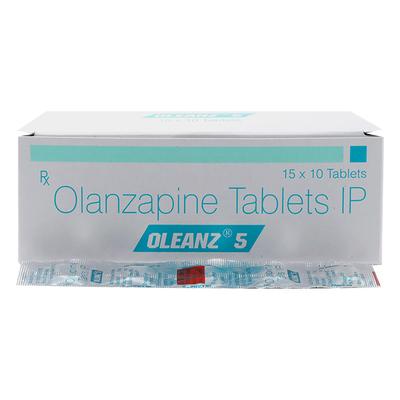
Introduction About OLEANZ 5MG TABLET
OLEANZ 5MG TABLET is used in the management of schizophrenia and severe manic episodes of bipolar disorders and its recurrence. It contains Olanzapine which belongs to group of medicines known as Antipsychotics.
It works by blocking certain brain receptors for dopamine and serotonin, which helps to reduce symptoms like hallucinations and mood swings in conditions like schizophrenia and bipolar disorder.
Along with this, your doctor might ask you to make certain lifestyle changes, such as eating a healthy diet, regular exercise and quitting alcohol. Avoid consumption of alcohol during management with OLEANZ 5MG TABLET as it can make you feel drowsy. OLEANZ 5MG TABLET is not recommended for use in patients previously diagnosed with eye problems like glaucoma or dementia in elderly.
Before taking OLEANZ 5MG TABLET, inform your doctor if you have a history of blood clotting, stroke, Parkinson’s disease, prostate, intestine, heart, liver or kidney disease, diabetes, and seizures.
OLEANZ 5MG TABLET should be used with caution among women who are pregnant. It is not recommended for use in breastfeeding women and in children and adolescents less than 18 years of age. OLEANZ 5MG TABLET should be used with caution in elderly patients with dementia. Common side effects are changes in the levels of some blood cells, weight gain, sleepiness and feeling dizzy.
Uses Of OLEANZ 5MG TABLET
It is used in the management of the psychotic conditions such as:
- Schizophrenia
- Severe manic episodes of bipolar disorder and its recurrence
Benefits of OLEANZ 5MG TABLET
- Helps stabilize mood in patients who experience severe mood fluctuations.
- Supports reduction of hallucinations and delusions, improving clarity of thought.
- Improves social interaction and daily functioning as symptoms become manageable.
- Reduces agitation, aggression, or restlessness associated with certain mental health conditions.
- Helps control sudden mood swings in conditions where mood stability is impaired.
- Provides long-term symptom control when used as part of a continuous treatment plan supervised by a psychiatrist.
How OLEANZ 5MG TABLET Works
Olanzapine works by targeting multiple neurotransmitter pathways in the brain. Its activity across dopamine and serotonin receptors makes it effective for mood and psychotic symptoms.
- Dopamine D2 Receptor Antagonism
- Reduces excessive dopamine activity, which is associated with hallucinations, delusions, agitation, and disorganized thinking.
- Helps restore balanced dopamine levels, improving perception and thought processes.
- Serotonin 5-HT2A and 5-HT2C Receptor Antagonism
- Balances serotonin pathways that influence mood, anxiety, sleep, and emotional stability.
- Enhances dopamine activity in certain brain regions, improving cognitive and mood-related symptoms.
- Interaction with Other Neurotransmitter Receptors
- Mild effects on histamine, alpha-adrenergic, and muscarinic receptors contribute to sedation, decreased agitation, and calming effects.
The combined modulation of dopamine and serotonin pathways helps stabilize mood, reduce psychotic symptoms, control agitation, and promote emotional regulation.
How to use OLEANZ 5MG TABLET
Always use OLEANZ only as advised by a psychiatrist, as dosage varies based on condition, age, severity, and individual response.
General Administration Instructions
- Take exactly as prescribed do not change the dose on your own.
- Usually taken once daily, often in the evening due to its calming effect.
- Can be taken with or without food.
- Swallow the tablet whole with water; do not crush or chew.
- Take at the same time every day to maintain consistent levels in the body.
Treatment Considerations
- Full effects may take 1–2 weeks, but some calming effects occur earlier.
- Do not stop abruptly unless instructed by your doctor sudden discontinuation may worsen symptoms.
- Regular follow-ups may be needed to monitor response, weight, metabolic changes, and overall progress.
What if I forgot to take OLEANZ 5MG TABLET
- Take it as soon as you remember.
- If the next dose is near, skip the missed one.
- Do not double the dose to compensate.
Overdose
If you or anyone else accidentally takes too much of OLEANZ 5MG TABLET, consult your doctor immediately or visit the nearby hospital. Symptoms of overdose are rapid beating of the heart, agitation, problems with speech, unusual movements (especially of the face or tongue), reduced level of consciousness, acute confusion, seizures.
Side Effects Of OLEANZ 5MG TABLET
Common side effects of OLEANZ 5MG TABLET:
- weight gain
- sleepiness
- feel dizzy (with a slow heart rate), especially while getting up from a lying or sitting position
- restlessness, tremor, unusual movements
- constipation
- dry mouth
- rashes
- loss of strength, extreme tiredness, feeling more hungry
- swelling of the hands, ankles, or feet
- fever, joint pain
- sexual dysfunction
- seizures, muscle stiffness
- syndrome of restless legs, problems with speech (stuttering)
- memory loss or forgetfulness
- hair loss
When to consult a doctor?
- unusual movement of face or tongue
- blood clots in the veins especially in the legs (swelling, pain, and redness in the leg), which may travel through blood vessels to the lungs causing chest pain and difficulty in breathing
- fever, faster breathing, sweating, muscle stiffness and drowsiness
Warning & Precautions

Pregnancy
Use with CautionOLEANZ 5MG TABLET should be used with caution in pregnant women. Consult your doctor before taking it.

Breastfeeding
ContraindicatedOLEANZ 5MG TABLET is not recommended for use in breastfeeding women as it can pass through breast milk.

Driving and Using Machines
Use with CautionDo not drive and use machines while taking OLEANZ 5MG TABLET as it can make you feel drowsy.

Alcohol
ContraindicatedDo not drink alcohol while taking OLEANZ 5MG TABLET as it can make you feel drowsy.

Kidney
Use with CautionOLEANZ 5MG TABLET should be used with caution in patients with kidney disease. Consult your doctor before taking.

Liver
Use with CautionOLEANZ 5MG TABLET should be used with caution in patients with liver disease.

Allergy
ContraindicatedDo not take OLEANZ 5MG TABLET if you are allergic to Olanzapine or any other ingredients of this medicine.

Heart Disease
Use with CautionOLEANZ 5MG TABLET should be used with caution in patients with heart disease.

Use In Pediatrics
ContraindicatedOLEANZ 5MG TABLET is not recommended for children and adolescents under 18 years of age.

Use In Geriatrics
Consult your doctorOLEANZ 5MG TABLET should be used with caution in elderly patients. Your doctor will decide the correct dose and duration for you depending upon your age, body weight and disease condition. Constant monitoring on blood pressure, blood sugar levels and cholesterol levels is recommended in elderly patients. It is not suitable for elders with dementia.
Other Warnings for OLEANZ 5MG TABLET
Before taking the medicine, inform your doctor if you:
- you or your family has a history of blood clots or blood disorders
- have a stroke or mini stroke
- have Parkinson’s disease
- have prostate problems, blocked intestine
- have diabetes
- have seizures
- have salt depletion because of prolonged severe diarrhoea and vomiting
- are intolerant to some sugar
- have phenylketonuria (increase phenylalanine in blood)
Who should not take OLEANZ 5MG TABLET
It is not recommended for use if you:
- have been previously diagnosed with eye problems such as certain kinds of glaucoma
- have dementia (especially in elderly patients)
Drug - Drug interaction
1. CNS Depressants (Sedatives)
Medicines that cause drowsiness can enhance the sedative effects of OLEANZ.
Examples:
- Benzodiazepines (e.g., diazepam, lorazepam, clonazepam)
- Sleep medicines (zolpidem, zopiclone)
- Opioid pain medicines (tramadol, morphine, codeine)
- Antihistamines with sedation (chlorpheniramine, hydroxyzine)
Possible outcomes: Increased drowsiness, impaired coordination, slowed breathing.
2. Antihypertensive & Cardiovascular Medicines
Olanzapine may enhance the blood pressure–lowering effect of many cardiac medications.
Examples:
- Beta-blockers (metoprolol, atenolol)
- Alpha-blockers (prazosin, tamsulosin)
- Calcium channel blockers (amlodipine)
Possible outcomes: Dizziness, fainting, postural hypotension.
3. Dopamine Agonists & Parkinson’s Medicines
These drugs have opposing effects to olanzapine.
Examples:
- Levodopa
- Ropinirole, pramipexole
- Cabergoline
Possible outcomes: Reduced effect of Parkinson’s medicines and altered movement control.
4. CYP1A2 Enzyme Interactions
Olanzapine is metabolized primarily by CYP1A2.
Medicines affecting this enzyme can increase or decrease Olanzapine levels.
CYP1A2 Inhibitors (↑ Olanzapine levels)
- Fluvoxamine (strong interaction)
- Ciprofloxacin
- Enoxacin
Possible outcomes: Increased sedation, dizziness, metabolic changes.
CYP1A2 Inducers (↓ Olanzapine levels)
- Carbamazepine
- Phenytoin
- Rifampicin
- Tobacco smoking (non-drug inducer)
Possible outcomes: Reduced effectiveness of OLEANZ.
5. Anticholinergic Medicines
Olanzapine has mild anticholinergic effects, which may add up with other anticholinergic drugs.
Examples:
- Trihexyphenidyl
- Benztropine
- Certain antidepressants (amitriptyline, imipramine)
- Overactive bladder meds (oxybutynin, tolterodine)
Possible outcomes: Constipation, dry mouth, blurred vision, urinary retention.
6. Mood Stabilizers & Anticonvulsants
Some can alter olanzapine levels or increase sedation.
Examples:
- Lithium
- Valproate (valproic acid)
- Lamotrigine
Possible outcomes: Enhanced sedation, increased risk of metabolic changes, altered drug levels.
7. Other Antipsychotics or Mood Medicines
Combined use may amplify both therapeutic and side-effect profiles.
Examples:
- Risperidone
- Clozapine
- Quetiapine
- Haloperidol
Possible outcomes: Increased risk of extrapyramidal symptoms, metabolic effects, and sedation.
8. Blood Sugar–Altering Drugs
Olanzapine can affect blood glucose levels.
Examples:
- Insulin
- Oral antidiabetics (metformin, glimepiride, sitagliptin)
Possible outcomes: Need for blood sugar monitoring and possible dose adjustments.
9. QT-Prolonging Medicines (Caution Required)
Though olanzapine has a lower risk, combining with QT-prolonging drugs may increase cardiac risks.
Examples:
- Certain antibiotics (azithromycin, levofloxacin)
- Antiarrhythmics (amiodarone)
- Antidepressants (citalopram)
Possible outcomes: Abnormal heart rhythms (rare but serious).
Synopsis
|
Drug |
: |
|
|
Pharmacological Category |
: |
Antipsychotics |
|
Therapeutic Indication |
: |
Schizophrenia, Manic episodes, Bipolar disorder |
|
Dosage Forms |
: |
Tablet, Orally disintegrating tablet, Mouth dissolving Tablet |
More Information
1. Pharmacological Uniqueness of Olanzapine
- OLEANZ 5MG Tablet belongs to the atypical antipsychotic class and shows a broad receptor-binding profile, acting on serotonin (5-HT2A/2C), dopamine (D2), histamine (H1), and adrenergic receptors.
- Its higher affinity for serotonin receptors than dopamine receptors is a key reason for its lower rates of movement-related side effects compared to older antipsychotics.
- Olanzapine has a long receptor “off-rate”, meaning it dissociates from D2 receptors relatively quickly, reducing the risk of severe dopamine blockade symptoms.
2. Pharmacokinetics Insights (Absorption, Distribution, Metabolism, Excretion)
- Absorption: Olanzapine is well absorbed orally and is not significantly affected by food, allowing flexible dosing schedules.
- Distribution: The drug is highly lipid-soluble, helping it distribute efficiently throughout brain tissue.
- Metabolism: Primarily processed by CYP1A2 and to a lesser extent by CYP2D6, which explains many of its drug–drug interactions.
- Half-life: Average half-life is 21–54 hours, supporting stable once-daily dosing and steady symptom coverage.
3. Role in Rapid Symptom Calming
- Olanzapine is frequently selected in settings where controlling acute agitation or disturbed behaviour is a priority.
- Its faster onset of calming effect compared to some alternatives adds to its clinical utility.
4. Cognitive and Behavioural Stabilisation Effects
- OLEANZ helps stabilize dopamine-serotonin balance, supporting improvements in:
- Overactive thought processes
- Disorganized behaviour
- Hallucination or delusion intensity
- Emotional regulation
These effects contribute to overall functional improvement, making it a central part of psychiatric management strategies.
5. Influence on Sleep Architecture
- Olanzapine is known to improve sleep by enhancing slow-wave sleep (deep sleep phase).
- This contributes to better daytime functioning in individuals with disrupted sleep patterns linked to psychiatric illnesses.
6. Formulation Advantages
- OLEANZ 5MG Tablet offers flexibility with multiple dose strengths, allowing doctors to adjust treatment gradually depending on clinical response.
- Available in standard tablets and orodispersible formulations (varies by brand), supporting easier administration for patients who have difficulty swallowing.
7. Monitoring Parameters Often Considered by Clinicians
To ensure safe and optimized treatment, healthcare providers may monitor:
- Weight, waist circumference
- Blood glucose and lipid profile
- Blood pressure
- Liver function tests
- Movement symptoms
- Mood and behaviour changes
This ensures the treatment remains safe and effective over time.
8. Impact of Smoking on OLEANZ Levels
- Tobacco smoking induces CYP1A2 enzyme, causing increased metabolism of olanzapine.
- This may lead to lower drug levels and reduced effectiveness.
- Sudden smoking cessation may increase olanzapine concentration a clinically relevant point often reviewed by doctors.
FAQs About OLEANZ 5MG TABLET
Q: What is OLEANZ 5MG Tablet used for?
A: OLEANZ 5MG Tablet contains olanzapine, an atypical antipsychotic that helps manage symptoms associated with schizophrenia, mood disorders, and certain behavioural disturbances as advised by a doctor.
Q: How does OLEANZ 5MG Tablet help in psychiatric conditions?
A: It helps restore the balance of brain chemicals involved in mood, thinking, and behaviour, supporting overall symptom stability.
Q: When is OLEANZ 5MG Tablet usually recommended?
A: It is typically recommended in clinical settings where control of disturbed thoughts, agitation, mood fluctuations, or behavioural symptoms is required under medical supervision.
Q: How long does OLEANZ 5MG Tablet take to show effect?
A: Some calming effects may appear earlier, but meaningful improvement in mood, thought clarity, or behaviour generally occurs gradually over several days to weeks.
Q: Can OLEANZ 5MG Tablet be taken on an empty stomach?
A: Yes, food does not significantly affect the absorption of olanzapine, so it can be taken with or without meals as advised by a doctor.
Q: Is OLEANZ 5MG Tablet habit-forming?
A: No, it is not considered habit-forming, but it should always be taken exactly as prescribed and not discontinued suddenly without medical guidance.
Q: Can OLEANZ 5MG Tablet cause daytime sleepiness?
A: Yes, sedation or drowsiness is common, especially during the initial days of therapy. Doctors may adjust the timing to reduce discomfort.
Q: Does OLEANZ 5MG Tablet affect weight or appetite?
A: It may increase appetite and lead to weight changes in some individuals. Regular monitoring of weight and diet control is often advised.
Q: Can smoking affect the effectiveness of OLEANZ 5MG Tablet?
A: Yes. Smoking increases the breakdown of olanzapine in the body, which may reduce its effectiveness. Your doctor may consider this when planning your treatment.
Q: What should I do if I miss a dose of OLEANZ 5MG Tablet?
A: Take the missed dose as soon as you remember, unless it's almost time for the next dose. Do not double the dose. Consistent use helps maintain stable results.
References
1. K D Tripathi. Drugs Used in Mental Illness: Antipsychotic and Antimanic Drugs. Essentials of Medical Pharmacology. Eighth Edition. 2019. Page –469.
2. Olanzapine. StatPearls. National Center for Biotecnology Information. National Library of Medicine. NCBI. PubMed Central. [Revised in August 2023] [Accessed on 25th May 2026] 
3. Olanzapine 2.5, 5, 7.5, 10, 15, 20 mg Tablet, Orodispersible tablet. EMC. UK. Sun Pharmaceutical Industries Europe B.V. [Revised in May 2020] [Accessed on 25th May 2026] 
Author Details