

Netmeds First Membership
Quick Links
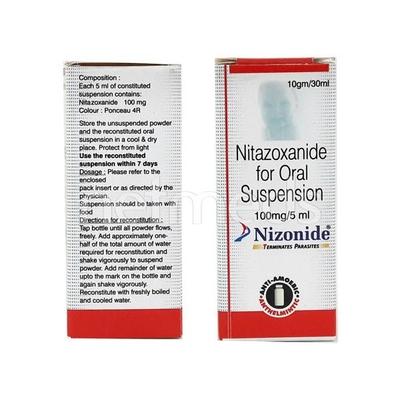
Introduction About NIZONIDE SUSPENSION
NIZONIDE SUSPENSION contains Nitazoxanide which belongs to the group of medicines called Antiprotozoals. It is used to manage diarrhoea caused by Giardia lamblia or Cryptosporidium parvum. Diarrhoea occurs when not enough water is removed from the stool, or too much fluid is secreted into the stool, making it loose.
Avoid consumption of alcohol while taking this medicine. NIZONIDE SUSPENSION is not effective for the management of diarrhoea caused by C. parvum in HIV-infected or immunodeficient patients. Before taking NIZONIDE SUSPENSION, inform your doctor if you have diabetes, kidney, liver, biliary problems.
NIZONIDE SUSPENSION should be used with caution among pregnant women and breastfeeding women as safety data has not been established yet. Safety and effectiveness of NIZONIDE SUSPENSION in children below 1 year of age has not been established yet. It should be used with caution in elderly patients above 65 years of age.
The most common side effects of taking NIZONIDE SUSPENSION are abdominal pain, diarrhoea, headache, and nausea. Contact your doctor if any of the above symptoms worsen.
Uses Of NIZONIDE SUSPENSION
- to manage diarrhea caused by Giardia lamblia or Cryptosporidium parvum
How NIZONIDE SUSPENSION Works
NIZONIDE SUSPENSION works by disturbing the energy metabolism in anaerobic microbes. It changes the structure of protozoa cell membranes, mitochondrial membranes, and stops viral replication. Thus killing the protozoa causing diarrhoea.
How to use NIZONIDE SUSPENSION
Take NIZONIDE SUSPENSION as advised by your physician. Shake well before use. Your doctor will decide the correct dose and duration for you depending on your age, body weight, and disease condition.
Side Effects Of NIZONIDE SUSPENSION
Common
- abdominal pain
- diarrhea
- headache
- nausea
How To Manage Side Effects
Headache:
Rest and relax. Keep yourself hydrated by drinking more fluids such as water or electrolytes. If needed apply a pain-relieving balm on the forehead. Avoid consumption of alcohol. If the symptom does not improve, contact your physician for advice.
Nausea:
Stick to simple meals. Avoid eating oil-rich or spicy foods. If the symptom does not improve, contact your physician for advice.
Diarrhoea:
Drink more fluids like water or fruit juice to keep yourself hydrated. Do not take any medicine on your own for diarrhoea without consulting your physician. If the symptom does not improve, contact your physician for advice.
Stomach pain:
Rest and relax. Eat and drink slowly or try to have lesser and more frequent meals. Keep a heating pad on your stomach. If the symptom does not improve, contact your physician for advice.
Warning & Precautions

Pregnancy
NIZONIDE SUSPENSION should be used with caution in pregnant women or women planning to have a baby as safety data has not been established yet. Consult your doctor before taking it.

Breastfeeding
NIZONIDE SUSPENSION should be used with caution in breastfeeding women as it is not known if it is excreted in breastmilk. Your doctor will weigh the potential benefits against the potential risks. Consult your doctor before taking it.

Alcohol
Avoid consumption of alcohol while taking NIZONIDE SUSPENSION.

Kidney
NIZONIDE SUSPENSION should be used with caution in patients with kidney problems as safety data has not been established yet. Consult your doctor before taking it.

Liver
NIZONIDE SUSPENSION should be taken with caution in patients with liver problems as safety data has not been established yet. Consult your doctor before taking it.

Allergy
Do not take NIZONIDE SUSPENSION if you are allergic to Nitazoxanide or any of the other ingredients of this medicine.
Others
NIZONIDE SUSPENSION is not recommended for use if you:
- have diarrhoea caused by C. parvum in HIV-infected or immunodeficient patients
Before taking NIZONIDE SUSPENSION inform your doctor if you:
- have biliary problems
Use in pediatrics:
Safety and effectiveness of NIZONIDE SUSPENSION in children below 1 year of age has not been established yet. Consult your doctor before taking it.
Use in geriatrics:
NIZONIDE SUSPENSION should be used with caution in elderly patients 65 years and above. Consult your doctor before taking it.
Interactions
A. Drug-Drug interactions:
Before taking NIZONIDE SUSPENSION, inform your doctor if you are taking any of the following medicine:
- medicines used to manage or manage blood clots (Ex. warfarin)
Overdosage:
If you or anyone else accidentally took more of NIZONIDE SUSPENSION, consult your doctor immediately or visit the nearby hospital.
Synopsis
| Drug | : | Nitazoxanide |
| Pharmacological Category | : | Antiprotozoals |
| Therapeutic Indication | : | Diarrhoea |
| Dosage Forms | : | Tablet, Oral Suspension, Suspension, Syrup, Dispersible |
More Information
- Keep NIZONIDE SUSPENSION out of reach of children
- Store at room temperature
FAQs About NIZONIDE SUSPENSION
What is NIZONIDE SUSPENSION used for?
NIZONIDE SUSPENSION is used to manage diarrhoea caused by Giardia lamblia or Cryptosporidium parvum. Diarrhoea occurs when not enough water is removed from the stool, or too much fluid is secreted into the stool, making it loose.
Can NIZONIDE SUSPENSION cause headaches?
Yes. Headache is one of the most common side effects of taking NIZONIDE SUSPENSION. In case your child is experiencing a headache after taking NIZONIDE SUSPENSION, rest and relax. Keep hydrated by drinking more fluids such as water or electrolytes. If needed apply a pain-relieving balm on the forehead. Avoid consumption of a. If the symptoms do not improve please consult your doctor.
What precaution is to be taken before taking NIZONIDE SUSPENSION?
NIZONIDE SUSPENSION should be used with caution in lactating and in children below 1 year of age. NIZONIDE SUSPENSION should be used with caution in patients who have renal problems, hepatic problems, pregnant women, and elderly patients. Please consult your doctor before taking NIZONIDE SUSPENSION.
Does NIZONIDE SUSPENSION change urine colour?
Yes, NIZONIDE SUSPENSION may change the colour of urine. This is normal and not harmful. if symptoms do not improve or get worse consult your doctor immediately.
How does NIZONIDE SUSPENSION work?
NIZONIDE SUSPENSION works by disturbing the energy metabolism in anaerobic microbes. It changes the structure of protozoa cell membranes, mitochondrial membranes, and stops viral replication. Thus killing the protozoa causing diarrhoea.
References
1. KD. Tripathi. Antiamoebic and Other Antiprotozoal Drugs. Drugs Essentials of medical pharmacology. Seventh edition. 2013. Page – 840-841.
2. Mohammad Rashidul Hashan, Khaled Mosaad Elhusseiny, Le Huu-Hoaiz, Thuan Minh Tieu , Soon Khai Low et.al. Effect of nitazoxanide on diarrhea: A systematic review and network meta-analysis of randomized controlled trials. Journal of Acta Tropica. Science direct. October 2020 [Accessed on 10th August 2022] https://www.sciencedirect.com/science/article/abs/pii/S0001706X19316328?via%3Dihub
3. Samarendra Mahapatro, Nijwm Mahilary, Amit Kumar Satapathy, and Rashmi Ranjan Das. Nitazoxanide in Acute Rotavirus Diarrhea: A Randomized Control Trial from a Developing Country. NIH. National Library of Medicine, National Center for Biotechnology information. Pubmed Central. February 2017 [Accessed on 10th August 2022] https://www.ncbi.nlm.nih.gov/pmc/articles/PMC5346365/
4. Romark Pharmaceuticals. US Food and Drug Administration. [Revised in June 2005] [Accessed on 10th August 2022] https://www.accessdata.fda.gov/drugsatfda_docs/label/2005/021818lbl.pdf
5. Romark Pharmaceuticals. ALINIA Tablets and Oral suspension. [Revised in April 2017] [Accessed on 10th August 2022] https://www.alinia.com/wp-content/uploads/2017/08/prescribing-information.pdf
6. Nitazoxanide. Mayoclinic. [Revised in November 2022] [Accessed on 10th August 2022] Nitazoxanide (Oral Route) Proper Use - Mayo Clinic
Useful Diagnostic Tests
- Stool Examination
Author Details