






Netmeds First Membership
Description
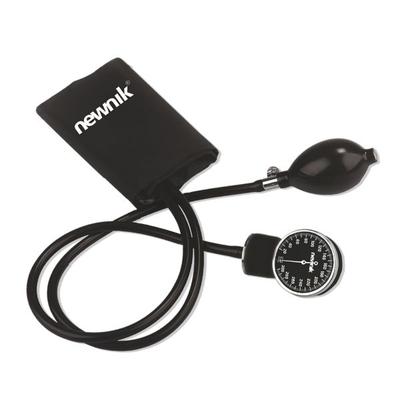
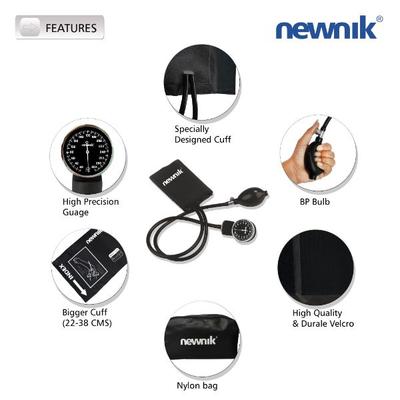
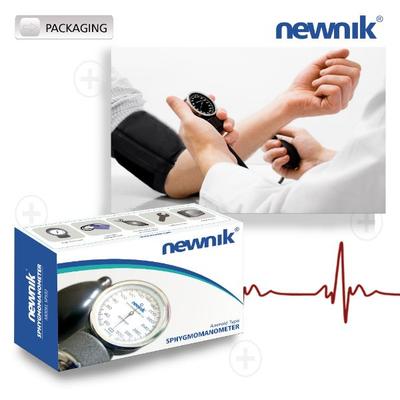
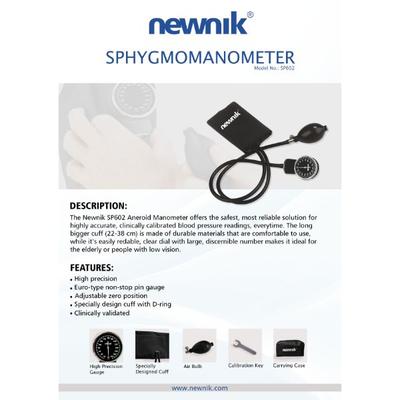
The Newnik Aneroid Type Sphygmomanometer (SP602) is a manual blood pressure monitoring device designed for obtaining readings from the upper arm. It features a durable, wear-resistant nylon cuff to accommodate various arm sizes, from slim to obese (22-38cm). The device is equipped with a large, readable number dial and a metal air needle valve for smooth pressure regulation. It is clinically tested and calibrated for accuracy. A water-resistant polyester carrying case is included for portability, though a stethoscope is required and not supplied with the unit.
Durable Nylon Cuff: Features a hard-wearing nylon cuff with a comfortable Velcro strip, designed to fit arm circumferences from 22-38cm. Readable Dial and Precise Valve: Equipped with a large number dial for clear visibility and a metal air needle valve for smooth pressure relief regulation. Sturdy Construction: Boasts a premium quality zinc alloy body and a non-stop manometer mechanism for longevity. Portable Design: Comes with a water-resistant, polyester carrying case, making it convenient to transport and store. Latex-Free Components: The inflation bulb is constructed from crack-resistant, non-sticking, high-density, hypoallergenic, latex-free PVC.
Q: Is this device suitable for home use?
A: This manual sphygmomanometer is suitable for both home and professional use. However, it is advisable to receive proper training from a healthcare provider to ensure correct usage and interpretation of results.
Q: What is included in the Newnik SP602 package?
A: The package contains a sphygmomanometer with a dial gauge, a standard adult cuff (22-38 cm), an inflation bulb with a valve, a calibration key, and a carrying case. A stethoscope is required for measurement but is not included with this model.
Q: Does this blood pressure monitor require batteries?
A: No, the Newnik SP602 is a manual, aneroid-type device and does not require any batteries for operation.
Q: How often should the device be calibrated?
A: For sustained accuracy, periodic calibration is recommended. Some guidelines suggest aneroid sphygmomanometers should be calibrated every six months to a year. A calibration key is included for adjustments.
Q: Is a stethoscope necessary to use this device?
A: Yes, a stethoscope is needed to listen for the Korotkoff sounds (the sounds of arterial blood flow) to determine the systolic and diastolic pressure readings.
The Newnik Aneroid Type Sphygmomanometer (SP602) is a manual blood pressure monitoring device designed for obtaining readings from the upper arm. It features a durable, wear-resistant nylon cuff to...
Key Benefits
Provides a method for regularly monitoring blood pressure at home, which can help in managing health conditions. The device is clinically tested and calibrated to deliver dependable readings. Designed for durability with a zinc alloy body and a wear-resistant nylon cuff. Its lightweight design and included carrying case allow for convenient portability. The large, clear dial is suitable for individuals with low vision.
Provides a method for regularly monitoring blood pressure at home, which can help in managing health conditions. The device is clinically tested and calibrated to deliver dependable readings. Desig...
Direction for Use/Dosage
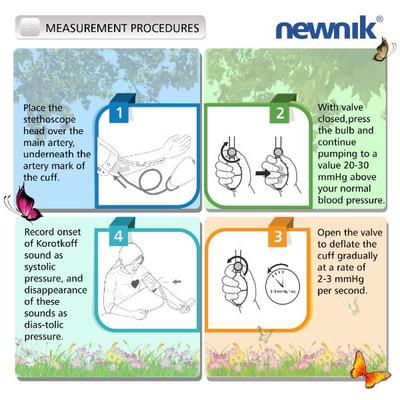
It is advisable to consult a healthcare professional for proper training on using a manual sphygmomanometer. Sit comfortably with your feet flat on the floor and your back supported. Rest your arm on a flat surface at heart level. Wrap the cuff snugly around the bare upper arm, about one inch above the elbow pit. Place the head of a stethoscope over the brachial artery, just below the cuff's edge. Close the air valve by turning it clockwise and rapidly inflate the cuff to about 20-30 mmHg above your usual systolic pressure. Slightly open the valve to allow the cuff to deflate gradually at a rate of 2-3 mmHg per second. The pressure at which you first hear the knocking sound (Korotkoff sound) is the systolic pressure. The pressure at which the sound disappears is the diastolic pressure. Fully deflate the cuff after the measurement is complete.
It is advisable to consult a healthcare professional for proper training on using a manual sphygmomanometer. Sit comfortably with your feet flat on the floor and your back supported. Rest your arm ...
Safety Information/Precaution
The information provided is for informational purposes only and not a substitute for professional medical advice. Always consult a physician or other qualified health provider with any questions you may have regarding a medical condition. Do not inflate the cuff beyond 300 mmHg. Wait for at least two minutes before a repeated measurement to allow blood circulation to return to normal. Using the correct cuff size is important for an accurate reading. Periodic calibration is recommended to maintain accuracy; it is suggested to have this done every two years under normal conditions.
The information provided is for informational purposes only and not a substitute for professional medical advice. Always consult a physician or other qualified health provider with any questions yo...
Other Information
The package includes the sphygmomanometer, a standard adult cuff (22-38cm), a calibration key, and a carrying case. A stethoscope is not included. To clean the cuff, use a slightly damp cloth. After use, wrap the cuff around the device and store it in the provided case. Always ensure the cuff is fully deflated before storage.
The package includes the sphygmomanometer, a standard adult cuff (22-38cm), a calibration key, and a carrying case. A stethoscope is not included. To clean the cuff, use a slightly damp cloth. Afte...