







Netmeds First Membership
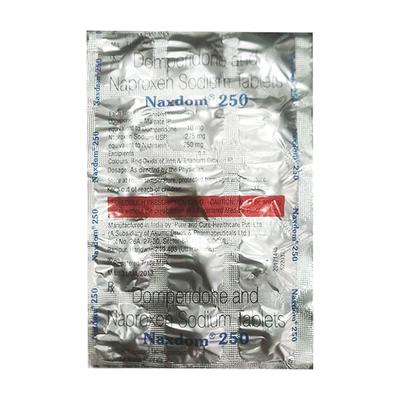
Introduction About NAXDOM 250 TABLET
NAXDOM 250 TABLET manages the symptoms of migraine, menstrual migraine, and chronic daily headaches associated with nausea and vomiting. It is a combination of Domperidone and Naproxen, which belong to the groups of medicines called antiemetics and NSAIDs (non-steroidal anti-inflammatory drugs), respectively.
NAXDOM 250 TABLET is not recommended in patients with severe liver, kidney, or heart problems, stomach ulcers, bleeding in the stomach or intestine, intestinal tears, or pituitary gland tumours. N
AXDOM 250 TABLET should be taken with caution in patients with lung disease, diabetes, high cholesterol, systemic lupus erythematosus, a blood clotting disorder, a history of gastrointestinal diseases, and a habit of drinking or smoking.
NAXDOM 250 TABLET is not recommended for use during pregnancy, while breastfeeding, or in children less than 5 years old. It should be used with caution in elderly patients (those over the age of 60). The common side effect of taking NAXDOM 250 TABLET may include dry mouth. Consult your doctor immediately if your symptoms get worse or persist.
Uses Of NAXDOM 250 TABLET
Manage symptoms of
- migraine
- menstrual migraine
- chronic daily headache
Benefits of NAXDOM 250 TABLET
Provides Effective Relief from Pain
- Naproxen is a strong NSAID (non-steroidal anti-inflammatory drug) that reduces pain, inflammation, and swelling.
- Offers longer pain relief compared to many other NSAIDs.
Helps Prevent Nausea and Vomiting
- Domperidone reduces stomach upset, queasiness, and vomiting that may occur along with pain or due to NSAID use.
Useful in Migraine Episodes
- The combination is particularly effective in migraine attacks where:
- Pain is intense
- Nausea/vomiting worsen symptoms
- Domperidone helps improve gastric emptying, which enhances absorption of Naproxen, giving faster relief.
Reduces Gastric Discomfort
- Domperidone counters the gastric irritation caused by NSAIDs, improving tolerance.
Long-Lasting Pain Control
- Naproxen has a longer duration of action (8–12 hours), reducing the need for frequent re-dosing.
Multi-Symptom Relief
Targeted benefit in conditions such as:
- Migraine with nausea
- Tension headache
- Menstrual pain
- Musculoskeletal pain
- Post-injury pain
How NAXDOM 250 TABLET Works
Naxdom works through a dual-action mechanism due to its two active ingredients:
A. Naproxen – Anti-inflammatory & Pain-Relief Action
Naproxen blocks the COX-1 and COX-2 enzymes, which are essential for producing prostaglandins.
Prostaglandins normally cause:
- Pain
- Swelling
- Inflammation
- Fever
By inhibiting prostaglandin production, Naproxen:
- Reduces pain severity
Controls inflammation
Lowers swelling
Improves mobility in muscle/joint-related conditions
Pharmacological Highlights
- Provides long-lasting analgesia
- Has strong anti-inflammatory potency
- Faster absorption when combined with Domperidone due to improved gastric motility
Domperidone – Anti-nausea & Prokinetic Action
Domperidone works by blocking dopamine D2 receptors present in:
- Chemoreceptor Trigger Zone (CTZ) – the brain area that controls nausea
- Stomach and upper intestine
This leads to:
- Reduced nausea & vomiting
- Improved stomach emptying
- Faster absorption of pain-relief medicine
- Relief from heaviness, bloating, and indigestion symptoms
Unique Advantage
During a migraine attack, stomach motility decreases. Domperidone counteracts this, allowing better absorption of Naproxen → resulting in quicker symptom relief.
How to use NAXDOM 250 TABLET
Recommended Administration
- Take before meals for faster absorption especially useful for migraine episodes.
- Swallow the tablet whole with a full glass of water.
- Do not chew or crush.
General Dosing Guidance
Typically taken:
- At the onset of pain or migraine symptoms
- Can be repeated based on medical advice, but usually not more than 2–3 tablets per day
Special Directions for Migraine Relief
For migraine, effectiveness improves when:
- Taken as early as possible during the aura or at the start of pain
- Avoiding delay helps prevent escalation of headache intensity
Hydration & Dietary Guidance
- Drink sufficient water to avoid dehydration during migraines.
- Avoid alcohol as it may worsen gastric irritation.
Missed Dose
- For scheduled use: take when remembered unless close to next dose.
- Do not double the dose.
Duration of Use
- Use the lowest effective dose for the shortest duration.
- Prolonged or excessive use of NSAIDs should be avoided unless medically supervised.
Overdose
If you or anyone else accidentally takes too much NAXDOM 250 TABLET, consult your doctor immediately or visit the nearby hospital. Overdoes of NAXDOM 250 TABLET can cause headaches, nausea, vomiting, sleepiness, confusion, heartburn, fainting, diarrhoea, disorientation, stomach or intestine bleeding, unconsciousness, drowsiness, dizziness, ringing or buzzing sensation in the ears, fits and excitation, unusual eye movements, unusual tongue movements, or abnormal posture (such as a twisted neck).
Side Effects Of NAXDOM 250 TABLET
Common
- dry mouth
When to consult a doctor?
- swelling of the hands, feet, ankles, face, lips or throat which may lead to difficulty in swallowing or breathing
- an itchy, lumpy rash (hives) or nettle rash (urticaria)
- any uncontrolled movements which include unusual movements of the tongue, irregular eye movements, and abnormal posture such as a twisted neck, muscle stiffness, and trembling
- very fast or unusual heartbeat
- a fit or seizure
Warning & Precautions

Pregnancy
ContraindicatedNAXDOM 250 TABLET is not recommended for use in pregnant women during the first 6 months of pregnancy. NAXDOM 250 TABLET must not be used during the last 3 months of pregnancy. Consult your doctor before taking it.

Breastfeeding
ContraindicatedNAXDOM 250 TABLET is not recommended for use in breastfeeding women. Consult your doctor before taking it.

Driving and Using Machines
Use with CautionDo not drive or operate any machines if you feel drowsy, dizzy, tired or have blurred vision after taking NAXDOM 250 TABLET.

Kidney
ContraindicatedNAXDOM 250 TABLET is not recommended in patients with severe kidney disease. Consult your doctor before taking.

Liver
ContraindicatedNAXDOM 250 TABLET is not recommended in patients with severe liver disease. Consult your doctor before taking it.

Allergy
ContraindicatedDo not take NAXDOM 250 TABLET if you are allergic to Domperidone or Naproxen.

Lungs
Use with CautionNAXDOM 250 TABLET should be used with caution in patients with lung diseases such as asthma, other breathing problems or nasal polyps. Consult your doctor before taking it.

Heart Disease
Consult your doctorNAXDOM 250 TABLET not recommended in patients with severe heart disease such as heart failure, prolonged QT corrected interval. It should be used with caution in patients having a stroke or high blood pressure. Consult your doctor before taking NAXDOM 250 TABLET.

Use In Pediatrics
ContraindicatedNAXDOM 250 TABLET is not recommended for use in children under 5 years of age. Consult your doctor before taking NAXDOM 250 TABLET.

Use In Geriatrics
Use with CautionNAXDOM 250 TABLET should be used with caution in elderly patients (above 60 years of age). Consult your doctor for advice.
Other Warnings for NAXDOM 250 TABLET
Before taking NAXDOM 250 TABLET tell your doctor if you:
- have a history of disorders of the stomach or bowel (ulcerative colitis, Crohn’s disease)
- have diabetes
- have a habit of smoking
- have systemic lupus erythematosus or other connective tissue disorder
- have a blood clotting disorder
Who should not take NAXDOM 250 TABLET
NAXDOM 250 TABLET is not recommended for use if you:
- have stomach or duodenal ulcers
- have bleeding in the stomach or intestines
- have a blockage or tear in the intestine
- have a tumour of the pituitary gland
Drug - Drug interaction
1. Medicines That Increase the Risk of Gastric Bleeding (With Naproxen)
Taking Naproxen together with certain drugs may raise the risk of stomach bleeding or ulcers, such as:
- Other NSAIDs (Ibuprofen, Diclofenac, Aspirin)
- Corticosteroids (Prednisolone, Dexamethasone)
- Anticoagulants / Blood thinners (Warfarin, Acenocoumarol)
- Antiplatelet drugs (Clopidogrel, Ticagrelor)
- SSRIs / SNRIs (Sertraline, Fluoxetine, Venlafaxine)
2. Drugs That Increase Naproxen Levels or Toxicity
Some medicines can increase Naproxen concentration in the bloodstream:
- Lithium – Risk of lithium toxicity increases
- Methotrexate – Higher risk of bone marrow suppression
- Phenytoin – Altered serum levels
- Probenecid – Reduces excretion of Naproxen
3. Medicines That Reduce the Effect of Certain Drugs
Naproxen may reduce the effectiveness of:
- Antihypertensives
- ACE inhibitors (Enalapril, Ramipril)
- ARBs (Losartan, Telmisartan)
- Beta-blockers (Metoprolol)
- Diuretics (Hydrochlorothiazide, Furosemide)
This may lead to reduced blood pressure control or reduced diuretic effect.
4. Interaction With Kidney-Impacting Medicines
Combined use may increase kidney stress:
- Calcineurin inhibitors (Cyclosporine, Tacrolimus)
- Diuretics
- ACE inhibitors / ARBs
Patients with pre-existing kidney concerns should be extra cautious.
5. Domperidone Interactions (QT-Prolongation Risk)
Domperidone may cause heart rhythm changes if taken with medicines that prolong the QT interval. Notable interacting drugs include:
- Macrolide antibiotics (Azithromycin, Clarithromycin)
- Fluoroquinolone antibiotics (Levofloxacin, Ciprofloxacin)
- Antifungals (Ketoconazole, Itraconazole, Fluconazole)
- Antiarrhythmics (Amiodarone, Quinidine)
- Certain antidepressants (Citalopram, Escitalopram)
- Antipsychotics (Haloperidol, Risperidone)
6. Drugs That Increase Domperidone Levels
Domperidone is metabolized by CYP3A4, so inhibitors of this enzyme can significantly raise its levels:
- Clarithromycin / Erythromycin
- Ketoconazole / Itraconazole
- HIV protease inhibitors (Ritonavir)
- Calcium channel blockers (Diltiazem, Verapamil)
This may increase cardiac side-effect risks.
7. Interactions With Antacids or Acid-Suppressing Agents
- Antacids (containing magnesium or aluminum)
- Proton pump inhibitors (PPIs)
- H2 blockers (Ranitidine, Famotidine)
These may reduce gastric acidity and slightly alter absorption of naproxen, though the effect is usually mild.
Synopsis
| Drug | : | Domperidone, Naproxen |
| Pharmacological Category | : | NSAIDs, Antiemetics |
| Therapeutic Indication | : | Migraine, Menstrual migraine and Chronic daily headache |
| Dosage Forms | : | Tablet |
More Information
1. Unique Therapeutic Positioning
Naxdom 250 Tablet offers a dual-action approach by combining an NSAID (Naproxen) with a prokinetic antiemetic (Domperidone).
This makes it particularly useful in situations where pain is often accompanied by nausea, such as:
- Migraine episodes
- Severe menstrual cramps
- Pain flares that cause gastric discomfort
- Pain-related nausea triggered by skipping meals
This dual-benefit profile differentiates it from plain analgesics.
2. Onset and Duration of Pain Relief
Naproxen in Naxdom:
- Has a longer half-life (around 12–17 hours) than many other painkillers
- Provides sustained pain-relief coverage, reducing the need for frequent re-dosing
- May be more beneficial for conditions where pain tends to return, such as musculoskeletal spasms or menstrual cramps
Domperidone starts working earlier, helping relieve nausea before or around the time pain relief begins, improving overall comfort.
3. Suitability for Patients with Episodic Pain
Naxdom 250 Tablet is often preferred for episodic or attack-like pain rather than chronic daily use due to:
- Better control of flare-ups
- Lower dosing frequency
- Longer duration of action compared to short-acting painkillers
It is not intended for long-term continuous use unless medically required.
4. Gastric Protective Role of Domperidone
Naproxen, like other NSAIDs, can cause stomach irritation in some individuals.
Domperidone in Naxdom 250 helps by:
- Enhancing gastric emptying
- Reducing nausea and vomiting
- Decreasing the likelihood of stomach discomfort during pain episodes
However, it does not replace medical advice for people with ulcers or gastric bleeding risk.
5. Impact on Daily Functioning
When taken as directed, many patients experience:
- Improved productivity during sudden pain flare-ups
- Reduced interruption of routine activities
- Better tolerance of pain episodes that usually bring nausea-driven discomfort
However, responses vary, and medical supervision is essential.
6. Food and Hydration Considerations
Taking Naxdom 250 with water and a light meal:
- Helps minimize the gastric load
- Allows smoother absorption of the NSAID
- Reduces nausea severity
- Improves tolerability, especially for those sensitive to NSAIDs
Adequate hydration supports healthier kidney function during NSAID use.
12. Why Only Prescribed Use Is Important
Both ingredients have:
- Cardiovascular considerations
- Gastric considerations
- Drug interaction profiles
- Dose-specific safety limits
Therefore, medical oversight ensures:
- Safe dose
- Suitable duration
- Prevention of complications
- Protection against drug-drug interactions
FAQs About NAXDOM 250 TABLET
Q: What is Naxdom 250 Tablet used for?
A: Naxdom 250 Tablet is generally used for short-term relief from pain and inflammation. It is commonly prescribed for headaches, migraines, muscle pain, joint pain, and other conditions where reducing pain and discomfort is required.
Q: How does Naxdom 250 Tablet work?
A: It contains Naproxen, which reduces pain-causing chemicals, and Domperidone, which helps manage nausea often associated with pain or pain medicines. Together, they provide both pain relief and anti-nausea support.
Q: How should I take Naxdom 250 Tablet?
A: Take it exactly as advised by your doctor, usually after food to reduce stomach irritation. Swallow the tablet with water and avoid taking more than the prescribed dose.
Q: Can I take Naxdom 250 on an empty stomach?
A: It is not recommended. Taking it with or after meals helps reduce the chances of stomach discomfort or acidity.
Q: Who should avoid using Naxdom 250 Tablet?
A: People with stomach ulcers, severe heart disease, kidney or liver problems, uncontrolled blood pressure, or known allergies to NSAIDs should avoid this medicine unless specifically advised by a doctor.
Q: What are the common side effects of Naxdom 250 Tablet?
A: Possible side effects include stomach pain, acidity, nausea, dizziness, bloating, and headache. These usually improve with time. If symptoms persist or worsen, seek medical help.
Q: Can I take Naxdom 250 Tablet with other painkillers?
A: Avoid combining it with other NSAIDs like Ibuprofen, Diclofenac, or Aspirin, as this increases the risk of gastric irritation and bleeding.
Q: Does NAXDOM 250 TABLET make you feel sleepy?
A: Yes. NAXDOM 250 TABLET may cause sleepiness, dizziness, fatigue, or blurring of your vision. Therefore, it is advised not to drive or use any machines if you feel any of the above side effects.
Q: Is NAXDOM 250 TABLET safe for use by pregnant and breastfeeding women?
A: NAXDOM 250 TABLET is not recommended for pregnant women in the first 6 months of pregnancy, and it must not be taken during the last 3 months. NAXDOM 250 TABLET is not advised for breastfeeding women as it may pass through the milk. Consult with your doctor.
Q: Does NAXDOM 250 TABLET help with migraines?
A: There is no permanent manage for migraine. NAXDOM 250 TABLET is used to manage the symptoms of migraine, which could be nausea, weakness, and sensitivity to sound and light. Consult with your doctor.
References
1. KD Tripathi. Gastrointestinal Drugs & NSAIDs and Antipyretic Analgesics. Essentials of medical pharmacology. Seventh edition. 2013. Page – 666 & 201.
2. Joseph C. Brutzkus, Mahsa Shahrokhi, Matthew Varacallo. Naproxen. NIH National Library of Medicine, National center for biotechnology information. Feb 2022. [Accessed on 24th May 2026] 
3. Max Life Sciences. Propimax D Tablets (Domperidone + Naproxen). [Accessed on 24th May 2026] 
4. SterisPharma. Naproxzen D Tablet (Domperidone + Naproxen). [Accessed on 24th May 2026]
Author Details