










Netmeds First Membership
Quick Links
Introduction About MONOCEF 1GM INJECTION
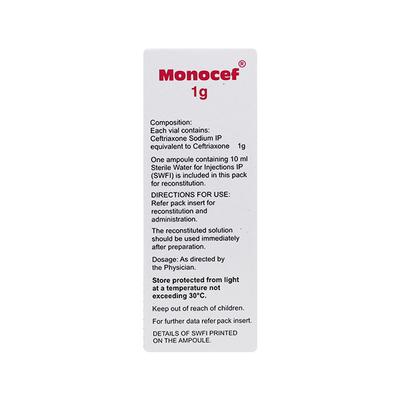
Monocef 1gm Injection contains ceftriaxone, a broad-spectrum antibiotic commonly used in hospital and clinical settings for moderate to severe bacterial infections. It is generally selected when infections are suspected to be significant or when oral antibiotics are not suitable. Because of its reliable activity against many bacteria, it is often used as an initial empirical option while laboratory reports are awaited.
This injection is used for a wide range of bacterial infections, including pneumonia, urinary tract infections, skin and soft tissue infections, abdominal infections, bone and joint infections, sepsis, and certain cases of meningitis. Mechanism of action: ceftriaxone works by inhibiting bacterial cell wall synthesis. It binds to penicillin-binding proteins (PBPs) in the bacterial cell wall, blocking peptidoglycan formation, which is essential for maintaining structural integrity. This results in weakening of the bacterial cell wall and leads to bacterial cell death (bactericidal effect).
Monocef 1gm is usually given as an intramuscular (IM) or intravenous (IV) injection by a healthcare professional in a hospital or clinical setting. The dose and duration depend on the type and severity of infection, patient age, kidney or liver function, and culture or sensitivity reports. It should not be self-administered, and the prescribed course should be completed as directed even if symptoms improve early, to maintain consistent antibacterial coverage and reduce the risk of bacterial regrowth.
Important precautions include informing the doctor about any history of penicillin or cephalosporin allergy, liver or kidney conditions, or gastrointestinal disorders. Caution is required when used with calcium-containing IV fluids, especially in newborns. In pregnancy, ceftriaxone is generally considered acceptable when clinically necessary, under medical supervision. During breastfeeding, small amounts may pass into breast milk, but it is generally considered compatible with monitoring.
Common side effects may include pain or swelling at the injection site, mild diarrhea, rash, nausea, or changes in blood counts. Rare but serious reactions can include severe allergic responses or antibiotic-associated intestinal imbalance. Responsible and guided use is important to maintain effectiveness and support appropriate antibacterial control.
Uses Of MONOCEF 1GM INJECTION
It is used to manage bacterial infections in different parts of the body, including:
• Lower respiratory tract infections (such as pneumonia and bronchial infections)
• Acute bacterial ear infections (otitis media)
• Skin and soft tissue infections caused by susceptible bacteria
• Urinary tract infections (complicated and uncomplicated cases)
• Bloodstream infections (bacterial septicemia)
• Bone and joint infections
• Intra-abdominal infections (abdominal bacterial infections)
• Brain infections such as meningitis
• Uncomplicated gonorrhea (urogenital and rectal infections)
• Pelvic inflammatory infections caused by specific bacteria
• Surgical infection risk reduction in selected contaminated or high-risk procedures
Benefits of MONOCEF 1GM INJECTION
Monocef 1gm Injection in Bacterial Infections
Monocef 1gm Injection is commonly referenced in medical settings for its role in managing bacterial infections under healthcare supervision. Its use depends on clinical evaluation and infection type.
Monocef Injection in Respiratory Tract Infection Cases
This injection may be considered in respiratory-related bacterial infection cases in clinical practice, as part of doctor-guided infection management approaches.
Ceftriaxone Injection in Urinary Tract Infection Cases
It is sometimes referenced in healthcare settings for urinary tract infection-related conditions, particularly when evaluated as medically necessary by a physician.
Monocef 1gm Injection in Skin and Soft Tissue Infection Cases
Monocef Injection may be included in clinical care discussions for bacterial skin and soft tissue conditions, depending on patient condition and medical assessment.
Role of Ceftriaxone Injection in Severe Infection Management
Ceftriaxone Injection is often associated with hospital-based management approaches for more severe bacterial infections under strict medical supervision.
Monocef Injection in Hospital-Based Infection Care
It is commonly administered in hospital settings where injectable antibiotics are selected as part of supervised clinical care protocols.
Ceftriaxone Injection in Post-Surgical Infection Care Context
It may be used in post-surgical clinical care settings when healthcare professionals consider it appropriate for infection-related risk management.
Use of Monocef Injection in Bloodstream Infection Cases
Monocef Injection is referenced in clinical settings for bloodstream-related bacterial conditions where hospital-based evaluation and monitoring are required.
How MONOCEF 1GM INJECTION Works
Mechanism of Action of Monocef 1gm Injection
Monocef 1gm Injection contains ceftriaxone, a cephalosporin antibiotic that works by interacting with bacterial cell wall formation processes in medical conditions where its use is considered appropriate by healthcare professionals.
How Monocef Injection Interacts with Bacterial Growth
Monocef Injection works by acting on bacteria at the cellular level, limiting their ability to grow and multiply. Its use is determined by healthcare professionals in clinical practice.
Understanding Cephalosporin Antibiotics
Cephalosporins are a class of antibiotics used in healthcare environments. They are selected by medical professionals based on infection type, severity, and clinical evaluation.
Step-by-Step Overview of Ceftriaxone Activity
Ceftriaxone acts in a structured biological process that involves binding to bacterial proteins responsible for cell wall synthesis, leading to disruption of bacterial structural integrity in susceptible organisms.
How to use MONOCEF 1GM INJECTION
Recommended Dosage of Monocef 1gm Injection
- The dosage of Monocef 1gm Injection is determined by healthcare professionals based on clinical evaluation and infection type.
- It may vary depending on individual health conditions and response to therapy.
How to Use Monocef Injection Correctly
- Monocef Injection is not self-administered.
- It is given only under the supervision of qualified healthcare professionals in clinical or hospital settings.
Administration of Ceftriaxone Injection (IV/IM)
- It may be administered either intravenously (IV) or intramuscularly (IM).
- The route of administration is selected by medical professionals based on patient condition.
Dosage Guidelines Based on Patient Needs
- Dosage is personalized according to age, severity of condition, and clinical assessment.
- Adjustments may be made by the prescribing healthcare provider.
Frequency of Monocef 1gm Injection Use
- The frequency of administration is decided by doctors based on medical requirements.
- It may be given once or multiple times daily depending on clinical judgment.
Side Effects Of MONOCEF 1GM INJECTION
Common Side Effects
- Pain, swelling, or redness
- Diarrhea or loose stools
- Nausea or vomiting
- Skin rash or mild itching
- Headache or dizziness
- Mild changes in liver function tests
- Changes in blood counts (reduction in red cells, white cells, or platelets)
- Temporary discomfort or fatigue
When to Consult Your Doctor About Monocef Injection:
- Signs of allergic reactions such as skin rash, itching, swelling of face, lips, tongue, or throat, or difficulty breathing
How To Manage Side Effects

Application Site Reactions
- Apply Cold Compress: Gently place a cold pack on the injection site to reduce pain and swelling.
- Avoid Pressure: Do not rub, massage, or apply pressure on the injection area.
- Keep Area Clean: Maintain proper hygiene to reduce infection at the injection site.
- Pain Relief: Use mild pain relievers only if advised by your doctor.
- Seek Medical Advice: Consult your doctor if swelling, redness, or pain increases or does not improve.

Diarrhea
- Stay Hydrated: Drink plenty of fluids such as water, ORS, or clear soups to avoid dehydration.
- Eat Light Foods: Prefer easily digestible foods like rice, bananas, toast, and curd (if tolerated).
- Avoid Irritating Foods: Stay away from spicy, oily, and dairy-heavy foods if symptoms worsen.
- Maintain Gut Health: Your doctor may advise probiotics to help restore normal intestinal flora.
- Seek Medical Advice: Contact your doctor if diarrhea is severe, persistent, or contains blood or mucus.
Warning & Precautions

Pregnancy
Use with CautionMonocef Injection should be used with caution during pregnancy and only if clearly needed and prescribed by a doctor. Animal studies have not shown harm to the fetus, but limited well-controlled human data is available. Always consult your doctor before use during pregnancy.

Breastfeeding
ContraindicatedMonocef Injection passes into breast milk in small amounts. It is generally not recommended during breastfeeding unless clearly advised by a doctor. Infants should be monitored for possible side effects such as diarrhea or fungal infections. Consult your doctor before use.

Driving and Using Machines
Use with CautionMonocef Injection may occasionally cause dizziness, confusion, or rare neurological side effects. Avoid driving or operating machinery if you feel unwell or experience such symptoms. Consult your doctor before using this medicine.

Kidney
Consult your doctorMonocef Injection (Ceftriaxone) should be used with caution in patients with kidney problems. It is eliminated through both kidneys and bile. In mild to moderate kidney impairment, dose adjustment is usually not required. However, in severe kidney disease (especially with liver impairment), careful monitoring is advised. Consult your doctor before use.

Liver
Use with CautionMonocef Injection should be used with caution in patients with liver dysfunction. May require dosage limitation and close medical supervision. Consult your doctor before use.

Allergy
ContraindicatedDo not use Monocef Injection if you are allergic to ceftriaxone, cephalosporins, penicillins, or other beta-lactam antibiotics. Severe allergic reactions such as anaphylaxis may occur and require immediate medical attention. Consult your doctor before use.

Heart Disease
Use with CautionMonocef Injection should be used with caution in patients with bleeding disorders or those taking anticoagulant medicines, as it may affect blood clotting (prothrombin time) and increase bleeding risk in rare cases. Consult your doctor before use.

Use In Pediatrics
Consult your doctorMonocef Injection is commonly used in children for serious bacterial infections under medical supervision. However, it should not be used in newborns with high bilirubin levels (hyperbilirubinemia), especially premature infants, due to the risk of bilirubin displacement and related complications. Consult your doctor before use.

Use In Geriatrics
Consult your doctorMonocef Injection is generally well tolerated in elderly patients. However, older adults may be more sensitive to side effects such as changes in kidney function, electrolyte imbalance, or gastrointestinal discomfort. Regular monitoring may be advised. Consult your doctor before use.
Other Warnings for MONOCEF 1GM INJECTION
Before taking Ceftriaxone Injection, inform your doctor if you have:
• History of severe drug allergy (especially penicillins or cephalosporins)
• Gastrointestinal disorders such as colitis
• History of gallbladder problems
• Bleeding disorders or are on blood thinners
• Severe or chronic illness requiring long-term antibiotic use
Who should not take MONOCEF 1GM INJECTION
Ceftriaxone Injection is not recommended in:
• Newborns with jaundice (hyperbilirubinemia), especially premature infants
• Patients with known severe allergy to beta-lactam antibiotics
• Cases where bacterial infection is not confirmed or strongly suspected (to avoid resistance development)
Drug - Drug interaction
Aminoglycosides (e.g., tobramycin, gentamicin)
Interaction: May be used together in severe infections under medical supervision.
Effects: No consistent evidence of increased kidney toxicity when used appropriately.
Management: Monitor kidney function when both drugs are used, especially in high-risk patients.
Potent Diuretics (e.g., furosemide)
Interaction: Concurrent use with ceftriaxone.
Effects: No significant impairment of kidney function has been observed in studies.
Management: Usually no dose adjustment required, but clinical monitoring is advised in patients with kidney disease.
Calcium-containing IV Solutions (e.g., Ringer’s lactate, Hartmann’s solution, parenteral nutrition)
Interaction: Physical incompatibility with ceftriaxone.
Effects: Risk of precipitation of ceftriaxone–calcium complexes, which can be dangerous, especially in neonates.
Management: Do not mix or administer simultaneously through the same IV line. Use separate lines or flush thoroughly between infusions.
Probenecid
Interaction: Alters drug elimination.
Effects: No clinically significant change in ceftriaxone levels; no added therapeutic benefit.
Management: Combination generally not required in practice.
Chloramphenicol
Interaction: Possible antagonistic effect observed in vitro.
Effects: May reduce antibacterial effectiveness of ceftriaxone in some cases.
Management: Avoid combination unless specifically advised by a specialist.
Vancomycin, Fluconazole, Amsacrine (IV incompatibility)
Interaction: Physical incompatibility when mixed in IV solutions.
Effects: Risk of precipitation or reduced drug stability.
Management: Do not mix in the same IV line or solution; administer separately.
Oral Hormonal Contraceptives
Interaction: May reduce effectiveness of hormonal contraception in some cases.
Effects: Possible decreased contraceptive protection.
Management: Use additional non-hormonal contraceptive methods during mangement and for a short period after completion.
Alcohol
Interaction: No disulfiram-like reaction reported with ceftriaxone.
Effects: No specific alcohol intolerance linked to ceftriaxone use.
Management: Moderate alcohol intake is generally not contraindicated, but caution is still advised during illness.
Synopsis
|
Drug |
: |
Ceftriaxone |
|
Pharmacological Category |
: |
Cephalosporin antibiotic (Third-generation beta-lactam antibiotic) |
|
Therapeutic Indication |
: |
Bacterial infections such as pneumonia, urinary tract infections, skin and soft tissue infections, intra-abdominal infections, meningitis, septicemia, bone and joint infections, and surgical infection risk management |
|
Dosage Forms |
: |
INJECTION |
More Information
1)Why Is Antibiotic Resistance Increasing in India After Seasonal Infections, and What Does It Mean for Common managements?
Understanding Antibiotic Resistance in Simple Terms
Antibiotic resistance happens when bacteria change over time and stop responding to medicines that once killed them. This makes common infections harder to treat and may require stronger or alternative antibiotics.
Overuse of Antibiotics During Seasonal Illnesses
During post-winter infection waves, many people get cough, cold, fever, and throat infections. Antibiotics are sometimes used even when infections are viral (where antibiotics are not needed), contributing to resistance.
Self-Medication and Incomplete Courses
Using antibiotics without a doctor’s advice or stopping management midway can allow bacteria to survive and become stronger over time.
Frequent Hospital Visits and Infections
Increased hospital admissions during seasonal illness periods can expose patients to more resistant bacteria, especially in crowded healthcare settings.
Limited Awareness About Viral vs Bacterial Infections
Many people expect antibiotics for all fevers or respiratory symptoms, but most seasonal infections are viral and do not require antibiotics.
Impact on Common managements
As resistance increases, commonly used antibiotics may become less effective, leading doctors to use stronger drugs, combination therapy, or lab-guided treatments.
Importance of Responsible Antibiotic Use
Proper diagnosis, following prescriptions, and completing full antibiotic courses help slow down resistance and protect future Management options.
2) Why Do Doctors Often Use Ceftriaxone in Hospitals, and When Is It Really Needed for Infections?
Understanding Ceftriaxone in Simple Terms
Ceftriaxone is a commonly used hospital antibiotic that helps treat a wide range of bacterial infections, especially when the exact germ is not yet known.
Broad Coverage Against Many Bacteria
It works against several common bacteria that cause pneumonia, bloodstream infections, urinary infections, and abdominal infections, making it useful for early management.
Used When Infection Is Serious or Unclear
In hospitals, doctors often start ceftriaxone when a patient is seriously ill and immediate management is needed before lab test results are available.
Once-Daily Dosing Convenience
It can often be given once a day, which is helpful in emergency rooms, wards, and ICU settings where quick and simple dosing is important.
Good Body and Brain Penetration
It reaches effective levels in blood and tissues, and can also enter the brain fluid, which is why it may be used in conditions like meningitis.
Adjusted After Test Results
Once lab reports identify the exact bacteria, doctors may continue, change, or stop ceftriaxone depending on whether it is the best choice.
Not Effective for All Infections
It does not work against all resistant bacteria, so it is not used for every infection and is carefully chosen based on clinical need.
Importance of Medical Guidance
Ceftriaxone is effective when used correctly under medical supervision, but unnecessary use can contribute to antibiotic resistance.
FAQs About MONOCEF 1GM INJECTION
Q: What is Monocef 1gm Injection used for?
A: Monocef 1gm Injection contains ceftriaxone, an antibiotic used in healthcare settings for managing bacterial infections based on medical evaluation and clinical judgment.
Q: How does Ceftriaxone Injection work?
A: Ceftriaxone works by acting on bacterial cell wall formation processes, which helps limit bacterial growth in conditions where it is considered appropriate by healthcare professionals.
Q: Is Monocef Injection given at home?
A: No. Monocef Injection is not self-administered and is only given in hospitals or clinical settings by trained healthcare professionals.
Q: How is Monocef 1gm Injection administered?
A: It is administered either intravenously (IV) or intramuscularly (IM), depending on the patient’s condition and the decision of the treating doctor.
Q: Can Monocef Injection be used for all infections?
A: No. The use of Monocef Injection depends on the type and severity of infection and is determined by a healthcare professional after proper evaluation.
Q: What are the common side effects of Ceftriaxone Injection?
A: Some commonly reported effects may include mild pain at the injection site, digestive discomfort, or changes in blood parameters. Not everyone experiences these effects.
Q: Who decides the dosage of Monocef Injection?
A: The dosage is decided by a qualified healthcare professional based on the patient’s age, condition, and clinical requirements.
Q: Is Monocef Injection safe for everyone?
A: It may not be suitable for everyone. Medical history, allergies, and clinical condition are assessed by healthcare professionals before use.
Q: Can Monocef 1gm Injection be used during pregnancy?
A: It is used in pregnancy only when prescribed by a healthcare professional after evaluating potential risks and benefits.
Q: Why is Monocef Injection used in hospitals?
A: It is commonly used in hospital environments because it requires controlled administration and medical supervision for safe and appropriate use
References
1. KD. Tripathi. Nonsteroidal Antimicrobials. Essentials of medical pharmacology. Seventh edition. 2013. Page – 728.
2. D M Richards, R C Heel, R N Brogden, T M Speight, and G S Avery. Ceftriaxone. A review of its antibacterial activity, pharmacological properties, and therapeutic use. NIH: National Library of Medicine, National Center of Biotechnology Information Pubmed.gov. Jun 1984. [Accessed on 18th April 2026] 
3. ACS DOBFAR S.p.A. Electronic Medicines Compendium (EMC) [Revised in August 2021] [Accessed on 18th April 2026] 
4. Hospira, Inc [Revised in Oct 2017] [Accessed on 18th April 2026]
Useful Diagnostic Tests
Author Details

