

Netmeds First Membership
Quick Links
Introduction About MACIROL TABLET
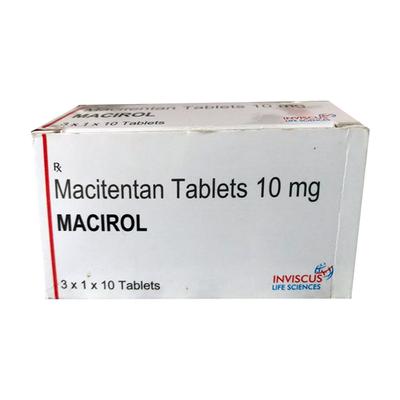
MACIROL TABLET contains Macitentan which belongs to the group of medicines called Endothelin receptor antagonists. MACIROL TABLET is used alone/with other medicines to manage pulmonary hypertension in adults, which is a condition that occurs due to high blood pressure in pulmonary arteries (blood vessels that carry blood from heart to lungs).
MACIROL TABLET is not recommended for use in patients allergic to Macitentan, and/or soya. It is also not recommended for use in patients with liver disease or who have been tested with very high levels of liver enzymes in the blood.
Before taking MACIROL TABLET, inform your doctor if you have lung problems (such as pulmonary veno-occlusive disease), and/or kidney problems.
The most common side effects of taking MACIROL TABLET are anemia, headache, bronchitis (inflammation of the airways), edema (swelling of arms and feet), urinary tract infection, low blood pressure, and/or blocked nose. Consult your doctor if any of these symptoms worsen.
Uses Of MACIROL TABLET
- Manage pulmonary arterial hypertension in adults
How MACIROL TABLET Works
MACIROL TABLET works by blocking the action of endothelin hormone (chemical that cause vasoconstriction) which leads to relaxation and widening of blood vessel wall resulting in reduced pressure on the blood vessel wall and lower blood pressure thus managing pulmonary hypertension in affected individuals.
How to use MACIROL TABLET
Take MACIROL TABLET as advised by your physician. Swallow the medicine with a glass of water. Do not crush or chew the medicine. Your doctor will decide the correct dose and duration for you depending upon your age, body weight, and disease condition.
Side Effects Of MACIROL TABLET
Common
- anemia/reduced hemoglobin
- headache
- bronchitis (inflammation of the airways)
- nasopharyngitis (inflammation in the throat and nasal passages)
- edema (swelling of arms and feet)
- influenza (flu)
- urinary tract infection
- low blood pressure
- blocked nose
Rare
Stop taking MACIROL TABLET and contact your doctor immediately if you experience any of the following side effects:
- signs of allergic reaction such as swelling around the eyes, face, lips, tongue/throat, itching, and/or rash
- signs of impaired liver function such as nausea, vomiting, fever, stomach pain, yellowing of skin/whites of eyes, dark-colored urine, itching skin, unusual tiredness/exhaustion, flu-like condition (joint and muscle pain with fever)
- signs of pulmonary edema (wet lung) such as breathlessness, cough with frothy sputum, racing/pounding heartbeat
How To Manage Side Effects
Headache:
If MACIROL TABLET causes headache, then take rest and drink plenty of fluids. Try to avoid drinking alcohol. Ask your doctor to recommend a painkiller. Headaches should usually go away after the first week of taking MACIROL TABLET. If it lasts more than a week or becomes severe, then consult and inform your doctor.
Warning & Precautions

Pregnancy
MACIROL TABLET is generally not recommended for use during pregnancy and in women planning for pregnancy. Women of childbearing potential should use contraceptive measures and should consult doctor immediately if accidental pregnancy occurred while taking MACIROL TABLET since the medicine may cause harm to the unborn babies.

Breastfeeding
MACIROL TABLET is not recommended for use in breastfeeding women as it is not known whether the medicine may pass through breast milk. Consult your doctor before taking the medicine.

Driving and Using Machines
Do not drive or operate machines if you feel headache and/or low blood pressure after taking MACIROL TABLET.

Kidney
MACIROL TABLET should be used with caution in patients with kidney problems. Consult your doctor before taking MACIROL TABLET.

Liver
MACIROL TABLET is not recommended to use in patients with liver disease or who have been tested with very high levels of liver enzymes in the blood. Consult your doctor before taking MACIROL TABLET.

Allergy
Do not take MACIROL TABLET if you are allergic to Macitentan, soya, and/or any other ingredients of this medicine.

Lungs
MACIROL TABLET should be used with caution in patients with lung problems such as pulmonary veno-occlusive disease (obstruction of lung vein). Consult your doctor before taking the medicine.
Others
Before taking MACIROL TABLET, inform your doctor if you:
- are a man and planning to become father
Use in Pediatrics:
MACIROL TABLET is not recommended for use in children and adolescents (aged below 18 years). Consult your doctor before taking MACIROL TABLET.
Use in Geriatrics:
MACIROL TABLET should be used with caution in elderly patients (aged 65-years/above). Consult your doctor before taking MACIROL TABLET.
Interactions
A. Drug-Drug interactions:
Before taking MACIROL TABLET, inform your doctor if you are taking any of the following medicine:
- antibiotics (used to manage bacterial infections) Ex. rifampicin, clarithromycin, telithromycin, ciprofloxacin, erythromycin
- medicine used to manage seizures (Ex. phenytoin)
- medicine used to manage depression and epilepsy (Ex. carbamazepine)
- herbal medicines used to manage depression (Ex. St. John’s Wort)
- medicines used to manage HIV infections (Ex. ritonavir, saquinavir)
- medicines used to manage depression (Ex. nefazodone)
- medicines used to manage fungal infections (Ex. ketoconazole (except shampoo), fluconazole, voriconazole, miconazole, itraconazole)
- medicines used to control the heartbeat (Ex. amiodarone)
- medicine used to manage organ rejection after transplant (Ex. cyclosporine)
- medicines used to manage high blood pressure/specific heart problems (Ex. diltiazem, verapamil)
B. Drug-Food interaction:
Avoid taking piperine (used as a dietary supplement) while taking MACIROL TABLET as it may alter the effect of the medicine.
Overdosage:
If you or anyone else accidentally take too much of MACIROL TABLET, consult your doctor immediately or visit the nearby hospital. Symptoms of overdose are headache, nausea, and/or vomiting.
Synopsis
| Drug | : | Macitentan |
| Pharmacological Category | : | Endothelin receptor antagonists |
| Therapeutic Indication | : | Pulmonary arterial hypertension |
| Dosage Forms | : | Tablet |
More Information
- Keep MACIROL TABLET out of reach of children
- Do not store MACIROL TABLET above 30°C
FAQs About MACIROL TABLET
What is MACIROL TABLET used for?
MACIROL TABLET is used alone/with other medicines to manage pulmonary hypertension in adults, which is a condition that occurs due to high blood pressure in pulmonary arteries (blood vessels that carry blood from heart to lungs).
What are the common side effects of taking MACIROL TABLET?
The most common side effects of taking MACIROL TABLET are anemia, headache, bronchitis (inflammation of the airways), edema (swelling of arms and feet), urinary tract infection, low blood pressure, and/or blocked nose. Consult your doctor if any of these symptoms worsen.
How MACIROL TABLET works?
MACIROL TABLET works by blocking the action of endothelin hormone (chemical that cause vasoconstriction) which leads to relaxation and widening of blood vessel wall resulting in reduced pressure on the blood vessel wall and lower blood pressure thus managing pulmonary hypertension in affected individuals.
How MACIROL TABLET should be taken?
Take MACIROL TABLET as advised by your physician. Swallow the medicines with a glass of water. Do not crush or chew the medicine. Your physician will decide the correct dose and duration for you depending upon your age, body weight and disease condition.
Can MACIROL TABLET be used in pregnant women?
No, MACIROL TABLET is not recommended for use during pregnancy and in women planning for pregnancy. Women of childbearing potential should use contraceptive measures and should consult doctor immediately if accidental pregnancy occurs while taking MACIROL TABLET since the medicine may cause harm to the unborn babies.
References
1. Dustin R. Fraidenburg, Ankit A. Desai, and Jason X.-J. Yuan. Treatment of Pulmonary Arterial Hypertension. Goodman & Gilman’s: The Pharmacological basics of Therapeutics. 13th Edition. 2018. Page – 574-584.
2. Anjan Khadka, Dick B Singh Brashier, Anantharamu Tejus, Ashok Kumar Sharma. Macitentan: An important addition to the treatment of pulmonary arterial hypertension. NIH National Library of Medicine. National Center for Biotechnology Information. PMC PubMed Central. March 2015. [Accessed on 30th May 2022] https://www.ncbi.nlm.nih.gov/pmc/articles/PMC4319253/
3. Nicholas Rothbard, Abhinav Agrawal, Conrad Fischer, Arunabh Talwar, Sonu Sahni. Pulmonary arterial hypertension in the elderly: Clinical perspectives. NIH National Library of Medicine. National Center for Biotechnology Information. PMC PubMed Central. May 2020. [Accessed on 30th May 2022] https://www.ncbi.nlm.nih.gov/pmc/articles/PMC8016023/
4. Janssen Pharmaceutica NV. Electronic Medicines Compendium (EMC). [Revised in July 2022]. [Accessed on 30th May 2022] https://www.medicines.org.uk/emc/files/pil.5223.pdf
Useful Diagnostic Tests
- Echocardiogram
Author Details