






Netmeds First Membership
Quick Links
Introduction About LULIGEE SOAP
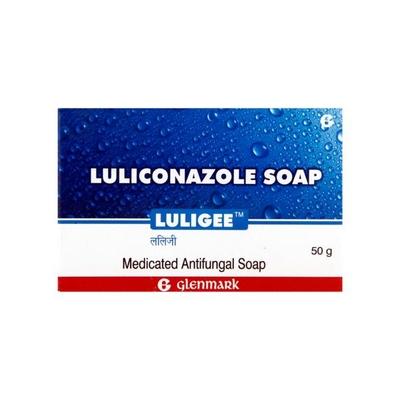
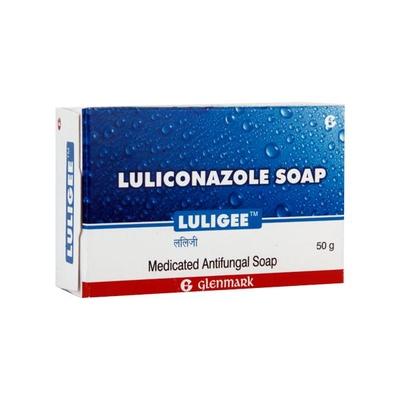
LULIGEE SOAP contains Luliconazole, which belongs to the group of medicines called Topical Antifungal agents. It is used in the management of various fungal infections such as tinea pedis (fungal infection between the toes), tinea cruris (occurs as a red and itchy rash in the warm and moist areas of the body) and tinea corporis (ringworm fungal infection). Fungal infections can be contagious and spread from one person to another person.
LULIGEE SOAP is not recommended for use among women who are pregnant and LULIGEE SOAP should be used with caution in breastfeeding women unless considered clearly necessary. LULIGEE SOAP is not recommended for use in children below 12 years of age unless clearly necessary. LULIGEE SOAP should be used with caution in elderly patients (aged 65 years or above).
Avoid applying LULIGEE SOAP to the eyes, mouth or vaginal region. The most common side effects of this medicine are application site reactions such as burning, irritation, itching and redness. Contact your physician if any of the symptoms worsen.
Uses Of LULIGEE SOAP
LULIGEE SOAP is used to manage various fungal infections such as:
- tinea pedis (athlete's foot)
- tinea cruris (jock itch)
- tinea corporis (ringworm)
- thrush
- dry, flaky skin
How LULIGEE SOAP Works
LULIGEE SOAP works by causing holes in the cell membranes of the fungus (essential for the survival of the fungus as they manage the entry of unwanted substances into the cells and stop the leakage of cell contents) and killing fungi. As a result, LULIGEE SOAP relieves discomfort, itching and irritation on the skin.
How to use LULIGEE SOAP
Use LULIGEE SOAP as advised by your doctor. Your doctor will decide the dosage and frequency based on the intensity of fungal infection and other relevant conditions. Adhere to the schedule recommended by your doctor.
Side Effects Of LULIGEE SOAP
Rare
- burning
- irritation
- itching
- redness
- blisters on the skin
- dry skin
- skin peeling
Stop using LULIGEE SOAP and contact your doctor immediately if you experience any of the following side effects:
- allergic reaction (symptoms like skin rash, itching or hives, swelling of face, lips or tongue)
- increased inflammation
- redness
- pain
Warning & Precautions

Pregnancy
LULIGEE SOAP is generally not recommended for use in pregnant women unless considered clearly necessary. Consult your physician before using LULIGEE SOAP.

Breastfeeding
LULIGEE SOAP should be used with caution in breastfeeding women. Consult your physician before using LULIGEE SOAP.

Allergy
Do not use LULIGEE SOAP if you are allergic to luliconazole or any of the other ingredients of this medicine.
Others
Use in pediatrics:
LULIGEE SOAP is generally not recommended to use in children12 years of age and below unless clearly necessary. Contact your doctor before applying LULIGEE SOAP.
Use in geriatrics:
LULIGEE SOAP should be used with caution in elderly patients (above 65 years of age). Consult your doctor before using LULIGEE SOAP.
Interactions
A. Drug-Drug interactions:
Tell your doctor if you are applying or have recently taken any other medicines, including medicines obtained without a prescription, vitamin supplements or herbal products.
Overdosage:
If you or anyone else accidentally use too much of LULIGEE SOAP or if you or a child accidentally swallow the medicine, consult your doctor immediately or visit the nearby hospital.
Synopsis
| Drug | : | Luliconazole |
| Pharmacological Category | : | Topical Antifungals |
| Therapeutic Indication | : | Fungal infections |
| Dosage Forms | Cream, Gel, Lotion, Ointment, Spray, Soap, Dusting powder |
More Information
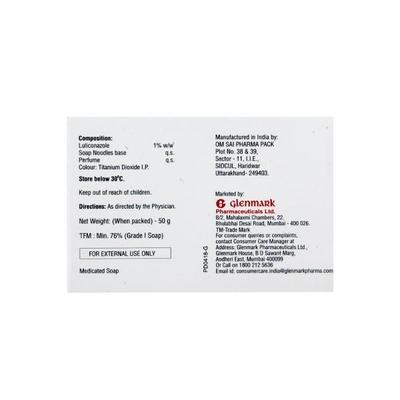
- Keep LULIGEE SOAP out of reach from children
- Store at a room temperature
FAQs About LULIGEE SOAP
Can I stop using LULIGEE SOAP if I feel better?
No. LULIGEE SOAP should not be stopped on your own, even if you feel better. Keep using LULIGEE SOAP for as long as the doctor says. Discontinuing on your own can cause the infection to arise again. Consult your doctor immediately if the symptoms get worse or persist.
How to use LULIGEE SOAP?
Use LULIGEE SOAP as advised by your doctor. Your doctor will decide the dosage and frequency based on the intensity of the fungal infection and other relevant conditions. Adhere to the schedule recommended by your doctor.
When should you seek medical attention while using LULIGEE SOAP?
Stop using LULIGEE SOAP and contact your doctor immediately if you experience an allergic reaction (symptoms like skin rash, itching or hives, swelling of the face, lips or tongue), increased inflammation, redness and pain.
How does LULIGEE SOAP work?
LULIGEE SOAP works by causing holes in the cell membranes of the fungus (essential for the survival of the fungus as they manage the entry of unwanted substances into the cells and stop the leakage of cell contents) and killing fungi. As a result, LULIGEE SOAP relieves discomfort, itching and irritation on the skin.
What is the use of LULIGEE SOAP?
LULIGEE SOAP is used in the management of various fungal infections such as tinea pedis, tinea cruris, tinea corporis, thrush, ringworm, dry and flaky skin. Please consult your physician before using LULIGEE SOAP.
Is LULIGEE SOAP safe to use by pregnant and breastfeeding women?
LULIGEE SOAP is not recommended for use by pregnant women. It should be used with caution in breastfeeding women unless considered clearly necessary. Please consult your physician before using LULIGEE SOAP.
What are the common side effects of LULIGEE SOAP?
The most common side effects of this medicine are application site reactions such as burning, irritation, itching and redness. Contact your physician if any of the symptoms worsen.
References
1. P. David Rogers and Damian J. Krysan. Antifungal Agents. Goodman & Gilman’s: The Pharmacological basics of Therapeutics. 13th Edition. New York McGraw Hill Medical 2018. Page – 1087-1104.
2. Deepshikha Khanna and Subhash Bharti. Luliconazole for the treatment of fungal infections: an evidence-based review. Journal of Core Evidence. September 2014 [Accessed on 11th July 2022] https://www.ncbi.nlm.nih.gov/pmc/articles/PMC4181444/
3. Manjot Kaur, Guru Nanak Dev, Kanwardeep Singh & Subheet Kumar Jain. Luliconazole vesicular-based gel formulations for its enhanced topical delivery. Journal of Liposome Research. October 2019. [Accessed on 11th July 2022] https://www.tandfonline.com/doi/abs/10.1080/08982104.2019.1682602?journalCode=ilpr20
4. Hiroyasu Koga, Yasuko Nanjoh, Koichi Makimura, Ryoji Tsuboi. In vitro antifungal activities of luliconazole, a new topical imidazole. Journal of Medical Mycology. September 2009. [Accessed on 11th July 2022] https://academic.oup.com/mmy/article/47/6/640/969830
5. Harshil M Patel, Aasma Gangat, Urvashi B Patel, Bhavesh Akbari. Fabrication and Characterization of Luliconazole Film-Forming Topical Spray for the Treatment of Fungal Infections. Manipal Journal of Pharmaceutical Sciences. September 2020. [Accessed on 11th July 2022] https://ejournal.manipal.edu/mjps/docs/Vol6_Issue2/5.%20MJPS_6.2_Sep_2020_approved.pdf
6. Sanify healthcare Pvt. Ltd. Luliconazole. [Accessed on 11th July 2022] https://www.sanifyhealthcare.com/product/selluli-soap/
7. Oaknet healthcare Limited. Luliconazole. [Accessed on 11th July 2022] https://oaknethealthcare.com/product/lulilok-soap-50g/
8. Healing Pharma Limited. Luliconazole. [Accessed on 11th July 2022] https://www.healingpharma.in/product/luliconaz-soap/
9. Zeelab Pharmacy. Luliconazole. [Accessed on 11th July 2022] https://zeelabpharmacy.com/product/Lulibol-Anti-fungal-Soap
10. Leeford Healthcare Limited. Luliconazole [Accessed on 11th July 2022] https://www.leeford.in/product/1282/luliford-soap
11. Medicis Pharmaceuticals. US Food and Drug Administration. [Revised in November 2013] [Accessed on 11th July 2022] https://www.accessdata.fda.gov/drugsatfda_docs/label/2013/204153s000lbl.pdf
Author Details