

Netmeds First Membership
Quick Links
Introduction About JUNIOR LANZOL 15MG TABLET
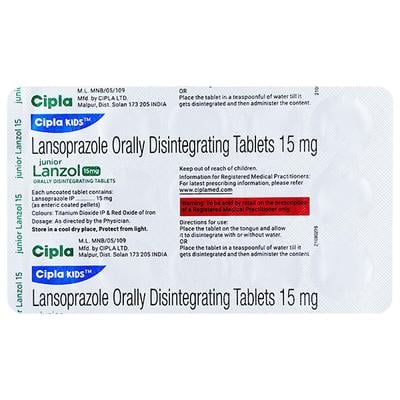
JUNIOR LANZOL 15MG TABLET contains Lansoprazole which belongs to the group of medicines called Proton Pump Inhibitors. It is used in the management of intestinal and peptic (stomach) ulcers. JUNIOR LANZOL 15MG TABLET is also used to manage reflux oesophagitis and Zollinger-Ellison Syndrome.
Before taking JUNIOR LANZOL 15MG TABLET, inform your doctor if you have severe liver disease, phenylketonuria, osteoporosis or if you are about to have a specific blood test (Chromogranin A). JUNIOR LANZOL 15MG TABLET should be used with caution in pregnant and breastfeeding women. JUNIOR LANZOL 15MG TABLET is not recommended for use in children.
Your doctor may perform an additional examination (endoscopy) to diagnose your condition or exclude malignant disease and regular blood tests to monitor your levels of magnesium. Common side effects of taking JUNIOR LANZOL 15MG TABLET are dizziness, nausea, headache, diarrhea. Contact your doctor if any of the symptoms gets worse over time.
Uses Of JUNIOR LANZOL 15MG TABLET
Manages:
- intestinal and peptic ulcers
- reflux oesophagitis
- Zollinger-Ellison Syndrome
Benefits of JUNIOR LANZOL 15MG TABLET
1. Relieves Symptoms of Acid-Related Conditions
Reduces discomfort such as heartburn, acidity, sour stomach, and burning sensation by lowering acid levels.
2. Supports Healing of Irritated Stomach and Food Pipe
Helps create a low-acid environment that allows inflamed or irritated stomach and esophageal lining to recover.
3. Useful in Managing Acid Reflux in Children
Helps reduce episodes of regurgitation, discomfort after meals, and sleep disturbances caused by excessive acid.
4. Provides Long-Lasting Acid Control
A single daily dose can keep acid production low for an extended period due to its proton pump inhibition.
5. Helps in Doctor-Supervised Treatment of Ulcers
Used as part of treatment plans to support healing of gastric and duodenal ulcers in children when recommended by a physician.
6. Reduces Risk of Acid-Triggered Irritation
Helpful for children who experience recurring acid-related discomfort during meals, night-time, or after certain foods.
How JUNIOR LANZOL 15MG TABLET Works
JUNIOR LANZOL contains lansoprazole, a proton pump inhibitor (PPI). It works by targeting the stomach cells responsible for acid release.
Step-by-Step Mechanism of Action
- Reaches the Parietal Cells
After absorption in the small intestine, lansoprazole travels through the bloodstream to the parietal cells lining the stomach. - Blocks the Proton Pumps (H?/K? ATPase Enzyme)
Lansoprazole selectively binds to and inhibits the proton pump, the final stage where stomach acid is produced. - Reduces Acid Secretion at the Source
By suppressing this pump, the tablet lowers acid secretion significantly, both during meals and at rest. - Provides Long-Lasting Relief
The inhibition is irreversible, so acid production stays low until the body forms new proton pumps, giving prolonged relief. - Creates a Favorable Environment for Healing
Reduced acid levels help the stomach and esophagus heal faster in conditions like acidity, reflux, or erosions.
How to use JUNIOR LANZOL 15MG TABLET
General Usage Guidance
- JUNIOR LANZOL is usually taken once daily, but the dose and duration are strictly based on a doctor’s prescription, especially for pediatric use.
- The tablet is a dispersible formulation, suitable for children who cannot swallow tablets.
How to Take JUNIOR LANZOL 15 mg (Dispersible Tablet)
- Do Not Swallow Whole
These tablets must be dispersed in water before administration.
Swallowing whole may reduce effectiveness. - Dissolving the Tablet
- Place the tablet in a small amount of water (usually 5–10 ml).
- Allow it to dissolve completely; gently stir if needed.
- Make sure no granules are stuck to the container.
- Administer Immediately
- Give the dissolved mixture right away for best absorption.
- If any residue remains, add a small amount of water and consume to ensure full dose intake.
- Timing of Administration
- Should be taken 30 minutes before food, ideally in the morning.
- Taking it before meals improves absorption and acid-control effectiveness.
- If the Child Is Using a Feeding Tube
- The dissolved tablet can be given through certain types of feeding tubes if advised by a healthcare provider.
- Flush the tube before and after administration with water.
What if I forgot to take JUNIOR LANZOL 15MG TABLET
- Give the missed dose as soon as you remember.
- Skip the dose if it is almost time for the next one.
- Do not double the dose.
Overdose
If you or anyone else accidentally take too much of JUNIOR LANZOL 15MG TABLET, consult your doctor immediately or visit the nearby hospital.
Side Effects Of JUNIOR LANZOL 15MG TABLET
Common
- headache, dizziness
- diarrhoea, constipation, stomach pain, nausea, vomiting, gas
- dry or sore mouth or throat
- skin rash, itching
- tiredness
- benign stomach polyps (pain on pressing the stomach, nausea, blood in stool, anemia)
- altered liver function tests
When to consult a doctor?
- angioedema (swollen face, tongue or pharynx, difficulty to swallow or breathe, hives)
- severe hypersensitivity reactions including anaphylactic shock (fever, rash, swelling and sometimes a fall in blood pressure)
- very severe skin reactions causing reddening, blistering, inflammation and skin loss (Ex. Stevens Johnson Syndrome, toxic epidermal necrolysis, erythema multiforme)
- liver inflammation (yellowing of skin or eye)
Warning & Precautions

Pregnancy
Use with CautionJUNIOR LANZOL 15MG TABLET should be used cautiously in pregnant women. Consult your doctor before taking it.

Breastfeeding
Use with CautionJUNIOR LANZOL 15MG TABLET should be used cautiously in breastfeeding women. Consult your doctor before taking it.

Driving and Using Machines
Use with CautionDo not drive or operate any machines if you experience dizziness, spinning sensation, tiredness and visual disturbances after taking JUNIOR LANZOL 15MG TABLET.

Kidney
Consult your doctorNo dosage adjustment of JUNIOR LANZOL 15MG TABLET is necessary in patients with kidney impairment, however, consult your doctor before taking it.

Liver
Use with CautionJUNIOR LANZOL 15MG TABLET should be used cautiously in patients having severe liver disease. Consult your doctor before taking it.

Allergy
ContraindicatedJUNIOR LANZOL 15MG TABLET is not recommended for use if you are allergic to Lansoprazole or any of the other ingredients of this medicine.

Use In Pediatrics
ContraindicatedJUNIOR LANZOL 15MG TABLET is not recommended for use in children. Consult your doctor before taking it.

Use In Geriatrics
Consult your doctorNo dosage adjustment of JUNIOR LANZOL 15MG TABLET is necessary in elderly patients, however, consult your doctor before taking it.
Other Warnings for JUNIOR LANZOL 15MG TABLET
Before taking JUNIOR LANZOL 15MG TABLET, inform your doctor if you:
- have osteoporosis (weak and brittle bones)
- have low level of Vitamin B12
- are about to have a specific blood test (Chromogranin A)
- had a skin reaction when previously managed with any medicine used to reduce acidity
- have phenylketonuria (a rare genetic disorder)
Drug - Drug interaction
1. Medicines That May Reduce or Increase Lansoprazole Levels
- Antacids (e.g., aluminium/magnesium preparations)
→ May reduce absorption if taken together.
Spacing 1 hour apart is usually advised. - Sucralfate
→ Can reduce lansoprazole absorption if taken simultaneously.
2. Medicines Whose Absorption Depends on Stomach Acid
Lansoprazole reduces stomach acidity, which can alter how some drugs are absorbed.
Reduced absorption of:
- Antifungals – ketoconazole, itraconazole
- HIV medicines – atazanavir, nelfinavir
- Iron supplements
- Vitamin B12 long-term absorption
Increased absorption of:
- Digoxin (heart medicine) – may raise digoxin levels.
3. Medicines Metabolized by Liver Enzymes
Lansoprazole may affect CYP enzyme pathways, altering drug levels:
- Theophylline (used in asthma)
- Tacrolimus (immunosuppressant)
- Warfarin (blood thinner) – may increase INR; monitoring advised
- Phenytoin (anti-seizure medicine)
4. Medicines With Potential Additive Effects
- Other Proton Pump Inhibitors (PPIs)
- H2-blockers (e.g., ranitidine, famotidine)
Concurrent use may reduce effectiveness or cause excessive acid suppression, so doctors typically avoid combination use.
5. Antibiotics Used in Ulcer Treatment
When used with antibiotics for H. pylori treatment:
- Clarithromycin
- Amoxicillin
6. Medicines Affected by Changes in Gastric pH
- Clopidogrel – lansoprazole may reduce activation of clopidogrel in some cases
- Methotrexate – high doses can interact, increasing methotrexate levels
Synopsis
| Drug | : | Lansoprazole |
| Pharmacological Category | : | Proton Pump Inhibitors |
| Therapeutic Indication | : | Reflux oesophagitis, Stomach ulcers, Zollinger-Ellison Syndrome |
| Dosage Forms | : | Injection, Capsule, Tablet, Orally Disintegrating Tablet |
More Information
Why JUNIOR LANZOL Is Designed Specifically for Children (Paediatric-Centric Insight)
Unlike standard adult-dose proton pump inhibitors, JUNIOR LANZOL 15MG TABLET provides a child-appropriate strength of lansoprazole, allowing prescribers to adjust dosage more accurately based on body weight, age, and symptom severity.
This ensures more predictable acid suppression and reduces the need for tablet splitting, which can affect stability and absorption.
Unique insight:
Children have a faster metabolism and gastric emptying rate, so their response to acid-suppressing medicine can differ from adults. The 15 mg paediatric dose helps maintain consistent control of stomach acidity without excessive exposure.
The Role of Delayed-Release Technology in Paediatric Comfort
Lansoprazole in JUNIOR LANZOL uses enteric-coated pellets inside the tablet.
This design protects the active ingredient from stomach acid until it reaches the intestine, where absorption is optimal.
Why this matters:
- Protects the active ingredient from degradation
- Ensures gradual release for sustained acid suppression
- Reduces irritation to the stomach lining
- Supports once-daily convenience for children who struggle with multiple-dose regimens
Unique detail:
Some caregivers sprinkle the pellet contents on soft food (only if advised by the doctor), but crushing or chewing destroys the coating—an important direction often overlooked.
How Stomach Acid Reduction Influences Daily Activities
By moderating acidity, children's comfort during routine activities—eating, sleeping, studying, and outdoor play—can improve.
Reduced nighttime discomfort may support better sleep patterns, which is important for growth and concentration.
Unique insight:
Lower nocturnal acid output from PPI therapy correlates with fewer early-morning symptoms, which is often when children complain most.
Gastric Acid and Drug Absorption: A Paediatric-Specific Consideration
Children often take nutritional supplements, antibiotics, or antacids. Lansoprazole may temporarily modify how some nutrients and medicines behave due to reduced acidity.
Key points:
- Acid-dependent nutrients (iron, calcium carbonate, vitamin B12) may show reduced uptake if used long-term
- Certain antibiotics (like macrolides) show improved activity when gastric pH is higher
- Medicines needing acidic breakdown may be better spaced apart to avoid absorption interference
Developmental Impact of Gastric pH in Children
Stomach acidity plays a role in digestion and microbial balance.
Mild, temporary changes from medicines like lansoprazole usually remain within safe limits, but following the recommended duration is essential.
Unique detail:
Doctors sometimes schedule periodic follow-ups for children on prolonged therapy to assess nutritional markers or growth parameters—not due to risk, but for optimized paediatric care.
Importance of Timing With Meals (Practical Real-World Detail)
Lansoprazole works best when taken before meals, ideally in the morning. This is because proton pumps are most active during meal times.
Unique addition:
In children with irregular morning routines, consistent timing is more important than exact clock hours. A routine that aligns with the child’s eating pattern ensures more consistent results.
Why Follow-Up Visits Are Important
Doctors may reassess therapy after a few weeks to ensure:
- The child is responding appropriately
- No dosing adjustments are needed
- Nutrition and growth are on track
- Meals and medicine timing are optimized
- Any interacting medicines are reviewed
FAQs About JUNIOR LANZOL 15MG TABLET
Q: What is the use of JUNIOR LANZOL 15MG TABLET?
A: JUNIOR LANZOL 15MG TABLET is used in children to manage intestinal and peptic (stomach) ulcers. It is also used to manage reflux oesophagitis (inflammation of lower food pipe due to backflow of acidic stomach material) and Zollinger-Ellison Syndrome (small tumour in the first part of your bowel due to excessive gastrin secretion).
Q: Can JUNIOR LANZOL 15MG TABLET be given to children?
A: Yes, your doctor will determine a proper dose of JUNIOR LANZOL 15MG TABLET or select a suitable alternative management for your child.
Q: Does JUNIOR LANZOL 15MG TABLET reduce heartburn?
A: JUNIOR LANZOL 15MG TABLET inhibits the acid secretion in stomach and manages the movement of contents from stomach back up to the food pipe and thus reduces heartburn (burning pain and discomfort felt in the chest and throat).
Q: What is the preferred time to take JUNIOR LANZOL 15MG TABLET?
A: JUNIOR LANZOL 15MG TABLET works best if taken on an empty stomach at least 30 minutes before food to reduce the amount of acid secretion. Your doctor will decide the correct dose and duration of JUNIOR LANZOL 15MG TABLET management for you depending upon your age, body weight and disease condition.
Q: How to give JUNIOR LANZOL 15MG TABLET?
A: Give JUNIOR LANZOL 15MG TABLET to your child as advised by your physician. It should be swallowed with enough water. Do not crush or chew it. For effective results take JUNIOR LANZOL 15MG TABLET at least half an hour before food. Your doctor will decide the correct dose and duration for you depending upon your age, body weight and disease condition.
Q: Does JUNIOR LANZOL 15MG TABLET cause allergic reactions?
A: Do not give JUNIOR LANZOL 15MG TABLET if your child is allergic to Lansoprazole or any of the other ingredients of this medicine.
Q: Can I take JUNIOR LANZOL 15MG TABLET along with painkillers?
A: Yes. JUNIOR LANZOL 15MG TABLET can be taken with painkillers because some of the painkillers like aspirin, ibuprofen cause acidity in some patients. JUNIOR LANZOL 15MG TABLET reduces the acidity caused by the painkillers. Consult your doctor for advice.
Q: How JUNIOR LANZOL 15MG TABLET works?
A: JUNIOR LANZOL 15MG TABLET suppresses stomach acid secretion by specific inhibition of an enzyme system at the secretory surface of stomach cells, that results in blockage of the final step of acid production.
Q: Does JUNIOR LANZOL 15MG TABLET cause diarrhoea?
A: Yes, JUNIOR LANZOL 15MG TABLET may cause diarrhoea. To avoid dehydration, give ample amount of fluids such as water, fruit juices or electrolytes. If symptom persists, contact your doctor.
Q: Does JUNIOR LANZOL 15MG TABLET cause nausea or vomiting?
A: Yes, JUNIOR LANZOL 15MG TABLET may cause nausea or vomiting in your child. Give JUNIOR LANZOL 15MG TABLET with or just after meals. Stick to simple meals. Avoid giving oily or spicy foods. If symptom persists, contact your doctor.
Q: What if I forget to give a dose of JUNIOR LANZOL 15MG TABLET?
A: If you forget to take a dose of JUNIOR LANZOL 15MG TABLET, give it as soon as you remember. However, skip that dose if it's almost time for the next dose. Do not give JUNIOR LANZOL 15MG TABLET two times to make up for the missed dose.
References
1. KD. Tripathi. Drugs for Peptic Ulcer and Gastroesophageal Reflux Disease. Essentials of Medical Pharmacology. Eighth edition. Page- 701.
2. Thomas O. Kovacs, James W. Freston, Marian M. Haber, Barbara Hunt, Stuart Atkinson and David A. Peura. Long-Term Efficacy of Lansoprazole in Preventing Relapse of Erosive Reflux Esophagitis. NIH National Library of Medicine, National center for biotechnology information. PubMed Central. August 2009. [Accessed on 25th April 2026] 
3. Takeda. Safety and Efficacy of Lansoprazole in Patients With Reflux Disease. NIH U.S. National Library of Medicine. ClinicalTrials.gov. [Revised in September 2012] [Accessed on 25th April 2026] 
4. Takeda Pharmaceuticals America, Inc. U.S Food & Drug Administration [Revised in September 2012] [Accessed on 25th April 2026]
5. Central Drugs Standard Control Organization (CDSCO). [Accessed on 25th April 2026]
Useful Diagnostic Tests
Author Details