



Netmeds First Membership
Quick Links
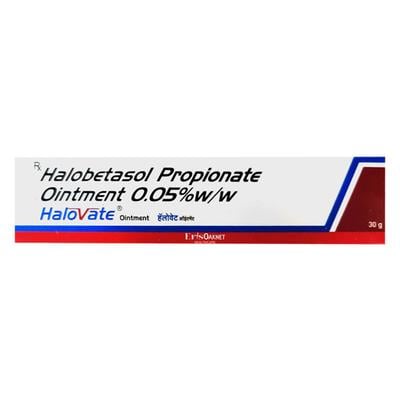
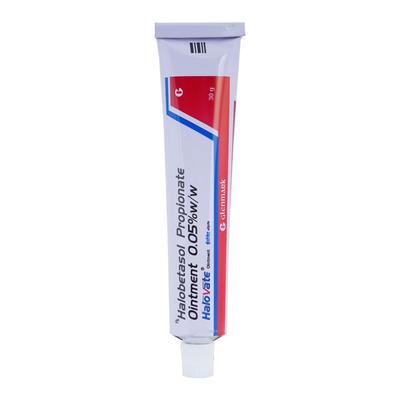
Introduction About HALOVATE OINTMENT
HALOVATE OINTMENT contains Halobetasol which belongs to a group of medicines called Topical Corticosteroids. HALOVATE OINTMENT is used to provide relief from inflammatory and pruritic manifestations of corticosteroid responsive dermatoses which is a skin disorder classified into three types namely, scalp psoriasis (skin disorder), eczema (skin inflammation), and atopic dermatitis (itchy inflamed skin) which is characterized by symptoms such as itchy scalp, and red itchy skin as a response to a corticosteroid management.
Avoid applying HALOVATE OINTMENT, if you are allergic to Halobetasol, have rosacea (condition marked by small, red, pus-filled bumps on face), or perioral dermatitis (red rash around the mouth).
Before applying HALOVATE OINTMENT, inform your doctor if you have concomitant skin infections (infections caused by parasites).
HALOVATE OINTMENT should be used with caution in pregnant and breastfeeding women only if it is necessary. Consult your doctor for advice.
HALOVATE OINTMENT is not recommended for use in children and adolescents (less than 12 years of age). Consult your doctor for advice.
The most common side effects of applying HALOVATE OINTMENT are stinging and burning sensation, itching, folliculitis (inflammation of hair follicles), hypertrichosis (excessive hair growth), allergic contact dermatitis (red itchy rash), secondary infection, and stretch marks. Contact your doctor if any of the symptoms worsen.
Uses Of HALOVATE OINTMENT
- Used to provide relief from inflammatory and pruritic manifestations of corticosteroid responsive dermatoses
How HALOVATE OINTMENT Works
HALOVATE OINTMENT works by the induction of lipocortins (inflammatory enzyme) that results in the decreased biosynthesis of prostaglandins and leukotrienes (potent mediators of inflammation) which manages the release of arachidonic acid (hormone responsible for inflammatory process in the skin) thus providing relief from the inflammation, redness, and itching sensation.
How to use HALOVATE OINTMENT
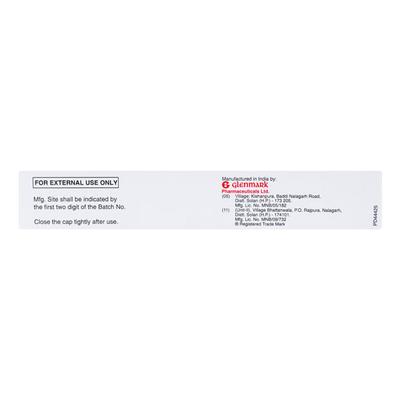
Apply HALOVATE OINTMENT as directed by your doctor. It is for external use only. Wash your hands before and after use to ensure hygiene is maintained. Your doctor will decide the right dose depends upon the severity of the condition.
Side Effects Of HALOVATE OINTMENT
Common
- stinging and burning sensation
- itching
- folliculitis (inflammation of hair follicles)
- hypertrichosis (excessive hair growth)
- acneiform eruptions (skin lesions)
- hypopigmentation (loss of skin color)
- perioral dermatitis (red rash around mouth)
- allergic contact dermatitis (red itchy rash)
- secondary infection
- stretch marks
- miliaria (heat rash)
Uncommon
- dry skin
- erythema
- skin atrophy (thin skin)
- leukoderma (loss of skin color)
- vesicles (thin walled fluid with sac in skin)
- pustule (pus filled lesions of skin)
- pimple
- telangiectasia (small-widened blood vessels on skin)
Rare
Stop applying HALOVATE OINTMENT and contact your doctor immediately if you experience any of the following side effects:
- signs of allergic contact dermatitis such as red rash, severe itching, dry, cracked, and scaly skin
How To Manage Side Effects
Dry Skin
Try moisturizing your skin with an ointment, cream, or lotion 2 or 3 times a day, or as often as needed. Moisturizers help to keep the area moisture, so they work best on damp skin. After you bathe, pat your skin dry then apply your moisturizer. Try to avoid using skin care products and soaps that contain alcohol, fragrances, dyes, or other chemicals.
Skin rash Or Itching
Try to pat or tap your skin instead of scratching it. Hold a damp towel to cool your skin. Wear loose clothing and avoid tight clothes, or clothes made from wool or synthetic fabrics. Avoid using perfumed soaps, deodorants or moisturizers and use skin softeners regularly.
Warning & Precautions

Pregnancy
Monitoring requiredHALOVATE OINTMENT should be used with caution in pregnant women only if it is clearly advised by your doctor. Consult your doctor before applying HALOVATE OINTMENT.

Breastfeeding
Monitoring requiredHALOVATE OINTMENT should be used with caution in breastfeeding women only if clearly advised by your doctor. Consult your doctor before applying HALOVATE OINTMENT.

Kidney
Use with CautionHALOVATE OINTMENT should be used with caution in patients with kidney problems. Consult your doctor before applying HALOVATE OINTMENT.

Liver
Use with CautionHALOVATE OINTMENT should be used with caution in patients with liver problems. Consult your doctor before applying HALOVATE OINTMENT.

Allergy
ContraindicatedDo not use HALOVATE OINTMENT if you are allergic to Halobetasol or any other ingredients in the medicine. Consult your doctor before applying HALOVATE OINTMENT.

Use In Pediatrics
ContraindicatedHALOVATE OINTMENT is not recommended for use in children and adolescents (less than 12 years of age). Consult your doctor before applying HALOVATE OINTMENT.

Use In Geriatrics
Use with CautionHALOVATE OINTMENT should be used with caution in elderly patients. Consult your doctor before applying HALOVATE OINTMENT.
Others
HALOVATE OINTMENT is not recommended for use if you:
- have rosacea
- have perioral dermatitis
Before applying HALOVATE OINTMENT, inform your doctor if you have:
- concomitant skin infections (infections caused by parasites)
Interactions
A. Drug-Drug Interactions:
Before applying HALOVATE OINTMENT, inform your doctor, if you are taking any of the prescription, non-prescription and herbal supplements.
Overdosage:
If you or anyone else accidentally uses too much HALOVATE OINTMENT, consult your doctor immediately or visit the nearby hospital.
Synopsis
| Drug | : | Halobetasol |
| Pharmacological Category | : | Topical Corticosteroids |
| Therapeutic Indication | : | Corticosteroid-responsive dermatoses |
| Dosage Forms | : | Cream,Ointment, Lotion, Gel |
More Information
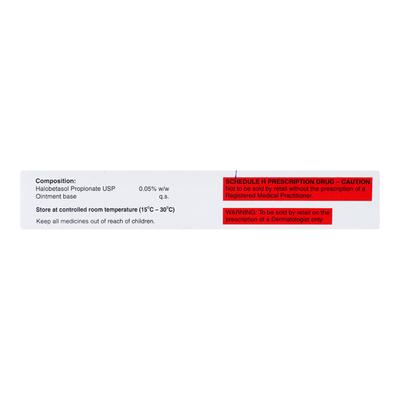
- Keep the medicine out of reach in children
- Store at room temperature
FAQs About HALOVATE OINTMENT
Q: What HALOVATE OINTMENT is used for?
A: HALOVATE OINTMENT is used to provide relief from inflammatory and pruritic manifestations of corticosteroid responsive dermatoses which is a skin disorder classified into three types namely, scalp psoriasis (skin disorder), eczema (skin inflammation), and atopic dermatitis (itchy inflamed skin) which is characterized by symptoms such as itchy scalp, and red itchy skin as a response to a corticosteroid management.
Q: How HALOVATE OINTMENT is applied on the affected site?
A: Apply HALOVATE OINTMENT as directed by your doctor. It is for external use only. Wash your hands before and after use to ensure hygiene is maintained. Your doctor will decide the duration of management depending upon the severity of the condition.
Q: What are the side effects of HALOVATE OINTMENT?
A: The most common side effects of applying HALOVATE OINTMENT are stinging and burning sensation, itching, folliculitis (inflammation of hair follicles), hypertrichosis (excessive hair growth), allergic contact dermatitis (red itchy rash), secondary infection, and stretch marks. Contact your doctor if any of the symptoms worsen.
Q: Is HALOVATE OINTMENT safe to use in children?
A: HALOVATE OINTMENT is not recommended for use in children and adolescents (less than 12 years of age). Consult your doctor before applying HALOVATE OINTMENT.
Q: Can HALOVATE OINTMENT be bought as over the counter drug?
A: No, HALOVATE OINTMENT should be bought only through prescription. It is a corticosteroid which suppresses your immunity and may cause certain side effects which should be regularly evaluated by your doctor.
References
1. Constance G Visovsky, Cheryl H Zambroski, Rebecca M. Lutz. Integumentary System Medications. Edmunds' Pharmacology for the Primary Care Provider - E-Book. 2022. Page – 34.
2. Nardin Awad; Charles V. Preuss. Halobetasol Cream. NIH National Library of Medicine. National Center for Biotechnology Information. StatPearls. March 2022 [Accessed on 11th June 2022] https://www.ncbi.nlm.nih.gov/books/NBK544234/
3. Halobetasol Lotion, Cream and Ointment Monograph. Pharmacy Benefits Management Services. [Revised in October 2016] [Accessed on 11th June 2022] https://www.pbm.va.gov/PBM/clinicalguidance/drugmonographs/Halobetasol_ULTRAVATE_Lotion_Cream_Ointment_Monograph.pdf
4. HALOBETASOL PROPIONATE cream. DailyMed. NIH U.S. National Library of Medicine. February 2021. [Accessed on 11th June 2022] https://dailymed.nlm.nih.gov/dailymed/drugInfo.cfm?setid=511a33bb-3f21-4ee6-b63c-dc616047329f
5. HALOBETASOL PROPIONATE ointment. DailyMed. NIH U.S. National Library of Medicine. November 2021. [Accessed on 11th June 2022] https://dailymed.nlm.nih.gov/dailymed/drugInfo.cfm?setid=f12ff257-dd77-4f9c-97c4-339784772d9f
Author Details