

Netmeds First Membership
Quick Links
Introduction About GRAMONEG SYRUP
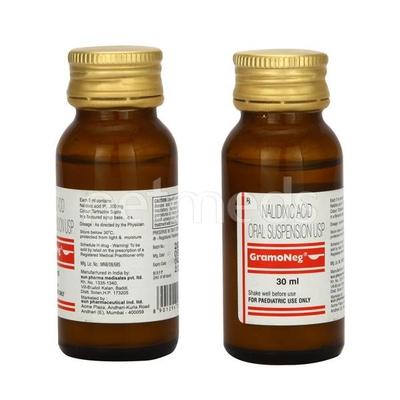
GRAMONEG SYRUP contains Nalidixic acid which belongs to the group of medicines called Antibiotics. It is used to manage urinary tract infections (infection of the kidneys, bladder and urethra. Symptoms include increase in urine frequency, pain while urinating, pain in your side or low back pain).
GRAMONEG SYRUP is also used to manage intestinal infections such as shigellosis (a bacterial infection causing diarrhea, fever and stomach cramps).
GRAMONEG SYRUP is not recommended for use in patients with kidney, liver disease, fits, porphyria. Consult your doctor before taking this medicine.
GRAMONEG SYRUP should be used with caution in patients suffering from heart diseases such as personal or family history of QTc prolongation (abnormal heart rhythm), slow heartrate and recent heart attack. Consult your doctor before taking this medicine.
GRAMONEG SYRUP should be used in pregnant women only if it is considered clearly necessary. It is not recommended for use in breast feeding women. Consult your doctor before taking this medicine.
GRAMONEG SYRUP is not recommended for use in infants below 3 months of age. It should be used with caution in elderly patients. Consult your doctor before taking this medicine.
Uses Of GRAMONEG SYRUP
To manage:
- Urinary tract infections
- Shigellosis
How GRAMONEG SYRUP Works
GRAMONEG SYRUP is bactericidal that works by managing DNA synthesis leading to death of bacteria. Thus, manages the infection effectively.
How to use GRAMONEG SYRUP
Take GRAMONEG SYRUP as advised by your doctor. Shake well before use. Your doctor will decide the correct dose and duration for you depending upon your age, body weight and severity of infection.
Side Effects Of GRAMONEG SYRUP
Rare
Stop taking GRAMONEG SYRUP and contact your physician immediately if you experience any of the following side effects:
- symptoms of stimulation of brain include tremor, restlessness, light-headedness, confusion and hallucinations
- serious allergic (anaphylactoid) reactions such as urticaria, itching, swelling of face or throat, shortness of breath accompanied by cardiovascular collapse, loss of consciousness, tingling sensation
- symptoms of neuropathy including pain, burning, tingling, numbness and/or weakness
- signs of phototoxicity (skin irritation)
Warning & Precautions

Pregnancy
GRAMONEG SYRUP should be used in pregnant women only if it is considered clearly necessary. Consult your doctor before taking this medicine.

Breastfeeding
GRAMONEG SYRUP is not recommended for use in breast feeding women as it may pass through the breastmilk. Consult your doctor before taking this medicine.

Driving and Using Machines
GRAMONEG SYRUP may cause dizziness and light-headedness. Hence, do not drive or operate machinery while taking this medicine.

Kidney
GRAMONEG SYRUP is not recommended for use in patients with kidney disease. Consult your doctor before taking this medicine.

Liver
GRAMONEG SYRUP is not recommended for use in patients with liver disease. Consult your doctor before taking this medicine.

Allergy
Do not take GRAMONEG SYRUP if you are allergic to Nalidixic acid or any other ingredients of this medicine.

Heart Disease
GRAMONEG SYRUP should be used with caution in patients suffering from heart diseases such as personal or family history of QTc prolongation (abnormal heart rhythm), slow heartrate and recent heart attack. Consult your doctor before taking this medicine.
Others
GRAMONEG SYRUP is not recommended for use if you:
- have convulsions (fits)
- have porphyria (red blood cell disorder)
Before taking GRAMONEG SYRUP inform your doctor if you:
- have severe cerebral arteriosclerosis (decreased blood flow to the brain)
- have glucose-6-phosphate dehydrogenase deficiency (red blood cell disorder)
- have hypokalemia (low blood potassium levels)
- are scheduled for lab test
Use in Pediatrics:
GRAMONEG SYRUP is not recommended for use in infants below 3 months of age as safety and effectiveness have not been established. It should be used in children under 18 years of age only clearly necessary. Consult your doctor before taking this medicine.
Use in Geriatrics:
GRAMONEG SYRUP should be used with caution in elderly patients. Consult your doctor before taking this medicine.
Interactions
A. Drug-Drug interactions:
Before taking GRAMONEG SYRUP, inform your doctor if you are taking any of the following medicine:
- melphalan (used to manage multiple myeloma)
- theophylline (used to manage asthma)
- caffeine (used to increase alertness)
- iron, zinc (vitamin supplements)
- sucralfate (used to manage intestinal ulcers)
- cisapride, aluminum, calcium, magnesium salts (medicines used to manage indigestion and heart burn)
- didanosine (used to manage HIV/AIDS)
- chloramphenicol, nitrofurantoin, tetracycline, erythromycin (medicines used to manage bacterial infections)
- antipsychotics (used to manage psychoses) Ex. haloperidol
- tricyclic antidepressants (used to manage depression) Ex. amitriptyline
- oral anticoagulants Ex. warfarin (used to thin the blood)
- probenecid (used to manage gout)
Overdosage:
If you or anyone else accidentally took too much of this medicine, consult your doctor immediately or visit the nearby hospital. Symptoms of overdose includes toxic psychosis, fits, increased intracranial pressure, metabolic acidosis, vomiting, nausea and weakness.
Synopsis
| Drug | : | Nalidixic acid |
| Pharmacological Category | : | Quinolone Antibiotics |
| Therapeutic Indication | : | Urinary tract infections, Shigellosis |
| Dosage Forms | : | Tablet, Syrup |
More Information
- Keep GRAMONEG SYRUP out of reach of children
- Store GRAMONEG SYRUP below 30°C
FAQs About GRAMONEG SYRUP
Q: Does GRAMONEG SYRUP cause fractures?
A: Ruptures of the shoulder, hand, Achilles tendon (muscles which connects the lower part of the leg to back of your heel) or other tendons that required surgical repair or resulted in prolonged disability have been reported in patients receiving GRAMONEG SYRUP. This risk may be increased in patients receiving concomitant corticosteroids, especially in the elderly. Discontinue GRAMONEG SYRUP and contact your doctor immediately if you experience pain, inflammation or rupture of a tendon.
Q: Can I use GRAMONEG SYRUP to manage cold?
A: No, GRAMONEG SYRUP is only used to manage bacterial infections and do not manage viral infections like common cold. Using GRAMONEG SYRUP in the absence of a proven or suspected bacterial infection or a prophylactic indication is unlikely to provide benefit and increases the risk of the development of drug-resistant bacteria.
Q: Does GRAMONEG SYRUP cause sunburns?
A: Yes. GRAMONEG SYRUP may cause sunburns due to increased sensitivity of your skin to sunlight. Avoid exposure to excessive sunlight, sun lamps. Use sunscreen and wear protective clothing while going outside. Use unscented moisturizers to soothe and hydrate the affected area. Contact your doctor if your sun burns worsen.
Q: What if I forget to take a dose of GRAMONEG SYRUP?
A: If you have missed a dose of GRAMONEG SYRUP, take it as soon as you remember. But if it is almost time for your next dose, you can skip the missed dose and take the next scheduled dose. Do not take double dose to make up for your missed one as this may increase the chances of having side effects.
Q: Is GRAMONEG SYRUP safe in pregnancy?
A: GRAMONEG SYRUP should be used in pregnant women only if it is considered clearly necessary. Inform your doctor if you are pregnant or planning for pregnancy before taking this medicine.
References
1. KD. Tripathi. Antimicrobial Drugs. Essentials of medical pharmacology. Eight edition. 2019. Page – 746, 759.
2. Bethesda (MD). Nalidixic acid. NIH National Library of Medicine, National Center for Biotechnology Information. PubChem Compound Summary. 2004. [Accessed on 6th December 2021]. https://pubchem.ncbi.nlm.nih.gov/compound/Nalidixic-acid
3. Crumplin GC, Smith JT. Nalidixic acid: an antibacterial paradox. NIH National Library of Medicine, National Center for Biotechnology Information. PubMed Central. September 1975. [Accessed on 6th December 2021]. https://www.ncbi.nlm.nih.gov/pmc/articles/PMC429302/
4. Sanofi-Aventis U.S. Inc. U.S. Food & Drug Administration. [Revised in July 2007] [Accessed on 6th December 2021] https://www.accessdata.fda.gov/drugsatfda_docs/label/2007/017430s032lbl.pdf
5. Nalidixin (Nalidixic acid). Kimi Pharmaceuticals Industries. [Accessed on 6th December 2021]. http://kimi-pharma.com/products/details/162
Useful Diagnostic Tests
- Complete Blood Count
- Kidney function test
- Liver function test
- Urinary examination
- Culture and Sensitivity test
Author Details