Description
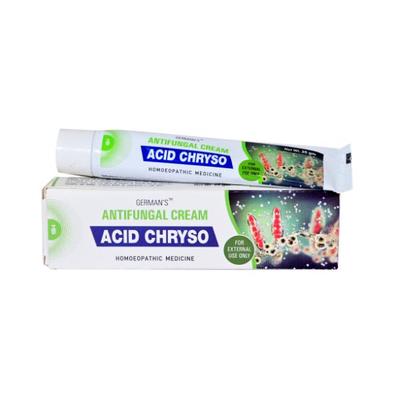
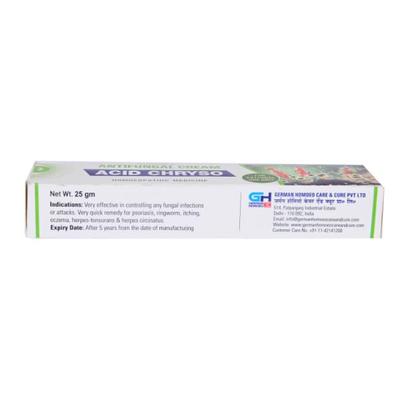
German's Acid Chryso Antifungal Cream is a homeopathic topical product for managing various fungal skin infections. It is formulated to address conditions such as ringworm, eczema, and psoriasis. The cream works by penetrating the skin to soothe irritation, reduce inflammation, and alleviate discomfort associated with these conditions. Its lightweight texture allows for quick absorption without leaving a greasy residue.
Addresses Fungal Infections: This cream targets a range of fungal skin concerns, including ringworm, psoriasis, and itching eczema.
Soothes Irritated Skin: It provides a soothing effect on inflamed, itchy, red, and swollen skin.
Quick Absorption Formula: The cream is lightweight and absorbs into the skin without leaving a greasy feeling.
Key Ingredient: Formulated with Acidum Chrysophanicum (Acid Chryso), which is known for its antifungal properties.
Q: What conditions can this cream be used for?
A: This cream is indicated for various fungal infections such as ringworm, psoriasis, and different forms of eczema.
Q: How should the cream be applied?
A: Clean the affected area and pat it dry. Then, apply a thin layer of the cream to the affected part, typically twice a day or as directed by a healthcare provider.
Q: Is it suitable for all skin types?
A: While it is generally formulated to be gentle, performing a patch test is recommended, especially for individuals with sensitive skin, to check for any irritation.
Q: Are there any specific precautions to follow?
A: This cream is for external use only. Avoid contact with eyes and open wounds. It is advisable to consult a physician before use if you are pregnant, nursing, or on other medications.
Q: What is the main component of this cream?
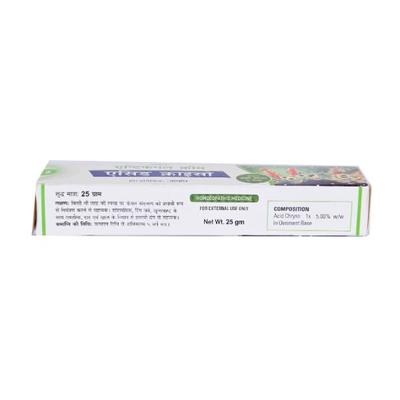
A: The primary active ingredient in the cream is Acidum Chrysophanicum (Acid Chryso), which is incorporated into an ointment base.
German's Acid Chryso Antifungal Cream is a homeopathic topical product for managing various fungal skin infections. It is formulated to address conditions such as ringworm, eczema, and psoriasis. The ...Read More