




Netmeds First Membership
Introduction About FARONAC TABLET
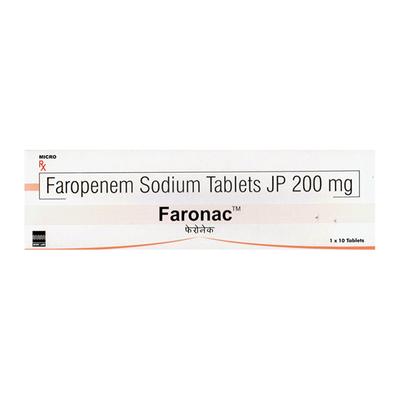
FARONAC TABLET contains Faropenem, which belongs to the group of medicines called Antibiotics. It is used in the management of respiratory tract infections, ear, nose, and throat infections, urinary tract infections, skin and skin structure infections, and gynaecological infections.
FARONAC TABLET is not recommended for use in patients with rare hereditary problems like galactose intolerance, Lapp lactase deficiency, and glucose galactose malabsorption. Contact your doctor before taking.
FARONAC TABLET should be used with caution in patients with liver or kidney diseases, history of hypersensitivity or anaphylactic reactions to penicillin, cephem, or carbapenems, family history of atopy, poor oral intake or poor general health or vitamin K deficiency, diarrhea, and loose bowel movement. Contact your doctor before taking.
FARONAC TABLET is generally not recommended for use in pregnant women unless considered clearly necessary. Contact your doctor before taking.
FARONAC TABLET is not recommended for use in breastfeeding women as it may pass through the breast milk. Contact your doctor before taking it.
FARONAC TABLET is not recommended for use in children. Contact your doctor before taking.
FARONAC TABLET should be used with caution in elderly patients aged 65 years and above. Contact your doctor before taking.
The most common side effects of taking FARONAC TABLET are vomiting, stomach pain, diarrhea and lack of appetite, gastritis, constipation, dizziness, drowsiness, edema, muscle pain, and lethargy. Contact your physician if any of the symptoms worsen.
Uses Of FARONAC TABLET
It is used to manage:
- Upper and lower respiratory tract infection
- Urinary tract infection
- Skin and skin structure infection
- Gynaecological infection
How FARONAC TABLET Works
FARONAC TABLET works against the bacteria by managing them from forming the bacterial protective covering (cell wall), which is needed for them to survive.
How to use FARONAC TABLET
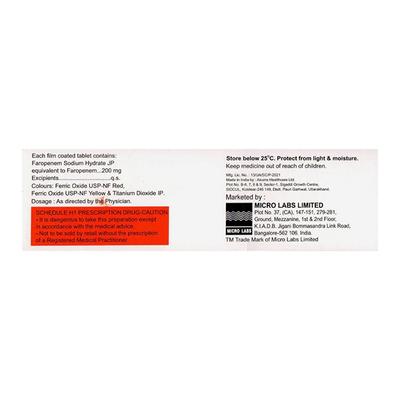
Take FARONAC TABLET as advised by your physician. Swallow the medicine with a glass of water. Do not crush or chew the medicine. Your physician will decide the correct dose and duration for you depending upon your age, body weight, and disease condition.
Overdose
If you or anyone else accidentally takes too much of FARONAC TABLET, consult your doctor immediately or visit the nearby hospital.
Side Effects Of FARONAC TABLET
Common side effects of FARONAC TABLET:
- Vomiting
- Stomach pain
- Diarrhoea
- Gastritis
- Constipation
- Lack of appetite
- Dizziness, drowsiness
- Edema
- Muscle pain
- Lethargy
How To Manage Side Effects
Constipation
Eat plenty of fiber-rich foods, such as fresh fruits, vegetables, and cereals. Drink plenty of water and exercise more regularly.
Diarrhea
Drink lots of fluids, such as water or fruit juices, to keep you hydrated. Do not take any medicine on your own for managing diarrhea. Contact your doctor if the symptom does not improve.

Dizziness Or Drowsiness
Try to rest and relax. Get enough sleep. Avoid driving or operating any machines while you are feeling dizzy. Do not consume alcohol, as it can aggravate your dizziness. Contact your doctor if the symptom does not improve.

Nausea And Vomiting
Take the medicine, with or just after a meal. Stick to simple meals. Avoid eating oily or spicy food.

Stomach Pain
Rest and relax. Try to have smaller meals but take them frequently. Keep a heat pad on your stomach. Do not self-manage and contact your doctor if the symptom does not improve.
Warning & Precautions

Pregnancy
Consult your doctorFARONAC TABLET is generally not recommended for use in pregnant women unless considered clearly necessary. Contact your doctor before taking FARONAC TABLET.

Breastfeeding
ContraindicatedFARONAC TABLET is not recommended for use in breastfeeding women as it may pass through the breast milk. Contact your doctor before taking FARONAC TABLET.

Kidney
Use with CautionFARONAC TABLET should be used with caution in patients with kidney disease. Contact your doctor before taking FARONAC TABLET.

Liver
FARONAC TABLET should be used with caution in patients with liver disease. Contact your doctor before taking FARONAC TABLET.

Allergy
ContraindicatedDo not take FARONAC TABLET if you are allergic to Faropenem or other beta-lactam antibiotics or to lactose or to other ingredients of this medicine.

Use In Pediatrics
ContraindicatedFARONAC TABLET is not recommended for use in children. Contact your doctor before taking FARONAC TABLET.

Use In Geriatrics
Use with CautionFARONAC TABLET should be used with caution in elderly patients aged 65 years or above. Contact your doctor before taking FARONAC TABLET.
Other Warnings for FARONAC TABLET
Before taking FARONAC TABLET, inform your doctor if you have:
- Family history of Atopy
- Poor oral intake or poor general health
- Vitamin K deficiency
- Diarrhea and loose bowel movement
Who should not take FARONAC TABLET
FARONAC TABLET is not recommended for use if you have:
- Rare hereditary problems like galactose intolerance, Lapp lactase deficiency, and glucose galactose malabsorption
Drug - Drug interaction
Before taking FARONAC TABLET, inform your physician if you are taking any of the following medicine:
- Imipenem and cilastatin sodium combination (medicines used to manage bacterial infections)
- Furosemide (medicines used for hypertension, edema)
- Sodium valproate (medicines used to manage seizures)
Synopsis
|
Drug |
Faropenem |
|
Pharmacological Category |
Antibiotics |
|
Therapeutic Indication |
Bacterial infections |
|
Dosage Forms |
Tablet |
More Information
Storage
- Keep FARONAC TABLET out of reach of children
- Store FARONAC TABLET at room temperature
FAQs About FARONAC TABLET
Q: For what conditions FARONAC TABLET is used?
A: FARONAC TABLET is used in the management of respiratory tract infections, ear, nose, and throat infections, urinary tract infections, skin and skin structure infections, and gynecological infections. Contact your doctor before taking FARONAC TABLET.
Q: How does FARONAC TABLET work?
A: FARONAC TABLET works against the bacteria by managing them from forming the bacterial protective covering (cell wall), which is needed for them to survive.
Q: What are the possible side effects of taking FARONAC TABLET?
A: The most common side effects of taking FARONAC TABLET are vomiting, stomach pain, diarrhea and lack of appetite, gastritis, constipation, dizziness, drowsiness, edema, muscle pain, and lethargy. Contact your physician if any of the symptoms worsen.
Q: Can I use FARONAC TABLET in children?
A: No. FARONAC TABLET is not recommended for use in children. Contact your doctor before taking FARONAC TABLET.
Q: Does FARONAC TABLET cause drowsiness?
A: Yes. FARONAC TABLET may cause drowsiness. Try to rest and relax. Get enough sleep. Avoid driving or operating any machines while you are feeling dizzy. Do not consume alcohol, as it can aggravate your dizziness. Contact your doctor if the symptom does not improve.
Q: Is FARONAC TABLET safe during pregnancy?
A: FARONAC TABLET is generally not recommended for use in pregnant women unless considered clearly necessary. Contact your doctor before taking FARONAC TABLET.
Q: Who should not take FARONAC TABLET?
A: FARONAC TABLET is not recommended for use if you have rare hereditary problems like galactose intolerance, Lapp lactase deficiency, glucose galactose malabsorption, or are allergic to Faropenem or other beta-lactam antibiotics or to lactose.
Q: What precautions must be taken while using FARONAC TABLET?
A: Before taking FARONAC TABLET, inform your doctor if you have kidney disease, liver disease, a family history of atopy, poor oral intake or poor general health, vitamin K deficiency, diarrhea, and loose bowel movement.
Q: Is FARONAC TABLET safe for kidneys?
A: FARONAC TABLET should be used with caution in patients with kidney disease. Contact your doctor before taking FARONAC TABLET.
Q: How should I take FARONAC TABLET?
A: Take FARONAC TABLET as advised by your physician. Swallow the medicine with a glass of water. Do not crush or chew the medicine. Your physician will decide the correct dose and duration for you depending upon your age, body weight, and disease condition.
References
1. M Lindsay Grayson. Faropenem. Kucers The use of Antibiotics. Seventh edition. 2018. Page-765.
2. Kristen N. Schurek, Ryan Wiebe, James A. Karlowsky, Ethan Rubinstein, Daryl J. Hoban, and George G. Zhanel. Faropenem: review of a new oral penem. National Institute of Health. National Library of Medicine. National Center for Biotechnology Information. Pubmed.gov. April 2007. [Accessed on 26th August 2026] 
3. Faropenem. Ciplamed.com. [Revised in December 2018] [Accessed on 26th August 2026] 
4. Faropenem. Leeford.in. [Accessed on 26th August 2026]
5. Faropenem. Taj Pharma India. [Accessed on 26th August 2026]
6. Faropenem. mims.com. [Accessed on 26th August 2026]
Author Details