


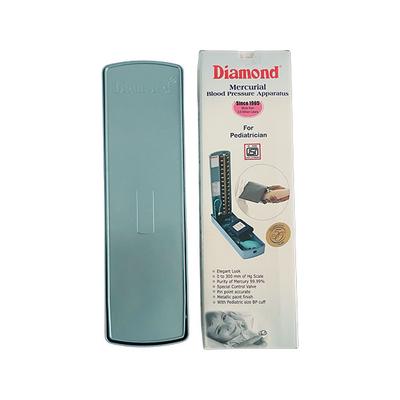


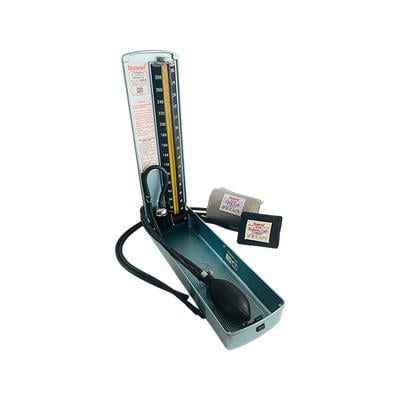

Diamond Mercurial Blood Pressure Apparatus for Pediatrician (BPMR 115)

Netmeds First Membership
Description
This Diamond Mercurial Blood Pressure Apparatus is a desktop model specifically designed for pediatric use, ensuring accurate cardiovascular monitoring for young patients. It is a conventional sphygmomanometer that relies on the auscultatory method, which involves a stethoscope for listening to arterial blood flow sounds. The apparatus is made from first-grade virgin materials for durability and contains 99.99% pure mercury for precision. It comes equipped with two cuff sizes to fit a full range of pediatric arm circumferences.
Pediatric and Child Cuffs: Includes two cuff sizes (Pediatric: 8 cm x 28 cm, Child: 11 cm x 43 cm) to ensure a proper fit for a range of arm sizes in children.
High-Contrast Display: The 0 to 300 mm of Hg scale features fine numbering and a durable, high-contrast background for clear visibility and readability.
Precision Control Valve: A special control valve allows for a perfect pressure drop, contributing to measurement accuracy.
Durable Construction: The body has a metallic paint finish, and exposed metal parts are plated to prevent corrosion, ensuring longevity.
Secure Cuff Fastening: The cuffs are equipped with extra-wide Velcro fasteners to provide an excellent grip and secure placement on the arm.
Q: Is this blood pressure apparatus suitable for all children?
A: This device is specifically designed for pediatric patients and includes two cuff sizes (Pediatric and Child) to cover a range of arm circumferences in children. However, it is always advisable to consult a pediatrician to ensure it is appropriate for a specific child's needs.
Q: What does 'mercurial apparatus' mean?
A: A mercurial apparatus, or sphygmomanometer, uses a column of mercury to measure blood pressure. This method is traditionally known for its accuracy. This device contains 99.99% pure mercury.
Q: Can this device be used at home by a non-professional?
A: This is a manual blood pressure monitor that requires the use of a stethoscope for the auscultation method. It is primarily intended for use by pediatricians, physicians, and general practitioners in clinical settings. Professional guidance is recommended for accurate measurement.
Q: What are the cuff sizes included?
A: The apparatus comes with two cuff sizes: a Pediatric cuff measuring 8 cm x 28 cm and a Child cuff measuring 11 cm x 43 cm, to fit a full range of pediatric arm circumferences.
Q: What is the measurement range and accuracy of this device?
A: The device has a measurement display range of 10 to 300 mm Hg with an accuracy of +/- 3mm Hg and a resolution of 2mm Hg.
This Diamond Mercurial Blood Pressure Apparatus is a desktop model specifically designed for pediatric use, ensuring accurate cardiovascular monitoring for young patients. It is a conventional sphy...
Key Benefits
Designed for pediatric patients, providing child-friendly features for reliable monitoring of cardiovascular health.
Includes two distinct cuff sizes to cover the full range of arm circumferences in children, ensuring measurement accuracy.
The traditional mercurial system is a trusted method for blood pressure measurement among medical professionals.
Constructed with durable materials, including a corrosion-resistant body and robust rubber components, for extended instrument life.
Features a clear, easy-to-read scale and a precision valve for controlled deflation, aiding in obtaining accurate readings.
Designed for pediatric patients, providing child-friendly features for reliable monitoring of cardiovascular health.
Includes two distinct cuff sizes to cover the full range of arm circumferenc...
Direction for Use/Dosage
It is recommended that this device be used by a trained healthcare professional.
Ensure the child is resting quietly for at least five minutes before measurement.
The child should be seated with their back supported, legs uncrossed, and their arm supported at heart level.
Select the appropriate cuff size; the bladder should encircle 80-100% of the arm's circumference.
Wrap the cuff snugly around the upper arm.
Close the valve on the bulb and inflate the cuff.
Slowly release the valve to deflate the cuff at a rate of 2-3 mmHg per second while listening with a stethoscope over the brachial artery.
The first sound heard is the systolic pressure, and the point where the sound disappears is the diastolic pressure.
It is recommended that this device be used by a trained healthcare professional.
Ensure the child is resting quietly for at least five minutes before measurement.
The child should be seated...
Safety Information/Precaution
Consult a healthcare professional before using this device, especially for children with existing medical conditions.
Using an incorrectly sized cuff can lead to inaccurate readings; a cuff that is too small may give a falsely high reading, while a cuff that is too large may give a falsely low reading.
This device contains mercury, which is a hazardous substance. Handle the apparatus with care to avoid breakage of the glass column.
Store the device in a cool, dry place.
Keep out of reach of children when not in use.
Consult a healthcare professional before using this device, especially for children with existing medical conditions.
Using an incorrectly sized cuff can lead to inaccurate readings; a cuff tha...
Other Information
Measurement Method: Auscultation with a Stethoscope
Pressure Display Range: 10 – 300 mm Hg
Accuracy: +/- 3mm Hg (Pressure)
Resolution: 2mm Hg
The manufacturer provides a warranty covering manufacturing defects in the main unit.
Measurement Method: Auscultation with a Stethoscope
Pressure Display Range: 10 – 300 mm Hg
Accuracy: +/- 3mm Hg (Pressure)
Resolution: 2mm Hg
The manufacturer provides a warranty co...