




Netmeds First Membership
Introduction About DERIPHYLLIN INJECTION
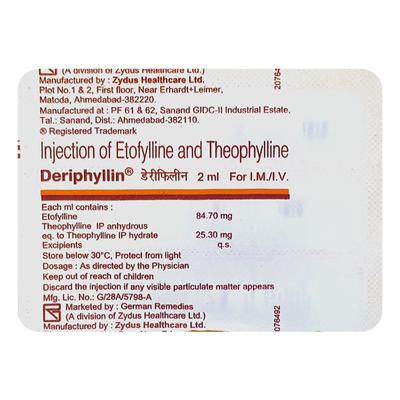
Deriphyllin Injection 2ml contains a combination of Etofylline and Theophylline and belongs to the class of bronchodilator medications. It is commonly prescribed by healthcare professionals to help manage respiratory conditions such as asthma, chronic obstructive pulmonary disease (COPD), and bronchospasm. The medicine works by relaxing the muscles of the airways, improving airflow, and enhancing oxygen delivery, providing rapid relief from breathing difficulties in both hospital and emergency settings.
Etofylline and Theophylline act on the bronchial smooth muscles and respiratory pathways to reduce airway obstruction, supporting relief from symptoms such as shortness of breath, wheezing, chest tightness, and cough. This helps improve overall respiratory function and patient comfort, particularly during acute exacerbations of chronic respiratory disorders.
This medicine is generally suitable for adult patients experiencing moderate to severe asthma attacks, COPD flare-ups, or bronchospasms. Special caution is advised for patients with heart disorders, liver or kidney issues, hyperthyroidism, or a history of hypersensitivity to methylxanthines. Dose adjustments and monitoring may be required based on clinical evaluation.
Deriphyllin Injection should be administered under medical supervision, usually as a slow intravenous infusion, to ensure safety and effectiveness. The dosage and infusion rate must follow a doctor’s prescription. Use during pregnancy should only be considered if the benefits outweigh potential risks, and caution is advised during breastfeeding, with monitoring of the infant for any side effects.
The most common side effects include mild nausea, headache, palpitations, tremors, or insomnia. These effects are usually temporary and resolve after treatment. Seek immediate medical attention if severe reactions such as arrhythmia, persistent vomiting, allergic reactions, or chest pain occur.
Uses Of DERIPHYLLIN INJECTION
It is used to manage:
- Asthma: Acute attacks and bronchospasm relief
- Chronic Obstructive Pulmonary Disease (COPD): Symptom management and airflow improvement
- Respiratory Distress: Shortness of breath and wheezing in emergency situations
- Bronchospasm: Relief of airway constriction due to various respiratory conditions
- Oral Medication Intolerance Cases: When patients cannot take oral bronchodilators
Benefits of DERIPHYLLIN INJECTION
Use of Deriphyllin Injection in Respiratory Conditions
Deriphyllin Injection 2ml contains Etofylline and Theophylline and is used under medical supervision to support patients experiencing breathing challenges. It helps maintain airway function and provides safe, monitored respiratory support in healthcare settings.
Support for Breathing Comfort in Clinical Settings
In hospitals or clinics, Deriphyllin Injection helps maintain comfortable airflow and assists healthcare professionals in managing episodes of respiratory strain. It supports short-term breathing challenges while ensuring patient safety.
Role in Airway Relaxation and Improved Airflow
The injection supports smooth muscle relaxation in the airways, contributing to better airflow and easier breathing. Its combined ingredients work under professional supervision to assist in maintaining respiratory comfort.
Benefits in Managing Breathing Difficulties
Deriphyllin Injection offers a clinically supervised option for patients with shortness of breath or labored breathing. It helps sustain oxygen flow and enhances comfort during respiratory episodes.
Use in Acute Respiratory Care Under Medical Supervision
In acute scenarios, Deriphyllin Injection is administered by trained professionals to ensure safety and proper monitoring. It is part of hospital-based respiratory support for patients needing professional care.
How DERIPHYLLIN INJECTION Works
Understanding the Mechanism of Deriphyllin Injection
Deriphyllin Injection 2ml contains Etofylline and Theophylline, which work under professional supervision to support breathing comfort. The injection helps maintain airway function and assists clinicians in managing short-term respiratory challenges safely.
How Etofylline and Theophylline Work Together
The two active ingredients in Deriphyllin complement each other to support smooth airway function. Etofylline and Theophylline work together to enhance airflow and help maintain comfortable breathing in clinical settings.
Action on Airway Muscles and Bronchial Relaxation
Deriphyllin helps relax the muscles surrounding the airways, contributing to easier breathing. Bronchial relaxation allows air to move more freely, helping patients experience better airflow under professional care.
How This Injection Supports Airflow Through Airway Expansion
By supporting airway expansion, Deriphyllin Injection allows improved airflow through the lungs. This action helps healthcare providers assist patients experiencing short-term breathing challenges.
Role of Xanthine Derivatives in Respiratory Function
Etofylline and Theophylline are Xanthine derivatives that support respiratory function by relaxing airway muscles and enhancing airflow. Their combined action provides controlled respiratory support in clinical settings.
Step-by-Step Process of Airway Relaxation
After administration, Deriphyllin helps the airway muscles relax gradually, improving airflow. This step-by-step relaxation supports breathing comfort and assists healthcare professionals in managing respiratory episodes safely.
How to use DERIPHYLLIN INJECTION
Recommended Dosage of Deriphyllin Injection
- The injection dosage is determined by healthcare professionals based on individual respiratory needs.
- It ensures the patient receives proper airway support under monitored conditions.
- Dosage is tailored to maintain comfort and safe airflow in clinical settings.
How Deriphyllin Injection Is Administered
- Administered via intramuscular or intravenous route in a clinical environment.
- Healthcare professionals carefully follow protocols to ensure safe and accurate delivery.
- Administration is performed under supervision to support breathing comfort.
Who Should Administer This Injection
- Only trained doctors or nurses should give the injection.
- Ensures professional monitoring of airway response and patient safety.
- Reduces the risk of complications and supports effective respiratory care.
Dosage Frequency and Duration Guidance
- Frequency and duration are decided by clinicians based on the patient’s respiratory condition.
- Ensures consistent airway support while maintaining safety and comfort.
- Monitoring during administration helps optimize dosing intervals.
Factors That Influence Dosage Selection
- Age, weight, and overall health of the patient are key considerations.
- The severity of breathing difficulty in clinical settings also guides dosage decisions.
- Healthcare professionals adjust dosage to provide safe and effective respiratory support.
Clinical Setting and Method of Administration
- Deriphyllin Injection is given in hospitals or clinics for proper monitoring.
- Ensures professional supervision throughout the injection process.
- Supports patient comfort and safe airflow management in acute respiratory care.
Side Effects Of DERIPHYLLIN INJECTION
Common Side Effects:
- Nausea
- Headache
- Restlessness
- Palpitations
- Tremors
- Insomnia
- Mild dizziness
When to Consult Your Doctor About Deriphyllin Injection 2ml:
- Severe allergic reactions such as swelling of face, lips, or throat, difficulty breathing, or rash
How To Manage Side Effects

Headache
- Stay Hydrated: Drink plenty of water throughout the day to help ease headache symptoms.
- Rest in a Quiet Environment: Minimize noise and bright lights by resting in a calm, dark room.
- Use Over-the-Counter Pain Relief: Consult your doctor about using mild pain relievers like acetaminophen to alleviate headaches.
- Avoid Stressful Activities: Limit activities that increase stress or physical exertion when experiencing headaches.
- Seek Medical Advice: Contact your healthcare provider if headaches become severe, persistent, or are accompanied by other symptoms.

Nausea And Vomiting
- Keep Yourself Hydrated: Take small, frequent sips of water, ginger tea, or clear soups to control dehydration.
- Eat Light Foods: Choose simple, bland foods like toast, crackers, or plain rice that are easy on the stomach.
- Avoid Strong Smells and Spicy Foods: These may trigger or worsen nausea.
- Take Adequate Rest: Sit or lie down in a comfortable position and avoid sudden movements.
- Consult a doctor if Needed: Seek medical advice if nausea is severe, does not improve, or is accompanied by repeated vomiting, fever, blood, or dehydration.
Warning & Precautions

Pregnancy
Use with CautionDeriphyllin Injection should be used with caution during pregnancy. Limited human data are available, and animal studies show no clear harmful effects, but well-controlled studies in pregnant women are lacking. Your doctor will assess potential benefits and risks before recommending its use. Consult your doctor before starting this medicine.

Breastfeeding
ContraindicatedDeriphyllin Injection is not recommended during breastfeeding. Etofylline and Theophylline are excreted in small amounts in breast milk and may cause irritability, sleep disturbances, or gastrointestinal issues in the infant.

Driving and Using Machines
Use with CautionDeriphyllin Injection may cause restlessness, tremors, or mild dizziness. Use caution while driving or operating machinery until you know how the medicine affects you. Consult your doctor if you need to drive or operate machinery regularly.

Kidney
Use with CautionDeriphyllin Injection should be used with caution in patients with kidney problems, as dose adjustments may be necessary in cases of severe renal impairment. Consult your doctor before use.

Liver
Use with CautionDeriphyllin Injection should be used with caution in patients with liver disease, as monitoring and dose adjustments may be necessary. Consult your doctor before starting treatment.

Allergy
ContraindicatedDo not take Deriphyllin Injection if you are allergic to Etofylline, Theophylline, or any ingredient in the formulation. Consult your doctor before use.

Lungs
Use with CautionDeriphyllin Injection should be used with caution in patients with respiratory conditions. Seek immediate medical attention if you experience worsening shortness of breath, chest tightness, or severe wheezing. Consult your doctor before use.

Heart Disease
Use with CautionDeriphyllin Injection should be used with caution in patients with heart problems, as rare side effects may affect heart rhythm or blood pressure. Consult your doctor before taking this medicine.

Use In Pediatrics
Consult your doctorDeriphyllin Injection is not recommended for infants below 3 months of age. For children older than 3 months, it should be used under strict medical supervision. Consult your doctor before administering this medicine.

Use In Geriatrics
Use with CautionDeriphyllin Injection should be used with caution in elderly patients (65 years and above), as older adults may be more sensitive to adverse effects. Consult your doctor before starting treatment.
Other Warnings for DERIPHYLLIN INJECTION
Before taking Deriphyllin Injection, inform your doctor if you have:
- History of seizure or neurological disorders
- Gastrointestinal disorders such as ulcerative colitis or severe reflux
- History of hypersensitivity to methylxanthines
Who should not take DERIPHYLLIN INJECTION
It is not recommended for patients with a history of:
- Severe allergic reactions such as wheezing, chest tightness, swelling of face/lips/throat, severe rash, or fainting
- Severe tremors, seizures, or arrhythmias
- Severe gastrointestinal disturbances such as persistent nausea, vomiting, or abdominal pain
Drug - Drug interaction
Beta-Agonists (e.g., Salbutamol, Formoterol)
- Interaction: Concurrent use may increase stimulation of the heart and nervous system.
- Effects: May cause palpitations, tremors, or nervousness.
- Management: Use under medical supervision; monitor heart rate and symptoms.
Other Methylxanthines (e.g., Theophylline tablets, Aminophylline)
- Interaction: May increase serum Theophylline levels.
- Effects: Higher risk of side effects such as nausea, vomiting, tremors, or arrhythmias.
- Management: Avoid concurrent use unless directed by a doctor; serum Theophylline levels may be monitored.
Diuretics (e.g., Furosemide, Hydrochlorothiazide)
- Interaction: May enhance the risk of electrolyte imbalance and cardiac effects.
- Effects: Possible irregular heartbeat or dehydration.
- Management: Use with caution and under medical supervision; monitor electrolytes if needed.
Cardiac Medications (e.g., Digoxin, Beta-blockers)
- Interaction: May alter heart rate or drug effect.
- Effects: Increased risk of arrhythmias or reduced drug effectiveness.
- Management: Inform your doctor; monitor ECG and clinical response.
Anti-Seizure Drugs (e.g., Phenytoin, Carbamazepine)
- Interaction: May affect Theophylline metabolism.
- Effects: Can reduce effectiveness or increase side effects of Deriphyllin.
- Management: Dose adjustments and monitoring may be required.
Corticosteroids (e.g., Prednisone)
- Interaction: Deriphyllin may reduce the steroid dose needed due to its anti-inflammatory effect.
- Effects: May allow lower steroid use but requires careful monitoring.
- Management: Use as directed by the doctor; monitor symptoms.
Synopsis
|
Drug |
: |
Etofylline Theophylline |
|
Pharmacological Category |
: |
Bronchodilator, Methylxanthine derivative |
|
Therapeutic Indication |
: |
Asthma, COPD, bronchospasm, and other obstructive airway conditions |
|
Dosage Forms |
: |
Injection |
More Information
1) Why Is Awareness of Air Pollution’s Impact on Respiratory Health Important for Patients?
Understanding the Risks
Being aware of how air pollution affects the respiratory system helps patients recognize triggers that can worsen asthma, COPD, or other lung conditions.
Identifying Symptoms Early
Awareness allows patients to notice early signs of respiratory strain, such as shortness of breath, wheezing, or chest tightness, enabling timely intervention.
Preventive Measures
Knowing about pollution risks encourages patients to adopt protective measures like wearing masks, using air purifiers, or avoiding outdoor activity during high pollution periods.
Managing Chronic Conditions
Patients with conditions like asthma or COPD can better adjust medications, inhaler use, or therapy schedules in response to environmental triggers.
Improving Daily Comfort
Awareness of air quality can help reduce discomfort, fatigue, and frequent respiratory flare-ups, enhancing overall quality of life.
Supporting Clinical Consultations
Patients who understand their environmental risks can provide accurate information to healthcare providers, enabling more personalized and effective care.
Educating Family Members
Sharing knowledge about pollution risks ensures that children, elderly, or other vulnerable family members are protected.
Reducing Long-Term Complications
Proactive awareness helps prevent repeated respiratory infections, hospitalizations, or worsening lung function over time.
Empowering Patients
Informed patients can take control of their environment and respiratory health, fostering confidence in managing daily life and long-term wellness.
2) How Can Supportive Clinical Care Help Manage Symptoms of Respiratory Strain?
Personalized Treatment Plans
Healthcare providers can tailor therapies such as bronchodilators, steroids, or oxygen support to meet the patient’s specific needs.
Rapid Symptom Relief
Supportive care interventions like nebulization or intravenous bronchodilators (e.g., Deriphyllin Injection) provide fast relief from acute breathing difficulties.
Monitoring Progress
Regular check-ups and symptom tracking help clinicians adjust medications, dosages, or therapy schedules for optimal outcomes.
Education on Medication Use
Patients learn how to correctly use inhalers, injections, or other respiratory medicines, improving effectiveness and safety.
Lifestyle and Environmental Guidance
Clinical support includes advice on avoiding triggers, improving indoor air quality, and adopting breathing exercises or pulmonary rehabilitation.
Preventing Complications
Supportive care helps reduce the risk of severe respiratory events, hospitalizations, or secondary infections.
Encouraging Adherence
Clinician guidance fosters consistent use of prescribed therapies, improving symptom control and long-term lung function.
Empowering Self-Management
Patients gain knowledge and tools to manage symptoms at home safely, making daily life more comfortable and reducing anxiety.
Support for Families and Caregivers
Education provided by clinicians ensures caregivers understand how to assist patients during flare-ups or emergency situations.
FAQs About DERIPHYLLIN INJECTION
Q: What is Deriphyllin injection used for?
A: Deriphyllin injection is used in the management of asthma, chronic bronchitis and chronic obstructive pulmonary disorder.
Q: Can Deriphyllin Injection be given i.v.?
A: Yes. Deriphyllin Injection is administered as an intravenous (i.v.) injection by your doctor or a nurse.
Q: Can Deriphyllin Injection cause insomnia (inability to sleep)?
A: Yes, the use of Deriphyllin Injection may cause lack of sleep in some individuals. If you experience any sleep disturbances, consult your doctor.
Q: Can Deriphyllin injection be prescribed for pregnant women?
A: Deriphyllin injection is not recommended for use in pregnant women or women planning to be pregnant unless clearly necessary. Consult your doctor before receiving it.
Q: Can Deriphyllin injection be used in patients with heart problems?
A: Deriphyllin injection should be used with caution in patients with heart disease, high blood pressure, heart failure or any other heart problems. Consult your doctor before receiving it.
Q: Can I consume alcohol while receiving Deriphyllin injection?
A: Do not consume alcohol while receiving Deriphyllin injection as it can alter the way this medicine works. Consult your doctor if you are addicted to alcohol.
Q: How does Deriphyllin injection work?
A: Deriphyllin injection works by relaxing the smooth muscles in the airway. Etofylline dilates and relaxes airway muscles, while theophylline relaxes smooth muscles in the bronchial airways and pulmonary blood vessels and reduces airway responsiveness to allergens.
Q: Is Deriphyllin injection safe to use in patients with kidney problems?
A: Deriphyllin injection is not recommended for use in patients with kidney diseases (such as kidney failure). It should be used with caution in patients with other kidney problems. Consult your doctor before taking it.
Q: Is Deriphyllin injection safe to use in patients with liver problems?
A: Deriphyllin injection is not recommended for use in patients who have or ever had liver diseases (such as liver tumours). It should be used with caution in patients with other liver or gallbladder problems.
Q: What are the common side effects of Deriphyllin injection?
A: The most common side effects listed are vaginal infections or inflammation, vaginal discharge, unusual spotting or bleeding, breast tenderness, milk discharge from breasts, mood changes, low sex drive, and changes in body weight. Consult your doctor if any side effects worsen.
Q: Is Deriphyllin injection safe to use in patients with lungs problems?
A: Deriphyllin injection is not recommended for use in patients who have blood clots in the lungs (pulmonary embolism). It should be used with caution in patients with asthma.
Q: Does Deriphyllin injection affects my ability to drive?
A: Deriphyllin injection has negligible effects on driving or handling heavy tools or machines. However, do not drive or handle heavy machinery if your ability is affected.
Q: Can Deriphyllin injection cause nausea and vomiting?
A: Yes, Deriphyllin injection can cause nausea and vomiting. Use it with or just after meals, stick to simple meals, and avoid oily or spicy foods. Consult your doctor if symptoms worsen.
Q: Can Deriphyllin injection cause headache?
A: Yes, Deriphyllin injection can cause headache. Rest, stay hydrated, and avoid excessive alcohol. Consult your doctor if the headache worsens.
References
1.KD Tripathi. Drugs for Cough and Bronchial Asthma. Drugs Essentials of medical pharmacology. 8th edition. 2013. Page –243,247
2) J Zuidema, J Verhoeven, F W Merkus.Pharmacokinetics of etofylline after intravenous and oral administration to humans.National Library of Medicine, National Center for Biotechnology Information. PubMed central. [Accessed date 1/04/2026] 
3) Peter J Barnes 1. Theophylline. National Library of Medicine, National Center for Biotechnology Information. PubMed central 2010 Mar 18. [Accessed date 1/04/2026] 
4) Zydus Healthcare Limited. Deriphyllin. [Accessed date 1/04/2026]
5) Zydus Cadila. Deriphyllin Injection. [Accessed date 1/04/2026]
6) Farbe Firma Pvt Ltd.Etophylline Theophylline Injection. [Accessed date 1/04/2026]
Author Details