



Netmeds First Membership
Quick Links
Introduction About D RISE 2000IU SOFTGEL
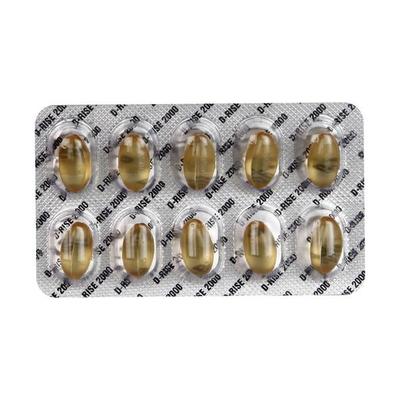
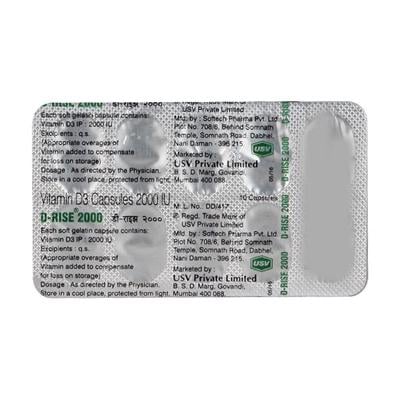
D Rise 2000IU Softgel is a dietary supplement that provides Vitamin D3 (cholecalciferol), a vital nutrient for maintaining healthy bones, teeth, and muscles. Many adults may experience low Vitamin D levels due to limited sunlight exposure, indoor lifestyles, or dietary gaps, making supplementation a practical choice. This softgel form is formulated for easy swallowing and better absorption when taken with meals, offering a convenient way to support daily Vitamin D needs.
Vitamin D3 in D Rise 2000IU Softgel helps the body absorb calcium and phosphorus, which are essential for bone mineralization and skeletal strength. It also plays a role in muscle function and overall bone health, making it particularly suitable for adults with low sun exposure, elderly individuals, postmenopausal women, or those at risk of bone weakening. By supporting adequate Vitamin D levels, this supplement may contribute to overall energy, mobility, and well-being.
D Rise 2000IU Softgel is usually taken once daily, preferably after a meal containing some healthy fats to enhance absorption. Swallow the softgel whole with water and try to take it at the same time each day for consistent results. Precautions include following the recommended dosage, storing the softgel in a cool, dry place away from sunlight, and keeping it out of reach of children. Avoid taking two doses at the same time to compensate for a missed dose.
Consult your doctor before use if you have kidney, liver, or metabolic conditions, or if you are taking other supplements or medications that may affect calcium or Vitamin D levels. Pregnant or breastfeeding women should seek medical advice before supplementation. Common side effects are usually mild and may include stomach discomfort, constipation, or nausea. Rarely, excessive intake may lead to elevated calcium levels, muscle weakness, or fatigue. Regular medical supervision ensures safe and effective use of D Rise 2000IU Softgel for maintaining optimal Vitamin D status.
Uses Of D RISE 2000IU SOFTGEL
- Used to manage vitamin D deficiency
- Used to manage osteoporosis (thinning of the bone) and other related bone conditions
Benefits of D RISE 2000IU SOFTGEL
D Rise 2000IU Softgel for Vitamin D Deficiency
Vitamin D deficiency is commonly linked to limited sun exposure, indoor lifestyles, and dietary gaps. D Rise 2000IU Softgel contains cholecalciferol (Vitamin D3), a form that is naturally utilized by the body. Regular intake helps support adequate Vitamin D levels, which are essential for multiple body functions. This softgel may be suitable for adults who require daily nutritional support to meet their Vitamin D needs, as advised by a healthcare professional.
D Rise 2000IU Softgel for Strong Bones and Teeth
Vitamin D plays a key role in maintaining bone and dental health by supporting mineral balance in the body. D Rise 2000IU Softgel helps ensure that calcium from food or supplements is effectively utilized for maintaining bone structure and tooth strength. Consistent Vitamin D intake supports bone integrity across different age groups, especially in individuals with higher nutritional requirements.
D Rise 2000IU Softgel for Calcium Absorption for Better Bone Nutrition
Calcium absorption depends significantly on sufficient Vitamin D levels. D Rise 2000IU Softgel supports the body’s ability to absorb and use calcium efficiently, which is essential for overall bone nutrition. This makes it a helpful addition to daily routines that already include calcium-rich foods or supplements, ensuring better nutritional synergy for skeletal support.
D Rise 2000IU Softgel for Muscle Strength and Function
Vitamin D is involved in muscle function and neuromuscular coordination. Adequate levels help support muscle strength, balance, and overall physical performance. D Rise 2000IU Softgel may be useful for individuals experiencing muscle weakness related to low Vitamin D levels, including older adults and those with sedentary or indoor lifestyles.
D Rise 2000IU Softgel for Osteoporosis
Osteoporosis is associated with reduced bone mineral density and increased bone fragility, often linked to long-term nutritional insufficiencies. D Rise 2000IU Softgel supports Vitamin D adequacy, which is essential for maintaining bone mineral content and calcium utilization. It may be included as part of a comprehensive bone health plan for elderly individuals, postmenopausal women, or people at risk of bone weakening, under medical guidance.
How D RISE 2000IU SOFTGEL Works
Mechanism of Action of D Rise 2000IU Softgel
D Rise 2000IU Softgel contains cholecalciferol (Vitamin D3), a form of Vitamin D that closely resembles the type produced by the body when exposed to sunlight. After oral intake, cholecalciferol is absorbed in the intestine and converted in the liver to 25-hydroxyvitamin D, the circulating form used to assess Vitamin D status. It is further converted in the kidneys into its active form, which plays a role in regulating calcium and phosphorus balance.
The active form of Vitamin D supports calcium absorption from the intestine and helps maintain adequate mineral availability for bones and muscles. By supporting optimal Vitamin D levels, D Rise 2000IU Softgel contributes to normal bone mineralization, muscle function, and overall skeletal health. The softgel formulation aids better absorption of this fat-soluble vitamin, making it suitable for daily nutritional supplementation when advised by a healthcare professional.
How to use D RISE 2000IU SOFTGEL
How to Take D Rise 2000IU Softgel
- Take D Rise 2000IU Softgel exactly as advised by your healthcare professional.
- It is usually taken once daily or as directed, depending on individual Vitamin D requirements.
- Swallow the softgel whole with water; do not crush, chew, or break it.
- For better absorption, it is preferably taken after a meal, especially one containing some fat.
- Try to take it at the same time each day to maintain consistent Vitamin D levels.
- Do not exceed the recommended intake unless specifically advised by a doctor.
- If a dose is missed, take it when you remember, unless it is close to the next scheduled dose.
- Store the softgel in a cool, dry place away from direct sunlight and out of reach of children.
What if I forgot to take D RISE 2000IU SOFTGEL
- If you forget to take a dose, take it as soon as you remember on the same day.
- If it is almost time for your next scheduled dose, skip the missed dose and continue with your regular intake schedule.
- Do not take two softgels at the same time to make up for a missed dose.
- Missing an occasional dose usually does not affect overall Vitamin D levels if you continue regular intake afterward.
- Try to take the softgel at the same time each day to help build a consistent routine.
- If you frequently forget doses, consult a healthcare professional for guidance on maintaining adequate Vitamin D intake.
Overdose
If too much D Rise 2000IU Softgel is taken accidentally, seek medical help immediately or visit the nearest hospital. Overuse may lead to symptoms such as loss of appetite, nausea, vomiting, constipation, stomach pain, excessive thirst, frequent urination, muscle weakness, tiredness, confusion, bone pain, kidney issues, and in severe cases, irregular heartbeat or coma.
Side Effects Of D RISE 2000IU SOFTGEL
Common side effects of D Rise 2000IU Softgel
- Increased calcium in the blood (hypercalcaemia) — may cause nausea, vomiting, loss of appetite, constipation, stomach pain, thirst, muscle weakness, drowsiness or confusion.
- Increased calcium in urine (hypercalciuria) — can be detected on lab tests and may contribute to kidney stone formation.
- Skin rash or itching.
When to Seek Medical Attention?
Stop taking D Rise 2000IU Softgel and contact your doctor immediately if you experience any of the following side effects:
- swollen face, lips, tongue or throat
- difficult to swallow and breathe
- raised itchy rash (hives)
How To Manage Side Effects

Skin rash Or Itching
- Cold Compress: Apply a clean cold cloth or ice pack wrapped in a towel for a few minutes to help calm itching and redness.
- Aloe Vera Gel: Fresh aloe vera gel can help soothe irritated skin and provide a cooling effect.
- Coconut Oil: Applying virgin coconut oil helps moisturize dry skin and reduce itching caused by dryness.
- Oatmeal Bath: Adding finely ground oats to lukewarm bath water may help relieve itching and dryness.
- Neem Leaves or Neem Oil (Diluted): Neem has soothing properties and may help calm itchy skin when used externally.
- Baking Soda Paste: Mix baking soda with a little water and apply gently to the itchy area; rinse after a few minutes.
- Keep Skin Moisturized: Use mild, fragrance-free moisturizers to prevent dryness-related itching.
- Wear Loose Cotton Clothing: Helps reduce sweating and friction that can worsen itching.

Stomach Pain
- Warm Water or Warm Compress: Drinking warm water or placing a warm heating pad on the abdomen can help relax muscles and ease discomfort.
- Ginger: Ginger tea or a small piece of fresh ginger may help soothe the stomach and support digestion.
- Ajwain (Carom Seeds): Chew a pinch of ajwain with warm water or boil it to make ajwain water, commonly used for gas-related pain.
- Jeera (Cumin) Water: Boiled and cooled cumin water may help reduce bloating and abdominal discomfort.
- Peppermint or Mint Tea: Peppermint helps relax digestive muscles and may ease cramps and gas.
- Buttermilk (Chaas): Plain buttermilk with a pinch of roasted cumin powder can support digestion after heavy meals.
- Light, Bland Foods: Eating simple foods like rice, curd, bananas, or toast can reduce stomach irritation.
- Adequate Rest: Lying down in a comfortable position may help relieve mild abdominal pain.
Warning & Precautions

Pregnancy
Use with CautionD Rise 2000IU Softgel should be used with caution in pregnant women or women planning to have a baby. Consult your doctor before taking it. If you require extra vitamin D do not take it without medical supervision because too much vitamin D may harm your baby.

Breastfeeding
Use with CautionD Rise 2000IU Softgel should be used with caution in breastfeeding women. Consult your doctor before taking it. If you require extra vitamin D do not take it without medical supervision because too much vitamin D may harm your baby.

Driving and Using Machines
Use with CautionD Rise 2000IU Softgel does not affect your ability to drive or use machines. Consult your doctor before taking it.

Kidney
ContraindicatedD Rise 2000IU Softgel is not recommended for use in patients with kidney failure, kidney stones (renal calculi) or have a tendency to form kidney stones. Consult your doctor before taking D Rise 2000IU Softgel.

Liver
Use with CautionD Rise 2000IU Softgel should be used with caution in patients with liver disease. Dose will be adjusted by your doctor. Consult your doctor before taking D Rise 2000IU Softgel.

Allergy
ContraindicatedD Rise 2000IU Softgel is not recommended for use if you are allergic to Cholecalciferol or any other ingredients of this medicine.

Heart Disease
Use with CautionD Rise 2000IU Softgel should be used with caution in patients with heart disease or narrowing of the arteries. Consult your doctor before taking D Rise 2000IU Softgel.

Use In Pediatrics
Consult your doctorD Rise 2000IU Softgel is recommended for children and adolescents aged 12 and above. Dose will be adjusted by your child’s doctor. Consult your child’s doctor before taking D Rise 2000IU Softgel.
Other Warnings for D RISE 2000IU SOFTGEL
Before taking D RISE 2000IU SOFTGEL, inform your doctor if you:
- have sarcoidosis (a multisystem chronic inflammatory condition which can affect your lungs, heart and kidneys)
- are taking medicines containing vitamin D or eating foods or drinking milk enriched with vitamin D
Who should not take D RISE 2000IU SOFTGEL
D RISE 2000IU SOFTGEL is not recommended for use if you:
- have high levels of calcium in the blood (hypercalcaemia) or urine (hypercalciuria)
- have high levels of vitamin D in the blood (hypervitaminosis D)
Safety Advice
- Follow Healthcare Guidance: Take D Rise 2000IU Softgel exactly as advised by your doctor or pharmacist.
- Do Not Exceed Recommended Dose: Avoid taking more than the recommended daily amount unless directed by a healthcare professional.
- Take with Food: For optimal absorption, take the softgel after a meal, especially one that contains some fat.
- Monitor for Symptoms: If you notice unusual symptoms like persistent nausea, stomach discomfort, frequent urination, or extreme fatigue, speak with a healthcare professional.
- Inform Your Doctor: Let your doctor know if you are taking other supplements or medications to avoid potential interactions.
- Medical Conditions: Consult your healthcare professional before use if you have any kidney, liver, or metabolic conditions.
- Do Not Crush or Chew: Swallow the softgel whole with water; do not crush or chew it.
Diet and Lifestyle Advice
- Include Vitamin D–rich foods such as fortified milk, curd, cheese, egg yolk, and mushrooms in your daily diet.
- Ensure adequate calcium intake through foods like milk, paneer, yogurt, sesame seeds, almonds, and green leafy vegetables to support bone nutrition.
- Take the softgel after a meal containing healthy fats (such as nuts, seeds, or oils) to support better absorption.
- Maintain a balanced diet with sufficient protein, vitamins, and minerals to support overall nutritional health.
- Stay well-hydrated throughout the day to support normal body functions.
- Get regular sunlight exposure (15–20 minutes on arms or face, when possible) to naturally support Vitamin D levels.
- Engage in weight-bearing and muscle-strengthening activities such as walking, yoga, or light exercise to support bone and muscle health.
- Avoid prolonged indoor inactivity; incorporate daily movement into your routine.
- Follow a consistent daily routine for taking the softgel to maintain steady Vitamin D intake.
1. D Rise 2000IU Softgel Vs D3 Drops / Syrup
|
Aspect |
D Rise 2000IU Softgel |
D3 Drops / Syrup |
Notes / Considerations |
|
Dosage Convenience |
Fixed 2000 IU per softgel, easy once-daily intake |
Flexible dosing, but requires careful measurement |
Softgel avoids dosing errors and is easier for adults with routine schedules |
|
Absorption |
Fat-soluble softgel aids better absorption when taken with meals |
Liquid form is also absorbed but may vary depending on fat content in meal |
Softgels can be more consistent if taken with food containing fat |
|
Portability |
Easy to carry and store, no need for measuring |
May require careful storage and measuring device |
Softgel is more convenient for travel or work |
|
Taste / Palatability |
Tasteless and easy to swallow |
Some drops or syrup may have taste or flavour issues |
Taste can affect adherence in some adults |
|
Suitability for Adults |
Designed for adult supplementation, standardized dosage |
Suitable for adults but often marketed for infants/children |
Softgel provides a precise adult dose, reducing risk of under- or overdosing |
Drug - Drug interaction
1. Calcium Supplements
- Interaction: Taking Vitamin D along with calcium supplements may increase calcium levels in the body.
- Management: Calcium intake should be monitored, and doses adjusted if needed. Follow your doctor’s advice regarding combined use.
2. Thiazide Diuretics (e.g., hydrochlorothiazide)
- Interaction: These medicines may reduce calcium excretion, and when combined with Vitamin D, may raise calcium levels.
- Management: Regular monitoring of calcium levels may be advised, especially during long-term use.
3. Corticosteroids (e.g., prednisolone)
- Interaction: Long-term corticosteroid use may reduce the effect of Vitamin D by interfering with its metabolism.
- Management: Your doctor may review Vitamin D intake and recommend appropriate supplementation based on individual needs.
4. Antiepileptic Medicines (e.g., phenytoin, carbamazepine)
- Interaction: These medicines may increase the breakdown of Vitamin D, lowering its availability in the body.
- Management: Periodic assessment of Vitamin D levels may be required, with dose adjustments if advised by a healthcare professional.
5. Cholestyramine and Other Fat Absorption–Reducing Agents
- Interaction: These medicines may reduce the absorption of fat-soluble vitamins, including Vitamin D.
- Management: D Rise 2000IU Softgel may be taken at a different time of day, as advised by a doctor, to support better absorption.
6. Digitalis (Digoxin)
- Interaction: High calcium levels associated with Vitamin D intake may increase sensitivity to digoxin.
- Management: Close medical supervision and monitoring are recommended if both are used together.
Drug - Food interaction
1. High-Fat Meals
- Interaction: Vitamin D absorption improves when taken with dietary fat.
- Management: Take D Rise 2000IU Softgel after a meal that contains healthy fats (such as nuts, seeds, dairy, or oils) to support better absorption.
2. Calcium-Rich Foods (Milk, Curd, Cheese)
- Interaction: Vitamin D supports the absorption of calcium from foods. Combined intake may increase calcium availability.
- Management: Calcium-rich foods can be included as part of a balanced diet, but excessive intake should be avoided unless advised by a doctor.
3. Foods High in Phosphorus (Processed Foods, Soft Drinks)
- Interaction: Excess phosphorus may affect calcium balance when Vitamin D intake is high.
- Management: Limit processed foods and choose natural, whole foods to maintain mineral balance.
4. High-Fiber Foods (Bran, Whole Grains in Excess)
- Interaction: Very high fibre intake may slightly reduce absorption of fat-soluble vitamins.
- Management: Maintain a balanced diet and avoid taking the softgel simultaneously with extremely high-fibre meals.
Synopsis
|
Drug |
Cholecalciferol (Vitamin D3) |
|
Pharmacological Category |
Vitamin D analogues |
|
Therapeutic Indication |
Osteoporosis, Vitamin D deficiency |
|
Dosage Forms |
Softgel |
More Information
Storage
- Store D Rise 2000IU Softgel in a cool, dry place.
- Keep it away from direct sunlight, heat, and moisture.
- Store out of reach of children and pets.
FAQs About D RISE 2000IU SOFTGEL
Q: What is D Rise 2000IU Softgel used for?
A: D Rise 2000IU Softgel is a dietary supplement that contains Vitamin D3 (cholecalciferol). It helps support healthy bones, teeth, and muscles by aiding calcium absorption. It is usually taken by adults to maintain adequate Vitamin D levels, especially when sun exposure or diet is limited.
Q: How should I take D Rise 2000IU Softgel?
A: Take the softgel once daily or as advised by your doctor. Swallow it whole with water, preferably after a meal containing some fat for better absorption. Try to take it at the same time each day to maintain consistent Vitamin D levels.
Q: Can I take D Rise 2000IU Softgel on an empty stomach?
A: It is better to take it after a meal, as Vitamin D is fat-soluble. Taking it with food that contains some healthy fats (like nuts, seeds, or milk) helps the body absorb it more efficiently. Avoid taking it on a completely empty stomach.
Q: What should I do if I forget a dose?
A: If you forget a dose, take it as soon as you remember on the same day. If it’s almost time for your next dose, skip the missed one and continue your regular schedule. Do not take two softgels at the same time to make up for a missed dose.
Q: Can I take D Rise 2000IU Softgel with other supplements?
A: It is generally safe with other supplements but let your doctor know if you are taking calcium, multivitamins, or any medications. Certain supplements or medications may affect calcium or Vitamin D levels, so medical advice is recommended.
Q: Can D Rise 2000IU Softgel be taken with medicines?
A: Some medicines, like thiazide diuretics, corticosteroids, or antiepileptics, may interact with Vitamin D. Your doctor may adjust your dose or monitor calcium and Vitamin D levels if needed. Always inform your healthcare provider about all medicines you take.
Q: Can D Rise 2000IU Softgel cause side effects?
A: Most people tolerate it well. Mild side effects may include nausea, stomach discomfort, or constipation. Severe reactions are rare but may include high calcium levels. Consult your doctor if you experience unusual symptoms like tiredness, muscle weakness, or excessive urination.
Q: What if I accidentally take too much?
A: If more than the recommended dose is taken, contact your doctor or visit the nearest hospital immediately. Overuse may lead to loss of appetite, nausea, vomiting, muscle weakness, bone pain, or kidney problems. Severe overdose may affect heart rhythm or cause serious complications.
Q: How long does it take to see results?
A: Vitamin D levels gradually improve with consistent use. Most people may notice improvements in energy, bone health, or muscle strength over a few weeks to months, depending on initial deficiency and lifestyle factors.
Q: Can I take it with food and drinks?
A: Yes, it is best taken with meals, especially those containing fat. Avoid alcohol in excess, as it may affect Vitamin D metabolism. Other normal foods do not interfere with its absorption.
Q: Can D Rise 2000IU Softgel help with osteoporosis?
A: Adequate Vitamin D supports calcium absorption, which is essential for bone mineralization. While it is not a treatment, it may be recommended as part of a bone health plan to support bone strength under medical guidance.
Q: Does it help with muscle weakness?
A: Vitamin D contributes to muscle function. Maintaining sufficient levels may help reduce muscle fatigue and improve strength, especially in adults who are deficient.
Q: Can D Rise 2000IU Softgel cause allergies?
A: Allergic reactions are rare. Signs may include rash, itching, swelling, or difficulty breathing. Stop use immediately and seek medical attention if any allergy symptoms occur.
Q: Can I take it for long-term use?
A: Yes, Vitamin D can be taken long-term under medical supervision. Regular monitoring may be suggested to ensure safe levels of Vitamin D and calcium in the body.
Q: Can it interact with food?
A: Vitamin D absorption improves with fat-containing meals. Avoid very high-fibre meals at the same time, as they may slightly reduce absorption. Limit excessive alcohol, which can interfere with Vitamin D metabolism.
Q: What are the main benefits of D Rise 2000IU Softgel?
A: It helps maintain adequate Vitamin D levels, supports bone and dental health, aids calcium absorption, contributes to muscle strength, and may support general bone and mineral health in adults.
Q: Can I take it along with calcium supplements?
A: Yes, taking Vitamin D with calcium may help the body use calcium more effectively. Follow your doctor’s advice to avoid excessive calcium intake and maintain a balanced diet for optimal bone health.
References
1. KD. Tripathi. Section 11, Vitamins. Essentials of medical pharmacology. Seventh edition. 2013. Page-909.
2. Nair, Rathish, and Arun Maseeh. Vitamin D: The "sunshine" vitamin. National library of Medicine, National center for Biotechnology information. Pubmed Central. 2012 [Accessed on 29th January 2026] 
3. J Christopher Gallagher, Daniel D Bikle. Vitamin D: Mechanisms of Action and Clinical Applications. National library of Medicine, National center for Biotechnology information. Pubmed.gov 2017. [Accessed on 29th January 2026] 
Useful Diagnostic Tests
Author Details