






Netmeds First Membership
Quick Links
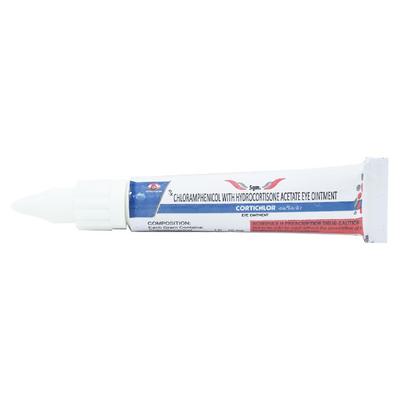
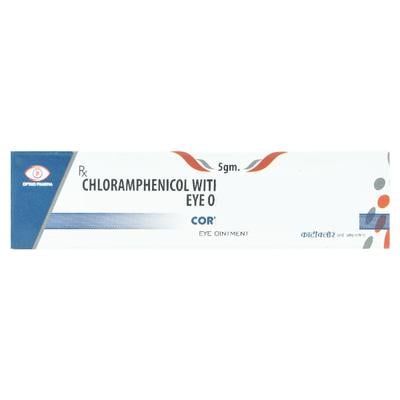
Introduction About CORTICHLOR EYE OINTMENT
CORTICHLOR EYE OINTMENT is a combination of Chloramphenicol and Hydrocortisone which belongs to the group of medicines called Antibiotics and Corticosteroids respectively. It is indicated for ocular infection and inflammation (uveitis, allergic conjunctivitis, blepharitis, scleritis, iridocyclitis, non-ulcerous keratitis).
During course of the management your doctor might regularly examine your eye to avoid any untoward side effects. Before using CORTICHLOR EYE OINTMENT, inform your doctor if you have any viral or fungal infection in the eye, or other eye problems.
CORTICHLOR EYE OINTMENT should be used in pregnant women only if specifically directed by your physician. CORTICHLOR EYE OINTMENT should be used with caution in breastfeeding women as it is not known if it passes into breast milk. Consult your doctor before using the medicine.
Safety and efficacy in pediatric patients below the age of 2 years have not been established. Consult your doctor before using CORTICHLOR EYE OINTMENT. The most common side effects of using CORTICHLOR EYE OINTMENT are burning, itching, mild stinging, or irritation. Contact your doctor if any of the side effects worsen.
Uses Of CORTICHLOR EYE OINTMENT
- It is used for ocular infection and inflammation (uveitis, allergic conjunctivitis, blepharitis, scleritis, iridocyclitis, non-ulcerous keratitis)
How CORTICHLOR EYE OINTMENT Works
CORTICHLOR EYE OINTMENT manages infection and inflammation where Chloramphenicol belongs to antibiotic which stops bacterial growth by inhibiting synthesis of essential proteins required by bacteria to carry out vital functions. Hydrocortisone belongs to corticosteroids which blocks the production of certain chemical messengers (prostaglandins) that cause redness, swelling and itching after an allergy or infection.
How to use CORTICHLOR EYE OINTMENT
Apply CORTICHLOR EYE OINTMENT as advised by your physician. It is for external use only. Your doctor will decide the correct dose and duration for you depending upon your age, body weight and disease condition.
Side Effects Of CORTICHLOR EYE OINTMENT
Common
- burning, itching, mild stinging, or irritation (application site reactions)
Rare
Stop using CORTICHLOR EYE OINTMENT and consult your doctor immediately if you experience any of the following side effects:
- allergic reaction (swelling of the lips, face or neck leading to severe trouble in breathing, skin rash or hives)
- local irritation
Warning & Precautions

Pregnancy
Monitoring requiredCORTICHLOR EYE OINTMENT should be used in pregnant women only if specifically directed by your physician. Consult your doctor before using.

Breastfeeding
Consult your doctorCORTICHLOR EYE OINTMENT should be used with caution in breastfeeding women as it is not known if it passes into breast milk. Consult your doctor before using the medicine.

Driving and Using Machines
Use with CautionYour vision may be blurred for a few minutes after using CORTICHLOR EYE OINTMENT. Do not drive or operate machinery until you can see clearly again.

Allergy
ContraindicatedDo not use CORTICHLOR EYE OINTMENT if you are allergic to Chloramphenicol or Hydrocortisone or any other ingredients of this medicine.
Others
CORTICHLOR EYE OINTMENT is not recommended for use if you:
- have viral or fungal eye infection
Use in Pediatrics:
Safety and efficacy in pediatric patients below the age of 2 years have not been established. Consult your doctor before using CORTICHLOR EYE OINTMENT.
Use in Geriatrics:
Your doctor will prescribe the right dose of CORTICHLOR EYE OINTMENT depending on your age, body weight and severity of infection.
Interactions
A. Drug-Drug interactions:
Before using CORTICHLOR EYE OINTMENT, inform your doctor if you are using, have used, or might use any other medicine, including prescription, non-prescription or any herbal medicine.
Overdosage:
If you or anyone else accidentally uses too much of CORTICHLOR EYE OINTMENT, contact your doctor immediately. Symptoms of overdosage includes increased redness of the eye.
Synopsis
| Drug | : | Chloramphenicol, Hydrocortisone |
| Pharmacological Category | : | Antibiotics, Corticosteroids |
| Therapeutic Indication | : | Eye infection and Inflammation |
| Dosage Forms | : | Eye ointment |
More Information
- Keep CORTICHLOR EYE OINTMENT out of reach of children
- Store below 30°C
FAQs About CORTICHLOR EYE OINTMENT
Q: Can I stop using CORTICHLOR EYE OINTMENT?
A: Do not stop using CORTICHLOR EYE OINTMENT unless your doctor advises you to stop. If there is no improvement within two days of starting management, stop using and consult your doctor.
Q: How do I use CORTICHLOR EYE OINTMENT?
A: Use CORTICHLOR EYE OINTMENT exactly as directed by your physician. Wash your hands before using this medicine. Tilt your head back and gently pull down your lower eyelid and look up. Gently squeeze a small amount of medicine along the inside of the lower eyelid, taking care that the tip does not touch your eye or eyelashes. Blink your eyes to spread the medicine evenly. Do not rub your eyes and wipe away any excess medicine with a clean tissue. Take care that the tip does not touch your fingers.
Q: Can I wear contact lens while using CORTICHLOR EYE OINTMENT?
A: Contact lenses should not be worn until your condition is resolved. Ask your doctor about wearing contact lenses while using CORTICHLOR EYE OINTMENT.
Q: Can CORTICHLOR EYE OINTMENT be used in breastfeeding women?
A: CORTICHLOR EYE OINTMENT should be used with caution in breastfeeding women as it is not known if it passes into breast milk. Consult your doctor before using the medicine.
Q: Can CORTICHLOR EYE OINTMENT be used on infants?
A: Safety and efficacy in pediatric patients below the age of 2 years have not been established. Consult your doctor before using CORTICHLOR EYE OINTMENT.
Q: Can CORTICHLOR EYE OINTMENT be used for inflammation of eyelid?
A: Yes. CORTICHLOR EYE OINTMENT is highly effective for the management of blepharitis (inflammation of eyelid) due to excellent penetration of eye tissue. Consult your doctor before using the medicine.
References
1. Sandoz Canada Inc. Chloramphenicol + Hydrocortisone. [Revised in June 2018] [Accessed on 24th May 2022] https://www.sandoz.ca/sites/www.sandoz.ca/files/Pentamycetin-Product-Monograph.pdf
2. Tubilux Pharma S.P.A. Chloramphenicol. [Revised in August 2020] [Accessed on 24th May 2022] https://www.medicines.org.uk/emc/files/pil.9770.pdf
3. Sunways. Chloramphenicol + Hydrocortisone. [Accessed on 24th May 2022] http://www.sunways.com/Products/SunwaysProducts/Chlorosun-H.html
4. Pharmtak Ophthalmics (I) Pvt. Ltd. Chloramphenicol + Hydrocortisone. [Accessed on 24th May 2022] https://www.pharmtakindia.com/product/takchlor-c-eye-ear-oint/
5. TEVA UK Limited. Hydrocortisone. [Revised in August 2021] [Accessed on 24th May 2022] https://products.tevauk.com/mediafile/id/51489.pdf
6. Raymed Pharmaceuticals Ltd. Chloramphenicol + Hydrocortisone. [Accessed on 24th May 2022] https://cdn.pixelbin.io/v2/catalog-cloud/ccprod/original/products/assets/item/free/original/ekn9HXW9m2-Retichlor-H.jpg
7. American Academy of Opthalmology. Inflammation. [Accessed on 24th May 2022] https://www.aao.org/eye-health/symptoms/inflammation
Author Details