



Netmeds First Membership
Quick Links
Introduction About COMBIGAN OPHTHALMIC SOLUTION
What is COMBIGAN Ophthalmic Solution?
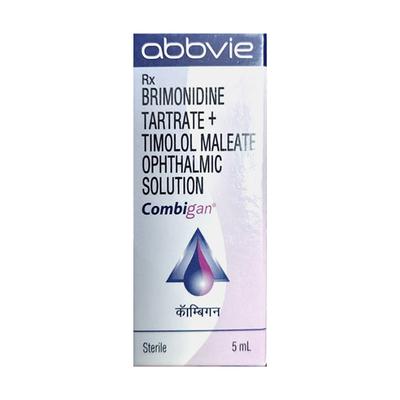
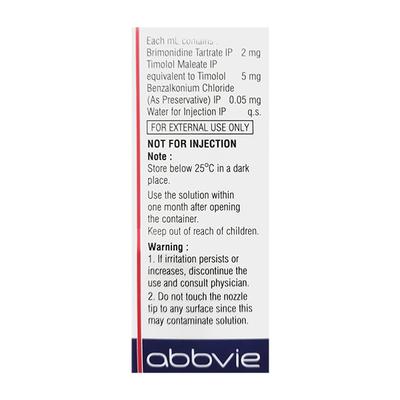
COMBIGAN Ophthalmic Solution 5ml contains Brimonidine (2mg/ml) and Timolol (5mg/ml), a combination eye drop used to reduce high intraocular pressure in open-angle glaucoma and ocular hypertension.
Brimonidine reduces aqueous humor production and increases fluid outflow, while Timolol (beta-blocker) decreases fluid production in the eye. Together, they lower eye pressure to manage optic nerve damage and vision loss.
Instill 1 drop in the affected eye(s) twice daily, approximately 12 hours apart. Wait 5-15 minutes between different eye drops. Remove contact lenses before use and wait 15 minutes before reinserting.
Uses Of COMBIGAN OPHTHALMIC SOLUTION
- Used to reduce high intraocular pressure in open-angle glaucoma and ocular hypertension
Benefits of COMBIGAN OPHTHALMIC SOLUTION
- Manages open-angle glaucoma when single eye drops are insufficient
- Manages ocular hypertension to reduce glaucoma progression
- Provides additive IOP reduction (25-30%) superior to individual components
- Convenient twice-daily dosing for consistent pressure control
How COMBIGAN OPHTHALMIC SOLUTION Works
Brimonidine reduces aqueous humor production and increases fluid outflow, while Timolol (beta-blocker) decreases fluid production in the eye. Together, they lower eye pressure to manage optic nerve damage and vision loss.
How to use COMBIGAN OPHTHALMIC SOLUTION
Instill 1 drop in the affected eye(s) twice daily, approximately 12 hours apart. Wait 5-15 minutes between different eye drops. Remove contact lenses before use and wait 15 minutes before reinserting.
Administering COMBIGAN with contact lenses
Remove contact lenses before applying COMBIGAN. Wait at least 15 minutes after instilling the drops before reinserting lenses to prevent absorption issues and ensure effectiveness.?
Safety precautions
Precautions: Wash hands before use; avoid touching dropper tip to eye or surfaces. Press inner eye corner for 1 minute post-application to minimize systemic absorption. Inform doctor of heart/lung conditions, asthma, or other medications
What if I forgot to take COMBIGAN OPHTHALMIC SOLUTION
Apply the missed dose as soon as you remember. If it is almost time for the next dose, skip the missed one and resume your regular schedule. Do not use double drops.?
Overdose
If you or anyone else accidentally use too much of COMBIGAN OPHTHALMIC SOLUTION, consult your doctor immediately or visit the nearby hospital. Overdosage symptoms of COMBIGAN OPHTHALMIC SOLUTION are dizziness, headache, bradycardia (slowing of heartbeats), bronchospasm (tightening of airway muscles causing coughing and noisy breathing), cardiac arrest (sudden loss of heart function) or low blood pressure.
Side Effects Of COMBIGAN OPHTHALMIC SOLUTION
Common
- Eye redness
- Itching
- Burning
- allergic reactions
- blurred vision
Serious side effects
- Slow heart rate
- breathing problems (avoid in asthma/COPD)
- severe allergic reactions
How To Manage Side Effects
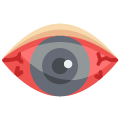
Eye irritation Or Itching
Clean your eyelids twice a day. Keep a flannel or cotton wool cloth soaked in warm water on your closed eyes for 5 to 10 minutes. Then gently massage your eyelids for few seconds. Do not use eye make up until the problem is resolved.
Warning & Precautions

Pregnancy
Monitoring requiredCOMBIGAN Ophthalmic Solution is not recommended for use in pregnant women unless considered clearly necessary.

Breastfeeding
ContraindicatedCOMBIGAN OPHTHALMIC SOLUTION is not recommended for use in breastfeeding mothers since it may pass into the milk.

Driving and Using Machines
Use with CautionDo not drive or operate machines while using COMBIGAN OPHTHALMIC SOLUTION as it may cause drowsiness, tiredness or blurred vision.

Alcohol
Consult your doctorAvoid or limit consumption of alcohol while using COMBIGAN OPHTHALMIC SOLUTION.

Kidney
Use with CautionCOMBIGAN OPHTHALMIC SOLUTION should be used with caution in patients with kidney problems.

Liver
Use with CautionCOMBIGAN OPHTHALMIC SOLUTION should be used with caution in patient with liver problems.

Allergy
ContraindicatedCOMBIGAN OPHTHALMIC SOLUTION is not recommended for use if you are allergic to brimonidine, timolol or any other ingredients of this medicine.

Lungs
ContraindicatedCOMBIGAN OPHTHALMIC SOLUTION is not recommended for use if you have/had respiratory problems such as bronchial asthma, severe chronic obstructive bronchitis (severe lung disease causing noisy breathing, difficulty in breathing or long- standing cough) and other severe chronic obstructive pulmonary disease (group of lung diseases causing difficulty in breathing).

Heart Disease
Consult your doctorCOMBIGAN OPHTHALMIC SOLUTION is not recommended for use in patients with sinus bradycardia (a type of slow heartbeat), 2nd or 3rd degree heart block (delay in electrical conduction that triggers heart pumping), cardiac failure, cardiogenic shock (condition arising when heart is unable to pump enough blood to heart or brain) or heartbeat disorders. It should be used with caution in patients with heart disease such as coronary heart disease (causing chest pain or tightness, breathlessness or choking).

Use In Pediatrics
ContraindicatedCOMBIGAN OPHTHALMIC SOLUTION is not recommended for use in children and adolescents (aged below 17 years).

Use In Geriatrics
Use with CautionCOMBIGAN OPHTHALMIC SOLUTION should be used with caution in elderly patients (aged 65 years and above).
Other Warnings for COMBIGAN OPHTHALMIC SOLUTION
Before using COMBIGAN OPHTHALMIC SOLUTION, inform your doctor if you:
- have low blood pressure
- have breathing problems
- have poor blood circulation disease such as Raynaud’s disease or syndrome
- have diabetes
- have hyperthyroidism
- have tumour of adrenal glands
- are scheduled for eye surgery to lower pressure in eye
- are scheduled for any major surgery under general anaesthesia
- have signs of cerebral insufficiency (low blood flow to brain) such as stroke
- have depression
- have orthostatic hypotension (lowering of blood pressure on changing the posture)
- have thromboangitis obliterans (condition occurring due to inflammation of small blood vessels leading to blockage of blood vessels due to clot formation)
- have myasthenia gravis (condition causing weakness and fatigue of muscles)
- history of atopy (condition that makes you more vulnerable to allergies) and anaphylaxis (an allergic reaction causing shortness of breath, noisy breathing or collapse)
Who should not take COMBIGAN OPHTHALMIC SOLUTION
Patients with asthma, severe COPD, heart block, or bradycardia. Newborns, children under 2 years, pregnant/breastfeeding women (consult doctor).
The common Eye redness, itching, burning, allergic reactions, blurred vision. Serious side effects are Slow heart rate, breathing problems (avoid in asthma/COPD), severe allergic reactions. Apply pressure to inner eye corner for 1 minute after instilling to reduce systemic absorption.
Drug - Drug interaction
|
Drug/Class |
Interaction Description |
Potential Effect |
Precaution / Advice |
|
Other Beta-blockers |
Additive beta-blocking effects may increase risk of low blood pressure and slow heart rate |
Hypotension, bradycardia, dizziness, fainting |
Avoid concurrent use; inform healthcare provider |
|
Calcium Channel Blockers |
Combined effects may cause excessive blood pressure lowering |
Hypotension, heart block |
Monitor cardiovascular status closely |
|
Monoamine Oxidase Inhibitors (MAOIs) |
MAOIs may increase brimonidine levels, raising risk of side effects |
Severe hypotension, CNS effects |
Avoid combination; notify doctor if both are needed |
|
CNS Depressants/Alcohol |
May potentiate sedation and dizziness caused by brimonidine |
Increased drowsiness, impaired coordination |
Limit alcohol; exercise caution with CNS depressants |
|
Other Eye Drops for Glaucoma |
Possible additive systemic absorption affecting heart/lung function |
Enhanced side effects such as slow heartbeat, bronchospasm |
Separate administration by 5-15 minutes; medical advice before combination |
|
Antidepressants (SSRIs, TCAs) |
Potential pharmacodynamic interactions increasing brimonidine effects |
Increased side effects like low blood pressure, sedation |
Monitor patients closely |
|
Systemic beta-blockers |
Increased risk of beta-blocker side effects due to systemic absorption from eye drops |
Bradycardia, hypotension, respiratory effects |
Use cautiously; monitor vital signs |
Synopsis
| Drug | : | Brimonidine, Timolol |
| Pharmacological Category | : | Alpha-adrenergic receptor agonist, Beta-adrenergic receptor inhibitors |
| Therapeutic Indication | : | Glaucoma, Ocular hypertension |
| Dosage Forms | : | Eye drops |
More Information
Lifestyle Fit: Minimal vision blur/dryness; contact lens compatible (15-min wait); discreet packaging for travel.
COMBIGAN Ophthalmic Solution is designed to fit seamlessly into patient’s lifestyles with features enhancing convenience and comfort:
- Minimal Vision Blur/Dryness: Many users report only minimal transient vision blur or eye dryness after instillation, allowing normal activities like reading or screen use shortly afterward.
- Contact Lens Compatibility: Although patients should remove contact lenses before applying drops, COMBIGAN is compatible with soft lenses if reinserted after waiting at least 15 minutes post-application. This allows continuous lens use without disrupting routine.
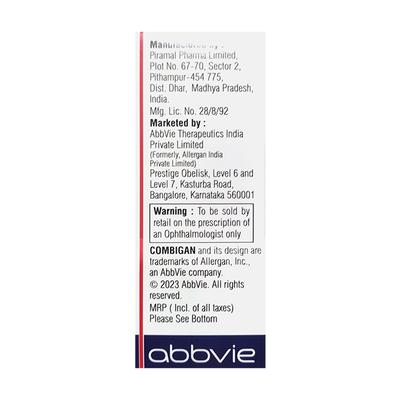
- Discreet Packaging for Travel: The compact 5ml bottle size is travel-friendly and includes secure, leak-proof caps aiding discreet and easy use on-the-go, supporting adherence even while traveling.
24-Hour Efficacy: Provides consistent diurnal IOP control comparable to concomitant therapy, reducing peak/trough fluctuations.
COMBIGAN Ophthalmic Solution provides consistent 24-hour intraocular pressure (IOP) control, comparable to concomitant therapy with separate brimonidine and timolol drops, while effectively reducing peak/trough fluctuations.
Clinical studies demonstrate that twice-daily COMBIGAN dosing maintains IOP reductions throughout the day, with mean daytime IOP control below 18 mmHg in 40% of patients, superior to monotherapy components. This smooth diurnal profile minimizes IOP spikes that contribute to glaucoma progression, offering reliable protection around the clock without three-times-daily dosing.?
The fixed combination achieves additive effects brimonidine enhancing uveoscleral outflow and timolol suppressing aqueous production resulting in 26-33% IOP reduction from baseline with stable 24-hour efficacy, similar to unfixed concomitant therapy but with improved convenience. Patients benefit from fewer fluctuations, supporting better long-term optic nerve preservation and visual field stability.
FAQs About COMBIGAN OPHTHALMIC SOLUTION
Q: What is COMBIGAN OPHTHALMIC SOLUTION used for?
A: COMBIGAN OPHTHALMIC SOLUTION is used to reduce the elevated intraocular pressure in patients with glaucoma. It is also used to reduce elevated intraocular pressure in patients with ocular hypertension who may require it as an adjunctive or replacement therapy due to uncontrolled intraocular pressure.
Q: What happens if you use more COMBIGAN OPHTHALMIC SOLUTION than your required dose?
A: If you or anyone else accidentally use too much of COMBIGAN OPHTHALMIC SOLUTION, consult your doctor immediately or visit the nearby hospital. Overdosage symptoms of COMBIGAN OPHTHALMIC SOLUTION are dizziness, headache, bradycardia (slowing of heartbeats), bronchospasm (tightening of airway muscles causing coughing and noisy breathing), cardiac arrest (sudden loss of heart function) or low blood pressure.
Q: Who should avoid using COMBIGAN OPHTHALMIC SOLUTION?
A: COMBIGAN OPHTHALMIC SOLUTION is not recommended for use if you are allergic to brimonidine and timolol and/or have reactive airway disease such as bronchial asthma, severe chronic obstructive pulmonary disease (group of lung diseases causing difficulty in breathing), sinus bradycardia (a type of slow heartbeat), 2nd or 3rd degree heart block, cardiac failure or cardiogenic shock. It is also not recommended for breast-feeding women including children and adolescents (aged below 17 years).
Q: Is COMBIGAN OPHTHALMIC SOLUTION safe to use in children?
A: COMBIGAN OPHTHALMIC SOLUTION is not recommended for use in children and adolescents (aged below 17 years). If COMBIGAN OPHTHALMIC SOLUTION is accidentally ingested by a child or adolescent, go to the hospital immediately and consult the doctor for further management.
Q: Does COMBIGAN OPHTHALMIC SOLUTION cause damage to lungs?
A: COMBIGAN OPHTHALMIC SOLUTION may cause damage to your lungs if you are having reactive airway disease including bronchial asthma, a history of bronchial asthma or severe chronic obstructive pulmonary disease (group of lung diseases causing difficulty in breathing).
Q: How does COMBIGAN OPHTHALMIC SOLUTION work?
A: COMBIGAN OPHTHALMIC SOLUTION helps to lower eye pressure due to glaucoma and intraocular hypertension, where Brimonidine works by allowing better fluid drainage from the eye resulting in reduced pressure in the eye and Timolol works by decreasing the amount of fluid formed in the eye which results in reduced intraocular pressure in the eye thereby managing glaucoma and ocular hypertension.
Q: Can COMBIGAN OPHTHALMIC SOLUTION lower the blood pressure?
A: Yes, COMBIGAN OPHTHALMIC SOLUTION may lower your blood pressure. Before using, inform your doctor if you are suffering from orthostatic hypotension (lowering of blood pressure on changing the posture) or taking blood pressure lowering medicines such as calcium antagonists such as amlodipine or catecholamine-depleting drugs such as reserpine.
Q: Can I wear contact lenses with COMBIGAN?
A: Remove before use, wait 15 minutes.
Q: What if I miss a dose?
A: Use as soon as remembered unless near next dose.
Q: Is COMBIGAN safe for long-term use?
A: Yes, under medical supervision.
References
1. KD. Tripathi. Antiadrenergic Drugs (Adrenergic Receptor Antagonists) and Drugs for Glaucoma. Seventh edition. 2013. Page – 153, 154.
2. Anne J Lee, Peter McCluskey. Fixed combination of topical brimonidine 0.2% and timolol 0.5% for glaucoma and uncontrolled intraocular pressure. NIH National Library of Medicine. National Centre for Biotechnology Information. PMC PubMed Central. September 2008. [Accessed on 27th November 2025] 
3. Allergan, Inc. U.S. Food & Drug Administration (FDA) [Revised in October 2015] [Accessed on 27th November 2025] 
4. Allergan, Inc. U.S. Food & Drug Administration (FDA). [Revised in May 2010] [Accessed on 27th November 2025]
5. Valeant Pharmaceuticals North America LLC. U.S. Food & Drug Administration (FDA). [Revised in April 2016] [Accessed on 27th November 2025]
Useful Diagnostic Tests
- Optic nerve imaging
- Visual field test
Author Details