



Netmeds First Membership
Quick Links
Introduction About COLIHENZ P 800 TABLET
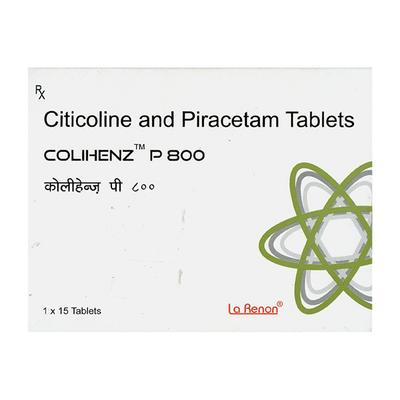
COLIHENZ P 800 TABLET is a combination of Citicoline and Piracetam which belongs to the group of medicines called Cerebroactive drugs. It is used as an adjunct for the management of acute stroke.
Acute stroke can be defined as a brain injury caused due to sudden loss in blood flow, nutrients and oxygen supply to the brain. It is usually characterized by paralysis of one side of the body, loss of sensation, double vision, difficulty in sleeping, facial droop, loss of balance, vertigo, nausea, vomiting, headache and/or blurred vision.
COLIHENZ P 800 TABLET can also be used to manage memory problems caused due to brain injury and other age-related brain problems.
Before taking COLIHENZ P 800 TABLET inform your doctor if you have any liver or kidney problems. You must also inform your doctor if you have any bleeding problems, history of bleeding in the brain or parkinsonism.
COLIHENZ P 800 TABLET is not recommended for use in patients with Huntington Disease, intracranial hemorrhage (bleeding within the skull) or a previous history of depression. It is also not suitable for use in pregnant or breastfeeding women unless considered necessary by the physician.
Women of childbearing potential must use a suitable contraceptive method to avoid pregnancy while undergoing therapy with COLIHENZ P 800 TABLET.
The most common side effects of taking COLIHENZ P 800 TABLET are headache, constipation, diarrhea, difficulty in falling asleep, nervousness, dizziness and weight gain. Consult your doctor if any of these side effects bother you.
Uses Of COLIHENZ P 800 TABLET
It is used to manage:
- Acute stroke
- Memory loss associated with aging or brain injury
How COLIHENZ P 800 TABLET Works
COLIHENZ P 800 TABLET contains two medicines namely citicoline and piracetam. Citicoline is a neuroprotectant. It protects the nerve cells by blocking the release of certain chemicals (such as glutamate and other free radicals) within the brain and nervous system that damages the nerve cells.
Piracetam is a GABA analogue. It improves oxygen supply to the brain and nervous system and protects it from further injury. Collectively, COLIHENZ P 800 TABLET repairs the brain cells and regulates proper nerve signal transmissions across the brain and the nervous system.
How to use COLIHENZ P 800 TABLET
Take COLIHENZ P 800 TABLET as directed by your physician. Swallow the medicine with a glass of water. Do not crush or chew the medicine.
Your doctor will decide the correct dose and duration of therapy for you depending upon your age, body weight and disease condition. Do not stop taking COLIHENZ P 800 TABLET unless your doctor advice you to stop.
Overdose
If you or anyone else accidentally took more COLIHENZ P 800 TABLET, consult your doctor immediately or visit the nearby hospital straight away. Symptoms of overdosage might include severe headache or severe stomach pain with bloody diarrhea.
Side Effects Of COLIHENZ P 800 TABLET
Common side effects of COLIHENZ P 800 TABLET:
- weight gain
- headache
- feeling nervous
- muscle spasms
- anxiety or agitation
- numbness, tingling sensation
- constipation, diarrhea, stomach upset
- dizziness
- difficulty in falling asleep
- nausea, vomiting
- skin rash
- back pain, shoulder pain, joint pain
Stop taking COLIHENZ P 800 TABLET and contact your doctor immediately if you experience any of the following side effects:
- severe allergic reaction (such as skin rash, swelling of the face, eyelids, lips, tongue or throat which causes difficulty in breathing or swallowing)
How To Manage Side Effects
Constipation
Eat plenty of fiber rich foods such as fresh fruits, vegetables, and cereals. Drink plenty of fluids. Exercise more regularly. Consult your doctor if this side effect bothers you.

Dizziness Or Drowsiness
Try to rest and relax. Get enough sleep. Avoid driving or operating any tools or machines completely while you are feeling dizzy. Do not consume excessive alcohol, as it could aggravate your dizziness. Consult your doctor if your dizziness worsens.

Headache
Rest and relax. Keep yourself hydrated by drinking plenty of fluids such as water or electrolytes. Applying a pain-relieving balm on your forehead can be beneficial. Do not consume excessive alcohol, as it could aggravate your headache. Consult your doctor if your headache worsens.

Nausea And Vomiting
Take COLIHENZ P 800 TABLET with or just after a meal or a snack. Stick to simple meals. Avoid eating rich or spicy food. Consult your doctor if your nausea worsens.
Warning & Precautions

Pregnancy
Consult your doctorCOLIHENZ P 800 TABLET should be used in pregnancy only if it is considered necessary by the physician. Your doctor will evaluate the risks and benefits of the therapy and prescribes it to you accordingly. Therefore, inform your doctor before taking COLIHENZ P 800 TABLET if you are pregnant, think you may be pregnant or planning to have a baby. Women of childbearing age must use a suitable contraceptive method to avoid pregnancy while undergoing therapy with COLIHENZ P 800 TABLET.

Breastfeeding
ContraindicatedCOLIHENZ P 800 TABLET is not recommended for use in breastfeeding women. Therefore, consult your doctor before taking it.

Driving and Using Machines
Use with CautionDo not drive or operate any heavy tools or machines if you experience drowsiness or shakiness after taking COLIHENZ P 800 TABLET.

Alcohol
ContraindicatedConsumption of alcohol is not recommended during management with COLIHENZ P 800 TABLET.

Kidney
Consult your doctorCOLIHENZ P 800 TABLET is not recommended for use in patients who have or ever had any severe kidney problems. It should be used with caution in patients with other kidney problems. Therefore, consult your doctor before taking it.

Liver
Consult your doctorCOLIHENZ P 800 TABLET is not recommended for use in patients with severe liver problems. It should be used with caution in patients with other liver problems. Therefore, consult your doctor before taking it.

Allergy
ContraindicatedDo not take COLIHENZ P 800 TABLET if you are allergic to Citicoline or Piracetam.

Use In Pediatrics
Consult your doctorCOLIHENZ P 800 TABLET should be used in children and adolescents (aged below 18 years) only if prescribed by the physician. Therefore, consult your doctor for advice.

Use In Geriatrics
Use with CautionCOLIHENZ P 800 TABLET should be used with caution in elderly patients. Therefore, consult your doctor before taking it.
Other Warnings for COLIHENZ P 800 TABLET
Before taking COLIHENZ P 800 TABLET inform your doctor if you:
- have any bleeding problems
Who should not take COLIHENZ P 800 TABLET
COLIHENZ P 800 TABLET is not recommended for use if you:
- have a previous history of bleeding in the brain
- have Huntington Disease (a rare genetic disease that causes degeneration of nerve cells)
- have prolonged bleeding within the skull (intracranial hemorrhage)
- have trimethylaminuria (fishy odor in the urine)
- have Parkinson’s disease
- have a previous history of depression
Drug - Drug interaction
Before taking COLIHENZ P 800 TABLET inform to your doctor if you are taking any of the following medicines such as:
- medicines used to manage thyroid problems (Ex. thyroxine, thyroid extract)
- medicines used for blood thinning (Ex. warfarin)
- aspirin (a medicine used for pain relief)
- levodopa (a medicine used for parkinsonism)
- meclofenoxate (a dietary supplement used to improve memory)
Synopsis
|
Drug |
: |
Citicoline, Piracetam |
|
Pharmacological Category |
: |
Pyrimidine Ribonucleoside diphosphates, GABA analogs |
|
Therapeutic Indication |
: |
Stroke |
|
Dosage Forms |
: |
Tablet, Capsule, Syrup |
More Information
Storage
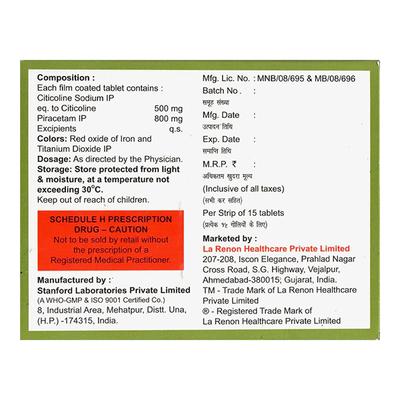
- Keep COLIHENZ P 800 TABLET out of reach of children
- Store COLIHENZ P 800 TABLET at room temperature
FAQs About COLIHENZ P 800 TABLET
Q: What are the uses of COLIHENZ P 800 TABLET?
A: COLIHENZ P 800 TABLET is used as an adjunct for the management of acute stroke.
Q: How COLIHENZ P 800 TABLET works?
A: COLIHENZ P 800 TABLET improves blood flow and oxygen supply to the brain and nervous system and protects it from further injury. It also repairs the brain cells and regulates proper nerve signal transmissions across the brain and the nervous system.
Q: What is the best time to take COLIHENZ P 800 TABLET?
A: Take COLIHENZ P 800 TABLET as advised by your physician. Your doctor will decide the best time for you to take COLIHENZ P 800 TABLET. Therefore, consult your doctor for advice.
Q: What are the side effects of taking COLIHENZ P 800 TABLET?
A: The most common side effects of taking COLIHENZ P 800 TABLET are headache, constipation, diarrhea, difficulty in falling asleep, nervousness, dizziness and weight gain. Consult your doctor if any of these side effects bother you.
Q: Can I consume alcohol along with COLIHENZ P 800 TABLET?
A: It is advisable to avoid alcohol consumption while taking COLIHENZ P 800 TABLET to achieve maximum benefits.
Q: Who should not take COLIHENZ P 800 TABLET?
A: COLIHENZ P 800 TABLET is not recommended for use in patients with severe liver or kidney problems. It is also not suitable for use in patients with Huntington Disease, parkinsonism, prolonged bleeding within the skull (intracranial hemorrhage), trimethylaminuria (fishy odor in the urine) or a previous history of cerebral bleeding or depression. Do not take COLIHENZ P 800 TABLET if you are pregnant or breastfeeding without consulting your doctor.
Q: What should I do if I forget to take a dose of COLIHENZ P 800 TABLET?
A: If you forget to take a dose of COLIHENZ P 800 TABLET, take it as soon as you remember. However, if it is time to take the next dose of COLIHENZ P 800 TABLET, skip the missed dose and take the next one at regular times. Do not take a double dose of COLIHENZ P 800 TABLET to compensate the missed dose, as it could lead to toxicity.
Q: Can I stop taking COLIHENZ P 800 TABLET once my symptom subsides?
A: Do not stop taking COLIHENZ P 800 TABLET unless your doctor advice you to stop, as sudden withdrawal of the therapy may cause unpleasant withdrawal symptoms such as muscle twitching or jerky movements. If you feel better after using COLIHENZ P 800 TABLET, consult your doctor for advice. Your doctor will gradually reduce the dose before complete cessation of the therapy.
Q: Can COLIHENZ P 800 TABLET be used during pregnancy?
A: COLIHENZ P 800 TABLET should be used in pregnancy only if it is considered necessary by the physician. Your doctor will evaluate the risks and benefits of the therapy and prescribes it to you accordingly.
Q: How to take COLIHENZ P 800 TABLET?
A: You must take COLIHENZ P 800 TABLET as advised by your physician. Swallow the medicine with a glass of water. Do not crush or chew the medicine.
References
1. KD. Tripathi. CNS stimulants and cognition enhancers. Essentials of Medical Pharmacology. Seventh Edition. May 2013. Page – 490 & 491.
2. José Álvarez-Sabín and Gustavo C. Román. The Role of Citicoline in Neuroprotection and Neurorepair in Ischemic Stroke. NIH. National Library of Medicine. National Center for Biotechnology Information. PMC. PubMed Central. September 2013. [Accessed on 15th June 2026] 
3. P.P. De Deyn, J D Reuck, W Deberdt, R Vlietinck, J M Orgogozo. Treatment of acute ischemic stroke with piracetam. Members of the Piracetam in Acute Stroke Study (PASS) Group. NIH. National Library of Medicine. National Center for Biotechnology Information. PMC. PubMed Central. December 1997. [Accessed on 15th June 2026] 
4. Leeford Healthcare Ltd. Nurocot P. Citicoline+Piracetam Tablets. [Accessed on 15th June 2026]
5. BioBrick Pharma. Biocoline-P. Citicoline+Piracetam Tablets. [Accessed on 15th June 2026]
6. Central Drug Standard Control Organization. Citicholine 500mg + Piracetam 400mg Tablets [Revised in October 2010]. [Accessed on 15th June 2026]
Useful Diagnostic Tests
Author Details