



Netmeds First Membership
Quick Links
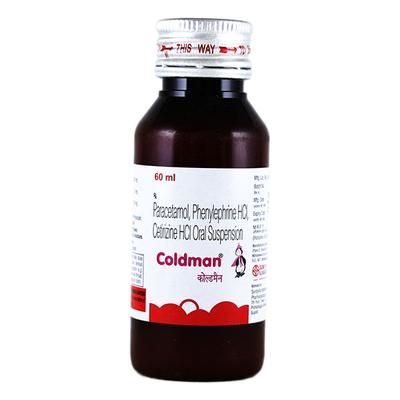
Introduction About COLDMAN SYRUP
COLDMAN SYRUP is used to relieve common cold symptoms such as blocked nose, runny nose, fever, watery eyes, sneezing, allergic rhinitis, and nasal congestion.
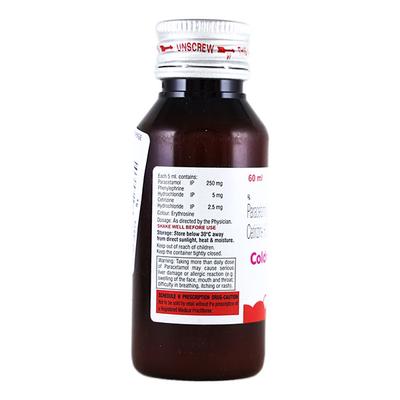
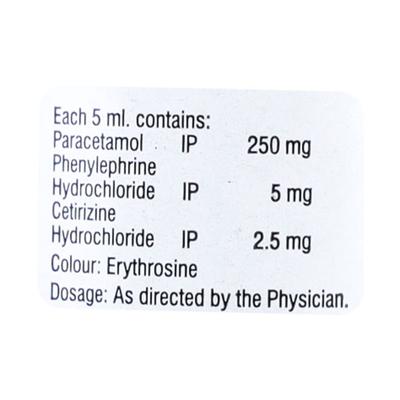
It contains a combination of medicines called Cetirizine, Paracetamol, and Phenylephrine, which belong to the group of medicines called Anti-allergic, Analgesic & Antipyretic, Nasal, and decongestant, respectively.
Cetirizine works by blocking histamine receptors in the body, reducing allergy symptoms like sneezing and itching. Paracetamol reduces pain and fever by inhibiting an enzyme in the brain that produces prostaglandins, which are chemicals that cause inflammation and pain. Phenylephrine acts as a decongestant by constricting blood vessels in the nasal passages, which helps to reduce swelling and congestion.
The common cold is a viral infection that affects the nose and throat. Fever is generally increased body temperature in response to an infection. Avoid alcohol consumption while taking this medicine, as it leads to excessive drowsiness.
Before taking COLDMAN SYRUP, inform your doctor if you have liver problems, kidney problems, convulsions, diabetes, or thyroid problems. It should be used with caution in pregnant women, and it is not recommended to use in breastfeeding women.
The most common side effects of COLDMAN SYRUP are nausea, vomiting, sleepiness, and dizziness. Consult your doctor for advice if any of the above symptoms worsen.
Uses Of COLDMAN SYRUP
It is used to relieve common cold symptoms such as:
- blocked nose
- runny nose
- fever
- watery eyes
- sneezing
- allergic rhinitis
- nasal congestion
How COLDMAN SYRUP Works
COLDMAN SYRUP is a combination of Cetirizine, Paracetamol, and Phenylephrine, where Cetirizine is an H1 receptor antagonist that works by blocking the action of a chemical messenger (histamine) responsible for runny nose, watery eyes, and sneezing. It also has anti-inflammatory action. Paracetamol is an analgesic and antipyretic that acts by inhibiting the synthesis of prostaglandins (chemicals that cause inflammation, pain, and fever), which helps in reducing pain and fever. Phenylephrine is a nasal decongestant that acts by narrowing the small blood vessels, providing temporary relief from congestion or stuffiness in the nose.
How to use COLDMAN SYRUP
- Take COLDMAN SYRUP as advised by your physician.
- Shake well before use.
- The dose and duration for you will be decided by your physician depending on your age, body weight, and disease condition.
Side Effects Of COLDMAN SYRUP
COMMON
- nausea, vomiting
- sleepiness
- dizziness
Warning & Precautions

Pregnancy
Use with CautionCOLDMAN SYRUP should be used with caution in pregnant women.

Breastfeeding
ContraindicatedCOLDMAN SYRUP is not recommended to use in breastfeeding women.

Driving and Using Machines
Use with CautionDo not drive or operate any machines if you feel sleepy or drowsy after taking COLDMAN SYRUP.

Alcohol
Consult your doctorAvoid alcohol consumption while using COLDMAN SYRUP, as it leads to excessive drowsiness.

Kidney
Use with CautionCOLDMAN SYRUP should be used with caution in patients with kidney problems.

Liver
Use with CautionCOLDMAN SYRUP should be used with caution in patients with liver problems.

Allergy
ContraindicatedDo not take COLDMAN SYRUP if you are allergic to cetirizine, paracetamol, and phenylephrine, or to any other ingredients of this medicine.

Use In Pediatrics
Use with CautionCOLDMAN SYRUP should be used with caution in children and adolescents (2 years of age and above).

Use In Geriatrics
Use with CautionCOLDMAN SYRUP should be used with caution in elderly patients.
Others
Before taking COLDMAN SYRUP, inform your doctor if you have:
- diabetes
- thyroid problems
- convulsions
Interactions
A. Drug-Drug interactions:
Before taking COLDMAN SYRUP, inform your doctor if you are taking any of the following medicine:
- medicines used to manage depression (Ex. isocarboxazid, phenelzine)
- medicines used for colds, coughs, and sleeping (Ex. chlorpheniramine, diazepam, and opioids)
- medicines used to manage epilepsy (Ex. phenobarbital, phenytoin, sodium valproate, primidone, and carbamazepine)
- medicines used to manage HIV infections (Ex. zidovudine)
- warfarin (a medicine used to manage blood clotting)
- medicines used to manage nausea and vomiting (Ex. domperidone and metoclopramide)
Overdosage:
If you or anyone else accidentally takes too much of COLDMAN SYRUP or if you or a child accidentally swallow this medicine, consult your doctor immediately or visit the nearby hospital.
Synopsis
| Drug | : | Cetirizine, Paracetamol, Phenylephrine |
| Pharmacological Category | : |
Anti-allergic, Analgesic & Antipyretic, Nasal Decongestant |
| Therapeutic Indication | : | Relieves common cold symptoms |
| Dosage Forms | : | Tablet, Syrup, Suspension, Drops |
More Information
Common Cold: A viral infection of the upper respiratory tract that causes symptoms like a blocked nose, runny nose, sneezing, sore throat, and mild fever.
Allergic Rhinitis: Inflammation of the nasal passages triggered by allergens like pollen or dust, leading to symptoms such as sneezing, runny nose, itchy eyes, and nasal congestion.
Nasal Congestion: Swelling of the nasal passages often caused by colds, allergies, or infections, resulting in difficulty breathing through the nose.
Some lifestyle changes that will help the cold:
FAQs About COLDMAN SYRUP
Q: Does COLDMAN SYRUP cause drowsiness?
A: Yes, the most common side effect of COLDMAN SYRUP is drowsiness. Caution should be exercised while driving or operating heavy machines. Do not drive or handle heavy machines if you experience side effects like dizziness or drowsiness while taking COLDMAN SYRUP. Consult your healthcare professional if the drowsiness does not improve.
Q: Can I consume alcohol along with COLDMAN SYRUP?
A: No, it is not advisable to drink alcohol while taking COLDMAN SYRUP. Consuming alcohol along with COLDMAN SYRUP may aggravate the symptoms of COLDMAN SYRUP and cause severe liver damage, dizziness, and drowsiness. Consult your doctor before using it.
Q: Can we use COLDMAN SYRUP during pregnancy and breastfeeding?
A: COLDMAN SYRUP should be used with caution in pregnant women, and it is not recommended for use in breastfeeding women. Consult your doctor before using it.
Q: Is COLDMAN SYRUP an antibiotic?
A: No, COLDMAN SYRUP is not an antibiotic. COLDMAN SYRUP is a combination of cetirizine, paracetamol, and phenylephrine, which belong to the group of medicines called anti-allergic, analgesic, antipyretic, and decongestant, respectively. It is used to relieve symptoms of the common cold, such as a blocked nose, runny nose, fever, headache, watery eyes and sneezing, allergic rhinitis, and nasal congestion. It does not manage bacterial infections.
Q: What precautions are to be taken if I forget to take COLDMAN SYRUP?
A: Before taking COLDMAN SYRUP, inform your doctor if you have diabetes, thyroid problems, fits, or occlusive vascular disease (Raynaud’s phenomenon).
Q: What should I do if I forget to take a dose of COLDMAN SYRUP?
A: If you forget to take a dose of COLDMAN SYRUP, take it as soon as you remember. However, if it is time for the next scheduled dose, skip the missed dose and take the usual prescribed dose. Do not take a double dose for the missed dose.
Q: Can I stop taking COLDMAN SYRUP if I feel better?
A: Do not stop taking COLDMAN SYRUP, even though you feel better. Your symptoms may recur if you stop taking COLDMAN SYRUP. Inform your doctor before stopping it.
Q: Can COLDMAN SYRUP cause diarrhea?
A: Yes, COLDMAN SYRUP can cause diarrhea in some individuals. Drink lots of fluids, such as water or fruit juice, to keep yourself hydrated. Do not consume any medicine on your own without consulting your doctor.
Q: Can I take COLDMAN SYRUP during kidney disease?
A: COLDMAN SYRUP should be used with caution in patients with kidney problems. Consult your doctor before taking it.
Q: Can I take COLDMAN SYRUP during liver disease?
A: COLDMAN SYRUP is not recommended in patients with severe hepatic dysfunction. It should be used with caution in patients with mild to moderate liver problems. Consult your doctor before taking it.
Q: What are the side effects of taking COLDMAN SYRUP?
A: The most common side effects of taking COLDMAN SYRUP are nausea, vomiting, fatigue, dry mouth, headache, abdominal pain, drowsiness, dizziness, and diarrhea. Consult your doctor if any of the side effects worsen.
Q: Who should not take COLDMAN SYRUP?
A: COLDMAN SYRUP is not recommended for use if you have severe liver disease, are allergic to cetirizine, paracetamol, and phenylephrine, or have coronary artery disease and severe hypertension. Consult your doctor before taking it.
Q: How does COLDMAN SYRUP work?
A: COLDMAN SYRUP is a combination of Cetirizine, Paracetamol, and Phenylephrine, where Cetirizine is an H1 receptor antagonist that works by blocking the action of a chemical messenger (histamine) responsible for runny noses, watery eyes, and sneezing. Paracetamol is an analgesic and antipyretic that acts by inhibiting the synthesis of prostaglandins (chemicals that cause inflammation, pain, and fever), which helps in reducing pain and fever. Phenylephrine is a nasal decongestant that acts by narrowing the small blood vessels, providing temporary relief from congestion or stuffiness in the nose.
References
1. KD. Tripathi Autacoids and Related Drugs, Adrenergic System and Drugs, Nonsteroidal Anti-inflammatory Drugs, and Antipyretic-Analgesics Essentials of Medical Pharmacology. Seventh edition. 2013. Pages-166, 135, 192.
2. Aasim Naqvi; Valerie Gerriets. Cetirizine. NIH. National Library of Medicine. National Center for Biotechnology Information. Stat Pearls. November 2022. [Accessed on 10th October 2024] click here
3. Samir S Ayoub. Paracetamol (acetaminophen): A familiar drug with an unexplained mechanism of action. The Journal of Temperature. February 2021. [Accessed on 10th October 2024] click here
4. Evan Richards; Michael J. Lopez; Christopher V. Maani. Phenylephrine. NIH. National Library of Medicine. National Center for Biotechnology Information. Stat Pearls. July 2022. [Accessed on 10th October 2024] click here
5. Phenylephrine. NIH. National Library of Medicine. [Accessed on 10th October 2024] click here
6. Rosemont Pharmaceuticals Ltd. Electronic Medicines Compendium (EMC). [Revised in October 2022] [Accessed on 10th October 2024] click here
7. Pinewood Laboratories Ltd. Electronic Medicines Compendium (EMC). [Revised in October 2020] [Accessed on 10th October 2024] click here
8. Leeford. Cetirizine, Paracetamol, and Phenylephrine. [Accessed on 10th October 2024] click here
User Feedback
Was this information helpful? Share with your friends
Relevant Natural Remedies:
Author Details