






Netmeds First Membership
Quick Links
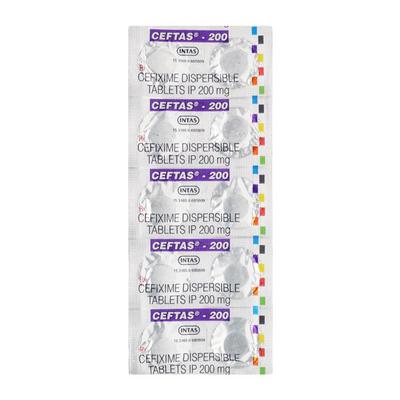
Introduction About CEFTAS 200MG TABLET
Ceftas 200mg Tablet is used in the management of bacterial infections like urinary tract, skin and soft-tissue, ear, bone, blood, abdomen, genital and lungs (pneumonia). It is also used to reduce the risk of getting infections after surgery.
It contains Cefixime, which belongs to the group of medicines called Antibiotics. It works by stopping the growth of bacteria by interfering with the synthesis of the bacterial cell wall and eventually killing the bacteria.
Take Ceftas 200mg Tablet for the stipulated duration instructed by your doctor even if you feel better during the midway of the therapy to achieve better results. Failing to complete the full course of the therapy or skipping doses in between the therapy may not result in adequate infection control.
Ceftas 200mg Tablet is suitable for use both in adults and in children aged 10 years or older. However, consult your doctor for advice before taking it.
Before taking Ceftas 200mg Tablet, inform your doctor if you have any stomach problems or kidney problems. You must also inform your doctor if you are pregnant or breastfeeding before taking Ceftas 200mg Tablet as a precaution. Common side effects of taking Ceftas 200mg Tablet are nausea, vomiting, diarrhoea, stomach pain, and bloating. Inform your doctor if they trouble you.
Uses Of CEFTAS 200MG TABLET
Ceftas 200mg Tablet is used in the management of bacterial infections such as:
- Ear infections
- Nose, throat or sinus infections (sore throat, sinusitis)
- Chest and lung infections (such as bronchitis, pneumonia)
- Urinary system (such as cystitis and kidney infections)
- Stomach infections (infections of the gut)
- Genital tract infections
Benefits of CEFTAS 200MG TABLET
1. Broad-Spectrum Antibacterial Protection
- Effective against many Gram-positive and Gram-negative bacteria, including Streptococcus pneumoniae, E. coli, Haemophilus influenzae, Proteus mirabilis, Neisseria gonorrhoeae, and more.
- Suitable for community-acquired bacterial infections where empirical therapy is needed.
2. High Tissue Penetration
- Reaches effective concentrations in respiratory, urinary, and middle-ear tissues, supporting quick symptom relief when used consistently.
3. Convenient Once- or Twice-Daily Dosing
- Long half-life enables simplified dosing schedules, improving adherence and overall treatment success.
4. Useful in Common Clinical Infections
Doctors commonly prescribe Ceftas 200mg Tablet for:
- Upper respiratory tract infections (URTI) – pharyngitis, tonsillitis, sinusitis
- Lower respiratory tract infections – bronchitis, lung infections of bacterial origin
- Urinary tract infections (UTI)
- Skin and soft tissue infections
- Typhoid fever – as a second-line therapy
How CEFTAS 200MG TABLET Works
Ceftas contains Cefixime, which kills bacteria through a targeted and well-defined pathway:
1. Inhibition of Bacterial Cell Wall Synthesis
- Cefixime binds to Penicillin-Binding Proteins (PBPs) located in bacterial cell walls.
- These PBPs are essential for synthesizing peptidoglycan, a key structural layer.
2. Weakening of Cell Wall Integrity
- When PBPs are blocked, bacteria cannot cross-link peptidoglycan strands.
- This leads to a structurally weak cell wall that cannot withstand osmotic pressure.
3. Bacterial Cell Lysis (Destruction)
- Due to the weakened wall, the bacterial cell absorbs excess fluid, swells, and bursts (lysis).
- As a result, the bacteria cannot survive or multiply.
Pharmacological Classification
- Drug Class: Third-generation cephalosporin antibiotic
- Bactericidal Action: Directly kills bacteria rather than only inhibiting growth
- Time-Dependent Killing: Works best when concentrations are maintained throughout the day
How to use CEFTAS 200MG TABLET
- Dose:
- Adults: Usually 200 mg once or twice daily, depending on the severity of infection.
- Pediatric doses differ follow doctor-specific instructions.
- Timing:
- Can be taken with or without food; however, taking it after meals may reduce stomach discomfort.
- Swallow Whole:
- Do not crush or chew the tablet.
- Duration:
- Complete the full course even if symptoms improve early.
- Stopping early may cause antibiotic resistance or relapse.
While Using Ceftas 200
- Maintain good hydration.
- Avoid taking antacids containing aluminum or magnesium within 2 hours of the dose (may reduce absorption).
- Inform your doctor if symptoms do not improve within 48–72 hours.
What if I forgot to take CEFTAS 200MG TABLET
- Take it as soon as you remember.
- If it’s almost time for the next dose, skip the missed dose.
- Do not double the dose.
Side Effects Of CEFTAS 200MG TABLET
Common Side Effects of Ceftas 200mg Tablet:
- Nausea or vomiting
- Stomach pain, indigestion, diarrhea, or wind
- Headache, dizziness
- Itchiness of the genital (or vaginal) areas
When to consult the doctor?
- Signs of severe allergic reactions (such as skin rash, itching, swelling of the face, lips, throat, or tongue causing difficulty in breathing or swallowing)
- Unusual bleeding or bruising, bleeding from the nose or gums with pale skin, tiredness, chills, and shortness of breath
- Signs of stomach damage causing severe uncontrollable watery diarrhea, feeling weak, and fever
Warning & Precautions

Pregnancy
Consult your doctorThere are no adequate and well-controlled studies regarding the usage of Cefixime in pregnant women. Therefore, this medicine should be used in pregnant women only if it is considered essential by the physician.

Breastfeeding
Consult your doctorThere are no adequate and well-controlled studies regarding the usage of Cefixime in breastfeeding women. Therefore, this medicine should be used in breastfeeding women only if it is considered essential by the physician.

Driving and Using Machines
Use with CautionDo not drive or operate any heavy tools or machines if your ability is affected by this medicine.

Alcohol
Consult your doctorAvoid consumption of alcohol while taking this medicine, as it might make you feel dizzier.

Kidney
Use with CautionCeftas should be used with caution in patients with kidney problems.

Allergy
ContraindicatedDo not take Ceftas 200mg if you are allergic to Cefixime or to any other cephalosporin antibiotics, including Penicillins.

Use In Pediatrics
Consult your doctorCeftas can be used in children and adolescents aged 10 years or older if prescribed by the physician. For children aged below 10 years, consult your doctor for a suitable alternative medicine.

Use In Geriatrics
Use with CautionCeftas 200mg should be used with caution in elderly patients, especially if you have kidney problems.
Other Warnings for CEFTAS 200MG TABLET
Before taking Ceftas, inform your doctor if you:
- Have ever had colitis (inflammation of the colon)
- Are going to have any blood or urine tests in the upcoming days
Drug - Drug interaction
1. Antacids Containing Magnesium or Aluminum
Examples: Magnesium hydroxide, Aluminum hydroxide
Interaction:
- These antacids reduce oral absorption of Cefixime, lowering its effectiveness.
2. H2 Blockers (Acidity Reducers)
Examples: Ranitidine, Famotidine
Interaction:
- May slightly reduce Cefixime absorption, though not as significantly as antacids.
3. Probenecid
Use: Commonly used in gout
Interaction:
- Inhibits renal tubular secretion → increases blood levels of Cefixime.
- May raise risk of side effects such as diarrhea or rash.
4. Blood Thinners (Anticoagulants)
Examples: Warfarin, Acenocoumarol
Interaction:
- Cefixime can alter gut flora involved in Vitamin K metabolism → may increase bleeding tendency.
- Can potentiate anticoagulant effects.
5. Carbamazepine
Use: Seizure control, neuropathic conditions
Interaction:
- Cefixime increases plasma levels of Carbamazepine, increasing the risk of toxicity (dizziness, blurred vision, imbalance).
6. Oral Contraceptive Pills (OCPs)
Interaction:
- Broad-spectrum antibiotics like Cefixime may reduce gut flora necessary for hormone reabsorption, potentially reducing contraceptive effectiveness.
7. Live Bacterial Vaccines
Examples: Typhoid oral vaccine
Interaction:
- Antibiotics may reduce vaccine effectiveness by killing the live attenuated bacteria used in the vaccine.
8. Diuretics (High-Dose or Loop Diuretics)
Examples: Furosemide, Bumetanide
Interaction:
- Combined use may increase strain on kidneys, raising risk of kidney-related side effects.
9. Nephrotoxic Medicines
Examples: Aminoglycosides (Gentamicin, Amikacin), Vancomycin, Amphotericin B
Interaction:
- May enhance renal stress, although cefixime itself has low nephrotoxicity.
10. Cyclosporine & Tacrolimus
Use: Immunosuppressants used in transplant patients
Interaction:
- Potential for altered kidney function and increased side effects.
Synopsis
| Drug | : | Cefixime |
| Pharmacological Category | : | Cephalosporins |
| Therapeutic Indication | : | Bacterial infections |
| Dosage Forms | : | Tablet, Dispersible Tablet, Syrup, Suspension, Dry syrup, Oral drops |
More Information
1. Pharmacokinetic Insights (Advanced Yet Patient-Friendly)
Absorption & Bioavailability
- Cefixime has a moderate oral bioavailability (~40–50%), which remains stable even when taken with food.
- Taking it after food slows absorption slightly but does not reduce the total amount absorbed. This is why it remains effective regardless of mealtime.
Protein Binding
- About 65% of Cefixime is protein-bound, allowing predictable plasma levels during therapy.
Half-Life
- The elimination half-life is approximately 3–6 hours, enabling once- or twice-daily dosing.
- In patients with kidney impairment, the half-life can extend to 8–10 hours, which is why dose adjustment may be needed.
Excretion
- Around 20–25% is excreted unchanged in urine, while a significant portion is eliminated through the bile.
- This dual route increases safety for patients with mild to moderate kidney disease.
2. Unique Clinical Strengths (Why Clinicians Prefer Cefixime in Certain Cases)
Effective Against Beta-Lactamase–Producing Bacteria
- Many bacteria produce beta-lactamase enzymes that destroy regular penicillin-type antibiotics.
- Cefixime is resistant to many beta-lactamases, making it useful when older antibiotics fail.
High Stability in the Presence of Gastric Acid
- Unlike some oral cephalosporins, Cefixime is acid-stable, ensuring consistent effectiveness when taken orally.
Useful in Empirical Therapy Where Culture Reports Are Pending
Doctors may choose cefixime in:
- Mixed respiratory infections
- Community-acquired infections
- Cases where antibiotic resistance patterns suggest good coverage
3. Formulation Advantages (Unique Pharma-Technical Insights)
Film-Coated Tablet
- Protects the drug from moisture and environmental degradation.
- Enhances swallowing comfort and reduces gastric irritation.
Sustained Blood Levels
- Stable plasma levels prevent peaks/troughs, maintaining continuous antibacterial action.
4. Advanced Safety-Related Details
Low Cross-Reactivity With Penicillin Allergy
- While caution is required, cefixime has lower cross-reactivity compared to first-generation cephalosporins.
Minimal Impact on Gut Microbiome (Relative to Stronger Antibiotics)
- Compared to broad-spectrum fluoroquinolones, cefixime has a narrower ecological impact, making secondary infections like C. difficile less common.
5. How CEFTAS 200 Differs from Other Cefixime Forms
Tablet vs. Dispersible Tablet
- Film-coated tablet = slower disintegration but better gastric protection
- Dispersible tablet = quicker absorption, suitable for swallowing difficulty
200 mg vs. 100 mg
- 200 mg is preferred in adults and moderate infections
- 100 mg is used for titrating doses or in children (depending on form)
FAQs About CEFTAS 200MG TABLET
Q: Is Ceftas 200mg Tablet a strong antibiotic?
A: Yes, Ceftas 200mg Tablet contains cefixime, a broad-spectrum antibiotic effective against a variety of bacterial infections. It works by killing the bacteria and stopping their growth.
Q: Can we take Ceftas 200mg Tablet twice a day?
A: Yes, this medicine is usually taken twice a day, depending on your doctor's prescription. Follow your doctor's advice regarding the exact dosage and schedule.
Q: What is the benefit of Ceftas 200mg Tablet medicine?
A:Ceftas 200mg Tablet is beneficial for managing bacterial infections such as ear, sinus, throat, respiratory, urinary tract infections, and typhoid fever. It helps clear infections by killing bacteria.
Q: How many times a day should you take Cefixime 200 mg?
A: Cefixime 200 mg is generally taken once or twice a day, depending on the severity of the infection. Your doctor will decide the correct dose and duration of therapy for you depending upon your age, body weight, and severity of the infection.
Q: How long does Ceftas 200mg Tablet take to work?
A: This medicine typically starts working within a few days. However, complete the full course of the antibiotic as prescribed by your doctor to ensure the infection is fully treated.
Q: Does Cefixime make you sleepy?
A: Drowsiness is not a common side effect of Cefixime tablets. Therefore, if you feel sleepy after taking it, inform your doctor.
Q: Is Cefixime 200 safe for kidneys?
A: Cefixime should be used with caution in patients with kidney problems. Always inform your doctor if you have any kidney condition before starting the medication.
Q: Which bacteria is killed by Cefixime?
A: Cefixime is effective against a wide range of bacteria, including those causing ear, respiratory, urinary, and gastrointestinal infections. It targets bacteria like Streptococcus, Haemophilus influenzae, and Neisseria gonorrhoeae.
Q: Can I stop Cefixime after 3 days?
A: No, do not stop Cefixime before completing the full prescribed course, even if you feel better. Stopping early can lead to the infection returning.
Q: Which disease is cured by Cefixime?
A: Cefixime is used to manage various bacterial infections, including ear, sinus, throat, lung, urinary tract, and genital infections, as well as typhoid fever.
Q: Which is better, Cefixime or Azithromycin?
A: Both Cefixime and Azithromycin are antibiotics, but they are used for different types of infections. Your doctor will choose the best one based on the infection you're treating.
Q: Who should not take Cefixime?
A: People who are allergic to Cefixime, other cephalosporins, or penicillin antibiotics should avoid taking it. Always consult your doctor before starting the medication.
Q: Is Cefixime good for urinary tract infections?
A: Yes, Cefixime is effective in managing urinary tract infections (UTIs), such as cystitis and kidney infections.
Q: What are the side effects of Ceftas 200mg Tablet?
A: Common side effects of Ceftas 200mg Tablet includes nausea, vomiting, diarrhea, stomach pain, bloating, and headache. Contact your doctor if these symptoms persist.
Q: Can I take paracetamol with Cefixime?
A: Yes, paracetamol can usually be taken with Cefixime to reduce fever or pain. However, always consult your doctor before combining medications.
Q: Does Ceftas 200mg Tablet cause diarrhea?
A: Diarrhea is a common side effect of this medicine. If you experience it, stay hydrated by drinking plenty of fluids and contact your doctor if diarrhea becomes severe.
References
1. KD Tripathi. Beta-Lactam Antibiotics. Essentials of Medical Pharmacology. 7th Edition, 2013. Page-728.
2. Cefixime 200mg Tablet. Mercury Pharmaceuticals Ltd. EMC.UK. [Revised in March 2024]. [Accessed on 26th May 2026] 
3. Pharmaceuticals (Rwanda) Ltd. Cefixime Capsule 200mg. [Accessed on 26th May 2026] 
4. Taxim-O 200 and 400mg. AlkemLabs. [Revised in November 2019]. [Accessed on 26th May 2026]
5. Cefixime Dispersible Tablets IP 100 mg / 200 mg. BlueCross Laboratories Ltd. [Revised in September 2022]. [Accessed on 26th May 2026]
6. Cefixime 100mg Tablet. Hetero HealthCare Ltd. [Accessed on 26th May 2026]
Useful Diagnostic Tests
Author Details