

Netmeds First Membership
Introduction About BETAMIL GM CREAM
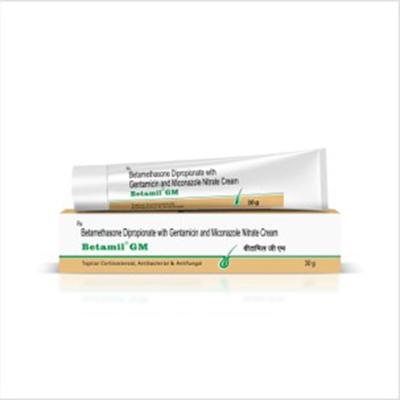
Betamil GM is a multifaceted cream designed to tackle various skin concerns effectively. Combining anti-fungal and anti-bacterial properties, it acts as a robust defense against skin infections. Additionally, its topical corticosteroid feature offers targeted treatment for skin infections while minimizing inflammation, providing quick relief from itching and swelling. Trust Betamil GM for an effective and comprehensive solution to promote skin health.
BETAMIL GM CREAM is a combination of Betamethasone, Gentamicin and Miconazole which belongs to the group of medicines called Corticosteroids, Antibiotics and Antifungals respectively.
BETAMIL GM CREAM is not recommended for use in patients with rosacea, acne vulgaris, perioral dermatitis, pruritus without inflammation, perianal and genital pruritus, primary cutaneous viral infections, primary infected skin lesions caused by bacterial, fungal, or yeast infections and perforated eardrum. BETAMIL GM CREAM should be used with caution in patients with liver or kidney disease. Contact your doctor before applying.
BETAMIL GM CREAM is generally not recommended for use in pregnancy and in breastfeeding women as it is not known whether it may pass through the breast milk. Contact your doctor before applying.
BETAMIL GM CREAM is not recommended for use in children under 2 years of age. It should be used with caution in elderly patients who have history of renal or hepatic impairment. Common side effects of this medicine are pruritis, skin burning sensation or pain in the skin. Contact your physician if any of the above symptoms worsen.
Uses Of BETAMIL GM CREAM
- Manages various skin infections
How BETAMIL GM CREAM Works
BETAMIL GM Cream contains a triple-ingredient formulation where each component performs a different role within the skin layers. Its overall action is based on anti-inflammatory, antibacterial, and antifungal pharmacological pathways.
1. Betamethasone – Corticosteroid Component (Anti-Inflammatory Pathway)
Betamethasone works by:
- interacting with glucocorticoid receptors in skin cells
- reducing the release of substances responsible for redness, swelling, and local irritation
- slowing down certain immune responses that contribute to surface inflammation
This results in a calming action on irritated or inflamed skin areas at the cellular level.
2. Gentamicin – Aminoglycoside Antibiotic Component (Bacterial Protein Synthesis Inhibition)
Gentamicin acts directly on bacterial ribosomes (30S subunit) and:
- interferes with the process of bacterial protein synthesis
- disrupts normal metabolic functions in bacteria
- blocks their ability to multiply on the skin
Its mechanism is targeted, focusing specifically on bacterial cell machinery rather than human cells.
3. Miconazole – Imidazole Antifungal Component (Cell Membrane Disruption)
Miconazole works by:
- blocking the synthesis of ergosterol, a key component of fungal cell membranes
- causing structural instability in fungal cells
- leading to loss of membrane integrity
This disrupts the fungal organism’s ability to survive on the skin surface.
How to use BETAMIL GM CREAM
1. Preparation Before Applying the Cream
- Wash your hands thoroughly with soap and water.
- Clean the affected skin area gently using mild soap and lukewarm water.
- Pat the area dry completely; moisture can interfere with proper absorption.
- Ensure the skin is free from other creams, lotions, makeup, or topical products unless advised by a healthcare professional.
2. How to Apply BETAMIL GM Cream Correctly
- Take a small, thin layer of the cream on your fingertip.
- Apply it lightly and evenly over the affected region; do not rub harshly.
- Gently spread until it forms a uniform coating over the skin.
- Avoid applying a thick layer, as only a minimal amount is needed for adequate coverage.
3. Frequency and Duration
- Apply exactly as advised by your healthcare provider in terms of:
- number of applications per day
- duration of use
- Do not exceed the recommended frequency or continue longer than advised.
4. Important Application Guidelines
- Do not cover the area with tight bandages, gauze, or occlusive dressings unless specifically recommended by a healthcare professional.
- Avoid using the cream near the eyes, inside the nose, inside the mouth, or on broken or severely damaged skin.
- Let the cream absorb fully before wearing clothing over the area.
- After applying, wash your hands thoroughly, unless your hands are the area being treated.
What if I forgot to take BETAMIL GM CREAM
- Apply the cream as soon as you remember.
- If it is almost time for the next scheduled application, skip the missed one and continue with the regular routine.
- Do not double-apply to compensate for a missed application.
Overdose
Acute overdosage is very unlikely, however, in the case of chronic overdosage or misuse, hypercortisolism-like (rare hormonal disorder caused by over exposure to the hormone, cortisol) symptoms may occur. Consult your doctor immediately or visit the nearby hospital.
Side Effects Of BETAMIL GM CREAM
Common
- pruritus
- skin burning sensation or pain in the skin
When to consult a doctor:
- prolonged or significant diarrhoea with abdominal pain
How To Manage Side Effects
Skin rash Or Itching
Avoid hot showers because hot water can irritate the skin. Do not scratch the affected area. Use sunscreen and protective clothing when outdoors. Regularly use unscented moisturizers to soothe and hydrate the affected area. Contact your doctor if itching worsens.
Warning & Precautions

Pregnancy
ContraindicatedBETAMIL GM CREAM is generally not recommended for use in pregnancy. Contact your doctor before applying.

Breastfeeding
ContraindicatedBETAMIL GM CREAM is generally not recommended for use in breastfeeding women as it is not known whether it may pass through the breast milk. Contact your doctor before applying.

Kidney
Use with CautionBETAMIL GM CREAM should be used with caution in patients with kidney disease. Dosage will be adjusted in patients with reduced renal function. Contact your doctor before applying.

Liver
Use with CautionBETAMIL GM CREAM should be used with caution in patients with liver disease. Contact your doctor before applying.

Allergy
ContraindicatedBETAMIL GM CREAM is not recommended in patients with allergic (hypersensitive) history to Betamethasone, Gentamicin, Miconazole, or to other ingredients of this medicine.

Use In Pediatrics
ContraindicatedBETAMIL GM CREAM is not recommended for use in children under 2 years of age. Contact your doctor before applying.

Use In Geriatrics
Use with CautionBETAMIL GM CREAM should be used with caution in elderly patients who have history of renal or hepatic impairment. Contact your doctor before applying.
Other Warnings for BETAMIL GM CREAM
Before applying BETAMIL GM CREAM inform your doctor if you have:
- psoriasis
- infection
- chronic leg ulcers
Who should not take BETAMIL GM CREAM
BETAMIL GM CREAM is not recommended for use if you have:
- rosacea
- acne vulgaris
- perioral dermatitis
- pruritus without inflammation
- perianal and genital pruritus
- primary cutaneous viral infections
- primary infected skin lesions caused by bacterial, fungal, or yeast infections
- perforated eardrum
Drug - Drug interaction
1. Interactions Related to Betamethasone (Topical Corticosteroid Component)
- Other corticosteroid-containing medicines
Using multiple steroid-based creams, ointments, eye drops, or systemic steroids may increase cumulative steroid exposure. - Immunosuppressive medications
Medicines such as ciclosporin, tacrolimus, or long-term systemic steroids may enhance immune-modulating effects when used together with topical steroids. - Medicines affecting skin integrity
Products that thin the skin (e.g., retinoids, exfoliating acids) may increase absorption of topical steroids.
2. Interactions Related to Gentamicin (Topical Aminoglycoside Component)
- Other aminoglycoside antibiotics
Using additional gentamicin or similar antibiotics (amikacin, neomycin, tobramycin) may increase combined exposure, especially if applied over large skin areas. - Ototoxic or nephrotoxic medicines (systemic)
Although topical absorption is low, caution is often advised when the user is already on systemic medicines known to affect kidneys or hearing, such as certain diuretics or chemotherapy agents.
3. Interactions Related to Miconazole (Topical Antifungal Component)
- Medicines metabolized through CYP enzymes
Miconazole may interfere with enzyme pathways involved in drug metabolism if systemic absorption occurs.
Examples include some anticoagulants or antidiabetic agents, although risk is typically low with topical forms. - Other antifungal products
Using multiple topical antifungals may lead to irritation or overlapping effects.
4. Interactions With Other Topical Products
Interaction risks increase if combined with:
- strong exfoliants or peels (may enhance absorption through irritated skin)
- topical antibiotics (may cause overlapping effects or skin sensitivity)
- cosmetic products with alcohol, fragrances, or harsh chemicals (may increase irritation)
Synopsis
| Drug | : |
Betamethasone, Gentamicin, Miconazole |
| Pharmacological Category | : |
Corticosteroids, Antibiotics, Antifungals |
| Therapeutic Indication | : |
Skin infections |
| Dosage Forms | : |
Cream |
More Information
1. Insight Into the Triple-Action Dermatology Combination
Betamil GM Cream brings together three dermatologically significant components—an anti-inflammatory agent, an antibacterial agent, and an antifungal component. This combination is formulated to assist in scenarios where skin concerns may involve multiple contributing factors simultaneously (inflammation, bacterial load, or fungal overgrowth).
Such multi-component preparations are often used when a healthcare professional anticipates overlapping skin concerns.
2. Why Multi-Component Dermatological Formulas Are Used in Practice
Skin issues can sometimes be complex, and monotherapy (single-agent product) may not offer enough coverage for all contributing factors.
A combination like Betamil GM is typically chosen in situations such as:
- mixed microbial influence suspected on the skin
- persistent skin irritation where secondary microbial involvement is common
- need for a topical product that can support comfort in inflamed areas while also addressing surface-level organisms
This makes the product contextually relevant in various dermatology routines recommended by professionals.
3. Formulation Advantages That Improve User Convenience
Betamil GM Cream is formulated to:
- spread easily on the skin
- absorb well without leaving an oily layer
- offer uniform distribution of all three active components
- be suitable for localized application without requiring large quantities
These formulation attributes support user adherence and comfort, especially when the product is applied to sensitive or irritated areas.
4. Value of the Cream Base in Enhancing Performance
The emollient cream base is designed to:
- maintain hydration around the application area
- support even penetration of the active components
- reduce friction, which is especially helpful for sensitive skin zones
This is especially beneficial for skin that is red, itchy, or inflamed, where friction can worsen sensations.
5. What Makes This Combination Distinct From Single-Agent Creams
- Combination creams like Betamil GM help simplify skincare routines by reducing the need for multiple prescriptions.
- They offer broad coverage for inflammation + bacteria + fungi, making them a practical choice in mixed presentations.
- They help minimize the confusion of applying multiple products with different schedules.
FAQs About BETAMIL GM CREAM
Q: What is Betamil GM Cream used for?
A: Betamil GM Cream is prescribed for certain inflammatory skin conditions that may also involve bacterial or fungal infection. It combines an anti-inflammatory corticosteroid, an antibacterial agent, and an antifungal medicine.
Q: How should I apply Betamil GM Cream?
A: Apply a thin, even layer on the affected area, gently rub it in, and wash your hands afterward. Use it exactly for the duration and frequency prescribed by your doctor.
Q: Can I use Betamil GM Cream on the face?
A: The face is thin and sensitive, so this cream should be used on facial skin only if specifically advised by your doctor.
Q: How long does it take to see improvement?
A: Many users notice relief in itching or redness within a few days, but completing the prescribed course is important to prevent recurrence.
Q: Can Betamil GM Cream be used on open wounds?
A: No, do not apply the cream to broken skin, cuts, or open wounds unless your doctor directs you otherwise.
Q: Is Betamil GM Cream safe for children?
A: Children’s skin absorbs steroids more easily, so the cream should be used in children only under strict medical supervision.
Q: Can I cover the treated area with a bandage?
A: Occlusive dressings (tight coverings) should be avoided unless your doctor specifically instructs you, as they can increase absorption and side effects.
Q: What should I do if I miss a dose?
A: Apply it as soon as you remember. If it’s close to the next scheduled application, skip the missed one. Do not double the dose.
Q: Are there any areas where Betamil GM Cream should not be applied?
A: Avoid applying the cream around the eyes, inside the nose, mouth, or on very sensitive/genital areas unless prescribed.
Q: Can I use Betamil GM Cream during pregnancy or breastfeeding?
A: Consult your doctor before use. Topical steroids should be used sparingly during pregnancy, and breastfeeding mothers should avoid applying it on or near the breast area.
References
1. K.D. Tripathi. Corticosteroids, Aminoglycoside Antibiotics & Antifungal drugs. Essentials of medical pharmacology. Seventh edition. 2013. Page – 289,747, 792.
2. Bethesda (MD). Betamethasone. National Institute of Health. NLM. National Centre for Biotechnology Information. PubChem Compound Summary. 2004. [Accessed on 11th April 2026] 
3. Bethesda (MD). Gentamicin. National Institute of Health. NLM. National Centre for Biotechnology Information. PubChem Compound Summary. 2004. [Accessed on 11th April 2026] 
4. Bethesda (MD). Miconazole. National Institute of Health. NLM. National Centre for Biotechnology Information. PubChem Compound Summary. 2004. [Accessed on 11th April 2026]
5. GlaxoSmithKline Pharmaceuticals Limited. Betamethasone + Gentamicin + Miconazole. [Revised in September 2020] [Accessed on 11th April 2026]
Author Details